%20%20--%3E%0A%3Csvg%20version%3D%221.1%22%20id%3D%22Layer_1%22%20xmlns%3D%22http%3A%2F%2Fwww.w3.org%2F2000%2Fsvg%22%20xmlns%3Axlink%3D%22http%3A%2F%2Fwww.w3.org%2F1999%2Fxlink%22%20x%3D%220px%22%20y%3D%220px%22%0A%09%20width%3D%2239px%22%20height%3D%2240px%22%20viewBox%3D%220%200%2039%2040%22%20enable-background%3D%22new%200%200%2039%2040%22%20xml%3Aspace%3D%22preserve%22%3E%0A%3Cpath%20fill%3D%22%23FFFFFF%22%20d%3D%22M38.5%2C7H28.2v26h10.3V7z%22%2F%3E%0A%3Cpath%20fill-rule%3D%22evenodd%22%20clip-rule%3D%22evenodd%22%20fill%3D%22%23FFFFFF%22%20d%3D%22M26.1%2C25.5c0%2C5.8-4.1%2C7.5-12.9%2C7.5C3.9%2C33%2C0%2C31.2%2C0%2C25.2v-1.1h11.6%0A%09v2.4c0%2C0.7%2C0.1%2C1.4%2C1.2%2C1.4c1%2C0%2C1.2-0.4%2C1.2-1.3v-0.9c0-1.6-0.9-1.6-3.5-2.2C2.2%2C21.7%2C0%2C19.7%2C0%2C15.3v-0.9C0%2C9.3%2C5.5%2C7%2C12.9%2C7%0A%09c10.2%2C0%2C12.8%2C2.6%2C12.8%2C7.4v1.8h-11v-2.9c0-0.6-0.4-1.1-1.2-1.1c-0.6%2C0-1.2%2C0.4-1.2%2C1.1v0.9c0%2C1.5%2C0.9%2C2%2C3.3%2C2.5%0A%09c8%2C1.6%2C10.5%2C3.3%2C10.5%2C7.5V25.5z%22%2F%3E%0A%3C%2Fsvg%3E%0A)
Tommy John, the Man Behind Baseball’s Most Famous Surgery, Dies at 83
In this story:
Tommy John, a former left-handed pitcher who lent his name to a surgery that has impacted Major League Baseball more than any other, died on Saturday at 83 years old.
A four-time All-Star, John pitched for six organizations during a 26-year career. He was a reliable starter for many years, racking up 288 wins and a 3.34 ERA during his time in the majors. Instead of his on-field exploits, John will forever be known for the surgery he underwent on September 25, 1974.
That season was shaping up to be the best of John’s career. By early July, he was 13–3 with a 2.50 ERA in his first 21 starts. On July 17, the 31-year-old felt something in his left elbow after throwing a fastball to Montreal Expos first baseman Hal Breeden. John attempted one more pitch before asking manager Walter Alston to take him out. It was soon revealed that he had torn the ulnar collateral ligament in his elbow, and his season was over.
John described the sensation to Sports Illustrated in 1978:
“Right at the point where I put force on the pitch, the point where my arm is back and bent, something happened. It felt as if I had left my arm someplace else. It was as if my body continued to go forward and my left arm had just flown out to right field, independent of the rest of me. … I walked off the mound and met [manager] Walter Alston coming out of the dugout. ‘You better get somebody,’ I told him. ‘I just hurt my arm.’”
In September, John allowed Dodgers team physician, Dr. Frank Jobe, to attempt a new procedure to save his career. Jobe replaced the ulnar collateral ligament in John’s left elbow with a tendon from his right forearm. He was the first pitcher to undergo the surgery that has since become commonplace and bears his name.
He missed the 1975 season as part of a lengthy recovery.
John returned for the 1976 season and was able to pitch 14 more seasons in the big leagues and returned to All-Star form. In a testament to the surgery’s success, John combined to go 60–28 with a 3.22 ERA from 1978 through ’80, and made the All-Star team in each of those three seasons.
Prior to the surgery, John was 124–106 with a 2.97 ERA in 355 games across 12 seasons. Following the procedure, he went on to play 14 more seasons and went 164–125 with a 3.66 ERA. Perhaps most crucially, over the five seasons after the surgery, he won 90 games with a 3.11 ERA and averaged more than 230 innings.
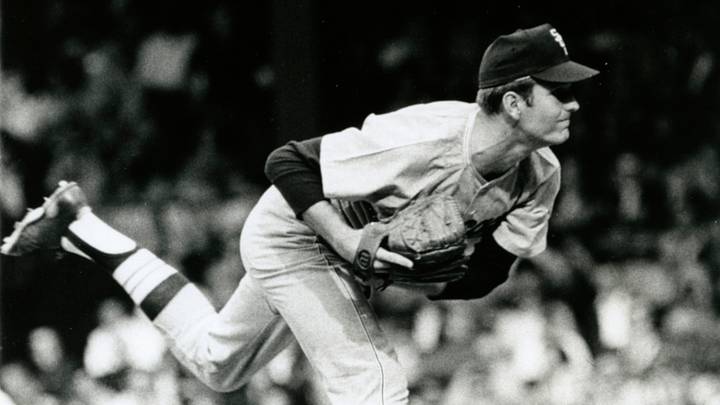
A native of Terre Haute, Ind., John starred in baseball and basketball at Gerstmeyer High School and was signed by Cleveland at 18 years old in 1961. He made his MLB debut on September 6, 1963, and flourished after being traded to the White Sox before the 1965 season. By 1968, he was an All-Star and went 10–5 with a 1.98 ERA.
John’s career included stints with the Dodgers, Yankees, Angels, Athletics and played his final four seasons back with New York before retiring in 1989.
On Sunday, the Yankees released a statement about John’s legacy.
The New York Yankees mourn the passing of Tommy John, who was a bedrock of our rotation during his time in pinstripes and a longtime favorite of Yankees fans. While his incredible longevity and post-surgery achievements changed the fortunes and trajectory of countless athletes around the world, it also overshadowed his excellence as a pitcher, which included consecutive 20‑win seasons with the Yankees. We pause to remember the totality of his legacy — his competitiveness and skill, his penchant for conversation, his kind and gracious nature, and his stature as an athletic and medical pioneer.
Following his success, “Tommy John surgery” became more popular. According to the American Medical Association, more than 1,000 professional pitchers had the surgery by 2024. By 2023, 35.3% of active major league pitchers had the procedure at some point.
While he’ll always be known for Jobe’s work on his elbow, John was an outstanding pitcher, and the work he did on the mound is often overlooked. His 288 wins are the second-most in the modern era by a pitcher who didn’t make the Hall of Fame, behind only Roger Clemens.
 Add us as a preferred source on Google
Ryan Phillips is a senior writer on the Breaking and Trending News team at Sports Illustrated. He has worked in digital media since 2009, spending eight years at The Big Lead before joining SI in 2024. Phillips also co-hosts The Assembly Call Podcast about Indiana Hoosiers basketball and previously worked at Bleacher Report. He is a proud San Diego native and a graduate of Indiana University’s journalism program.
Follow rumorsandrants