%20%20--%3E%0A%3Csvg%20version%3D%221.1%22%20id%3D%22Layer_1%22%20xmlns%3D%22http%3A%2F%2Fwww.w3.org%2F2000%2Fsvg%22%20xmlns%3Axlink%3D%22http%3A%2F%2Fwww.w3.org%2F1999%2Fxlink%22%20x%3D%220px%22%20y%3D%220px%22%0A%09%20width%3D%2239px%22%20height%3D%2240px%22%20viewBox%3D%220%200%2039%2040%22%20enable-background%3D%22new%200%200%2039%2040%22%20xml%3Aspace%3D%22preserve%22%3E%0A%3Cpath%20fill%3D%22%23FFFFFF%22%20d%3D%22M38.5%2C7H28.2v26h10.3V7z%22%2F%3E%0A%3Cpath%20fill-rule%3D%22evenodd%22%20clip-rule%3D%22evenodd%22%20fill%3D%22%23FFFFFF%22%20d%3D%22M26.1%2C25.5c0%2C5.8-4.1%2C7.5-12.9%2C7.5C3.9%2C33%2C0%2C31.2%2C0%2C25.2v-1.1h11.6%0A%09v2.4c0%2C0.7%2C0.1%2C1.4%2C1.2%2C1.4c1%2C0%2C1.2-0.4%2C1.2-1.3v-0.9c0-1.6-0.9-1.6-3.5-2.2C2.2%2C21.7%2C0%2C19.7%2C0%2C15.3v-0.9C0%2C9.3%2C5.5%2C7%2C12.9%2C7%0A%09c10.2%2C0%2C12.8%2C2.6%2C12.8%2C7.4v1.8h-11v-2.9c0-0.6-0.4-1.1-1.2-1.1c-0.6%2C0-1.2%2C0.4-1.2%2C1.1v0.9c0%2C1.5%2C0.9%2C2%2C3.3%2C2.5%0A%09c8%2C1.6%2C10.5%2C3.3%2C10.5%2C7.5V25.5z%22%2F%3E%0A%3C%2Fsvg%3E%0A)
What the Padres Sale Says About Other Small-Market Teams
In this story:
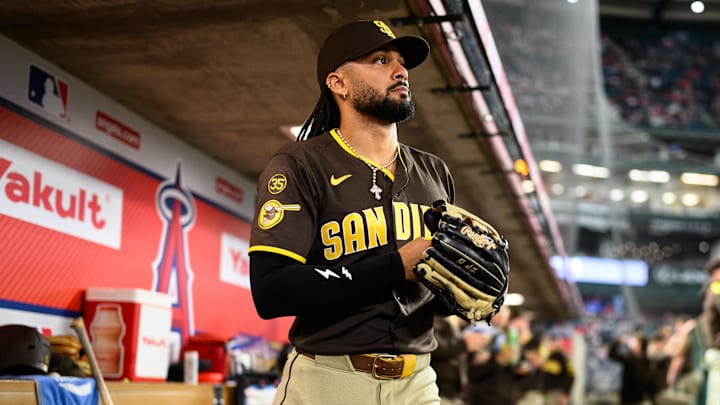
For the last five years, the Padres spent. They spent $340 million on Fernando Tatis Jr. and $350 million on Manny Machado, making them one of only three teams with two guys making that much. They spent more than a billion dollars, more than all but four other clubs. They spent so much that they had to take out a $50 million loan in 2023 to make payroll.
And the franchise just sold for a league-record $3.9 billion, 62.5% more than the Mets fetched in 2020.
So tell me again, why can’t the Pirates do this?
Major League Baseball and team executives, workshopping talking points for this winter’s inevitable lockout when the collective-bargaining agreement expires, will tell you the sport needs a salary cap because the current system is unsustainable. The big-market teams spend and spend, and the smaller markets simply can’t afford to keep up. Indeed, they’re losing money!
Well, it’s certainly working out O.K. for the Seidler family. The late Peter Seidler, grandson of former Dodgers owner Walter O’Malley, bought the team along with Ron Fowler in 2012 for $800 million. That’s a franchise value increase of 387.5% in 14 years, not because Seidler cut costs and looked lean to investors but because he spent money to transform the Padres into one of the sport’s marquee organizations.
After Seidler’s death in 2023, his widow, Sheel Seidler, and his brothers staged an ugly legal battle for control of the team; Sheel reportedly dropped a lawsuit against them in February. They will now turn the organization over to private-equity billionaire—and co-owner of Chelsea Football Club—José E. Feliciano and his wife, Kwanza Jones. While other MLB owners cry poor, it seems that someone in the business of identifying undervalued assets and increasing their profits saw an opportunity.
The Padres’ story could be a model for the rest of the league, if only those other teams wanted it to be. They could see how an ownership group that spent money on stars, prioritized the ballpark experience and turned out a perennial contender in the league’s No. 24 media market could be rewarded financially. Instead they will certainly see how a beach town with no other major men’s sports franchises offers no blueprint for anyone else.
But they will be wrong. Atlanta, the league’s only publicly traded team, saw its stock jump nearly 5% the day of the San Diego announcement. The other 29 ownership groups benefit nearly as much from the Padres sale as the Seidlers do.
You won’t see them act like it, though, which is a shame. The Pirates could be an excellent candidate for a similar process: two elite young players in 23-year-old reigning National League Cy Young Award winner Paul Skenes and newly extended 19-year-old top shortstop prospect Konnor Griffin; probably the best view from a ballpark in the sport; and a fan base that in 2013, in their first playoff appearance in 21 years, roared so loudly the opposing pitcher got spooked and dropped the baseball.

Knowing all that, this offseason they handed out their first multiyear free agent deal since November 2016: two years and $29 million to right fielder Ryan O’Hearn. That brought their Opening Day payroll to $121 million, No. 22 in the sport. It marked a better beginning to the season than last year’s, during which a plane trailing a SELL THE TEAM BOB banner flew over PNC Park. “I really respect and appreciate the passion of our fans,” owner Bob Nutting said that day. “I understand their anger and I understand their concern and I understand that they want the team to win. I do too. That’s the most important thing we’re focused on.” They might have a better chance if he could find it in his heart and his wallet to, say, sign Tarik Skubal this winter.
Let’s not just pick on Nutting, who at least managed to pay lip service to his fan base. In 2022, a few months before the Padres traded for star right fielder Juan Soto, Reds president Phil Castellini scoffed at fans who suggested he sell the team. “Well, where you gonna go?” he said, later adding, “If you wanna look at what would you have this team do to have it be more profitable, make more money, compete more in the current economic system that this game exists, it would be to pick it up and move it somewhere else. And, so, be careful what you ask for.” The Reds, by the way, employ 24-year-old shortstop Elly De La Cruz, who received NL MVP votes in each of the last two years, and 26-year-old ace Hunter Greene, who was an NL Cy Young favorite last season until he strained his groin. Their ballpark, too, is a delight to which fans flock when the team is good, which it could be if Cincinnati had won the bidding for hometown hero Kyle Schwarber this winter.
And then of course there’s John Fisher, who actually did pick up his team and move it somewhere else, from No. 10 media market Oakland to No. 20 Sacramento, in anticipation of dragging the A’s to No. 40 Las Vegas if they can ever get a ballpark built. The Coliseum was not exactly a gem, what with the sewage and the vermin and the mold. But that too was by design, as Fisher tried to bolster his case to leave town. Fans only gave up on the team once the team gave up on them; as recently as 2014, the A’s drew two million. Meanwhile, 22-year-old first baseman Nick Kurtz won the American League Rookie of the Year award last season, and 19-year-old top shortstop prospect Leo De Vries could debut in the next few months. They could make a run with, say, Corbin Burnes if he opts out this winter.
Instead they will almost certainly continue to insist that they can’t make money in this business, while fans beg them to spend or to sell the team. The Padres have shown that if they did the former, they’d make more money doing the latter.
More MLB from Sports Illustrated
 Add us as a preferred source on Google
Stephanie Apstein was a senior writer covering baseball and Olympic sports for Sports Illustrated, where she started as an intern in 2011 and has since covered a dozen World Series and three Olympics. She has twice won top honors from the Associated Press Sports Editors, and her work has been included in the Best American Sports Writing book series. She graduated from Trinity College with a bachelor’s in French and Italian, and has a master’s in journalism from Columbia University.
Follow stephapstein