%22%3E%0A%3Cpath%20d%3D%22M0%206.0625H8.64197L13.955%2014.7703L19.2681%206.0625H27.9101V30.8506H19.6537V18.56L13.955%2027.3806H13.814L8.11537%2018.56V30.8506H0V6.0625Z%22%20fill%3D%22white%22%2F%3E%0A%3Cpath%20d%3D%22M30.6094%205H38.9316V10.1344H30.6094V5ZM30.7504%2011.5167H38.7906V30.8507H30.7504V11.5167Z%22%20fill%3D%22white%22%2F%3E%0A%3Cpath%20d%3D%22M40.6611%2025.3588V25.2836C40.6611%2021.4281%2043.5292%2019.2653%2048.0242%2019.2653C49.651%2019.2653%2051.7387%2019.6226%2052.5944%2019.9705V19.6508C52.5944%2017.8829%2051.4942%2016.8579%2049.021%2016.8579C47.0368%2016.8579%2045.3724%2017.2811%2043.6703%2017.9581L42.2504%2012.6075C44.479%2011.7611%2047.0274%2011.1875%2050.3939%2011.1875C54.3247%2011.1875%2056.8731%2012.0056%2058.5751%2013.6983C60.0233%2015.1464%2060.5969%2017.0272%2060.5969%2019.8201V30.8318H52.5568V28.8852C51.212%2030.3334%2049.4065%2031.2925%2046.9992%2031.2925C43.2848%2031.2925%2040.6611%2029.1673%2040.6611%2025.34V25.3588ZM52.6696%2023.6944V22.8763C52.2088%2022.6976%2051.5036%2022.5565%2050.8265%2022.5565C49.2279%2022.5565%2048.3439%2023.5157%2048.3439%2024.7194V24.7946C48.3439%2025.9325%2049.162%2026.6753%2050.187%2026.6753C51.607%2026.6753%2052.6696%2025.5375%2052.6696%2023.7038V23.6944Z%22%20fill%3D%22white%22%2F%3E%0A%3Cpath%20d%3D%22M63.0137%2011.5167H71.0538V14.1027C72.2951%2012.5041%2074.2417%2011.0559%2076.8935%2011.0559C79.5453%2011.0559%2081.5295%2012.1938%2082.5921%2014.2438C84.2189%2012.4006%2086.1655%2011.0559%2089.1465%2011.0559C93.2935%2011.0559%2095.8419%2013.7454%2095.8419%2018.0993V30.8506H87.8017V20.61C87.8017%2018.9832%2086.8426%2018.0616%2085.6765%2018.0616C84.5105%2018.0616%2083.4478%2018.9832%2083.4478%2020.61V30.8506H75.4077V20.61C75.4077%2018.9832%2074.4485%2018.0616%2073.2825%2018.0616C72.1164%2018.0616%2071.0538%2018.9832%2071.0538%2020.61V30.8506H63.0137V11.5167Z%22%20fill%3D%22white%22%2F%3E%0A%3Cpath%20d%3D%22M98.1836%205H106.506V10.1344H98.1836V5ZM98.3247%2011.5167H106.365V30.8507H98.3247V11.5167Z%22%20fill%3D%22white%22%2F%3E%0A%3Cpath%20d%3D%22M118.336%206.0625H126.621V14.8079H134.2V6.0625H142.485V30.8506H134.2V21.9641H126.621V30.8506H118.336V6.0625Z%22%20fill%3D%22white%22%2F%3E%0A%3Cpath%20d%3D%22M144.657%2021.2872V21.212C144.657%2015.4381%20148.804%2011.0466%20154.606%2011.0466C161.48%2011.0466%20164.668%2015.8237%20164.668%2021.7104C164.668%2022.1336%20164.668%2022.6319%20164.63%2023.0551H152.199C152.763%2024.7572%20154.108%2025.6411%20155.847%2025.6411C157.295%2025.6411%20158.499%2024.9641%20159.778%2023.6569L164.094%2027.0893C162.185%2029.5719%20159.458%2031.3021%20155.274%2031.3021C148.936%2031.3021%20144.647%2027.2962%20144.647%2021.2778L144.657%2021.2872ZM157.333%2019.5193C157.154%2017.6762%20156.054%2016.6136%20154.644%2016.6136C153.233%2016.6136%20152.34%2017.7514%20152.095%2019.5193H157.333Z%22%20fill%3D%22white%22%2F%3E%0A%3Cpath%20d%3D%22M165.834%2025.3588V25.2836C165.834%2021.4281%20168.702%2019.2653%20173.197%2019.2653C174.824%2019.2653%20176.912%2019.6226%20177.767%2019.9705V19.6508C177.767%2017.8829%20176.667%2016.8579%20174.194%2016.8579C172.21%2016.8579%20170.545%2017.2811%20168.843%2017.9581L167.423%2012.6075C169.652%2011.7611%20172.2%2011.1875%20175.567%2011.1875C179.498%2011.1875%20182.046%2012.0056%20183.748%2013.6983C185.196%2015.1464%20185.77%2017.0272%20185.77%2019.8201V30.8318H177.73V28.8852C176.385%2030.3334%20174.579%2031.2925%20172.172%2031.2925C168.458%2031.2925%20165.834%2029.1673%20165.834%2025.34V25.3588ZM177.842%2023.6944V22.8763C177.382%2022.6976%20176.676%2022.5565%20175.999%2022.5565C174.401%2022.5565%20173.517%2023.5157%20173.517%2024.7194V24.7946C173.517%2025.9325%20174.335%2026.6753%20175.36%2026.6753C176.78%2026.6753%20177.842%2025.5375%20177.842%2023.7038V23.6944Z%22%20fill%3D%22white%22%2F%3E%0A%3Cpath%20d%3D%22M189.493%2024.3714V17.7136H187.227V11.5166H189.493V6.66431H197.533V11.5166H202V17.7136H197.533V22.6035C197.533%2024.0517%20198.21%2024.5877%20199.48%2024.5877C200.222%2024.5877%20201.069%2024.3714%20201.924%2023.9859V30.1829C200.646%2030.8599%20198.737%2031.2831%20196.79%2031.2831C192.041%2031.2831%20189.493%2029.0826%20189.493%2024.3714Z%22%20fill%3D%22white%22%2F%3E%0A%3Cpath%20fill-rule%3D%22evenodd%22%20clip-rule%3D%22evenodd%22%20d%3D%22M211.368%204.36764C217.191%20-1.45588%20226.632%20-1.45588%20232.456%204.36764C238.279%2010.1912%20238.279%2019.6324%20232.456%2025.4559L221.912%2036L211.368%2025.4559C205.544%2019.6324%20205.544%2010.1912%20211.368%204.36764ZM214.009%207.55761C213.948%207.86849%20213.916%208.39718%20213.916%209.14566V10.4189C213.916%2011.1832%20213.948%2011.7198%20214.013%2012.0267C214.078%2012.3317%20214.278%2012.6168%20214.617%2012.8762C214.956%2013.1376%20215.403%2013.3316%20215.958%2013.4623C216.512%2013.593%20217.1%2013.6583%20217.837%2013.6583C218.573%2013.6583%20219.217%2013.591%20219.769%2013.4524C220.322%2013.3158%20220.761%2013.1178%20221.086%2012.8604C221.411%2012.6029%20221.605%2012.3178%20221.666%2012.0069C221.728%2011.6961%20221.759%2011.1674%20221.759%2010.4189V9.14566C221.759%208.38134%20221.728%207.84473%20221.662%207.53781C221.597%207.23287%20221.397%206.94972%20221.058%206.68834C220.72%206.42696%20220.272%206.23291%20219.718%206.10223C219.163%205.97154%20218.536%205.90619%20217.839%205.90619C217.102%205.90619%20216.459%205.97352%20215.906%206.11213C215.352%206.24875%20214.914%206.44677%20214.589%206.70418C214.265%206.9616%20214.071%207.24673%20214.009%207.55761ZM219.276%2024.8638C222.876%2024.8638%20224.557%2024.2064%20224.557%2021.862V21.858V21.3155C224.557%2019.6581%20223.516%2018.971%20220.252%2018.3136C219.278%2018.1136%20218.908%2017.9136%20218.908%2017.3136V16.9414C218.908%2016.6543%20219.177%2016.5117%20219.413%2016.5117C219.749%2016.5117%20219.918%2016.7137%20219.918%2016.9414V18.1136H224.391V17.3988C224.391%2015.4563%20223.347%2014.4266%20219.177%2014.4266C216.15%2014.4266%20213.896%2015.3414%20213.896%2017.3711V17.7433C213.896%2019.5155%20214.805%2020.3155%20218.201%2021.0303C218.28%2021.0472%20218.355%2021.063%20218.427%2021.0781C219.329%2021.2674%20219.647%2021.3341%20219.647%2021.9174V22.2897C219.647%2022.6619%20219.546%2022.8045%20219.142%2022.8045C218.67%2022.8045%20218.637%2022.5471%20218.637%2022.262V21.2897H213.894V21.7471C213.894%2024.149%20215.476%2024.8638%20219.276%2024.8638ZM225.424%2024.5569H229.925V14.7355H225.424V24.5569ZM226.955%2013.5019H229.925V6.06064H227.092V9.411L225.193%206.06064H222.359V13.5019H225.193V10.1199L226.955%2013.5019ZM218.269%2012.152C218.204%2012.2688%20218.055%2012.3262%20217.825%2012.3262L217.827%2012.3282C217.604%2012.3282%20217.459%2012.2767%20217.398%2012.1757C217.336%2012.0748%20217.305%2011.8074%20217.305%2011.3758V7.90068C217.305%207.51852%20217.352%207.28684%20217.445%207.20962C217.538%207.13239%20217.675%207.09279%20217.851%207.09279C218.059%207.09279%20218.198%207.14031%20218.265%207.23734C218.332%207.33239%20218.366%207.55416%20218.366%207.90068V11.3203C218.366%2011.7579%20218.334%2012.0352%20218.269%2012.152Z%22%20fill%3D%22white%22%2F%3E%0A%3C%2Fg%3E%0A%3Cdefs%3E%0A%3CclipPath%20id%3D%22clip0_15229_1538%22%3E%0A%3Crect%20width%3D%22237%22%20height%3D%2236%22%20fill%3D%22white%22%2F%3E%0A%3C%2FclipPath%3E%0A%3C%2Fdefs%3E%0A%3C%2Fsvg%3E%0A)
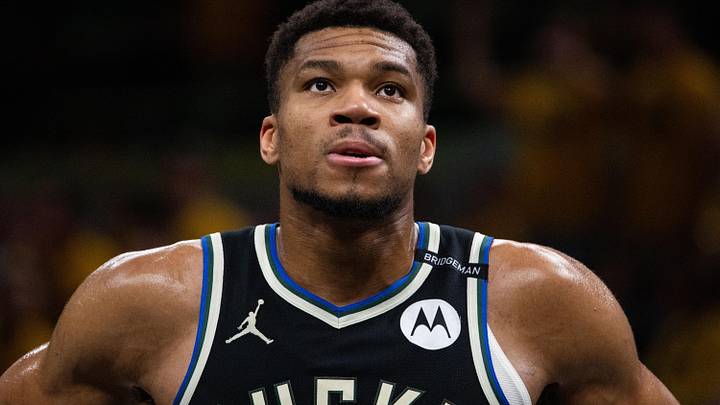
Why the Miami Heat should be trusted when trading for stars... like Giannis
In this story:
There's a reason the Miami Heat always revert to a single strategy, regardless of the decade or the NBA's collective bargaining agreement conditions at the time:
It's what they do best.....
What they are trying to do now: acquire Giannis Antetokounmpo in a megadeal from the Milwaukee Bucks, and then figure out the rest.
Some Heat fans worry that the organization will give up too much, too many core young players, and come to regret it. Maybe Kel'el Ware in addition to Tyler Herro. Maybe Jaime Jaquez Jr.
Maybe Kasparas Jakucionis or Pelle Larsson.
They shouldn't stress too much.

Yes, these are good pieces, and the Heat -- while also sending future first round selections -- will try to keep as many as possible, as many as their leverage will allow.
But no significant sleep should be lost about anyone sent out.
The Heat have never lost a major, major trade like this would be.
Smaller ones, for the likes of Terry Rozier, sure. That was a disaster. Even Kyle Lowry, before Rozier, didn't produce as hoped after he arrived from Toronto. You can find other examples. Deals that didn't deliver, anything but regret.
But when it comes to the premium targets that the Heat have been able to acquire, those who have recently been All-NBA or at least All-Star selections, they have always reaped the majority of the reward. No matter how much was sent the other direction, it was later deemed worth it. The problem recently has been landing the 1A, whether it was Damian Lillard or Kevin Durant; the history suggests that when the Heat finally do, it will pay off.
That's why they are at this again. That's also why other teams may be somewhat fearful to execute anything with them. You tend not to get equal value.

Since Pat Riley arrived and was introduced by Micky Arison on the Carnival Imagination in 1995, the Heat have chased those kind of stars. Stars of all sorts. Sometimes the stars' shine has been dimmed a bit, such as when the hobbled Tim Hardaway had been relegated to third string in Golden State and the Heat believed he could benefit from a refresh.
Sometimes they hadn't had the opportunity to fully blaze, as was the case with Jimmy Butler in Minnesota, from where the Heat tried to take him before waiting until the next season and finally fleecing Philadelphia for him.
But from Alonzo Mourning in 1995 to Shaquille O'Neal in 2004 -- both of whom were snatched due to contract disputes -- and beyond, the commonality of all the Heat's major deals for some other organization's disgruntled centerpiece is that the guy they eventually got would excel for Miami.

So this is what they need to do again.
While the Heat have made use of the draft effectively at times -- and spectacularly in the case of Dwyane Wade in 2003 -- and have brought in some free agents, the Riley era has largely been fueled by the right trade for the right guy at the right time. It is easier to evaluate someone else's superstar than to build your own from scratch. You know what they have done, and you can project what will likely do for you, so long as you surround them with the right supporting cast and coaching support system.
Trades are the major reason the Heat have been so successful on the whole for three decades, with as many NBA Finals appearances (seven) as postseason misses (also... seven, including 2025-26).
This reliance on successful, splash trades is true even if you exclude the acquisitions of LeBron James and Chris Bosh in 2010 from the trade category. They were technically sign-and-trades with a total of four first-round picks sent to Cleveland and Toronto to allow James and Bosh to receive six-year contracts with a fourth-year opt-out, an odd quirk of the Collective Bargaining Agreement at the time.

Even if the technicality eliminates that Big Three coup -- and the four NBA Finals and two championships it produced -- from this conversation, and you can still have plenty of evidence that the trade game has worked.
- Let's start with Mourning, as Riley did. The Heat gave up their best player at the time, Glen Rice, a lethal shooter who had been the 4th overall pick, as well as Khalid Reeves, Matt Geiger and a first-round pick (16th overall) that became Tony Delk. While Rice became an All-Star in Charlotte and contributed to a championship for the Lakers after, Mourning became the foundation of the Heat franchise, and everything that came after -- and eventually got his own title as a reserve in 2006. Regret level: ZERO.
- Next was Hardaway, who was the major get in a complex multi-team deal in which the most accomplished player going out was the aging Kevin Willis, who had unfortunately been brought in for Steve Smith by the prior regime. The Heat didn't miss anyone else who went out, not the underachieving Billy Owens for sure, as Hardaway re-invented himself as a halfcourt point guard and the perfect outside complement to Mourning. No, the Heat didn't make the NBA Finals, because they kept running into the rival Knicks, but you'd do this again every time. Regret level: ZERO.

- In 2000, the Heat finally tried to reshuffle their core. After striking out on Tracy McGrady and Grant Hill in free agency, they got Eddie Jones, Brian Grant and Anthony Mason in a combination of trades that cost them starters Jamal Mashburn and PJ Brown, with Jones being the star-level player at the time. It didn't work out, ultimately, but it's almost unfair to evaluate it, because Mourning was diagnosed with kidney disease prior to their first season all together, and missed 69 games, before returning in time for a Charlotte sweep of the Heat. Regret level: Modest, but really only Mashburn got his revenge in the first round against the Heat.
- Then, after Wade and Caron Butler was drafted and Lamar Odom was signed, and they had a surprisingly strong 2003-04 season, Riley caught wind that the Lakers might move O'Neal, due to conditioning and contract conflicts. Yes, Butler was a nice player who would go on to an All-Star game down the road in Washington (and is now back as a Heat assistant). And Odom became a key contributor to Kobe Bryant's runs at the lead piece for the Lakers. But, come on. Shaq could have been the MVP in his first Heat season, and won a championship (even with Wade leading) in his second. So, the regret level: ZERO.

- * After LeBron James left, the Heat tried to reboot on the fly behind Bosh and Wade, and brought in Goran Dragic after the third-team All-NBA guard had soured on his situation in Phoenix. The Heat gave up two-first round picks, guard Norris Cole (who hadn't flourished as a starter after playing a key role as a championship reserve) and not much else. Dragic's tenure was undermined somewhat by Bosh retiring due to blood clots, but he did become one of the Heat's most popular players, and played a huge role in the Bubble run to the Finals in 2020. Yes, they lost two first round picks, which got moved several times after, but you'd still do this again. Regret level: MINIMAL.

- That brings us to Butler, long coveted by Miami for his ability and intensity, which they believed they could best harness. So much so that Riley and the rest of the front office tried to get him from at least two different teams. They finally did in 2019, as Butler haggled with the 76ers about contract length. Even after miscommunication with Dallas while trying to consummate a complicated multi-team deal, the Heat were able to quickly pivot and snare their next leading man for next to nothing. Just former second-round pick Josh Richardson (a good player, not a great one, who ended up returning later before fading out), a first-round pick and.... Hassan Whiteside's bloated contract, which the Heat were ecstatic to give away. As it turns out, one of the great heists in recent history, and that remains true even if Butler imploded near the end, and forced his own trade out when the Heat refused to extend his deal. More on that another time -- we're still reviewing it, as some of the pieces remain on Miami. But when you reach two NBA Finals, and have the fun you did during most of Butler's turbulent time, the trade to get him was unquestionably well worth it. Regret level: ZERO.

So will the Heat regret anything related to Giannis Antetokounmpo?
Only if he gets away.
 Add us as a preferred source on Google
_(1)-c71eedf9389e7f7ca96a93b150d0957a.jpeg "Ethan J. Skolnick")
Ethan has covered all major sports -- in South Florida and beyond -- since 1996 and is one of the longest-tenured fully credentialed members of the Miami Heat. He has covered, in total, more than 30 NBA Finals, Super Bowls, World Series and Stanley Cup Finals. After working full-time for the Miami Herald, South Florida Sun-Sentinel, Palm Beach Post, Bleacher Report and several other outlets, he founded the Five Reasons Sports Network in 2019 and began hosting the Five on the Floor podcast as part of that network. The podcast is regularly among the most downloaded one-team focused NBA podcasts in the nation, and the network is the largest independent sports outlet in South Florida, by views, listens and social media reach. He has a B.A. from The Johns Hopkins University and an M.S. from Columbia University. TWITTER: @EthanJSkolnick and @5ReasonsSports EMAIL: fllscribe@gmail.com
Follow EthanJSkolnick