
The Charlotte Hornets' Pursuit of the Future Is Coming at the Expense of the Present
In this story:
We are just about 14 games into the 2026-27 NBA season.
There is almost 70 games to go. Major storylines, breakouts, letdowns, and devastating injuries have yet to happen. In fact, November often feels like a distant memory by the time January 1st rolls around.
"Every team you lead is the most together team right now," Celtics Head Coach Joe Mazzulla said during the team's training camp in early October. "No one's gotten benched. No one's been on a losing streak. No one's gotten blamed in the media. No one's had to go stand in the corner for 10 minutes and not get the ball."
"So, you learn those things as the season goes on, and you just learn how to work through those things together. And you can't simulate those. It just comes with time. And so, right now I would say all 30 teams feel great about themselves, and we got to wait till adversity hits."
"And adversity is even a strong word. There's nothing really adverse about playing in the NBA. But we got to wait until stuff doesn't go your way, and then you got to figure out who we are and how we're going to be at our best."
The Charlotte Hornets have not gotten the early results that they have hoped for, and the decision to trade LaMelo Ball has naturally faced scrutiny. 14 games into a season, it's far too early to determine whether or not Jeff Peterson made the right call. The more important question is whether the reasoning behind the move holds up, and whether the Hornets have shown enough to suggest it can work.
On Tuesday, the Hornets fell in overtime 118-114 to the Western Conference-leading Los Angeles Lakers. The loss came with some disappointment from the fanbase, as starters Coby White and Brandon Miller sat on Charlotte's bench for the entire overtime period.
In overtime Charlotte was outscored 7-3, and the Lakers took their largest lead of the ball game with 8.8 seconds to go in overtime after trailing by as many as 18 points.
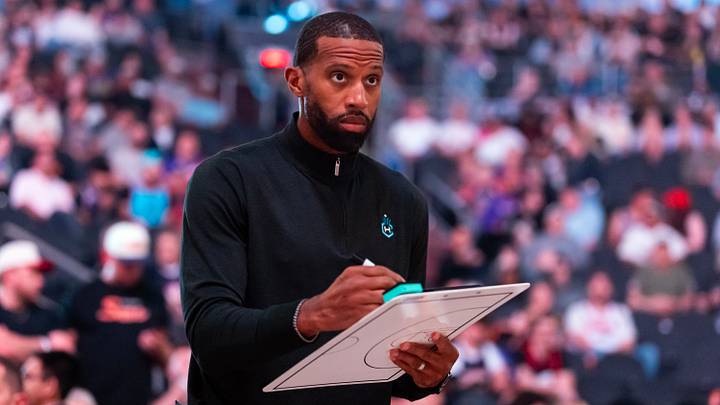
Charles Lee's decision to keep two of the most important players on the team out during the overtime period raised questions about how Charlotte executes in late-game moments. That being said, the issue extends beyond just one overtime period.
The Hornets have committed themselves to a younger core, one that is still trying to learn how to navigate through the peaks and valleys of an 82-game season. This comes with growing pains, and it also raises questions about how much experience that Charlotte has sacrificed to pursue their long-term vision.
In their 37 seasons of play since their debut in 1988, Charlotte has made the playoffs just ten times. They have appeared in a playoff series only three times since 2002, and are currently in the midst of a ten-year postseason drought.
For a franchise that has made the playoffs just 10 times in its history, there is something to be said about the importance of maintaining a competitive roster. The Hornets are not the Boston Celtics or Los Angeles Lakers, organizations who seemingly make the playoffs every single season and have established a winning culture. Charlotte has spent much of their existence searching for sustained relevance.
President of Basketball Operations Jeff Peterson deserves credit for the flexibility that has been created. He's accumulated a war chest of future draft capital, which gives the Hornets the opportunity to acquire young talent, pursue trades, and build a roster that is competent for years to come. Building around 2023 2nd-overall selection Brandon Miller and 2025 4th-overall selection Kon Knueppel is an understandable direction for the franchise.
Draft capital is only valuable if it translates into meaningful production, though.
There is absolutely no guarantee that the future draft selections will develop into quality NBA players, or even become players capable of helping the Hornets win in the postseason. It does not help to mention the fact that of the 10 first-round picks Charlotte has used since the beginning of the decade, only four of them remain on the roster.
Last season, Charlotte put together a 44-win campaign behind the best starting lineup by net rating in the sport, eventually winning a Play-In game against the Miami Heat at home. Rather than capitalize on the progress, Jeff Peterson elected to take another step toward the future.
There is absolutely a reasonable arguement for doing so. In a league with top-heavy teams such as the San Antonio Spurs, Oklahoma City Thunder, New York Knicks, and Boston Celtics, maintaining the same roster for the sake of making the playoffs may not have been the best decision. With the league's new lottery rules, sitting around the bottom of the Play-In Tournament may be more valuable than losing in the first round.
There is also a difference between refusing to settle in mediocrity and refusing to prioritize winning altogether.
The Hornets need to establish an enviornment where winning basketball is the expectation rather than an eventual goal. Miller and Knueppel can develop their games, but Charlotte needs to learn how to compete alongside players who have already experienced meaningful basketball.
The Boston Celtics offer an interesting example of what that balance can look like. After selecting Jaylen Brown and Jayson Tatum with consecutive top-three picks in 2016 and 2017, respectively, Boston surrounded its young stars with established talent and consistently competed in the postseason. By the time the Celtics won the 2024 NBA Championship, both players had accumulated years of meaningful playoff experience.
Charlotte doesn't need to replicate Boston's timeline or immediately assemble a championship-caliber roster. But there is something to be said about allowing young players to develop in an environment where winning is already an expectation.
Young talent is important. Draft capital is important. Financial flexibility is important. None of those things guarantee a winning basketball team.
Charlotte cannot afford to spend another five seasons accumulating assets and pushing the responsibility of winning "eventually" further away. Eventually, the assets they have brought in from dealing away LaMelo Ball, Miles Bridges, PJ Washington, and several others need to turn into players who can help the organization accomplish something it rarely does.
Mazzulla's comments about adversity are particularly relevant here. The NBA season eventually tests every team, and the ability to navigate those moments often separates the good teams from the great ones.
The Hornets are going to experience plenty of those moments this season, and already have so far. There is still plenty of time for Charlotte to turn things around. It would be premature to draw any definitive conclusions about Jeff's decisions based on FOURTEEN games.
But for a franchise that has spent far too long waiting for its future to arrive, perhaps it's time to place a little more value on the present.
 Add us as a preferred source on Google

A Boston native and product of Elon University, Owen brings a fresh perspective to the Charlotte sports scene. He joined Charlotte Hornets On SI in 2024, providing in-depth coverage of all areas of the organization, from the draft, free agency, trades, and on scene at games.