%20%20--%3E%0A%3Csvg%20version%3D%221.1%22%20id%3D%22Layer_1%22%20xmlns%3D%22http%3A%2F%2Fwww.w3.org%2F2000%2Fsvg%22%20xmlns%3Axlink%3D%22http%3A%2F%2Fwww.w3.org%2F1999%2Fxlink%22%20x%3D%220px%22%20y%3D%220px%22%0A%09%20width%3D%2239px%22%20height%3D%2240px%22%20viewBox%3D%220%200%2039%2040%22%20enable-background%3D%22new%200%200%2039%2040%22%20xml%3Aspace%3D%22preserve%22%3E%0A%3Cpath%20fill%3D%22%23FFFFFF%22%20d%3D%22M38.5%2C7H28.2v26h10.3V7z%22%2F%3E%0A%3Cpath%20fill-rule%3D%22evenodd%22%20clip-rule%3D%22evenodd%22%20fill%3D%22%23FFFFFF%22%20d%3D%22M26.1%2C25.5c0%2C5.8-4.1%2C7.5-12.9%2C7.5C3.9%2C33%2C0%2C31.2%2C0%2C25.2v-1.1h11.6%0A%09v2.4c0%2C0.7%2C0.1%2C1.4%2C1.2%2C1.4c1%2C0%2C1.2-0.4%2C1.2-1.3v-0.9c0-1.6-0.9-1.6-3.5-2.2C2.2%2C21.7%2C0%2C19.7%2C0%2C15.3v-0.9C0%2C9.3%2C5.5%2C7%2C12.9%2C7%0A%09c10.2%2C0%2C12.8%2C2.6%2C12.8%2C7.4v1.8h-11v-2.9c0-0.6-0.4-1.1-1.2-1.1c-0.6%2C0-1.2%2C0.4-1.2%2C1.1v0.9c0%2C1.5%2C0.9%2C2%2C3.3%2C2.5%0A%09c8%2C1.6%2C10.5%2C3.3%2C10.5%2C7.5V25.5z%22%2F%3E%0A%3C%2Fsvg%3E%0A)
LaMelo Ball Trade Grades: How Timberwolves, Hornets Made Out in Stunning Blockbuster
In this story:
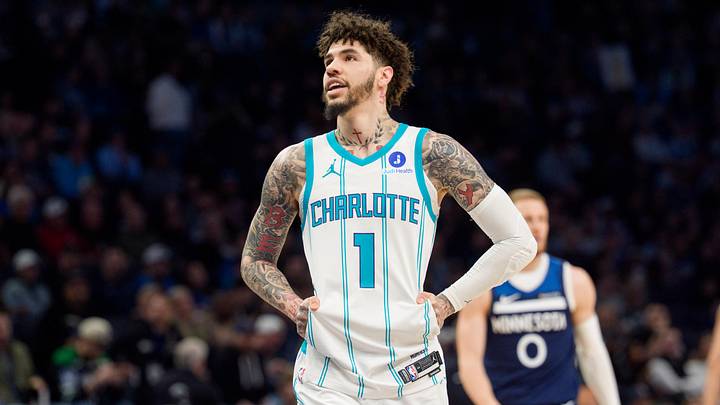
A surprise development on Wednesday night became a shocking trade on Thursday morning, as the Timberwolves traded for star Hornets point guard LaMelo Ball, ESPN’s Shams Charania reports. Minnesota is sending an absolute horde of picks (three first-round pick swaps in 2028, ’29 and ’30, an unprotected first-rounder in ’33 and three seconds) along with fan favorite Naz Reid to Charlotte in exchange for the 24-year-old coming off his best all-around season in the NBA.
It is a truly stunning turn of events. The Hornets were one of the best stories in the league last year with an electric offense led by Ball getting Charlotte as close to the playoffs as the franchise has been in a decade. He figured to be at the center of the organization’s new core along with Brandon Miller and Kon Kneuppel, a trio talented enough to ensure playoff contention for the foreseeable future. Apparently the Hornets’ front office, led by Jeff Peterson, disagreed.
It’s been an eventful offseason already but this move came way out of left field and fundamentally changes the championship landscape in both conferences. Let’s break it down by grading how each team made out in the earth-shaking transaction.
Hornets: C-

We’ll start with Charlotte. This is a baffling move.
Ball is definitely not a perfect player, to be clear. His six-year NBA career to this point has been fraught with injuries, off-court incidents and lackadaisical play on both ends. Last year was the first season he played more than 47 games since 2021–22. His defense is genuinely maddening at times and he’s already at a disadvantage on that end due to a slim frame lacking strength. Ball’s love of extremely deep three-pointers is great when he’s making them but they too often bail out the defense. There are plenty of things to pick apart.
But even with all those flaws he was the cornerstone talent of this Hornets team. Kneuppel’s shooting is top-tier and Miller has the pieces to be a quality wing talent. Neither can match the overall impact of Ball running the offense. He was the conductor of Charles Lee’s scheme. Most of their plays start with Ball running a pick-and-roll and seeing how the defense reacts before deciding to shoot, drive or dish it out to one of his talented teammates.
Charlotte’s offensive rating dropped like a rock from 125.22 to 113.30 per 100 possessions when Ball left the court, reflecting the roster’s lack of a backup point guard as well as Ball’s importance to making the whole system work. He opened up the floor for his teammates and was the guy to pass them the ball when the defense showed cracks. The team did pick up a possible replacement in Christian Anderson in the first round of the draft. But relying heavily on rookie point guards is almost always a fool’s errand. Particularly for an organization that just got a taste of contention for the first time since Kemba Walker was in his prime.
The return was certainly notable. The Hornets took the Timberwolves for all the picks they had remaining and one of the best stretch big men in the NBA in Reid. But it’s hard not to feel like they are overvaluing draft picks from a team with one high-level superstar in Anthony Edwards and now an All-Star in Ball. It’s even harder not to feel like they pulled the plug really early on Ball and the rest of this young core—Charlotte really only clicked in the second half of the campaign. Who knows what a full season would have looked like?
We’ll never know. The Hornets are making a very risky bet that their system is what got them within one win of the playoffs rather than the main star around which it revolved. The roster still has plenty of talent but Ball has shown flashes of being the No. 1 guy every team is hunting for, and Charlotte just threw itself back into that search for no reason other than asset accumulation. Even if you aren’t a believer in Ball it’s difficult to justify giving up on that potential when he’s 24 years old and coming off his most successful professional season. Even if one of those Wolves picks has the potential to land high in the lottery due to the new rules being instituted next season.
Timberwolves: B+

As much a risk as this is for Hornets, it’s no sure thing for the Timberwolves, either.
Minnesota was already bereft of draft capital but the cupboard is now completely empty. There are essentially no more picks to use to improve the roster. That leaves the franchise on the edge and very vulnerable to any extended injury absence from either of the two stars now on the roster. Trading away Reid at 26 years old hurts, too. He’s a homegrown talent with an extremely valuable skillset as a truly elite shooter at 6’9”, particularly for a team that will have Rudy Gobert in the starting lineup. What’s more, it’s a chemistry risk after trading away Julius Randle, too, and in light of the strong personalities Ball and Edwards bring to the table.
But it’s not hard to see why Minnesota made this move. Every playoff loss over the last two years has seen Edwards get swarmed by double-teams at every turn and no Timberwolves player was able to capitalize as a perimeter threat. That won’t be true anymore with Ball. If defenses want to throw two guys at Edwards, that will leave a point guard who averaged 7.1 assists last year and shot 36.8% from deep on 10.3 attempts per game wide-open with a 4-on-3 advantage. As long as coach Chris Finch ensures everyone is in the right spot, doubling Edwards will no longer be a consistent option for opponents, which is a huge positive.
Ultimately, that’s what it’s all about—maximizing Edwards’s talents by finding complementary star talents. Ball will take a pretty significant chunk of the offensive playmaking off his shoulders. Edwards averaged 28.8 points per game last year without a real point guard playing alongside him and can now focus even more on just scoring the ball. Between that and the double team aspect there’s a real chance this move allows Edwards to make an even bigger leap and threaten for the title of best scorer in the NBA.
There are questions to be answered. Ball will need to shape up defensively if he’s to compete in the Western Conference. The Wolves do not have a starting-caliber power forward anymore. Spacing around Gobert might get dicy, which has long been the Achilles heel for teams that employ the elite defensive big man. And sending out every pick they have leaves Minnesota dangling over the cliff without a safety net. If Ball’s injury issues pop up again there’s a non-zero chance Edwards can’t power this roster to playoff contention after the team sacrificed two rotation players to get the star point guard.
Still, it’s a tantalizing fit. Edwards and Ball are part of the same draft class and so have, potentially, many years of contention together ahead of them. Their offensive skillsets will prove dangerous when combined on the court in Minnesota. It’s a big bet but the potential payoff is championship contention behind an elite offensive backcourt. That kind of star power is needed to make it out of a loaded Western Conference.
The upside is worth the risk.
More NBA from Sports Illustrated
Listen to SI’s NBA podcast, Open Floor, below or on Apple and Spotify. Watch the show on SI’s YouTube channel.
 Add us as a preferred source on Google
Liam McKeone is a senior news writer for the NBA team at Sports Illustrated. He has been in the industry covering the NBA and other sports as a content creator starting in 2017. Prior to joining SI, McKeone worked for NBC Sports Boston and The Big Lead. In addition to his work as a writer, he has hosted the Press Pass Podcast covering sports media and The Big Stream covering pop culture. A graduate of Fordham University, he is always up for a good debate and enjoys loudly arguing about sports, rap music, books and video games. McKeone has been a member of the National Sports Media Association since 2020.
Follow liam_mckeone