%20%20--%3E%0A%3Csvg%20version%3D%221.1%22%20id%3D%22Layer_1%22%20xmlns%3D%22http%3A%2F%2Fwww.w3.org%2F2000%2Fsvg%22%20xmlns%3Axlink%3D%22http%3A%2F%2Fwww.w3.org%2F1999%2Fxlink%22%20x%3D%220px%22%20y%3D%220px%22%0A%09%20width%3D%2239px%22%20height%3D%2240px%22%20viewBox%3D%220%200%2039%2040%22%20enable-background%3D%22new%200%200%2039%2040%22%20xml%3Aspace%3D%22preserve%22%3E%0A%3Cpath%20fill%3D%22%23FFFFFF%22%20d%3D%22M38.5%2C7H28.2v26h10.3V7z%22%2F%3E%0A%3Cpath%20fill-rule%3D%22evenodd%22%20clip-rule%3D%22evenodd%22%20fill%3D%22%23FFFFFF%22%20d%3D%22M26.1%2C25.5c0%2C5.8-4.1%2C7.5-12.9%2C7.5C3.9%2C33%2C0%2C31.2%2C0%2C25.2v-1.1h11.6%0A%09v2.4c0%2C0.7%2C0.1%2C1.4%2C1.2%2C1.4c1%2C0%2C1.2-0.4%2C1.2-1.3v-0.9c0-1.6-0.9-1.6-3.5-2.2C2.2%2C21.7%2C0%2C19.7%2C0%2C15.3v-0.9C0%2C9.3%2C5.5%2C7%2C12.9%2C7%0A%09c10.2%2C0%2C12.8%2C2.6%2C12.8%2C7.4v1.8h-11v-2.9c0-0.6-0.4-1.1-1.2-1.1c-0.6%2C0-1.2%2C0.4-1.2%2C1.1v0.9c0%2C1.5%2C0.9%2C2%2C3.3%2C2.5%0A%09c8%2C1.6%2C10.5%2C3.3%2C10.5%2C7.5V25.5z%22%2F%3E%0A%3C%2Fsvg%3E%0A)
What to Watch for NBA Draft 2026: Latest Intel Around No. 1 Pick, Predicted Risers and Fallers
In this story:
The NBA draft is officially here!
After months of speculation about who’ll go No. 1 and years of work by NBA front offices evaluating the top prospects in this much-anticipated class, the moment has finally arrived. The combination of the strength at the top of this class and the potential trade activity surrounding multiple established stars that could come to a head on draft night makes this year’s first round a must-watch affair.
What should you be keeping an eye on during Tuesday’s first round? Here’s a look at all the latest intel and key questions to be answered:
There’s real drama at No. 1
For the first time since the 2022 draft that featured Paolo Banchero, Chet Holmgren and Jabari Smith Jr., we enter draft day with a real lack of clarity over who will go No. 1. According to ESPN, the Wizards have narrowed their choice down to BYU wing AJ Dybantsa and Darryn Peterson, who have long been the consensus top two prospects on the board. Dybantsa has been the favorite to go No. 1 in the eyes of NBA executives since his late-season surge that saw him average nearly 29 points per game in February and March. He has all the measurables to be the next great big wing in the NBA. That said, Peterson is as good a guard prospect as many decision-makers have evaluated, especially if he can regain the athletic burst that defined his game in high school before cramping issues derailed his season at Kansas.
If Peterson is the surprise choice at No. 1, expect Dybantsa to land in Utah with the Jazz, who own the second pick. Dybantsa has spent the last two years in Utah, first at Utah Prep and then at BYU. If Dybantsa goes first, Peterson is the favorite to land in Utah and fits better with the current Jazz core. However, Cameron Boozer, whose father Carlos works in the Jazz front office, is also believed to be in play for that second pick, especially if Dybantsa is not available.
The point guards will dominate picks five through 10
After the draft’s “core four” of Dybantsa, Peterson, Boozer and North Carolina’s Caleb Wilson, the next stretch of the draft will be heavily shaped by point guards. Four are expected to be picked between pick Nos. 5 and 10: Illinois’s Keaton Wagler, Arkansas’s Darius Acuff Jr., Louisville’s Mikel Brown Jr. and Houston’s Kingston Flemings.
At No. 5, the Clippers’ choice is particularly fascinating given the presence of Darius Garland, who the team acquired earlier this year from the Cavaliers. Does his presence mandate that the Clippers draft a bigger guard who can play off the ball more comfortably? Conventional wisdom says Wagler is the most logical choice, and Wagler canceling his workout with Brooklyn (which owns the sixth pick) has added fuel to the fire that Wagler could be primed to go No. 5. Brown seems like the other most in play for the Clippers assuming they keep their pick. Brown and Acuff are both expected to get long looks from the Nets at No. 6, though it’s not a guarantee they’ll take a point guard and are known to like Nate Ament.
Flemings seems to have the lowest floor of the four point guards on draft night, but it’d be a surprise to see him slip past the Bucks at No. 10. If he does, expect a flurry of activity from teams trying to move up to get him.

Who could rise?
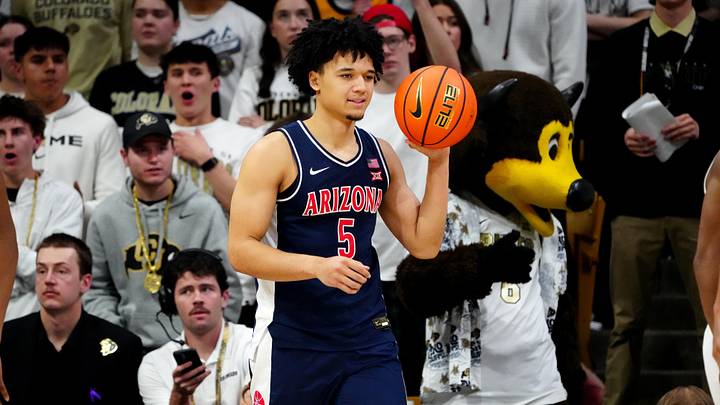
Arizona guard Brayden Burries has seemed to gain steam in recent days. He has often been connected to the Mavericks at No. 9, where he seems like a solid fit alongside Kyrie Irving in the backcourt and gives the Mavs a potential high-level scorer to pair with Cooper Flagg long term. But it increasingly seems possible that Burries could go earlier than that, potentially as a trade target if teams move up into the top eight.
Michigan forward Morez Johnson Jr. tested well at the NBA draft combine and has impressed teams with his consistency as a shooter in workouts. He’s also the exact type of player who teams see as a good fit for what worked in this season’s playoffs with size, physicality and offensive rebounding increasingly important.
Who could fall?
Yaxel Lendeborg could have a fascinating draft night. Teams have two big concerns: his age (he’ll be 24 by the time he makes his NBA debut) and his immaturity, which was one of the reasons his stock was less secure last season and led to him enrolling at Michigan. He could still get picked in the back half of the lottery, but it wouldn’t be a surprise if he falls into the teens and not a total shock if he’s available in the 20s.
Labaron Philon Jr. out of Alabama could feel the crunch of the slew of point guards available. He’s clearly below the four top PGs mentioned above on many boards, and other PGs like Christian Anderson and Bennett Stirtz could be better fits since they’re better shooters who project better playing off the ball. He’s another who could slip into the 20s if things break wrong.
Jayden Quaintance is another popular potential faller, with fuel added to that speculation by him not receiving an invitation to the green room for draft night. Concerns linger about his health after he played only four games this season at Kentucky struggling to recover from an ACL tear. Still just 18 years old, teams may also be worried he’s just not ready to make an early NBA impact even if healthy. It’s still expected that he finds a suitor in the first round, but things might get nervy into the 20s.
What are late first-round picks worth?
Among the biggest stories of the predraft process has been the flood of prospects who elected to return to school over turning pro. The effect of that is that the quality of the draft notably drops off somewhere between the 20s and 30s. Given the cap hit attached to first-round contracts, it will be interesting to see just how aggressively teams covet those picks in the 20s. There’s a strong group of college veterans expected to be picked somewhere in the No. 25 to 40 range who could be controllable plug-and-play pieces, but not every team in the 20s will be happy with what’s available and those picks could get moved even for rather modest returns.
More NBA Draft From Sports Illustrated
Listen to SI’s NBA podcast, Open Floor, below or on Apple and Spotify. Watch the show on SI’s YouTube channel.
 Add us as a preferred source on Google
Kevin Sweeney is a staff writer at Sports Illustrated covering college basketball and the NBA draft. He joined the SI staff in July 2021 and also serves host and analyst for The Field of 68. Sweeney is a Naismith Trophy voter and ia member of the U.S. Basketball Writers Association. He is a graduate of Northwestern University’s Medill School of Journalism.
Follow CBB_Central