%20%20--%3E%0A%3Csvg%20version%3D%221.1%22%20id%3D%22Layer_1%22%20xmlns%3D%22http%3A%2F%2Fwww.w3.org%2F2000%2Fsvg%22%20xmlns%3Axlink%3D%22http%3A%2F%2Fwww.w3.org%2F1999%2Fxlink%22%20x%3D%220px%22%20y%3D%220px%22%0A%09%20width%3D%2239px%22%20height%3D%2240px%22%20viewBox%3D%220%200%2039%2040%22%20enable-background%3D%22new%200%200%2039%2040%22%20xml%3Aspace%3D%22preserve%22%3E%0A%3Cpath%20fill%3D%22%23FFFFFF%22%20d%3D%22M38.5%2C7H28.2v26h10.3V7z%22%2F%3E%0A%3Cpath%20fill-rule%3D%22evenodd%22%20clip-rule%3D%22evenodd%22%20fill%3D%22%23FFFFFF%22%20d%3D%22M26.1%2C25.5c0%2C5.8-4.1%2C7.5-12.9%2C7.5C3.9%2C33%2C0%2C31.2%2C0%2C25.2v-1.1h11.6%0A%09v2.4c0%2C0.7%2C0.1%2C1.4%2C1.2%2C1.4c1%2C0%2C1.2-0.4%2C1.2-1.3v-0.9c0-1.6-0.9-1.6-3.5-2.2C2.2%2C21.7%2C0%2C19.7%2C0%2C15.3v-0.9C0%2C9.3%2C5.5%2C7%2C12.9%2C7%0A%09c10.2%2C0%2C12.8%2C2.6%2C12.8%2C7.4v1.8h-11v-2.9c0-0.6-0.4-1.1-1.2-1.1c-0.6%2C0-1.2%2C0.4-1.2%2C1.1v0.9c0%2C1.5%2C0.9%2C2%2C3.3%2C2.5%0A%09c8%2C1.6%2C10.5%2C3.3%2C10.5%2C7.5V25.5z%22%2F%3E%0A%3C%2Fsvg%3E%0A)
Victor Wembanyama Saved the NBA From a Ton of Embarrassment With Brilliant Performance vs. Mavs
In this story:
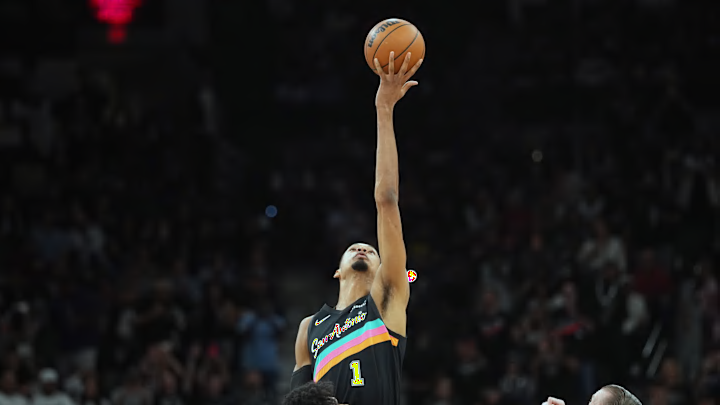
Victor Wembanyama put up another incredible performance on Friday night against the Mavericks, finishing with 40 points, 13 rebounds, five assists, two blocks and a steal over just 26 minutes of action while leading the Spurs to a dominant 139–120 win.
The win wasn’t exactly an important one for the Spurs, as they were already locked into the No. 2 spot in the West, but it was important for Wembanyama, as it was his 65th game of the season, and thus made him eligible for end-of-season awards.
After the game, Wembanyama was asked about reaching the awards threshold, and the effort that it took to get there.
“Tremendous amount of work,” Wembanyama said of reaching the 65-game mark. “Lots and lots of talks with the medical staff. Lots of figuring out the best plan. More than any year in my career, mental work to play through pain or discomfort. But we made it.”
Wembanyama’s chances of being eligible for awards season were thrown into question after a calf strain forced him to miss 12 straight games all the way back in December. That stretch on the bench put him on a tightrope to walk the rest of the season, and after sustaining a rib injury earlier this week, it was unclear if Wembanyama would make it across the 65-game finish line.
Luckily for the NBA, he did.
Wembanyama’s situation makes clear that the league’s 65-game policy is absurd

Had Wemby been unable to play in either of the Spurs’ final two games of the season, he would not have been able to win any of the postseason awards. This would be a disappointing break for the MVP race, though the presence of Shai Gilgeous-Alexander makes it so that there was always going to be a deserving recipient for the award. But Wembanyama being disqualified from Defensive Player of the Year contention on a technicality would have been flat-out ridiculous.
Asked if he would be surprised if he wasn’t named DPOY by a unanimous vote, Wembanyama was his usual, confident self.
“Yes. I would,” he said after a pause. “Who are the other front-runners?”
“Yes, I would.”
— Bleacher Report (@BleacherReport) April 11, 2026
Wemby on if he would be surprised if he didn’t unanimously win DPOY 👀
(Via @spurs) pic.twitter.com/YkHxNPsiPD
That wasn’t a dig at the competition—he was genuinely asking—and the assembled press rightfully mumbled a few names that while are fine contenders are not the defensive force that Wembanyama is.
By the numbers alone, Wemby’s DPOY case is clear, but when you factor in just how much gravity he pulls away from opposing offenses by his presence alone, it is obvious that there is no player in the league operating at his level on that end of the floor right now.
Had the award gone to another player due to Wemby playing 63 games rather than 65 games, the NBA would have had an immediate crisis on its hands, as it would be clear that the already much-debated threshold rule needed to be changed. Make no mistake, the league got lucky.
Despite it almost costing him some awards, Wembanyama has a surprisingly nuanced take on the threshold debate
Wembanyama spent a good amount of time in his postgame press conference on Friday night talking through the 65-game rule, which has only been in place for three seasons.
While Wemby expressed frustration that players like Luka Dončić, Anthony Edwards and Cade Cunningham would all be ineligible for awards this year because of the rule, he also made clear he wasn’t inherently opposed to some sort of playing time requirement.
“It’s an interesting question. It’s a very interesting question. If those three aren’t, especially Cade and Luka, if they aren’t in the end-of-season awards, for sure it’s not going to reflect their impact on the season,” Wembanyama said. “At the same time, in my opinion it’s good to have a threshold, a limit. Where do we need to put it? I don’t know. It’s a good question.”
At that point, he opened up the conversation to the reporters in the room, asking if they believed there should be a threshold. Responses ranged from two-thirds of the season to 75% of the season to no threshold at all. Wembanyama then showed off a bit with his mental math, arguing that minutes played can often be more indicative of a players impact than games played.
“If a guy plays 50 games, 35 minutes a game, that’s 1750 minutes. If a guy plays 75 games at 20 minutes, it’s 1500,” Wembanyama explained. “It’s a good view in my opinion to not have a limit. 75% of the games, in my opinion would be a logical thing, that would be 61.5 games right? So 62 games?”
add mental math to the list of Wemby superpowers
— tryler (@tylerlauletta) April 11, 2026
🎥 @spurs pic.twitter.com/sG1OApUu3L
The NBA is lucky to have a player as thoughtful as Wembanyama at the center of this debate. Had he gone up to the mic and said, “It is ridiculous that the league is asking me to play this game at less than 100% health in order to be eligible for awards,” he would have been absolutely correct.
With his team comfortably locked into a postseason spot, Wembanyama risked further injury playing hurt—and having to play a minimum of 20 minutes no less—in order to reach the threshold. It would be one thing if these awards were just for plaques and trophies, but it’s these honors are also key elements to a player’s ability to receive a supermax extension. A player can’t be expected to give that oppoortunity up to preserve his health for the good of his team.
But instead of fighting the issue, Wembanyama acknowledged that the question is a tough one, and one that remains open. He might not admit it, but he’s the reason the question is still open at all—had he been unable to play on Friday, there’s a chance the rule would be gone by the start of the playoffs.
In a somewhat comical turn of events, the Spurs’ last game of the season still matters in a big way

San Antonio may be locked into the No. 2 slot for the race in the West, but the rest of the standings below the Spurs are still in flux, and Sunday’s season finale against the Nuggets has massive implications.
The Nuggets currently hold a one-game lead over the Lakers for the No. 3 seed in the West, but Los Angeles holds the season tiebreaker over Denver having won the regular-season series between the teams 2–1. If the Spurs can beat the Nuggets on Sunday, and the Lakers prevail against the tanking Jazz, the Lakers will jump back up into the No. 3 slot.
The shift would mean that the Spurs, assuming all favorites advanced through the first round of the playoffs in the West, would be up against the injury-depleted Lakers in the first round, while the Thunder would have to go through the Nuggets to reach the conference finals.
San Antonio is going to want to win on Sunday. Whether its likely Defensive Player of the Year winner will be able to suit up for the game remains to be seen.
More NBA from Sports Illustrated
 Add us as a preferred source on Google
Tyler Lauletta was a staff writer for the Breaking and Trending News team at Sports Illustrated. Before joining SI, he covered sports for nearly a decade at Business Insider, and helped design and launch the OffBall newsletter. He is a graduate of Temple University in Philadelphia, and remains an Eagles and Phillies sicko. When not watching or blogging about sports, Tyler can be found scratching his dog behind the ears.
Follow tylerlauletta