%20%20--%3E%0A%3Csvg%20version%3D%221.1%22%20id%3D%22Layer_1%22%20xmlns%3D%22http%3A%2F%2Fwww.w3.org%2F2000%2Fsvg%22%20xmlns%3Axlink%3D%22http%3A%2F%2Fwww.w3.org%2F1999%2Fxlink%22%20x%3D%220px%22%20y%3D%220px%22%0A%09%20width%3D%2239px%22%20height%3D%2240px%22%20viewBox%3D%220%200%2039%2040%22%20enable-background%3D%22new%200%200%2039%2040%22%20xml%3Aspace%3D%22preserve%22%3E%0A%3Cpath%20fill%3D%22%23FFFFFF%22%20d%3D%22M38.5%2C7H28.2v26h10.3V7z%22%2F%3E%0A%3Cpath%20fill-rule%3D%22evenodd%22%20clip-rule%3D%22evenodd%22%20fill%3D%22%23FFFFFF%22%20d%3D%22M26.1%2C25.5c0%2C5.8-4.1%2C7.5-12.9%2C7.5C3.9%2C33%2C0%2C31.2%2C0%2C25.2v-1.1h11.6%0A%09v2.4c0%2C0.7%2C0.1%2C1.4%2C1.2%2C1.4c1%2C0%2C1.2-0.4%2C1.2-1.3v-0.9c0-1.6-0.9-1.6-3.5-2.2C2.2%2C21.7%2C0%2C19.7%2C0%2C15.3v-0.9C0%2C9.3%2C5.5%2C7%2C12.9%2C7%0A%09c10.2%2C0%2C12.8%2C2.6%2C12.8%2C7.4v1.8h-11v-2.9c0-0.6-0.4-1.1-1.2-1.1c-0.6%2C0-1.2%2C0.4-1.2%2C1.1v0.9c0%2C1.5%2C0.9%2C2%2C3.3%2C2.5%0A%09c8%2C1.6%2C10.5%2C3.3%2C10.5%2C7.5V25.5z%22%2F%3E%0A%3C%2Fsvg%3E%0A)
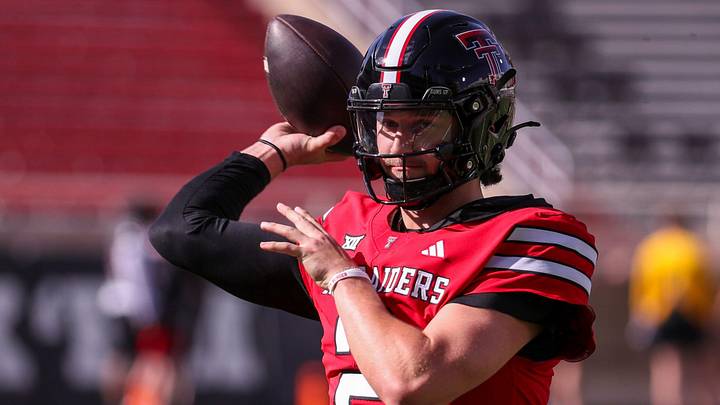
Brendan Sorsby on the Field at Texas Tech in the Fall Will Bring His Gambling to Life
In this story:
The NFL has already felt the effects of the post-COVID-19 meltdown of the NCAA’s authority. It has hit the league in the number of 25-year-olds entering its ranks, players who won fights over and over again to stack years of eligibility. It has impacted depth in the draft, with the talent in the lower rounds hollowed out by guys staying in school to pursue NIL money that bests what they’d get in the pros. It also has changed how players are developed, with prospects entering the NFL without having spent more than a single season at any school.
Those changes aren’t routine, but they’re manageable.
What’s gone down in a Lubbock County courtroom over the past week is different.
Pat Forde: Brendan Sorsby ruling shows there are no rules left for college sports
On Monday, presiding judge Ken Curry ruled in favor of Brendan Sorsby’s application for an injunction, essentially putting the NCAA’s decision to revoke Sorsby’s college eligibility on hold until after the case is heard in court. Sorsby, if you hadn’t heard, placed thousands of sports bets online, including some on the Indiana football team that he played on in 2022 and '23, and has admitted as much, which led to the NCAA punishment in the first place.
Sorsby then hired famed labor lawyer Jeffrey Kessler, and Tech lawyered up and mobilized to get the quarterback—who the school plucked from the transfer portal at $6 million—back eligible. For now, it has worked, and Sorsby is clear to rejoin the football program following a two-game suspension and treatment, per the judge’s conditions.
The most obvious piece of fallout is that the NCAA, again, looks totally toothless and incapable of enforcing its own policies. The rule here was black-and-white: If you gamble on a team at your school as an athlete, even one you’re not playing for, you’re out. No one is arguing that Sorsby isn’t guilty in this case. Yet the NCAA can’t even win this one, which is wild, especially since betting on your own team, for obvious reasons, is sports’ cardinal sin.
It cost Pete Rose his career and a place in the Baseball Hall of Fame.
It stands to cost Sorsby about 150 snaps against Abilene Christian and Oregon State.
If the ruling stands and Sorsby plays the season out, drops any sort of legal action—presuming the lawyers can kick this that far down the road—in early 2027 as he enters the draft, the league really won’t have much recourse, either.
His time will have been served. His offenses will have happened outside of NFL jurisdiction. The league will likely let him play, with any cost coming in draft position, if a team or two (or 10) is concerned about the addiction following him into pro football. While it’s not going to take any money out of the owners’ pockets, Sorsby’s presence after serving such a light penalty will only call attention to how thorny the NFL’s relationships with casinos and gambling outfits—which have exploded over the past decade—really are.
To be clear, this is no affront to Sorsby, who, by all accounts, is a good kid who messed up in a major way. He’s getting help and that’s good, and he has the ability to compete with Oregon’s Dante Moore, Texas’s Arch Manning, Notre Dame’s CJ Carr and the rest of a crowded group of draft-eligible quarterback prospects for positioning near the top of the next year’s board. I am, for one, excited to watch him in the fall.
Also, that anyone would argue that this isn’t as big a deal only illustrates how much attitudes on sports gambling have changed over the past decade.
But make no mistake: Athletes betting on their own games is an existential threat to sports.
So, sure, in the short term, the NFL may actually benefit from this. It lifts the burden of having to rule on Sorsby’s eligibility for the supplemental draft (my understanding is the league had communicated it was letting him in) off them. They also won’t have to decide whether to sanction Sorsby to create a deterrent and set a precedent for the future.
In the long term, though, this case shines a bright light on exactly how complicated all of this is in pro sports. As the Calvin Ridley and Jameson Williams cases show, the NFL does take this stuff seriously, and the Sorsby case illustrates that the problem isn’t going away.
And the addiction piece of it, when added to the increased access we all have to gambling, only makes it more likely this will happen again—and, no, that judge’s ruling in a court sitting in the shadow of Jerry Jones’s AT&T Stadium doesn’t change any of that. Just as alcoholism is an addiction that can lead to crimes that need to be punished, a gambling addiction can go the way this one did and lead someone like Sorsby down the wrong road.
The visual of Sorsby on the field at Tech in the fall will bring it to life.
Then it’ll become a draft story, a training camp story and a regular-season story.
It’ll become an NFL story, too, shining a light on all the money the league has taken over the past decade as part of the philosophical U-turn it has made on gambling.
Which, if we’re being real, isn’t great for anyone.
More NFL from Sports Illustrated
 Add us as a preferred source on Google
Albert Breer is a senior writer covering the NFL for Sports Illustrated, delivering the biggest stories and breaking news from across the league. He has been on the NFL beat since 2005 and joined SI in 2016. Breer began his career covering the New England Patriots for the MetroWest Daily News and the Boston Herald from 2005 to ’07, then covered the Dallas Cowboys for the Dallas Morning News from 2007 to ’08. He worked for The Sporting News from 2008 to ’09 before returning to Massachusetts as The Boston Globe’s national NFL writer in 2009. From 2010 to 2016, Breer served as a national reporter for NFL Network. In addition to his work at Sports Illustrated, Breer regularly appears on NBC Sports Boston, 98.5 The Sports Hub in Boston, FS1 with Colin Cowherd, The Rich Eisen Show and The Dan Patrick Show. A 2002 graduate of Ohio State, Breer lives near Boston with his wife, a cardiac ICU nurse at Boston Children’s Hospital, and their three children.
Follow AlbertBreer