%20%20--%3E%0A%3Csvg%20version%3D%221.1%22%20id%3D%22Layer_1%22%20xmlns%3D%22http%3A%2F%2Fwww.w3.org%2F2000%2Fsvg%22%20xmlns%3Axlink%3D%22http%3A%2F%2Fwww.w3.org%2F1999%2Fxlink%22%20x%3D%220px%22%20y%3D%220px%22%0A%09%20width%3D%2239px%22%20height%3D%2240px%22%20viewBox%3D%220%200%2039%2040%22%20enable-background%3D%22new%200%200%2039%2040%22%20xml%3Aspace%3D%22preserve%22%3E%0A%3Cpath%20fill%3D%22%23FFFFFF%22%20d%3D%22M38.5%2C7H28.2v26h10.3V7z%22%2F%3E%0A%3Cpath%20fill-rule%3D%22evenodd%22%20clip-rule%3D%22evenodd%22%20fill%3D%22%23FFFFFF%22%20d%3D%22M26.1%2C25.5c0%2C5.8-4.1%2C7.5-12.9%2C7.5C3.9%2C33%2C0%2C31.2%2C0%2C25.2v-1.1h11.6%0A%09v2.4c0%2C0.7%2C0.1%2C1.4%2C1.2%2C1.4c1%2C0%2C1.2-0.4%2C1.2-1.3v-0.9c0-1.6-0.9-1.6-3.5-2.2C2.2%2C21.7%2C0%2C19.7%2C0%2C15.3v-0.9C0%2C9.3%2C5.5%2C7%2C12.9%2C7%0A%09c10.2%2C0%2C12.8%2C2.6%2C12.8%2C7.4v1.8h-11v-2.9c0-0.6-0.4-1.1-1.2-1.1c-0.6%2C0-1.2%2C0.4-1.2%2C1.1v0.9c0%2C1.5%2C0.9%2C2%2C3.3%2C2.5%0A%09c8%2C1.6%2C10.5%2C3.3%2C10.5%2C7.5V25.5z%22%2F%3E%0A%3C%2Fsvg%3E%0A)
Brendan Sorsby Ruling Shows There Are No Rules Left for College Sports
In this story:
Rules are not made to be broken, they’re made and then broken. This has been the way of the NCAA for nearly its entire existence.
Until Monday, at least. That’s when the pretense went away completely thanks to a few keystrokes from an imported Lubbock County judge.
Now, there are no rules anymore in college sports—as long as there’s a favorable local venue to garner an advantageous ruling in which to render those bylaws as bygone.
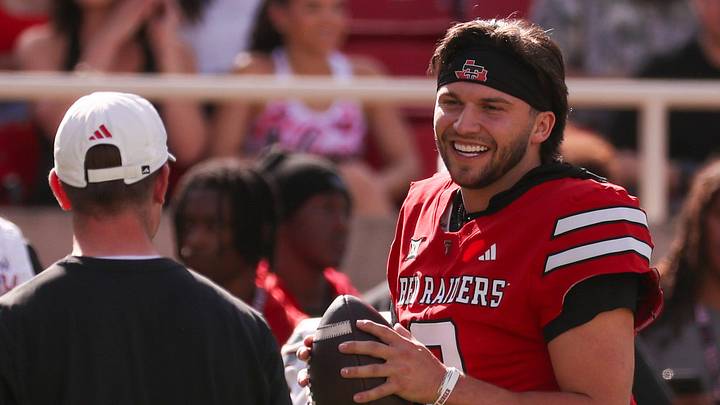
It is simply no longer an embellishment to say the enterprise is the Wild, Wild West with a patchwork of vague governing principles. It truly is anything goes in the world of college athletics thanks to gunslinging Texas Tech quarterback Brendan Sorsby, who now is allowed to wear the uniform of an actual gun-toting cowboy this fall.
That you can actually bet on right after you unironically take the over on the Red Raiders’ win total in your gambling app of choice.
“The Court finds that Applicant [Sorsby] has demonstrated that he will suffer a probable, imminent, irreparable injury if this Court does not issue this temporary injunction,” said Judge Ken Curry in his order.
Because arbitrary rules need some arbitrary justice though, Sorsby will miss the first two games of the upcoming season against Abilene Christian and Oregon State. That’s what he and his lawyers asked for, and it’s good to know that if you offer a modicum of contrition while blowing up the system, judges will be happy to go along with the charade by granting that, too.
The facts of what got us to this point aren’t disputed. Everyone agrees Sorsby bet and bet a lot. He bet on baseball pitches and golf. He bet on pro sports as much as college ones. He went full Pete Rose and placed at least 40 bets on his own team. The NCAA’s initial filing in the case noted he placed roughly $90,000 total on bets during his time at Indiana, Cincinnati and even this year while at Texas Tech.
As much as you can rightfully applaud him for eventually seeking treatment for what is an obvious gambling addiction, everyone aside from a Texas judge can also see how blatantly line-crossing his actions were at the same time. Sorsby did all this despite it being illegal to gamble in this manner in the state of Texas and that there is no gray area in the NCAA’s rules about wagering on sports it sponsors a championship in.
“Don’t bet on it” is not just a marketing campaign that gets hammered in the head of every college athlete from the moment they step on campus, it’s been a foundational red line you’re not supposed to cross for decades. Sorsby has instead stiff-armed it aside so that he can collect on the roughly $5 million he was promised in order to be the missing piece for a program’s zealous quest for national prominence on the football field.
“The NCAA strongly disagrees with the court’s ruling in Sorsby’s case and is deeply concerned about the damaging, far-reaching and broadly destabilizing ramifications of this outcome—which undermines and corrupts the integrity of sports. The NCAA is committed to supporting student-athlete mental health but must continue to aggressively defend against actions that defraud college athletics and threaten competitive integrity, such as betting on one’s own sport,” the organization said in a statement after the ruling was announced.
It takes a lot for the wider sporting world to come down in support of the NCAA, which may poll favorably in numbers generally comparable to the tobacco or healthcare industries. In that, Sorsby and Texas Tech may have done something even more impossible than pulling off this eligibility Hail Mary in the courts by actually getting the public to embrace the nameless, faceless bureaucrats from Indianapolis who typically have been thrown under the bus at every turn. My how we all long for the days of cream cheese on bagels turning into an infractions case now after seeing a judge all but declare no rule is ever really enforceable as long as you have the funds needed for the requisite billable hours.
A larger question now beckons over where the suddenly sympathetic NCAA goes from here. It most certainly will appeal the ruling to a higher court in order to stem the immediate effects of Sorsby returning to the field. Unsurprisingly, it also wasted little time in holding up the case as an example for lawmakers as to why the NCAA needs help from Washington, D.C., less than a week after the latest dog-and-pony show making an effort at saving college sports.
“There is no better example of why targeted intervention from Congress is necessary. When you have schools and deep-pocketed supporters willing to look the other way on the glaring integrity threat of betting on your own team—and judges whose rulings effectively strip away our ability to stop them—only Congress can equip the NCAA to apply this common sense rule to everyone fairly and consistently,” NCAA president Charlie Baker tweeted in the wake of the ruling. “The Protect College Sports Act would empower the NCAA to enforce rules including the gambling restrictions—it’s needed now more than ever.”
Until something actually gets over the line with that, Baker and his member schools will have to get a grip on the current reality of there being no line thick enough to cross anymore.
All bets are, well, off now. If you already thought the world of college sports was a lawless and ungovernable entity before, you weren’t alone. Now there’s tangible proof thanks to a county judge as things are about to get even worse in a world where anything goes.
More College Football From Sports Illustrated
Listen to SI’s college sports podcast, Others Receiving Votes, below or on Apple and Spotify. Watch the show on SI’s College YouTube channel.
 Add us as a preferred source on Google
Bryan Fischer is a staff writer at Sports Illustrated covering college sports. He joined the SI staff in October 2024 after spending nearly two decades at outlets such as FOX Sports, NBC Sports and CBS Sports. A member of the Football Writers Association of America’s All-America Selection Committee and a Heisman Trophy voter, Fischer has received awards for investigative journalism from the Associated Press Sports Editors and FWAA. He has a bachelor’s in communication from USC.
Follow bryandfischer