%20%20--%3E%0A%3Csvg%20version%3D%221.1%22%20id%3D%22Layer_1%22%20xmlns%3D%22http%3A%2F%2Fwww.w3.org%2F2000%2Fsvg%22%20xmlns%3Axlink%3D%22http%3A%2F%2Fwww.w3.org%2F1999%2Fxlink%22%20x%3D%220px%22%20y%3D%220px%22%0A%09%20width%3D%2239px%22%20height%3D%2240px%22%20viewBox%3D%220%200%2039%2040%22%20enable-background%3D%22new%200%200%2039%2040%22%20xml%3Aspace%3D%22preserve%22%3E%0A%3Cpath%20fill%3D%22%23FFFFFF%22%20d%3D%22M38.5%2C7H28.2v26h10.3V7z%22%2F%3E%0A%3Cpath%20fill-rule%3D%22evenodd%22%20clip-rule%3D%22evenodd%22%20fill%3D%22%23FFFFFF%22%20d%3D%22M26.1%2C25.5c0%2C5.8-4.1%2C7.5-12.9%2C7.5C3.9%2C33%2C0%2C31.2%2C0%2C25.2v-1.1h11.6%0A%09v2.4c0%2C0.7%2C0.1%2C1.4%2C1.2%2C1.4c1%2C0%2C1.2-0.4%2C1.2-1.3v-0.9c0-1.6-0.9-1.6-3.5-2.2C2.2%2C21.7%2C0%2C19.7%2C0%2C15.3v-0.9C0%2C9.3%2C5.5%2C7%2C12.9%2C7%0A%09c10.2%2C0%2C12.8%2C2.6%2C12.8%2C7.4v1.8h-11v-2.9c0-0.6-0.4-1.1-1.2-1.1c-0.6%2C0-1.2%2C0.4-1.2%2C1.1v0.9c0%2C1.5%2C0.9%2C2%2C3.3%2C2.5%0A%09c8%2C1.6%2C10.5%2C3.3%2C10.5%2C7.5V25.5z%22%2F%3E%0A%3C%2Fsvg%3E%0A)
Why the Jaxson Dart and Jayden Daniels Injuries Could Completely Upend the NFL
In this story:
Back in 2023, the season when Aaron Rodgers made it precisely four plays before reminding Jets fans of their cursed position in this universe, we had something approaching an epidemic of quarterback injuries to high-profile veteran players. Joe Burrow hurt his wrist and missed seven games, Kyler Murray tore his ACL and missed half of the season, Deshaun Watson missed 11 games with a shoulder injury, and Kirk Cousins tore his Achilles and missed nine games.
This was reminiscent of the 2017 season, when we made similar complaints about the fragility of the position and the utter disaster that is an NFL team without its starting quarterback (most of the time, unless you’re the Eagles). Rodgers missed nine games that year as the Packers sank from playoff contention, Watson tore his ACL in practice, Carson Wentz sustained a very famous ACL and LCL tear that led to the rise of Nick Foles (that one exception), Andrew Luck missed the year after labrum surgery, Carson Palmer missed half the season with a broken arm, and Sam Bradford began the end of his NFL career as a degenerative knee issue reared its head.
The common thread, mostly, is that these were tenured and established starters. Aside from the 2017 iteration of Watson (a rookie), each player already had a defined ceiling and the specific quest of all of their respective teams was figuring out how to maximize each quarterback’s remaining window of prime athleticism.
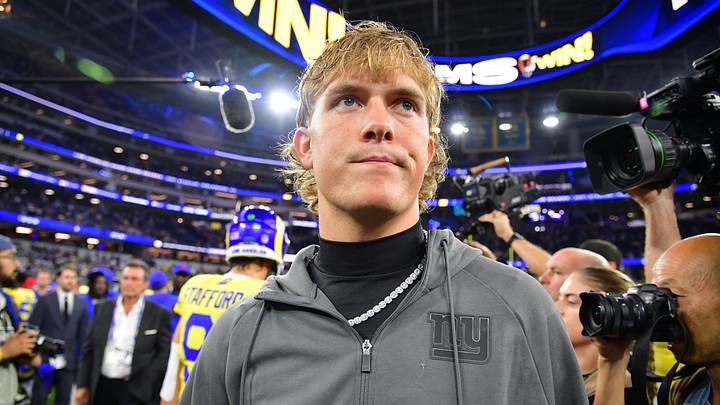
It’s with that in mind that I would argue that the 2026 rash of quarterback injuries isn’t the same. It’s far more devastating to the league and to each of its individual teams because of the specific circumstances at hand (aside from the Bears, as we’re working on the assumption that Caleb Williams’s injury is not going to cost him too many games). On Tuesday, we found out that Jaxson Dart will reportedly miss most, if not all, of the season with a knee injury. This followed Jayden Daniels’s second gruesome elbow dislocation in less than 365 days. In both of those cases, the quarterbacks are somewhat mysterious in terms of ceiling outside of promising flashes—or in the case of Daniels, outright dominance—during a rookie campaign, followed immediately by a slam into the developmental brick wall. In both of those cases, the quarterbacks are playing with new offensive coordinators. In both of those cases, the teams will more than likely crater in their absence and find themselves in competition for a top-10 pick in the draft.
The potential fallout from these two injuries could be astounding if the Giants and Commanders proceed to play like teams that had top-10 picks last year and are now attempting to play 15 games without their QB1. It could not only reshape the fortunes of their own individual franchises, but many others as well. Jayden Daniels missed 10 games last season and the Commanders ended up with the No. 7 pick in the draft (Sonny Styles). Patrick Mahomes missed three games and the Chiefs ended up with the No. 9 pick (Mansoor Delane). Joe Burrow played eight games in 2025 and the Bengals finished with the No. 10 pick, which they traded for Dexter Lawrence II. In 2023, Kyler Murray missed eight games and the Cardinals ended up with the No. 4 pick (Marvin Harrison Jr.). Jimmy Garoppolo played just three games in 2018, leading to the No. 2 pick for the 49ers the following season (Nick Bosa). While there are some examples of teams rising above these circumstances (the Jets, for example, somehow won seven games without Rodgers, pushing them outside the top 10 of the 2024 draft; and the Cowboys won six games despite Dak Prescott missing most of the 2020 season, which placed them at No. 10, though after a trade, they still turned that capital into Micah Parsons), I’m trying to illustrate how commonplace it is for a team missing its starter to be in the conversation for a top pick the following year. Most famously, Peyton Manning missed the entire 2011 season with a neck issue, leading to the No. 1 pick—Andrew Luck—the following season.
Let’s couch something important: We’re operating under the assumption that the quarterbacks available at the top of the 2027 draft will a) decide to actually come out and b) be good enough at the end of this regular season to warrant a first-round pick. Drew Allar, LaNorris Sellers, Dante Moore and Garrett Nussmeier were, at this time last year, believed to be legitimate top-10 options. Two went back to school, one went in the third round and one in the seventh. Arch Manning, Sellers, Moore and Trinidad Chambliss may be the 2026 version of this same situation.
That said, the Commanders and the Giants now have a top-10 chance of securing the No. 1 pick, according to ESPN’s draft order projection simulator. The Giants have the third-highest overall projection and both teams have better than a 20% chance of picking in the top five. This, at a time when the Dolphins, Cardinals, Browns and Jets are all believed to be at least tangentially interested in upgrading at the quarterback position and finishing around the top five as well. The Jets have three first-round picks, including one from the winless Colts. The Browns have two, one of which came from the Rams.
Washington and New York both have quarterbacks that, as unfair as this feels to say, can be labeled as “injury risks.” There is a headache-inducing 20/20 hindsight debate, for example, raging about the thinness of Daniels’s frame that has resurfaced from the grave of 2024 draft takes. Dart battled the perception that he was reckless as a runner and appeared consistently in the medical tent in 2025, albeit with only one diagnosed concussion. If he does not play again this season, he’ll have started 14 games over the course of his first two seasons. Daniels would have 26 starts in three seasons if he does not appear in another game this year.
Analytically, both teams would be filleted if they chose to ignore this and pass up on a possibly generational quarterback prospect in the top five. Again, that’s not being controversial for the sake of being controversial. The value of a potentially awesome first-round quarterback on a cost-controlled rookie deal is a scale-breaker when charting a team’s path to success. If Dart or Daniels were to miss time again in 2027 and either team had opted not to select a top-five-caliber quarterback, it would almost assuredly trigger a change at the general manager position.
On the flip side, picking a new quarterback that high would be a way to bury the relationship with a young star player, assuredly setting him on the path to seek a Sam Darnold–like renaissance somewhere else in the NFL. Certainly, Dart or Daniels could exist on the roster in a modified Drew Brees–Philip Rivers scenario, but that is a minefield to navigate for any modern NFL head coach. There is also the flip side to the fan revolt scenario to consider: Dart or Daniels finally get healthy but suffer from a lack of skill-position talent, which could have been attained with the pick the team spent on his replacement at quarterback. When it comes to the long-term health of the franchise, I’m less worried about that scenario given, again, the sheer value of a good first-round quarterback.
There exists a third scenario where the Giants or Commanders double down on their affinity for Dart and Daniels, and trade a prospective top-five pick, spinning that into a pre–Caleb Williams Bears surplus, which could keep the team in play for a quarterback the following season if Dart or Daniels continue to struggle with their health.
I’ll couch something else quickly: I really don’t think NFL teams go into a season banking on getting a top pick for a quarterback anymore. It’s too messy from a roster standpoint. It’s too unpredictable, as we outlined before, and there is enough veteran movement to create more of a healthy ecosystem of capable quarterbacks on the market every year. At best, we’ve seen teams obviously modify their end-of-season rosters over the final two or three games to ensure a foregone conclusion, which is less odious. That said, there is no question that the injuries to Daniels and Dart may create some discomfort for teams like the Jets, Browns, Dolphins and Cardinals. Two teams that we safely assumed would have won at least six games this year are now very much in danger of not doing so.
The last thought, outside of the fact that it’s unfortunate neither Dart nor Daniels will be a large part of the story of 2026, is what each individual team’s infrastructure will endure. As we said at the top, both teams are breaking in new offensive coordinators that they hoped would pair well with their respective ascending star quarterbacks. With only a one-game sample size for each new coordinator—Matt Nagy in New York and David Blough in Washington—deciding whether to bring them back in 2027 amounts to another roll of the dice. Certainly, performance with a backup quarterback can be indicative of overall skill as a play-caller, but this is a relationship business. If either of these coaches was viewed as a hard “no” by Dart or Daniels, it’s unlikely they would be there in the first place.
The events of the past 48 hours will produce more ripples than a pond during a thunderstorm. Over the course of the next six months, we’ll discover if the NFL will ever be quite the same again.
 Add us as a preferred source on Google
Conor Orr is a Senior Writer for Sports Illustrated with more than 15 years of experience covering the NFL. His work has been cited in Best American Sportswriting and has won a PFWAA award. Prior to Sports Illustrated, he covered both the Giants and Jets for The Star-Ledger. Conor lives in New Jersey with his amazing wife and three children.
Follow author