%20%20--%3E%0A%3Csvg%20version%3D%221.1%22%20id%3D%22Layer_1%22%20xmlns%3D%22http%3A%2F%2Fwww.w3.org%2F2000%2Fsvg%22%20xmlns%3Axlink%3D%22http%3A%2F%2Fwww.w3.org%2F1999%2Fxlink%22%20x%3D%220px%22%20y%3D%220px%22%0A%09%20width%3D%2239px%22%20height%3D%2240px%22%20viewBox%3D%220%200%2039%2040%22%20enable-background%3D%22new%200%200%2039%2040%22%20xml%3Aspace%3D%22preserve%22%3E%0A%3Cpath%20fill%3D%22%23FFFFFF%22%20d%3D%22M38.5%2C7H28.2v26h10.3V7z%22%2F%3E%0A%3Cpath%20fill-rule%3D%22evenodd%22%20clip-rule%3D%22evenodd%22%20fill%3D%22%23FFFFFF%22%20d%3D%22M26.1%2C25.5c0%2C5.8-4.1%2C7.5-12.9%2C7.5C3.9%2C33%2C0%2C31.2%2C0%2C25.2v-1.1h11.6%0A%09v2.4c0%2C0.7%2C0.1%2C1.4%2C1.2%2C1.4c1%2C0%2C1.2-0.4%2C1.2-1.3v-0.9c0-1.6-0.9-1.6-3.5-2.2C2.2%2C21.7%2C0%2C19.7%2C0%2C15.3v-0.9C0%2C9.3%2C5.5%2C7%2C12.9%2C7%0A%09c10.2%2C0%2C12.8%2C2.6%2C12.8%2C7.4v1.8h-11v-2.9c0-0.6-0.4-1.1-1.2-1.1c-0.6%2C0-1.2%2C0.4-1.2%2C1.1v0.9c0%2C1.5%2C0.9%2C2%2C3.3%2C2.5%0A%09c8%2C1.6%2C10.5%2C3.3%2C10.5%2C7.5V25.5z%22%2F%3E%0A%3C%2Fsvg%3E%0A)
The NFL Is to Blame for the Environment that Caused the Maxx Crosby Mess
In this story:
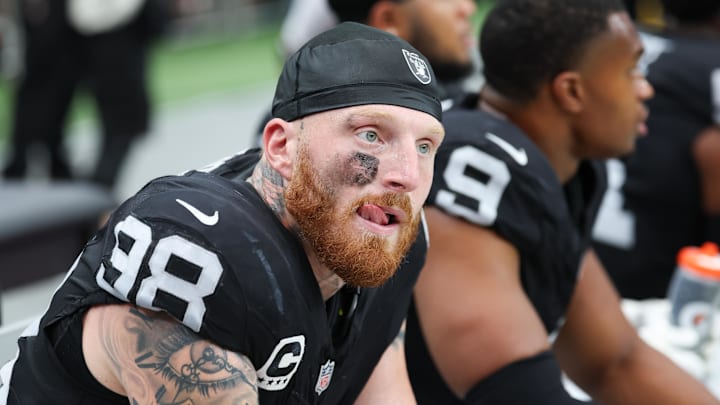
Here’s the cleanest of scenarios when it comes to the unbelievable breakdown of the canceled Maxx Crosby trade to the Ravens: A surgeon and an agent paid by Maxx Crosby have a rosier assessment of Crosby’s overall health than a team that was about to pay him $30 million per season while also surrendering a pair of first-round draft picks for the privilege.
Another team (the Raiders), who shut Crosby down due to the medical issue last season and are now starting an old-fashioned statement duel over the collapse of this trade, thought the Ravens understood more clearly the difference between a meniscus trim, which most athletes receive, and a meniscus repair, which carries an extended recovery timeline (and is especially difficult to analyze and project in a vacuum, at this stage of recovery if you’re an individual team’s doctor charged with assessing a risk worth hundreds of millions of dollars).
But as the weeds and thickets cleared Wednesday morning and Baltimore agreed to terms with Trey Hendrickson, the best edge rusher available in free agency, to essentially replace Crosby at a discount 12 hours after backing away from the trade, a lock was justifiably removed on the cage of every NFL conspiracy theorist who subscribes to the following chain of events: The Ravens traded for Crosby, began to feel they misgauged the market and developed regrets over spending multiple first-round picks, noticed Hendrickson being forced to come off his initial asking price of $30 million per season and saw both an opportunity and, in Crosby’s pending physical, an escape hatch.
The latter, of course, buoyed by the fact that Crosby’s meniscus repair (not trim) was reported back in January.
I’m here to tell you it really doesn’t matter what’s true. The odor emanating from this one is permanent, like a home absorbing years of tobacco smoke and pet droppings. Put up new paint and carpeting if you want, but the fact remains that, in the most consequential of situations, something that amounted to a gentleman’s agreement was backed out of, causing a massive ripple effect that quaked throughout the league. Business with the Ravens during GM Eric DeCosta’s tenure will likely never be the same. Business before the start of the league year may never be the same.
Think for a moment about how big this really is: Baltimore brought in Crosby, which then altered the edge markets for 31 other teams. It altered draft boards. It altered the budget of the Raiders, who ate cash to trade Geno Smith to the Jets. They paid Tyler Linderbaum like a Wall Street CEO. They went out and gobbled nearly every ambulatory offensive and defensive free agent in an effort to bolster the roster, believing that Crosby’s money was off the books. Teams that finished behind Baltimore in the race for Crosby made other moves—like Dallas trading for Rashan Gary. And so on, and so on.
I wonder how close we were to a full-scale riot, which would have ruined the established cuteness of the NFL’s most famed oxymoron, the legal tampering period. Because these deals are not official until the start of the league year, everything could have theoretically collapsed like a new Bluey-themed cryptocurrency. I wonder how this changes the willingness of teams to play along with the entire thing.
I’m tempted to blame it on the NFL for one reason: There is no better case file on modern football—which asks billion-dollar businesses that primarily serve as entertainment and content vehicles on a timeline dictated by insatiable fans with depressingly thin attention spans—to also try to operate as, well, serious billion-dollar businesses. Such a maniacally compressed timeline for free agency means we’re flying veteran bodies carrying up to (or more than) a normal human lifespan of abuse, who also have to clear a totally subjective and noncentralized medical bar defined by each team before a transaction can be made official, across the country in a frantic process rife with constant errors, corner-cutting and subterfuge.
This is no different than, say, the NFL head coaching carousel, another cute name that obscures the reality: back-to-back-to-back-to-back interviews set against the landscape of a near-constant anxiety that another team will lock your preferred candidate in the facility and won’t let them leave without a contract (while you simultaneously try to artfully skirt the league’s rule around interviewing minority candidates, which was designed to slow the process down but ultimately made it more offensive). Hires are, at best, made so quickly that teams have been exposed having not conducted even the most routine of background checks, never mind being able to spend the requisite time with a prospective coach to ascertain whether that person can actually do the job. At worst, teams feel the pressure and begin negotiating too soon, à la the Cardinals and Jonathan Gannon, who spoke with his future employer while trying to help his existing one win a Super Bowl.
Is the new coach you’re hiring going to show up and start talking about biting opponents? Is he going to show up in a suit made for a man three times his size? The team should know, but even to them, it’s always a surprise.
But the Trey Hendrickson signing pivoted me, pivoted us, made the vibe so nefarious that Baltimore has to now shoulder its newfound shadowy reputation, deserved or otherwise. That’s because the cleanest of scenarios cannot shoulder this much doubt.
If the Raiders truly wanted to take this off paper and into the street, perhaps they could ask the NFL to gauge exactly when Baltimore started reaching out to Hendrickson, and whether that timeline and behavior may conflict with a team that had still believed Crosby was in its facility.
Then again, that might show us more than we ever really wanted to know.
More NFL From Sports Illustrated
 Add us as a preferred source on Google
Conor Orr is a Senior Writer for Sports Illustrated with more than 15 years of experience covering the NFL. His work has been cited in Best American Sportswriting and has won a PFWAA award. Prior to Sports Illustrated, he covered both the Giants and Jets for The Star-Ledger. Conor lives in New Jersey with his amazing wife and three children.
Follow author