%20%20--%3E%0A%3Csvg%20version%3D%221.1%22%20id%3D%22Layer_1%22%20xmlns%3D%22http%3A%2F%2Fwww.w3.org%2F2000%2Fsvg%22%20xmlns%3Axlink%3D%22http%3A%2F%2Fwww.w3.org%2F1999%2Fxlink%22%20x%3D%220px%22%20y%3D%220px%22%0A%09%20width%3D%2239px%22%20height%3D%2240px%22%20viewBox%3D%220%200%2039%2040%22%20enable-background%3D%22new%200%200%2039%2040%22%20xml%3Aspace%3D%22preserve%22%3E%0A%3Cpath%20fill%3D%22%23FFFFFF%22%20d%3D%22M38.5%2C7H28.2v26h10.3V7z%22%2F%3E%0A%3Cpath%20fill-rule%3D%22evenodd%22%20clip-rule%3D%22evenodd%22%20fill%3D%22%23FFFFFF%22%20d%3D%22M26.1%2C25.5c0%2C5.8-4.1%2C7.5-12.9%2C7.5C3.9%2C33%2C0%2C31.2%2C0%2C25.2v-1.1h11.6%0A%09v2.4c0%2C0.7%2C0.1%2C1.4%2C1.2%2C1.4c1%2C0%2C1.2-0.4%2C1.2-1.3v-0.9c0-1.6-0.9-1.6-3.5-2.2C2.2%2C21.7%2C0%2C19.7%2C0%2C15.3v-0.9C0%2C9.3%2C5.5%2C7%2C12.9%2C7%0A%09c10.2%2C0%2C12.8%2C2.6%2C12.8%2C7.4v1.8h-11v-2.9c0-0.6-0.4-1.1-1.2-1.1c-0.6%2C0-1.2%2C0.4-1.2%2C1.1v0.9c0%2C1.5%2C0.9%2C2%2C3.3%2C2.5%0A%09c8%2C1.6%2C10.5%2C3.3%2C10.5%2C7.5V25.5z%22%2F%3E%0A%3C%2Fsvg%3E%0A)
Ranking the Five NFL Teams That Improved the Most in Free Agency
In this story:
The NFL draft is preparing to overtake us like a fast-rising desert sun, which means any and all bowtie-ing on free agency must be completed in the next 48 to 72 hours. These are the rules of the football content Gods, not mine. After this, I have to find another quarterback I like better than Fernando Mendoza and pretend he should go No. 1 in the draft (Diego Pavia’s just got that moxie, right guys?).
In all seriousness, examining which teams have improved the most already this offseason is valuable, not only in terms of tempering one’s own excitement about free agency but also in looking at what we really find important. Around the league, coaches are talking about Mike Vrabel’s approach a year ago and, generous schedule be damned, believe that there was some headway to be made before the draft by finding the right veterans.
Here, I’ve tried to find the right mix of Vrabel-like teams, outright spenders and pinpoint scheme fits, all of which can combine into a tapestry of different potential free-agency success stories. Let’s jump into it while I cue up some Joe Fagnano tape…
5. Houston Texans
This reminds me of a Bengals-esque offensive line rebuild on the fly, albeit without a centerpiece blockbuster investment. Still, bringing in Braden Smith and Wyatt Teller is a more than adequate stopgap while the team continues its emotional and literal overhaul of the offensive line.
The Texans were 30th in pass-block win rate and dead last in run-block win rate last season, which made it nearly impossible to get the Texans’ new offensive system off the ground. Houston was moving away from the Shanahan-lite system run by previous offensive coordinator Bobby Slowik into a more multiple system run by the Patriots- and Rams-inspired Nick Caley. Despite the heft of that transition, it’s fair to point out that Caley didn’t have much in the way of a backup plan for Joe Mixon at running back, and the best remaining player on that offensive line (Tytus Howard) was traded this offseason.
Enter running back David Montgomery, plus Smith, Teller and Evan Brown, who will come in as competition and depth at multiple positions. If I had to give the Texans a particular superlative, I would say that out of any team on this list, Houston made the largest impact while spending the least amount of money. I don’t value this necessarily—since the advent of Moneyball we’ve become too obsessed and complimentary of general managers attaining value in the absence of an owner’s willingness to spend, which feels like the whole point of being a billionaire owner of a football team—but after bringing in Reed Blankenship, it’s hard not to get Patriots vibes from this Texans’ offseason. He’s one of those signings that takes DeMeco Ryans’s and Matt Burke’s defense and adds another layer of subterfuge, plus the baseline ability to play just about anywhere in the secondary, limit YAC on checkdown throws and keep the lid on a defense.
4. Los Angeles Rams
Rams defensive coordinator Chris Shula did an incredible job last year in hiding an undermanned secondary as best he could. But, in games like the thrilling walk-off field goal block loss to the Eagles, it was clear that, in a bind, opponents would lean on the holes in Emmanuel Forbes’s game and body him with a bigger wide receiver (or some other version of the same mismatch principle). While improvement is difficult when the team was probably one poorly managed clock performance away from the Super Bowl (and, let’s be honest, a Super Bowl victory), the Rams were emboldened to extend the Matthew Stafford window for one more season and sacrifice both draft and financial capital to rebuild the cornerback room.
Jaylen Watson is an elite run defender and his play style just screams big game cornerback, which feels like a platitude until you watch him rip the ball away from an elite wide receiver. Next to Trent McDuffie, who is also an excellent run defender and a versatile blitzer, the Rams will have a whole golf bag full of options for opponents next year—enough that I would venture to say this iteration of the Rams would have beaten Seattle in the NFC championship game last season.
Given what the Seahawks lost and what the Rams added, I think it’s fair to now put the Rams into the conversation as the best team in the NFL. The Rams were a top-10 run defense but “struggled”—again, in air quotes given that this was still a top-11 unit against the pass despite a pretty undermanned secondary—more against teams uncorking the football. Four of the Rams’ five worst defensive performances last year were against elite-schemed passing offenses, and two of those teams (Seattle and San Francisco) are twice-a-year opponents. Again, this is about going from a graduate degree to a doctorate, which was the directive for Les Snead this offseason. It’s safe to say the mission was accomplished.
3. Denver Broncos
No one attempted more passes last year than Bo Nix. But, Nix’s completed air yards per attempt (and completion) were among the lowest in the league. Nix sat below Bryce Young, Cam Ward, Joe Flacco and Tua Tagovailoa, just ahead of Aaron Rodgers and Kirk Cousins. It’s no surprise, then, that Denver had one of the lowest explosive-play rates in the NFL at 5.3%—a number distressingly identical to the blown-up Cardinals. Denver is in a tinkering phase offensively and, while we will never discuss the totality of how much the Broncos were bailed out by DC Vance Joseph and an excellent slate of pass rushers last year, because of Sean Payton’s looming reputation and the general laziness of those who simply associate a Payton team with offensive dominance, Jaylen Waddle is the kind of player who can push Denver into another tier offensively.
There were 12 quarterbacks last year who had more than 100 true play-action snaps. Seven of those quarterbacks—Matthew Stafford, Jared Goff, Trevor Lawrence, Sam Darnold, Dak Prescott, Josh Allen and Drake Maye—finished in some combination of the Pro Bowl, All-Pro or MVP balloting. Nix did not. Along that same line, RJ Harvey and J.K. Dobbins each faced an eight-man box more than 30% of the time—both among the five highest rates in the NFL. Similar to Mike Evans on the 49ers, but in a far different context, Waddle gives Denver a field-altering wide receiver that will benefit the running game nearly as much as Nix and the downfield passing game.
There is an argument to be made that, outside of the Raiders signing Tyler Linderbaum, Waddle is the single biggest upgrade specific to a team and its needs this offseason, and, unlike Evans, Waddle is far younger and will have a few more years of efficacy ahead to grow with Nix.
Alex Singleton, while not an “addition” is another critical re-signing. I think we are severely underplaying the market value of on-field defensive coordinators. Nearly all of the best defenses are self-called to a degree—just ask Brian Flores’s players in Minnesota or the Seahawks (I wrote a little bit about that after the Super Bowl as well). Joseph is installing the parameters and setting the guardrails, but it is players like Singleton who can recognize how to utilize the advantages in real time.
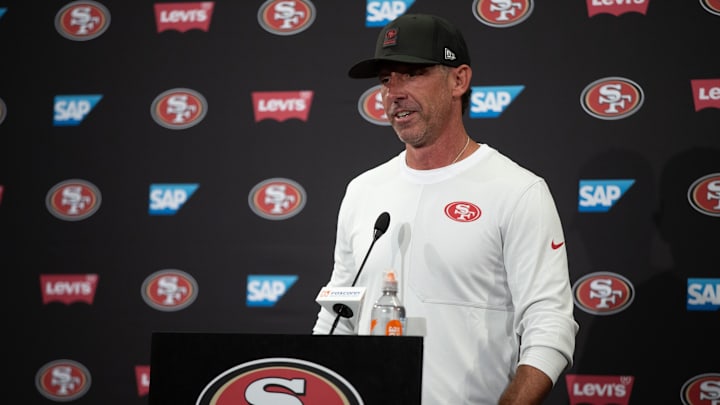
2. San Francisco 49ers
We have to operate under the assumption that what the team is attempting might work. We can be cynical and dismiss the improvements made across free agency, espousing the importance of draft and development, but with a mediocre draft class on tap that may ultimately lack a game-changing player, the 49ers made what I consider the most important move in free agency by signing Mike Evans.
Evans, as I noted in a stand-alone column about the acquisition, was signed to reverse the fortunes of Christian McCaffrey. McCaffrey handled a 413-touch regular season while facing the heaviest boxes in the NFL. McCaffrey’s near 30% eight-man box rate was bested only by backs like Saquon Barkley, Quinshon Judkins and Kareem Hunt—ballcarriers whose offensive systems were either compromised by a quarterback injury or some fatal flaw in the scheme. If Evans is remotely effective after turning 33, he stands a chance of removing that eighth defender from the box and freeing up McCaffrey. It’s both an obvious investment in the remaining years of a versatile running back and bolstering the skills of a red zone offense that was already one of the best in the NFL at converting red zone trips to touchdowns.
Osa Odighizuwa was in the top 10 in the NFL last year in both pass-rush win rate and run-stop win rate among defensive tackles. This is a marked improvement over what San Francisco was depending on with its interior rotation a year ago. Inside the locker room, I’ve heard Odighizuwa is one of the great clubhouse presences in the NFL and on the field, he is a machine at generating pressures. While Dallas may not have liked his undersized nature, Odighizuwa has a next-level get-off, which he uses to get deep in the backfield and make up for a lack of heft. In an ears-back, all-gas defense like San Francisco’s, he’ll fit right at home.
1. Las Vegas Raiders
There is a difference between falling for a series of major signings and recognizing that some of those major signings will immediately take the Raiders to a place of competence they were not able to display a year ago with the aid of additional factors.
One: This Raiders offensive coaching structure is not a mismatched set of ideals, as it was last season between Pete Carroll and Chip Kelly. Klint Kubiak is an experienced coach with a family history at the position, who happened to hire one of his closest friends and longtime associates as offensive coordinator (Andrew Janocko). It’s safe to assume those two will be on the same page more than a marriage arranged by a fly-by-night minority owner learning as he goes.
Two: Vegas has the Saints, Browns, Jets, Titans and Dolphins all sprinkled throughout its schedule, with some of its tougher out-of-division opponents like the Rams and Bills at home. So when we’re talking about the most improved rosters, we have to speak about it in the context of how much better the team got in addition to the fertileness of its schedule, coaching staff and division.
The Raiders are not a playoff team but, assuming that Kirk Cousins is running the offense while Fernando Mendoza learns to play under center, it’s not hard to imagine this team being competitive enough to win outright or keep pace with the lower rung of its schedule. Tyler Linderbaum is a game-changer at center and has the athleticism to run point in Kubiak’s offense. Mendoza, while not experienced under center, has the athleticism to run a boot-heavy scheme (though we can fairly ask questions about what that will look like with Cousins under center). The defense, after adding two quality edge players and linebackers, plus retaining Maxx Crosby (for now) will improve upon a unit that wasn’t actually as bad as you might have imagined given the talent level on the field. Largely because of Crosby, the Raiders had a better down-by-down success rate against the run than the Vikings, Browns, Patriots and 49ers in 2025. All of this to say that the Raiders, according to MGM, are sitting at a projected 5.5 win total. Last year’s Pythagorean win-loss projection for the Raiders was 3.4 wins. It’s not a stretch to be curious about the over on 5.5 (assuming Cousins starts some games at the beginning of the season) and that says a lot about the work done by GM John Spytek so far this winter and spring.
More NFL From Sports Illustrated
 Add us as a preferred source on Google
Conor Orr is a Senior Writer for Sports Illustrated with more than 15 years of experience covering the NFL. His work has been cited in Best American Sportswriting and has won a PFWAA award. Prior to Sports Illustrated, he covered both the Giants and Jets for The Star-Ledger. Conor lives in New Jersey with his amazing wife and three children.
Follow author