%20%20--%3E%0A%3Csvg%20version%3D%221.1%22%20id%3D%22Layer_1%22%20xmlns%3D%22http%3A%2F%2Fwww.w3.org%2F2000%2Fsvg%22%20xmlns%3Axlink%3D%22http%3A%2F%2Fwww.w3.org%2F1999%2Fxlink%22%20x%3D%220px%22%20y%3D%220px%22%0A%09%20width%3D%2239px%22%20height%3D%2240px%22%20viewBox%3D%220%200%2039%2040%22%20enable-background%3D%22new%200%200%2039%2040%22%20xml%3Aspace%3D%22preserve%22%3E%0A%3Cpath%20fill%3D%22%23FFFFFF%22%20d%3D%22M38.5%2C7H28.2v26h10.3V7z%22%2F%3E%0A%3Cpath%20fill-rule%3D%22evenodd%22%20clip-rule%3D%22evenodd%22%20fill%3D%22%23FFFFFF%22%20d%3D%22M26.1%2C25.5c0%2C5.8-4.1%2C7.5-12.9%2C7.5C3.9%2C33%2C0%2C31.2%2C0%2C25.2v-1.1h11.6%0A%09v2.4c0%2C0.7%2C0.1%2C1.4%2C1.2%2C1.4c1%2C0%2C1.2-0.4%2C1.2-1.3v-0.9c0-1.6-0.9-1.6-3.5-2.2C2.2%2C21.7%2C0%2C19.7%2C0%2C15.3v-0.9C0%2C9.3%2C5.5%2C7%2C12.9%2C7%0A%09c10.2%2C0%2C12.8%2C2.6%2C12.8%2C7.4v1.8h-11v-2.9c0-0.6-0.4-1.1-1.2-1.1c-0.6%2C0-1.2%2C0.4-1.2%2C1.1v0.9c0%2C1.5%2C0.9%2C2%2C3.3%2C2.5%0A%09c8%2C1.6%2C10.5%2C3.3%2C10.5%2C7.5V25.5z%22%2F%3E%0A%3C%2Fsvg%3E%0A)
Hockey's under-the-radar forces

The Stealth List returns, the annual tribute to five people, who, while generally under the radar, make their teams -- or hockey -- better.
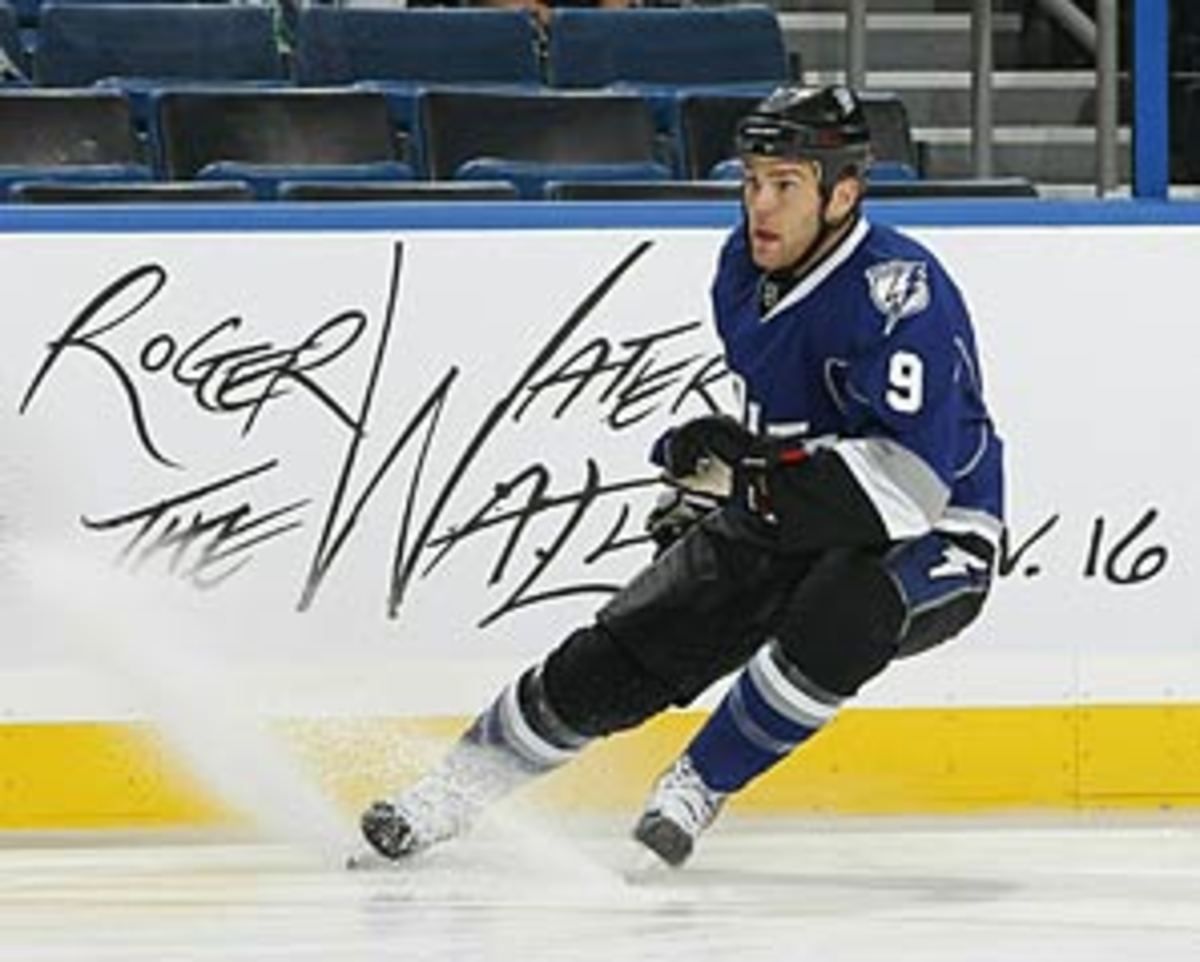
Yes, Steve Downie. That wasn't easy to type. Downie's appearance here might be the biggest upset in the history of the Stealth List. A few years ago, the mere thought of including him on any list of people who do not receive appropriate attention would have been absurd. The winger received a ton of notoriety, even infamy. He was a one-man circus in junior hockey -- you might recall his attack on teammate Akim Aliu -- and he announced his NHL intentions in his first game when he sucker-punched Toronto's Jason Blake. Downie also managed to pick up separate suspensions of 20 games, one for a deliberate attempt to injure Ottawa's Dean McAmmond in a 2007 exhibition game and another in 2009 for slashing a linesman while playing for Tampa Bay's minor league affiliate.
But Downie found a home last year on the Lightning's top line with Steven Stamkos and Martin St. Louis, scoring 22 goals -- a total that approached his best output in junior -- while picking up 208 penalty minutes. He is hardly an angel, but he is now a useful professional. Maturing from his Gong Show roots, Downie clearly has become a credible top six NHL forward who happens to be lost in the glare that shimmers off stars such as Vincent Lecavalier, Stamkos and St. Louis.
The Philadelphia Flyers' goaltending coach is not a brand name like, say, an Allaire brother. He hasn't tried to reinvent the goaltending wheel, at least as far as we can tell. Nor will he singlehandedly solve nearly two decades of problematic goaltending in Philadelphia, where questions about the position are as much a hardy perennial as the Mummers Parade. But Reese has a knack for sucking every ounce of talent from his charges. Consider Michael Leighton, who took the Flyers to Game 6 of the 2010 Stanley Cup Final.
When the Flyers claimed the journeyman's journeyman last season, Reese screened some painful video: 20 to 25 clips of an October 31, 2009 match in which Philadelphia torched Leighton, who was then a Carolina Hurricane, for six goals on 28 shots. Reese was no silver-spoon goalie during an NHL career that spanned five teams and never involved more than 30 games in a season. In a perfect world, he would have nurtured a relationship with Leighton, but the reeling Flyers didn't have the time. So he tweaked Leighton's game, moving him deeper in the crease to be better prepared for rebounds while stressing quicker side-to-side bursts "to beat the pass" from a defenseman to his partner. In the end, Reese helped the Flyers almost finesse a Cup.
Could you pick him out of a police lineup? You probably would know his Colorado Avalanche teammate Paul Stastny, who has a Hall of Fame bloodline, an Olympic silver medal with Team USA, and an absent front tooth. And you might identify Matt Duchene, the freshly scrubbed sophomore center with the Joe Sakic posters on his bedroom walls and the near Calder Trophy credentials. But Stewart scored eight more goals than Stastny last season and nine more points than Duchene.
Stewart, Colorado's 2006 first round draft pick (18th overall), opened the season with five goals and 11 points in the first nine games. He uses his big body -- 6'2", 228 -- well around the net and has a sweet set of hands. Denver is a splendid sports town, arguably the best in the United States. When Avs fans stop thinking that an annual Stanley Cup contender is a divine right and adjust to life after Sakic, Roy and Forsberg -- and the economy improves -- they will grow to fully appreciate this bruising right winger.
Sam Flood, now the executive producer of NBC Sports, is a shrewd hockey guy. When the Peacock landed the NHL's national contract, Flood, the son of a hockey coach, showed his solid instincts by thinking outside the box and the U.S. border. He looked to Canada to sign Pierre McGuire and ultimately land Chris Cuthbert as one of the original NBC play-by-play men. (You'll recall NBC did three regional games at the time.) One of the people he should have corralled was Duthie, the TSN studio host who would be perfect to referee the between-periods bun fights between the loquacious McGuire and the acerbic Mike Milbury.
Duthie is, of course, a household face in Canada. Some American viewers might know him from trade deadline day, but he is largely unknown in the States. Duthie is a maestro in the studio, a ringmaster capable of extracting more information from panelists than probably even they thought they knew. Except John Tortorella.
On the Wednesday night between-periods Quiz on TSN, Tortorella, then without a coaching job, was spectacularly recalcitrant. If Duthie had asked him, "Torts, which color do you prefer, red or green?" Tortorella would have grumbled, "Now James, I'm not gonna get into that."
(Disclosure: TSN allows me to yak on its network on Sunday mornings and, occasionally, at other times. Just because I do some work there doesn't make Duthie any less of a broadcasting marvel.)
Back in the days of Bob Gainey, boys and girls, there was something known as a "defensive forward." The best was awarded a new trophy, the Selke. Gainey won it most years, then it went to a Montreal teammate, Guy Carbonneau. Seems like an eternity ago, doesn't it? The Professional Hockey Writers Association now generally hands the Selke to the best two-way forward, although we have no quibble when the honor is bestowed on Detroit's Pavel Datsyuk, who probably is the top defensive forward despite his other conspicuous gifts.
But Simmonds, in his third NHL season, is a Gainey throwback, a fast and conscientious right winger for the Los Angeles Kings who has at least as much offensive touch as Gainey once had. Simmonds had 16 goals last season. He scored two in the first eight this season, which hints that he is capable of turning into a 20-goal man. (Gainey, incidentally, hit the 20-goal mark four times in 16 seasons.)
Simmonds doesn't get the attention that is lavished on his closest friend on the Kings, the dashing (and now concussed) defenseman Drew Doughty, or first-line center Anze Kopitar. But he is a bundle of energy on a team that needs one strong push from ownership/management to become a Stanley Cup contender.
 Add us as a preferred source on Google
Along with the pages of Sports Illustrated, you'll find senior writer Michael Farber in the Hockey Hall of Fame. Farber joined the staff of Sports Illustrated in January 1994 and now stands as one of the magazine's top journalists, covering primarily ice hockey and Olympic sports. He is also a regular contributor to SI.com. In 2003 Farber was honored with the Elmer Ferguson Award from the Hockey Hall of Fame for distinguished hockey writing. "Michael Farber represents the best in our business," said the New York Post's Larry Brooks, past president of the Professional Hockey Writers' Association. "He is a witty and stylish writer, who has the ability to tell a story with charm and intelligence." Farber says his Feb. 2, 1998 piece on the use and abuse of Sudafed among NHL players was his most memorable story for SI. He also cites a feature on the personal problems of Kevin Stevens, Life of the Party. His most memorable sports moment as a journalist came in 1988 when Canadian Ben Johnson set his controversial world record by running the 100 meters in 9.79 seconds at the Summer Olympic Games, in Seoul. Before coming to Sports Illustrated, Farber spent 15 years as an award-winning sports columnist and writer for the Montreal Gazette, three years at the Bergen Record, and one year at the Sun Bulletin in Binghamton, NY. He has won many honors for his writing, including the "outstanding sports writing award" in 2007 from Sports Media Canada, and the Prix Jacques-Beauchamp (Quebec sportswriter of the year) in 1993. While at the Gazette, he won a National Newspaper award in 1982 and 1990. Sometimes Life Gets in the Way, a compendium of his best Gazette columns, was published during his time in newspapers. Farber says hockey is his favorite sport to cover. "The most down-to-earth athletes play the most demanding game," he says. Away from Sports Illustrated, Farber is a commentator for CJAD-AM in Montreal and a panelist on TSN's The Reporters (the Canadian equivalent of ESPN's The Sports Reporters in the United States, except more dignified). Farber is also one of the 18 members on the Hockey Hall of Fame selection committee. Born and raised in New Jersey, Farber is a 1973 graduate of Rutgers University where he was Phi Beta Kappa. He now resides in Montreal with his wife, Danielle Tétrault, son Jérémy and daughter Gabrielle.