%20%20--%3E%0A%3Csvg%20version%3D%221.1%22%20id%3D%22Layer_1%22%20xmlns%3D%22http%3A%2F%2Fwww.w3.org%2F2000%2Fsvg%22%20xmlns%3Axlink%3D%22http%3A%2F%2Fwww.w3.org%2F1999%2Fxlink%22%20x%3D%220px%22%20y%3D%220px%22%0A%09%20width%3D%2239px%22%20height%3D%2240px%22%20viewBox%3D%220%200%2039%2040%22%20enable-background%3D%22new%200%200%2039%2040%22%20xml%3Aspace%3D%22preserve%22%3E%0A%3Cpath%20fill%3D%22%23FFFFFF%22%20d%3D%22M38.5%2C7H28.2v26h10.3V7z%22%2F%3E%0A%3Cpath%20fill-rule%3D%22evenodd%22%20clip-rule%3D%22evenodd%22%20fill%3D%22%23FFFFFF%22%20d%3D%22M26.1%2C25.5c0%2C5.8-4.1%2C7.5-12.9%2C7.5C3.9%2C33%2C0%2C31.2%2C0%2C25.2v-1.1h11.6%0A%09v2.4c0%2C0.7%2C0.1%2C1.4%2C1.2%2C1.4c1%2C0%2C1.2-0.4%2C1.2-1.3v-0.9c0-1.6-0.9-1.6-3.5-2.2C2.2%2C21.7%2C0%2C19.7%2C0%2C15.3v-0.9C0%2C9.3%2C5.5%2C7%2C12.9%2C7%0A%09c10.2%2C0%2C12.8%2C2.6%2C12.8%2C7.4v1.8h-11v-2.9c0-0.6-0.4-1.1-1.2-1.1c-0.6%2C0-1.2%2C0.4-1.2%2C1.1v0.9c0%2C1.5%2C0.9%2C2%2C3.3%2C2.5%0A%09c8%2C1.6%2C10.5%2C3.3%2C10.5%2C7.5V25.5z%22%2F%3E%0A%3C%2Fsvg%3E%0A)
NHL Playoff Overtime Rules, Explained
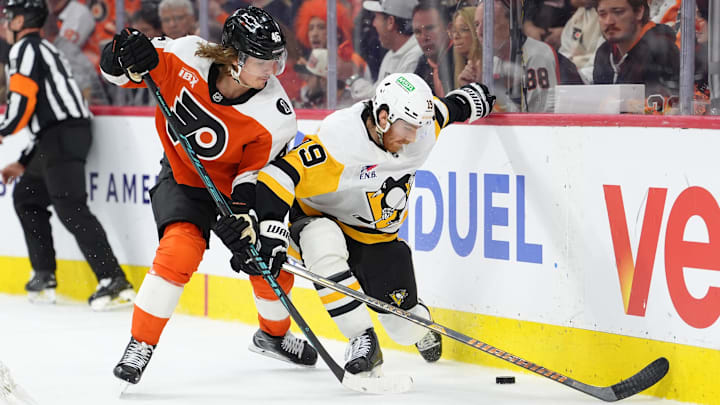
The 2026 Stanley Cup Playoffs are in full swing, with the opening round of play nearing its end. Thus far, it’s been a tightly contested first round, with all eight series having at least one game reach overtime.
Those tuning into the games may have noticed a pretty significant difference between overtime hockey in the NHL playoffs compared to the regular season. That’s because the rules are quite different once teams reach the postseason.
Let’s review what rules change in overtime in the playoffs compared to that of the regular season.
NHL Playoff overtime rules
In the NHL postseason, teams will play 5-on-5 in the overtime period. Overtime is a full 20-minute period, and the game won’t end until a team scores. If no team scores in the first overtime period, the game will have an intermission to clean the ice and a second overtime period will be played. The teams will continue to play 20-minute overtimes until a winner is decided.
That differs from the regular season, wherein teams play 3-on-3 for five minutes before going to a shootout. During the season, both teams are awarded one point if the game goes to overtime, and the winning team receives an additional point. Obviously, in the playoffs, all that matters is a win, so the points system goes to the wayside and losers get absolutely nothing.
In the playoffs, a penalty in overtime results in a standard power play, with the team that committed the infraction forced to play down a man for a set period of time (two minutes for a minor, four minutes for a double-minor and five minutes for a major). In the regular season, since it’s a 3-on-3 situation, the team that drew the penalty will get a fourth skater on the ice and play at 4-on-3.
Longest overtime in Stanley Cup Playoffs history
There have been some excruciatingly long overtime periods in playoff history. The longest OT came back in 1936 when the Red Wings defeated the Montreal Maroons, 1–0, in a game that needed six overtime periods to reach its conclusion. In addition to the 60 minutes of regulation, the teams played over 116 minutes of overtime, and somehow only one goal was scored.
In 1933, the Bruins and Maple Leafs played a six-overtime game that also ended in a 1–0 score in favor of Toronto. That came had nearly 105 minutes of overtime.
More recently, in 2020, the Blue Jackets and Lightning battled in a five-overtime thriller that ended in a 3–2 Tampa Bay win. There was over 90 minutes of overtime exhausted in that game, the fourth-longest game in playoff history. During the fifth overtime, Lightning forward Brayden Point scored the game-winner at long last, courtesy of assists from Nikita Kucherov and Kevin Shattenkirk.
More from Sports Illustrated
 Add us as a preferred source on Google
Karl Rasmussen is a staff writer for Sports Illustrated. A University of Oregon alum who joined SI in February 2023, his work has appeared on 12up and ClutchPoints. Rasmussen is a loyal Tottenham, Jets, Yankees and Ducks fan.
Follow Karlras920