%20%20--%3E%0A%3Csvg%20version%3D%221.1%22%20id%3D%22Layer_1%22%20xmlns%3D%22http%3A%2F%2Fwww.w3.org%2F2000%2Fsvg%22%20xmlns%3Axlink%3D%22http%3A%2F%2Fwww.w3.org%2F1999%2Fxlink%22%20x%3D%220px%22%20y%3D%220px%22%0A%09%20width%3D%2239px%22%20height%3D%2240px%22%20viewBox%3D%220%200%2039%2040%22%20enable-background%3D%22new%200%200%2039%2040%22%20xml%3Aspace%3D%22preserve%22%3E%0A%3Cpath%20fill%3D%22%23FFFFFF%22%20d%3D%22M38.5%2C7H28.2v26h10.3V7z%22%2F%3E%0A%3Cpath%20fill-rule%3D%22evenodd%22%20clip-rule%3D%22evenodd%22%20fill%3D%22%23FFFFFF%22%20d%3D%22M26.1%2C25.5c0%2C5.8-4.1%2C7.5-12.9%2C7.5C3.9%2C33%2C0%2C31.2%2C0%2C25.2v-1.1h11.6%0A%09v2.4c0%2C0.7%2C0.1%2C1.4%2C1.2%2C1.4c1%2C0%2C1.2-0.4%2C1.2-1.3v-0.9c0-1.6-0.9-1.6-3.5-2.2C2.2%2C21.7%2C0%2C19.7%2C0%2C15.3v-0.9C0%2C9.3%2C5.5%2C7%2C12.9%2C7%0A%09c10.2%2C0%2C12.8%2C2.6%2C12.8%2C7.4v1.8h-11v-2.9c0-0.6-0.4-1.1-1.2-1.1c-0.6%2C0-1.2%2C0.4-1.2%2C1.1v0.9c0%2C1.5%2C0.9%2C2%2C3.3%2C2.5%0A%09c8%2C1.6%2C10.5%2C3.3%2C10.5%2C7.5V25.5z%22%2F%3E%0A%3C%2Fsvg%3E%0A)
‘Not a Pleasure’—Arne Slot Aims Thinly Veiled Dig at Arsenal As History Repeats Itself
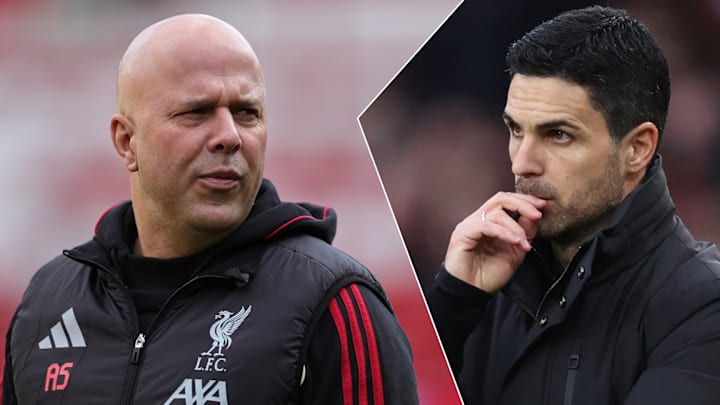
Liverpool manager Arne Slot revealed that most Premier League games are “not a pleasure” for him to watch given the reliance upon set pieces exemplified best by current league leaders Arsenal.
Slot’s aesthetic idealism ironically surfaced after his Liverpool side defeated West Ham United with the help of three goals from corners. The style debate was intensified by Arsenal’s 2–1 win over Chelsea on Sunday which also featured a trio of goals from set-piece bundles.
“If I watch other leagues, I do not see as much emphasis on set pieces,” the Reds boss moaned. “In the Eredivisie, I see goals being disallowed and fouls on goalkeepers being given and I think: ‘Wow, what a big difference.’
“Here, you can almost hit a goalkeeper in the face and the referee still says, ‘Play on.’ Do I like that? My heart as a former player does not like it. If you ask me, thinking about football, I think about the Barcelona team from 10, 15 years ago. Every Sunday you looked forward to watching them play.
“Most of the games I watch in the Premier League are not a pleasure for me, but they are interesting because they are very competitive.”
Slot’s public lament received widespread backing from neutrals, but not everyone was so supportive.
Mikel Arteta: It’s Not Ugly

Mikel Arteta was not the first to promote the idea of set-piece devotion—the data analytics movement at the start of the 21st century swiftly spotted that this area of the game, one of the few aspects in such a volatile sport which can be properly practised, was not being fully exploited. However, his Arsenal side have become the posterboys of the modern obsession given their dead-ball dominance.
Naturally, as the figure benefitting most from the robust approach to this aspect of the game, Arteta offered a counterpoint to Slot—Darth Vader never had a bad word about the Death Star’s effectiveness.
“It’s not ugly, you have to play the game that is there for you to play, and against Chelsea, you know exactly the game you’re going to play,” Arteta argued this weekend.
“For me, it’s a beautiful game to play because there is so much quality and you have to adapt so much to what they do, and they have to do the same against us, so the margins are very, very small, and the duels at the end decide these kind of games.”
Premier League’s Set-Piece Obsession in Numbers

Arsenal’s meaty battle with Chelsea over the weekend saw all three goals come from corners. As Opta pointed out, there were only two corner goals across the 16 Premier League games between Jürgen Klopp’s Liverpool and Pep Guardiola’s Manchester City, the rivalry rightly upheld as the high-spec peak of England’s top flight in the modern age.
The London derby was representative of a wider trend.
Taking out penalties and own goals, more than 29% of all the goals scored by Premier League clubs in 2025–26 have come from dead balls. This is the highest ratio across a single season in the division since 2010–11 (29.3%). Manchester United won a third successive top-flight title in a campaign that year which few would have hailed as a standout example of swash and buckle at the time—which is part of the problem with Slot’s argument.
No One Is Ever Happy in Soccer

The legendary Uruguayan writer Eduardo Galeano was the ultimate soccer aesthete. “Years have gone by and I’ve finally learned to accept myself for who I am: a beggar for good soccer,” he wrote in his seminal work, Soccer in Sun and Shadow. “I go about the world, hand outstretched, and in the stadiums I plead: ‘A pretty move, for the love of God.’
“And when good soccer happens, I give thanks for the miracle and I don’t give a damn which team or country performs it.”
As much as Slot and the wider public would like to claim the same level of idealism, it is a stance many take when it suits them. It’s perhaps no coincidence that Liverpool’s manager is moaning about style when the substance of his team is found to be lacking.
This criticism is nothing new. The 1986 World Cup winner Jorge Valdano launched an infamous tirade about the state of the game after the 2007 Champions League semifinal between Liverpool and Chelsea. “Football is made up of subjective feeling, of suggestion,” he fumed.
“Put a s--- hanging from a stick in the middle of this passionate, crazy stadium and there are people who will tell you it’s a work of art. It’s not: it’s a s--- hanging from a stick.”
People easily forget how loathed the Spanish domination of soccer was at the time. While Slot’s favorites Barcelona played a more high tempo brand of possession play, the national team were unpopular world champions, forever being accused of passing the opponent (and spectators) to death. France World Cup winner Bixente Lizarazu once lambasted the tiki-taka style as “love without sex.”
For all the contemporaneous contempt, this is exactly the same period which has been so widely fetishized by the “Barclaysman” trend of the modern age. Nostalgia can smooth the edges of even the roughest players, transforming the likes of Hugo Rodallega and Charles N’Zogbia into world beaters a decade later.
In 10 years time, there is every chance that Michael Kayode’s long throws will be immortalized in a highlight reel to a soundtrack by Evanescence. There will be a lot more complaining until then.
READ THE LATEST PREMIER LEAGUE NEWS, ANALYSIS AND INSIGHT FROM SI FC
 Add us as a preferred source on Google
Grey Whitebloom is an Associate Editor for SI FC. He has more than half a decade of experience in sports media across all its various guises, from the fast-paced demands of news articles and match reports to in-depth research required for features. Whitebloom graduated with a First Class Honours from University College London and found himself named on the Dean’s List—which, despite his initial fears, was a form of praise rather than a punishment. He specialises in the Premier League and Champions League, while also boasting an extensive track record of La Liga coverage.