%20%20--%3E%0A%3Csvg%20version%3D%221.1%22%20id%3D%22Layer_1%22%20xmlns%3D%22http%3A%2F%2Fwww.w3.org%2F2000%2Fsvg%22%20xmlns%3Axlink%3D%22http%3A%2F%2Fwww.w3.org%2F1999%2Fxlink%22%20x%3D%220px%22%20y%3D%220px%22%0A%09%20width%3D%2239px%22%20height%3D%2240px%22%20viewBox%3D%220%200%2039%2040%22%20enable-background%3D%22new%200%200%2039%2040%22%20xml%3Aspace%3D%22preserve%22%3E%0A%3Cpath%20fill%3D%22%23FFFFFF%22%20d%3D%22M38.5%2C7H28.2v26h10.3V7z%22%2F%3E%0A%3Cpath%20fill-rule%3D%22evenodd%22%20clip-rule%3D%22evenodd%22%20fill%3D%22%23FFFFFF%22%20d%3D%22M26.1%2C25.5c0%2C5.8-4.1%2C7.5-12.9%2C7.5C3.9%2C33%2C0%2C31.2%2C0%2C25.2v-1.1h11.6%0A%09v2.4c0%2C0.7%2C0.1%2C1.4%2C1.2%2C1.4c1%2C0%2C1.2-0.4%2C1.2-1.3v-0.9c0-1.6-0.9-1.6-3.5-2.2C2.2%2C21.7%2C0%2C19.7%2C0%2C15.3v-0.9C0%2C9.3%2C5.5%2C7%2C12.9%2C7%0A%09c10.2%2C0%2C12.8%2C2.6%2C12.8%2C7.4v1.8h-11v-2.9c0-0.6-0.4-1.1-1.2-1.1c-0.6%2C0-1.2%2C0.4-1.2%2C1.1v0.9c0%2C1.5%2C0.9%2C2%2C3.3%2C2.5%0A%09c8%2C1.6%2C10.5%2C3.3%2C10.5%2C7.5V25.5z%22%2F%3E%0A%3C%2Fsvg%3E%0A)
The 10 Biggest Controversies in Ballon d’Or History—Ranked
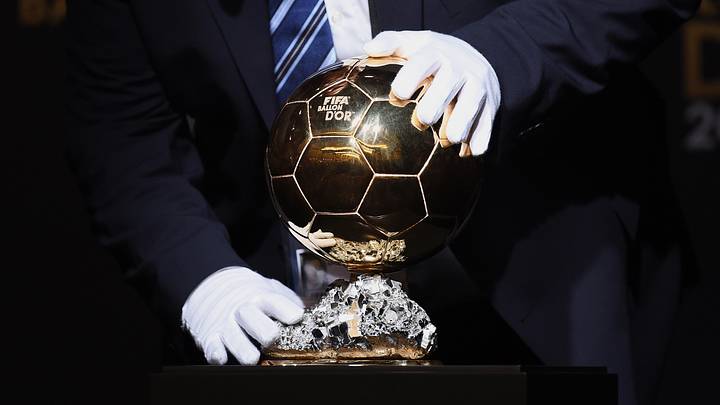
When sports writers Gabriel Hanot and Jacques Ferran concocted an award for journalists to honor the finest European soccer player of the year way back in the mid 1950s, they could hardly have known what they would eventually unleash.
The Ballon d’Or, organized each year by France Football magazine and voted for by selected journalists, has grown steadily in importance over the decades to become the single most significant individual honor in global soccer. Nothing else—not even FIFA’s official trinket, clumsily titled The Best Awards—even comes close.
Super-charged by the Messi-Ronaldo era and an ever-growing trend towards individualism, the Ballon d’Or holds special status as the high watermark of exceptionalism. In 2026, superstars like Kylian Mbappé and Lamine Yamal actively campaign for votes, while the results of every year are fiercely debated.
No year’s award has ever been won unanimously and, despite its prestige, the Ballon d’Or is not above bizarre decision making, eyebrow-raising oversights and fluctuating parameters.
Here are the biggest controversies in the award’s history.
10. The Lack of Non-Europeans

Conceived as an award solely for European players playing in Europe, the award stayed that way until 1995 when the rest of the world’s stars were finally deemed worthy of judgement.
The logic of focussing on Europeans at the outset was sound, given the lack of global broadcasting. But that started to fall down long before the ‘90s, as the best South Americans and Africans naturally gravitated towards the top European leagues—but still couldn’t be considered.
As a result, the historic winners list lacks recognition of the likes of Pelé, Diego Maradona, Mario Kempes and Romário.
Muddying the rules even further, Argentine-born stars like Alfredo Di Stefano and Omar Sívori did get to win the award because of dual citizenship.
9. Keegan’s Back-to-Back Awards

Kevin Keegan was a superb forward; one of only four Englishmen to lift the Ballon d’Or and one of only nine players ever to retain the trophy back in 1979.
However, King Kev’s first honor was undoubtedly a strange one. The former Liverpool striker initially struggled to his best form after a British transfer record move to Hamburg and he won no club honors at all in 1978. Meanwhile, England didn’t even qualify for the World Cup.
The same year, Kenny Dalglish, signed as his Liverpool replacement, bagged 31 goals, including the winner in the European Cup final. He finished just eighth in the voting.
8. Haaland Snubbed

Erling Haaland could hardly have done much more in his first season at Manchester City. The goal-munching super striker scored 52 times in 53 appearances as City won a historic treble.
Still, voters preferred Lionel Messi (by some margin) for his eighth prize after his World Cup heroics.
7. Sneijder Misses the Podium

Messi dominated again back in 2010, taking advantage of a split vote between Spain’s World Cup-winning maestros Andrés Iniesta and Xavi.
Most curiously, however, was the fact that Wesley Sneijder, a treble winner with José Mourinho’s Inter Milan and key player for the Netherlands in reaching the World Cup final, missed out on the podium entirely, finishing fourth with just 14.5% of the vote.
Meanwhile, in a packed field, Diego Milito—Serie A Footballer of the Year and scorer in the Champions League final—was not even nominated.
6. Owen Wins Over Raúl

Michael Owen remains the last Englishman to win the trophy back in 2001, after a treble (of sorts) with Liverpool.
The then-21-year-old forward wowed voters with his goalscoring for club and country, which included a memorable hat-trick against Germany in a World Cup qualifier.
However, Owen’s 2001 largely pales in comparison to Raúl’s who dominated La Liga with Real Madrid and was named both the best player and top scorer that season.
The typically measured media response in Spain included headlines like “Stolen Ballon d’Or” while the decision is still debated in Madrid circles to this day.
5. Henry Overlooked

2003 was another strange year for the Ballon d’Or that went under the radar thanks to the lack of social media.
Classy Czech winger Pavel Nedvěd took home the big golden ball after a strong year with Juventus in which he won Serie A and reached the Champions League final, though his individual statistics look relatively modest through modern eyes.
Meanwhile, Thierry Henry could only come second despite a staggering season in 2002–03, becoming the first player to score 20+ goals and register 20+ assists in a Premier League season.
Paolo Maldini, another overlooked legend, placed third in the voting.
4. Ferenc Puskas Misses Out

Luís Suárez (not that one) won the award back in 1960 after impressing for Barcelona, but how Ferenc Puskás only finished second in the voting is almost beyond comprehension.
The Galloping Major was the top scorer in Spain with Real Madrid and registered a frankly ludicrous 47 goals in 36 games across 1959–60—four of which came in the European Cup final.
The Hungarian legend never won a Ballon d’Or, but surely would’ve had the award started a few years earlier when he was in his pomp.
3. Real Madrid Throw a Tantrum

Two decades on from Raúl-gate, Madrid upped the ante after Vinícius Jr was overlooked for the Ballon d’Or in favor of Rodri.
The Spain midfielder had been the fulcrum of Spain’s Euro 2024 win, but Real Madrid felt (strongly) that their Brazilian superstar, who was key in their La Liga and Champions League wins, was the true deserving player.
Such was Los Blancos’s indignance that the club boycotted the ceremony in Paris.
“It is clear that Ballon d’Or-Uefa does not respect Real Madrid. And Real Madrid does not go where it is not respected,” read a particularly sulky statement from the club.
2. Voting Extension Hands Ronaldo the Win

Cristiano Ronaldo is the last player to win the award without winning any club trophies in the same year.
The Portuguese superstar did bag an insane 55 goals in 55 games in 2012–13, making him a worthy contender.
However, he was given a helping hand when France Football extended the voting deadline to include the 2014 World Cup playoffs, during which Ronaldo scored four goals to beat Sweden and possibly secured himself the extra votes to get his victory over the line amid a tight three-way race with Lionel Messi and Bayern Munich treble winner Franck Ribéry.
1. COVID Cancellation

The biggest controversy was when there was no award at all. France Football called the whole thing off in 2020, citing organizational difficulties amid the pandemic.
The decision hit poor Robert Lewandowski hard. The Polish striker had just posted outrageous numbers in Bayern Munich’s latest treble win and was far and away the favorite before the cancellation was called.
Lewandowski went again even harder the following year, shattering Gerd Müller’s Bundesliga scoring records with 41 goals in 29 games. Alas, it was to no avail as voters opted to honor Messi’s Copa América triumph instead.
 Add us as a preferred source on Google
Andy Headspeath is a Real Madrid correspondent for Sports Illustrated FC. Originally from the UK, the weather, culture and soccer lured him to Spain over a decade ago where he lives with his wife, son and two untrainable dogs. A player of unspeakably limited talents and only one fully functional knee, he has more than a decade's experience in a wide variety of editorial roles within sports media, from match reporting to in-depth feature writing and interviews. He specializes in soccer history and culture, as well as—of course—La Liga.