%20%20--%3E%0A%3Csvg%20version%3D%221.1%22%20id%3D%22Layer_1%22%20xmlns%3D%22http%3A%2F%2Fwww.w3.org%2F2000%2Fsvg%22%20xmlns%3Axlink%3D%22http%3A%2F%2Fwww.w3.org%2F1999%2Fxlink%22%20x%3D%220px%22%20y%3D%220px%22%0A%09%20width%3D%2239px%22%20height%3D%2240px%22%20viewBox%3D%220%200%2039%2040%22%20enable-background%3D%22new%200%200%2039%2040%22%20xml%3Aspace%3D%22preserve%22%3E%0A%3Cpath%20fill%3D%22%23FFFFFF%22%20d%3D%22M38.5%2C7H28.2v26h10.3V7z%22%2F%3E%0A%3Cpath%20fill-rule%3D%22evenodd%22%20clip-rule%3D%22evenodd%22%20fill%3D%22%23FFFFFF%22%20d%3D%22M26.1%2C25.5c0%2C5.8-4.1%2C7.5-12.9%2C7.5C3.9%2C33%2C0%2C31.2%2C0%2C25.2v-1.1h11.6%0A%09v2.4c0%2C0.7%2C0.1%2C1.4%2C1.2%2C1.4c1%2C0%2C1.2-0.4%2C1.2-1.3v-0.9c0-1.6-0.9-1.6-3.5-2.2C2.2%2C21.7%2C0%2C19.7%2C0%2C15.3v-0.9C0%2C9.3%2C5.5%2C7%2C12.9%2C7%0A%09c10.2%2C0%2C12.8%2C2.6%2C12.8%2C7.4v1.8h-11v-2.9c0-0.6-0.4-1.1-1.2-1.1c-0.6%2C0-1.2%2C0.4-1.2%2C1.1v0.9c0%2C1.5%2C0.9%2C2%2C3.3%2C2.5%0A%09c8%2C1.6%2C10.5%2C3.3%2C10.5%2C7.5V25.5z%22%2F%3E%0A%3C%2Fsvg%3E%0A)
11 Players Real Madrid Signed After Standout World Cup Performances
As a club that prides itself on signing the best of the best, Real Madrid have used the World Cup as fertile scouting ground over the years.
The condensed, pressured environment of the tournament—often in sweltering heat and against the globe’s finest opposition—can reveal the cream of the crop, with reputations enhanced, legends forged and transfers earned off the back of strong World Cup displays.
Madrid’s recruiters will always be on the lookout for the next global superstar, but buyer beware—while some transfers have worked out brilliantly, a solid few games one summer is not always the most reliable sample size.
Here are, for better and worse, eleven players that signed for Real Madrid following World Cup success.
1. Didi (1958)

Following Brazil’s World Cup triumph in 1958, Real Madrid signed the Seleção’s chief string-puller Didi, who had won the Golden Ball as player of the tournament.
The transfer was not an unmitigated success, with Didi only lasting a year in Madrid amid tensions with Alfredo Di Stefano. He did, at least, return to Botafogo a European Cup winner.
2. Paul Breitner (1974)

One of the all-time great left backs, Breitner caught Madrid eyes in the 1974 World Cup where his Germany team stunned Netherlands in the home final.
Breitner scored Germany’s equalizer from the penalty spot, during a 2–1 victory and is only of only five men to have scored in two separate World Cup finals.
He made the move from Bayern Munich after the 1974 tournament and went on to win two La Liga titles in three years at the Bernabéu.
3. Gheorghe Hagi (1990)

Although already a star, Hagi’s fine performances at the World Cup certainly helped convince Madrid to pay big to get a deal done in the summer of 1990.
“The Maradona of the Carpathians" occasionally managed to showcase his attacking talents in Madrid, but was not the consistent force he had been for Steaua București and Romania. He left after two years for Brescia and later returned to Spain with Barcelona.
4. Predrag Spasic (1990)

Like Hagi, Spasić arrived in Madrid fresh from an impressive set of displays at Italia 90, where he reached the quarterfinals with a strong Yugoslavia team.
However, in an era when teams were only permitted to have three foreign players, Spasić’s transfer was ultimately a major disappointment.
The center back failed to develop into the much-needed replacement for Oscar Ruggeri, and he is best remembered for an own goal in a Clásico defeat. He joined Osasuna after one season and is a regular inhabitant of ‘worst-ever transfer’ lists.
5. Robert Jarni (1998)

A series of lung-busting outings for World Cup semi-finalists Croatia in 1998 saw Jarni earn a move to Coventry City £2.6 million ($3.5 million). Bizarrely, the wing back then immediately moved to Real Madrid for £3.4 million ($4.5 million) without ever making an appearance in England—with many speculating that the deal was set up to avoid Real Betis having to deal directly with Madrid.
After all the hassle, Jarni spent a sole season at the Bernabéu, before joining Las Palmas.
6. Ronaldo Nazário (2002)

One of Florentino Pérez’s original “Galácticos”, Ronaldo joined in the summer of 2002 after winning the World Cup for Brazil in Japan and South Korea.
His eight goals, which earned him the tournament’s Golden Boot, completed a redemption arc for Ronaldo, who had suffered a fit ahead of the 1998 final defeat against France.
Jersey sales records were broken on the first day after Ronaldo’s €46 million ($53 million) transfer from Inter Milan. The Brazilian superstar went on to score 104 goals in 177 appearances for Los Blancos and win La Liga twice.
7. Fabio Cannavaro (2006)

When Juventus were demoted to Serie B as punishment for the Calciopoli scandal in 2006, Real Madrid were presented with an opportunity.
Veteran defender Cannavaro proved a steal for Madrid at €7 million ($8 million), after captaining Italy to World Cup glory that summer.
Already 33 at the time of his transfer, the Ballon d’Or winner spent three seasons in Madrid and helped restore standards after a barren spell, claiming two La Liga crowns.
8. Mesut Özil (2010)

Özil entered the World Cup in 2010 a relative unknown—outside of Bundesliga aficionados and soccer hipsters—but fast became a global megastar as the standout talent of a young, dynamic Germany team.
The playmaker was nominated for the tournament’s Golden Ball after shining against the likes of England and Argentina, and his easy-on-the-eye creative skills saw him become the most coveted player of the summer.
Real Madrid won the transfer race ahead of Manchester United and Barcelona, paying just €15 million ($17 million) to Werder Bremen.
Özil was an assist monster in his three years at Madrid and played a key role in the record-breaking La Liga title win of 2011–12.
9. Sami Khedira (2010)

Much like Özil, Khedira became hot property after Germany’s head-turning showing in South Africa, with the box-to-box midfielder also earning a move to Madrid.
Although less spectacular than Özil, Khedira outlasted his international teammate in the Spanish capital, sticking around long enough to win the Champions League in 2013–14.
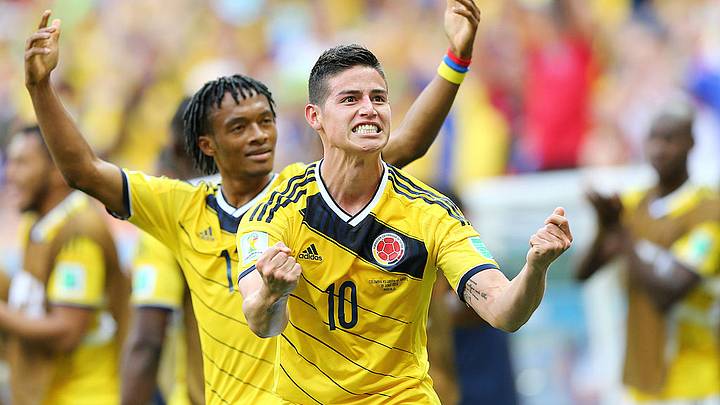
10. James Rodríguez (2014)

Everything about Rodríguez, from his good looks to his swivelling, out-of-this-world volleys, screamed big-money Real Madrid move.
The Colombian openly flirted with Los Blancos during the 2014 World Cup, during which he claimed the Golden Boot with six goals, despite exiting the tournament at the quarterfinals.
The No. 10 only managed to impress in fits and starts at the Bernabéu—though always maintained an eye for the spectacular—and was ultimately overshadowed by Madrid’s other Galácticos.
11. Thibaut Courtois (2018)

Courtois built a reputation as one of the world’s best young goalkeepers during a three-year loan at Atlético Madrid between 2011–2014, but it was in the summer of 2018 that Real Madrid really took notice.
The Belgian was handed the Golden Glove for his wall-like displays at Russia 2018, where he made a tournament-high 27 saves, convincing Florentino Pérez that this was the keeper Madrid needed.
A £35 million ($46.5 million) transfer fee from Chelsea looks a snip at today’s valuations, with Courtois going on to become one of Madrid’s all-time greats.
To date, he has three La Liga titles and was the Man of the Match during the 2022 Champions League final.
READ THE LATEST REAL MADRID NEWS, ANALYSIS AND INSIGHT FROM SI FC
 Add us as a preferred source on Google
Andy Headspeath is a Real Madrid correspondent for Sports Illustrated FC. Originally from the UK, the weather, culture and soccer lured him to Spain over a decade ago where he lives with his wife, son and two untrainable dogs. A player of unspeakably limited talents and only one fully functional knee, he has more than a decade's experience in a wide variety of editorial roles within sports media, from match reporting to in-depth feature writing and interviews. He specializes in soccer history and culture, as well as—of course—La Liga.