%20%20--%3E%0A%3Csvg%20version%3D%221.1%22%20id%3D%22Layer_1%22%20xmlns%3D%22http%3A%2F%2Fwww.w3.org%2F2000%2Fsvg%22%20xmlns%3Axlink%3D%22http%3A%2F%2Fwww.w3.org%2F1999%2Fxlink%22%20x%3D%220px%22%20y%3D%220px%22%0A%09%20width%3D%2239px%22%20height%3D%2240px%22%20viewBox%3D%220%200%2039%2040%22%20enable-background%3D%22new%200%200%2039%2040%22%20xml%3Aspace%3D%22preserve%22%3E%0A%3Cpath%20fill%3D%22%23FFFFFF%22%20d%3D%22M38.5%2C7H28.2v26h10.3V7z%22%2F%3E%0A%3Cpath%20fill-rule%3D%22evenodd%22%20clip-rule%3D%22evenodd%22%20fill%3D%22%23FFFFFF%22%20d%3D%22M26.1%2C25.5c0%2C5.8-4.1%2C7.5-12.9%2C7.5C3.9%2C33%2C0%2C31.2%2C0%2C25.2v-1.1h11.6%0A%09v2.4c0%2C0.7%2C0.1%2C1.4%2C1.2%2C1.4c1%2C0%2C1.2-0.4%2C1.2-1.3v-0.9c0-1.6-0.9-1.6-3.5-2.2C2.2%2C21.7%2C0%2C19.7%2C0%2C15.3v-0.9C0%2C9.3%2C5.5%2C7%2C12.9%2C7%0A%09c10.2%2C0%2C12.8%2C2.6%2C12.8%2C7.4v1.8h-11v-2.9c0-0.6-0.4-1.1-1.2-1.1c-0.6%2C0-1.2%2C0.4-1.2%2C1.1v0.9c0%2C1.5%2C0.9%2C2%2C3.3%2C2.5%0A%09c8%2C1.6%2C10.5%2C3.3%2C10.5%2C7.5V25.5z%22%2F%3E%0A%3C%2Fsvg%3E%0A)
Every Manager That Has Ever Replaced Pep Guardiola and How They Fared
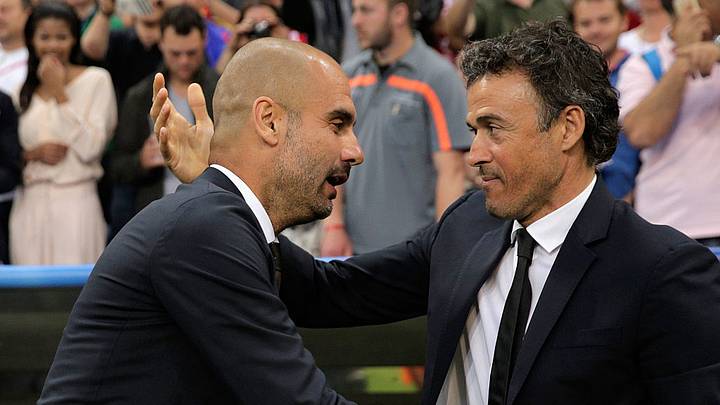
They’re calling it the impossible job. How can Enzo Maresca possibly follow a decade of Pep Guardiola-led dominance in Manchester?
However, history suggests that greatness can be inherited, harnessed and built upon. From Liverpool’s ’Boot Room’ dynasty to Arne Slot’s Premier League title success in a post-Jürgen Klopp landscape, there are local examples to encourage Manchester City’s new boss.
Further afield, Stefan Kovacs lifted two European Cups with Ajax after Rinus Michels’s totaalvoetbal revolution, and Fabio Capello further evolved Arrigo Sacchi’s two-time European Cup-winning machine into perennial Serie A champions and the slayers of Johan Cruyff’s Barcelona Dream Team in 1994.
Those who successfully follow the preceding genius generally boast a prior working relationship and are aided by cores remaining intact. Maresca has taken over a Man City team that has undergone plenty of change over the past two years, with stalwarts of the Guardiola era moving on.
This is a new dawn at the Etihad Stadium, with a former Guardiola assisant leading the charge. Here’s how the Spaniard’s successors at his previous three jobs have fared.
Luis Enrique (Barcelona Atlètic)

Barcelona ’B’, renamed Barcelona Atlètic in 2008, has quite the coaching alumni. It was, of course, where Guardiola started his quest to alter soccer forever, and he was immediately followed by a future three-time Champions League-winning manager, Luis Enrique.
Enrique is one of just 17 players to play on both sides of the Clásico divide, and one of the very few to directly transfer between Barça and Real Madrid. After five years in the capital, Enrique finished his playing career with an eight-year spell in Catalonia.
Upon his appointment as Guardiola’s successor in 2008, Enrique said: "I have come home."
Two years prior, Enrique had offered to take charge of the newly promoted top-flight outfit Gimnàstic de Tarragona for free and planned to bring Guardiola in as his assistant. The board turned him down, and Nàstic have spent the next 19 seasons away from La Liga. Talk about a sliding-doors moment.
Guardiola instead returned to Barça and guided the reserves up to the third tier. Enrique built on his work, overseeing promotion to the Segunda in his second season and into the Segunda playoffs, which they were ineligible for, in 2010–11, with an impressive haul of 71 points.
Sergi Roberto, Marc Bartra and Thiago Alcántara were among those who starred for Enrique’s team before he left for Roma in 2011.
Tito Vilanova (Barcelona)

While the heavy and dark Guardiola-shaped cloud didn’t linger over Enrique in a relatively low-pressure job, it had certainly taken shape when Tito Vilanova was appointed Barcelona manager in 2012.
Guardiola had helped craft perhaps the greatest club team in soccer history. Barça claimed 14 major honors during his four-year reign, including two Champions Leagues and three La Ligas. However, he was exhausted by José Mourinho’s psychological warfare by the end of the 2011–12 season, with Real Madrid’s counterattacking juggernaut bringing Barça’s spell of dominance to a close.
Los Blancos seemed primed for their own prolonged period at the summit, as Barça pivoted to Guardiola’s right-hand man, Vilanova, in a bid to come again.
The transition was seamless. Vilanova won 23 of his first 25 La Liga games in charge, and Barça led the division from start to finish, matching Madrid’s record haul of 100 points from the season before.
Cruelly, Vilanova‘s reign was cut short by illness and he passed away at the age of 45 in 2014. Their post-Guardiola decline didn’t kick in until the likes of Ronald Koeman and Quique Setién took the job on.
Carlo Ancelotti (Bayern Munich)

Guardiola was hugely responsible for reshaping German soccer, although Bayern Munich’s regeneration predated the Spaniard. Louis van Gaal is largely credited with bringing the great German club into the 21st century, and ’gegenpressing’ became the rage after Bayern toppled Bundesliga rivals Borussia Dortmund in the 2013 Champions League final.
Guardiola had huge shoes to fill when he arrived in an alien environment off the back of the aforementioned success led by Jupp Heynckes, delivering three consecutive league titles and two DFB-Pokals. Three Champions League semifinal exits, however, meant the Spaniard departed with a sense of unfulfillment.
Thirsty for another continental conquest, Bayern pivoted to the most successful manager in the competition’s history. Carlo Ancelotti is hardly an ideological equal to Guardiola, but the club believed that the Italian was wise enough to tinker without ruining what had been crafted by not merely the Spaniard, but the likes of Van Gaal and Heynckes.
However, Ancelotti’s reign in Munich was somewhat disappointing. Sure, their domestic dominance continued, but they regressed in the Champions League, losing to Real Madrid in the quarterfinals.
Key players turned on the Italian at the start of his second season, with the influential Thomas Müller saying he didn’t feel valued by the manager. A star-studded group didn’t take to Ancelotti’s laissez-faire approach, which was a far cry from Guardiola’s hypnotic detail.
Things came to a head in September 2017, with Ancelotti losing his job after a 3–0 defeat to Paris Saint-Germain.
 Add us as a preferred source on Google
James Cormack is a writer for SI FC. Opting against a football coaching undergraduate degree at the last minute, he instead decided to take on a six-month internship with 90min in 2019 and hasn't looked back. Cormack's current SEO focus means he tends to venture to the land of match previews and predicted lineups, but he also has a wealth of experience in news and feature writing. A passion for soccer's history and the European game often takes his work beyond the familiarity of the Premier League, but it's with Tottenham Hotspur where his strongest allegiance lies.