%20%20--%3E%0A%3Csvg%20version%3D%221.1%22%20id%3D%22Layer_1%22%20xmlns%3D%22http%3A%2F%2Fwww.w3.org%2F2000%2Fsvg%22%20xmlns%3Axlink%3D%22http%3A%2F%2Fwww.w3.org%2F1999%2Fxlink%22%20x%3D%220px%22%20y%3D%220px%22%0A%09%20width%3D%2239px%22%20height%3D%2240px%22%20viewBox%3D%220%200%2039%2040%22%20enable-background%3D%22new%200%200%2039%2040%22%20xml%3Aspace%3D%22preserve%22%3E%0A%3Cpath%20fill%3D%22%23FFFFFF%22%20d%3D%22M38.5%2C7H28.2v26h10.3V7z%22%2F%3E%0A%3Cpath%20fill-rule%3D%22evenodd%22%20clip-rule%3D%22evenodd%22%20fill%3D%22%23FFFFFF%22%20d%3D%22M26.1%2C25.5c0%2C5.8-4.1%2C7.5-12.9%2C7.5C3.9%2C33%2C0%2C31.2%2C0%2C25.2v-1.1h11.6%0A%09v2.4c0%2C0.7%2C0.1%2C1.4%2C1.2%2C1.4c1%2C0%2C1.2-0.4%2C1.2-1.3v-0.9c0-1.6-0.9-1.6-3.5-2.2C2.2%2C21.7%2C0%2C19.7%2C0%2C15.3v-0.9C0%2C9.3%2C5.5%2C7%2C12.9%2C7%0A%09c10.2%2C0%2C12.8%2C2.6%2C12.8%2C7.4v1.8h-11v-2.9c0-0.6-0.4-1.1-1.2-1.1c-0.6%2C0-1.2%2C0.4-1.2%2C1.1v0.9c0%2C1.5%2C0.9%2C2%2C3.3%2C2.5%0A%09c8%2C1.6%2C10.5%2C3.3%2C10.5%2C7.5V25.5z%22%2F%3E%0A%3C%2Fsvg%3E%0A)
Five Things We Learned From Michael Carrick’s Stunning Second Debut As Man Utd Manager
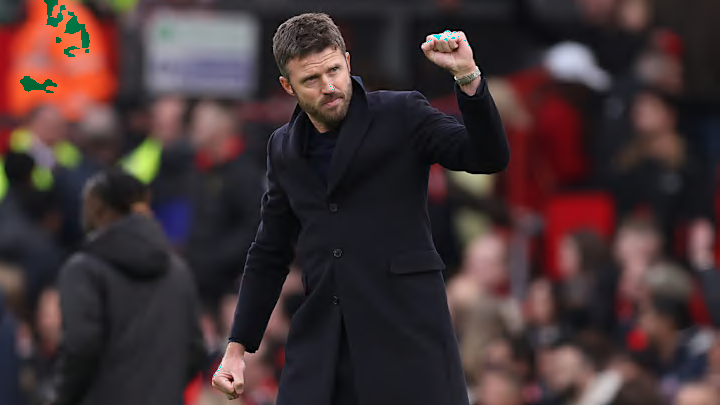
Michael Carrick could not have wished for a better start to this second spell as temporary Manchester United manager, adding Pep Guardiola to the scalps he has claimed.
During his three-game caretaker spell in 2021, Carrick enjoyed victories over both Unai Emery (Villarreal boss at the time) and Mikel Arteta. He also drew with Thomas Tuchel and has now beaten Guardiola following Manchester City’s visit to Old Trafford on Saturday.
This was as close to as tough as it gets for Carrick, but the 44-year-old inspired United to a level of performance seldom seen by fans since Sir Alex Ferguson retired in 2013.
In truth, only losing 2–0 flattered City. Between the three disallowed goals ruled out for marginal offsides, Harry Maguire hitting the bar, Amad Diallo striking the post and a world class save from Gianluigi Donnarumma among his many stops throughout, United could have scored far more.
With no distractions and only Premier League position left to play for, Carrick’s objective for the rest of the season—potentially an audition to land the job permanently—is reported to be Champions League qualification with a top four, or top five, finish.
Consistency, something that was lacking under Ruben Amorim over the past year, is going to be key in achieving that. But if United can bottle this derby performance and take that forward, they will be a forced to be reckoned with in that race for Europe’s elite competition.
Carrick Channels Fergie
Roy Keane didn’t approve of Michael Carrick’s appointment, or some of the choices made in the selection of the new coaching team, as well as recently suggesting that Sir Alex Ferguson lingers at Old Trafford like a “bad smell” more than a decade after calling time on a historic career.
The former captain had a problem with Darren Fletcher allegedly seeking ‘permission’ from Fergie before accepting the gig on a short-term basis when Ruben Amorim was sacked.
But what Carrick, one of the key figures in Fergie’s third great United team from the late 2000s, did was play a brand of football the great Scot would have been proud of.
Lining up in a 4-2-3-1 that had flexibility to become a 4-3-3 and even a 4-2-4, it highlighted Carrick’s shrewd interpretation of the strengths in the squad and suddenly felt a lot more like ‘United’ should.

This wasn’t about taking City on at their own game, or playing with intricate tactical mastery with a focus on the technical, it was about performing with the kind of speed, directness and intensity that the great United sides over the decades have been defined by. The visitors controlled the majority of possession, but Carrick’s team put pressure on the ball in the defensive third—something which wasn’t happening properly before—and broke forward with purpose.
Counter-attacking goals were the hallmark of Ferguson teams, turning defensive situations into attacks in the blink of an eye. Multiple times, United burst away and it was from that which Bryan Mbeumo at last broke the deadlock after Donnarumma had been single-handedly keeping City in it.
Carrick did away with inside forwards and asked Patrick Dorgu and Amad to play as proper wingers, stretching rather than shrinking the pitch. Bruno Fernandes in the No. 10 role plays to his strengths, giving the skipper a freedom to be creative in a way that he couldn’t when previously operating much deeper under Amorim. His vision and constant switching of the play when wingers were in space kept City heads spinning and gave Guardiola’s side no time to breathe.
Mbeumo, Amad Make Man Utd Better
It’s no coincidence that the return of Mbeumo and Amad came in a victory of this nature. The pair, away on international duty at the Africa Cup of Nations since mid-December’s 4–4 draw against Bournemouth, are United’s two best attackers.
Without them, the average goals per game output dropped from 2.4 across nine fixtures stretching from the October international break to their departure for AFCON, to just 1.2 across the subsequent games up to and including last weekend’s FA Cup defeat to Brighton & Hove Albion.
Both are quick, both play with high energy, both are direct.
Although Mbeumo has made his name as a wide forward, Carrick chose him in the No. 9 role instead of Benjamin Šeško, who is a very different type of player as a penalty box striker. But playing Mbeumo, who had the freedom to roam anyway, centrally allowed Carrick to also have Amad in the same team in his strongest position on the right flank.
Statement of Intent on Mainoo

Looking back at Carrick’s high public praise of Kobbie Mainoo last summer, which came during an interview published on Rio Ferdinand’s YouTube channel, it suggested that the midfielder would be heavily involved once the new boss got started. That prediction was proven correct here.
Fletcher had already brought back the 20-year-old, famously kept out of the starting XI this season by Amorim, and Carrick gave Mainoo his first 90 minutes in a Premier League game in eight months.
There could hardly have been a bigger stage, but Mainoo proved that the new boss can trust him.
Crucially, there was nothing truly spectacular about what he did, but it was the kind of level-headed and mature performance that originally fuelled his breakout in 2024—both with United and England. The basics done well can never be underestimated.
Strongest Back Four Plays Together

The return of Harry Maguire from an injury absence that stretched back into the latter stages of Amorim’s time in charge meant that Carrick had his strongest back four immediately available.
Lisandro Martínez has spent too much time injured since he joined the club in 2022, but is arguably as good as any central defender in the Premier League when fully fit. Erling Haaland towered over the Argentine but there was only one winner of the physical battle in this contest.
The pair of centre backs had not started together in almost a year prior to this game. On that occasion—against Crystal Palace last February—it was as part of a back three.
Diogo Dalot didn’t have a brilliant start to the game, at risk of being sent off for a reckless challenge on Jérémy Doku, but more than held his own against the tricky Belgian in the end. On the other side, Luke Shaw is a better left back than a left-sided centre back.
If this back four can all stay fit, which has been the problem and remains a sizeable ‘if’, to get a run of games together, United can potentially become much more defensively solid quite quickly.
Fernandes Is Still No. 1

Bruno Fernandes’s future as a Manchester United player has never been more in doubt. He turned down an opportunity to move to Saudi Arabia last summer because he still has a desire to stay at the highest level—which means staying in Europe—and has made clear his desire to feel overtly wanted within the corridors of power at Old Trafford.
Fernandes reportedly has no plans to leave the club this month, but is tipped to consider his options at the end of the season, when he will have just one year left on his contract.
After this derby win, his importance to United is in no doubt. As already alluded to, playing further forward as the No. 10 brought the best out of him—something we’d already started to see during Fletcher’s brief stint. The Portuguese was at the heart of everything that was good about United against City and replacing him, even now at the age of 31, would be a very tall order indeed.
It can only be hoped that a strong end to the season convinces both him and the club that they belong together for a while longer yet.
READ THE LATEST MAN UTD NEWS, TRANSFER RUMORS AND MORE
 Add us as a preferred source on Google
Jamie Spencer is a writer and editor for SI FC. Jamie grew up in Manchester, England, in the 1990s and fell in love with the game at the same time as the Premier League was taking off. With more than a decade of experience behind him in sports media, he specializes in Manchester United and the overall Premier League, still living in England’s north-west soccer hotbed. Jamie is also an expert on the women’s game and enjoys old school nostalgia, telling stories from soccer’s rich history and culture.