%20%20--%3E%0A%3Csvg%20version%3D%221.1%22%20id%3D%22Layer_1%22%20xmlns%3D%22http%3A%2F%2Fwww.w3.org%2F2000%2Fsvg%22%20xmlns%3Axlink%3D%22http%3A%2F%2Fwww.w3.org%2F1999%2Fxlink%22%20x%3D%220px%22%20y%3D%220px%22%0A%09%20width%3D%2239px%22%20height%3D%2240px%22%20viewBox%3D%220%200%2039%2040%22%20enable-background%3D%22new%200%200%2039%2040%22%20xml%3Aspace%3D%22preserve%22%3E%0A%3Cpath%20fill%3D%22%23FFFFFF%22%20d%3D%22M38.5%2C7H28.2v26h10.3V7z%22%2F%3E%0A%3Cpath%20fill-rule%3D%22evenodd%22%20clip-rule%3D%22evenodd%22%20fill%3D%22%23FFFFFF%22%20d%3D%22M26.1%2C25.5c0%2C5.8-4.1%2C7.5-12.9%2C7.5C3.9%2C33%2C0%2C31.2%2C0%2C25.2v-1.1h11.6%0A%09v2.4c0%2C0.7%2C0.1%2C1.4%2C1.2%2C1.4c1%2C0%2C1.2-0.4%2C1.2-1.3v-0.9c0-1.6-0.9-1.6-3.5-2.2C2.2%2C21.7%2C0%2C19.7%2C0%2C15.3v-0.9C0%2C9.3%2C5.5%2C7%2C12.9%2C7%0A%09c10.2%2C0%2C12.8%2C2.6%2C12.8%2C7.4v1.8h-11v-2.9c0-0.6-0.4-1.1-1.2-1.1c-0.6%2C0-1.2%2C0.4-1.2%2C1.1v0.9c0%2C1.5%2C0.9%2C2%2C3.3%2C2.5%0A%09c8%2C1.6%2C10.5%2C3.3%2C10.5%2C7.5V25.5z%22%2F%3E%0A%3C%2Fsvg%3E%0A)
The Greatest FA Cup Underdog Stories of All Time
The FA Cup is famous in England and around the world for producing stunning upsets—or “cupsets,” if you prefer—and unforgettable underdog stories every single season.
Teams separated by dozens, sometimes even hundreds, of league places can face one another in the competition, and throughout its history giants from the old First Division and modern Premier League have suffered humiliating defeats at the hands of lower-league sides chasing their moment of glory.
That enduring “magic of the FA Cup” continues to deliver shock after shock, with the tournament’s rich history packed full of fearless underdogs going toe to toe with the heavyweights of English soccer—and somehow coming out on top.
Here are some of the greatest giant-killings and Cinderella stories of them all.
Notts County (1894)
If you ever needed reminding of just how old the FA Cup really is, Notts County’s triumph came in the 23rd edition of the competition—more than 130 years ago—and remains the only time the club has ever lifted the trophy.
Their remarkable run to glory saw them defeat Burnley, Burton Wanderers, Nottingham Forest and Blackburn Rovers before setting up a final clash with Bolton Wanderers. Waiting for them at Goodison Park, however, Bolton were blown away in a dominant 4–1 victory that secured one of the greatest achievements in Notts County’s history.
Jimmy Logan was the star of the show, becoming just the second player ever to score a hat-trick in an FA Cup final.
FA Cup Run
- First Round: Notts County 1–0 Burnley — Jan. 27, 1894
- Second Round: Burton Wanderers 1–2 Notts County — Feb. 10, 1894
- Third Round: Nottingham Forest 1–1 Notts County — Feb. 24, 1894
- Third Round Replay: Notts County 4–1 Nottingham Forest — Mar. 3, 1894
- Semifinal: Notts County 1–0 Blackburn Rovers — Mar. 10, 1894
- Final: Notts County 4–1 Bolton Wanderers — Mar. 31, 1894
Tottenham Hotspur (1901)

Tottenham Hotspur made history in 1901 by becoming the first—and still only—non-league club to win the FA Cup.
More than a century later, Spurs are now regarded as one of the competition’s traditional powerhouses with eight FA Cup triumphs, but their 1901 success remains one of the most remarkable stories in English soccer history.
The north London side defeated established Football League opposition throughout their incredible run, including Preston North End and reigning holders Bury, before eventually overcoming Sheffield United in a final replay to lift the trophy.
FA Cup Run
- First Round: Tottenham Hotspur 1–1 Preston North End — Feb. 9, 1901
- First Round Replay: Preston North End 2–4 Tottenham Hotspur — Feb. 13, 1901
- Second Round: Tottenham Hotspur 2–1 Bury — Feb. 16, 1901
- Third Round: Reading 1–1 Tottenham Hotspur — Mar. 23, 1901
- Third Round Replay: Tottenham Hotspur 3–0 Reading — Mar. 27, 1901
- Semifinal: Tottenham Hotspur 4–0 West Bromwich Albion — Apr. 8, 1901
- Final: Tottenham Hotspur 2–2 Sheffield United — Apr. 20, 1901
- Final Replay: Tottenham Hotspur 3–1 Sheffield United — Apr. 27, 1901
Wolverhampton Wanderers (1908)

During the 1907–08 season, Wolverhampton Wanderers were a Second Division side and only finished ninth in the league—yet somehow still ended the campaign by winning the FA Cup for the second time in club history.
Wolves produced a superb run through the competition before defeating Newcastle United 3–1 in the final at Crystal Palace, sealing one of the great underdog triumphs of the early FA Cup era.
The tournament that season was filled with shocks. Thirteen of the 20 First Division clubs were knocked out by teams from lower divisions, while three of the four semifinalists came from outside the top flight—a reminder that the “magic of the FA Cup” was alive and well even more than a century ago.
FA Cup Run
- First Round: Bradford City 1–1 Wolverhampton Wanderers — Jan. 11, 1908
- First Round Replay: Wolverhampton Wanderers 1–0 Bradford City — Jan. 15, 1908
- Second Round: Wolverhampton Wanderers 2–0 Bury — Feb. 1, 1908
- Third Round: Wolverhampton Wanderers 2–0 Swindon Town — Feb. 22, 1908
- Fourth Round: Stoke City 0–1 Wolverhampton Wanderers — Mar. 7, 1908
- Semifinal: Wolverhampton Wanderers 2–0 Southampton — Mar. 28, 1908
- Final: Wolverhampton Wanderers 3–1 Newcastle United — Apr. 25, 1908
Barnsley (1912)
Barnsley’s remarkable 1912 FA Cup triumph was not for the faint-hearted.
During their extraordinary run to the trophy, Barnsley played 12 matches in total—including an astonishing 12 professional games in a single month, both records that still stand today. It was a grueling journey built on discipline, resilience and sheer endurance.
This was not a flashy, free-scoring side. Barnsley were rugged, organized and incredibly difficult to break down, conceding just three goals throughout the entire competition. Draws became a regular theme of their campaign, but when it mattered most, they always found a way through.
Their historic run finally ended in glory with a hard-fought 1–0 replay victory over West Bromwich Albion after extra time, securing the FA Cup for the first—and still only—time in the club’s history.
FA Cup Run
- First Round: Birmingham City 0–0 Barnsley — Jan. 13, 1912
- First Round Replay: Barnsley 3–0 Birmingham City — Jan. 22, 1912
- Second Round: Barnsley 1–0 Leicester Fosse — Feb. 3, 1912
- Third Round: Bolton Wanderers 1–2 Barnsley — Feb. 24, 1912
- Fourth Round: Barnsley 0–0 Bradford City — Mar. 9, 1912
- Fourth Round, First Replay: Bradford City 0–0 Barnsley — Mar. 13, 1912
- Fourth Round, Second Replay: Barnsley 0–0 Bradford City — Mar. 18, 1912
- Fourth Round, Third Replay: Barnsley 3–2 Bradford City — Mar. 21, 1912
- Semifinal: Barnsley 0–0 Swindon Town — Mar. 30, 1912
- Semifinal Replay: Barnsley 1–0 Swindon Town — Apr. 3, 1912
- Final: Barnsley 0–0 West Bromwich Albion — Apr. 20, 1912
- Final Replay: Barnsley 1–0 West Bromwich Albion (after extra time) — Apr. 24, 1912
West Bromwich Albion (1931)
Second Division West Bromwich Albion enjoyed a relatively favorable path to Wembley in 1931, facing just one First Division side before reaching the final.
The Baggies defeated Portsmouth in the fifth round before setting up a showdown with local rivals Birmingham City, who were playing in the top flight at the time. West Brom had already won every previous FA Cup meeting between the two clubs, and that dominance continued in the final as a brace from W.G. Richardson secured a 2–1 victory.
Their triumph was a landmark achievement, with West Brom becoming the last team from outside the top division to win the FA Cup until Sunderland repeated the feat in 1973.
FA Cup Run
- Third Round: West Bromwich Albion 2–2 Charlton Athletic — Jan. 10, 1931
- Third Round, First Replay: Charlton Athletic 1–1 West Bromwich Albion — Jan. 14, 1931
- Third Round, Second Replay: West Bromwich Albion 2–1 Charlton Athletic — Jan. 19, 1931
- Fourth Round: West Bromwich Albion 1–0 Tottenham Hotspur — Jan. 24, 1931
- Fifth Round: Portsmouth 0–1 West Bromwich Albion — Feb. 14, 1931
- Sixth Round: West Bromwich Albion 1–1 Wolverhampton Wanderers — Feb. 28, 1931
- Sixth Round Replay: Wolverhampton Wanderers 1–2 West Bromwich Albion — Mar. 4, 1931
- Semifinal: West Bromwich Albion 1–0 Everton — Mar. 14, 1931
- Final: West Bromwich Albion 2–1 Birmingham City — Apr. 25, 1931
Colchester United (1948)
Colchester United’s incredible 1947–48 FA Cup run remains one of the great underdog stories in the competition’s history.
At the time, the club played in the regional Southern League, and 17 members of the squad were only part-time professionals. That made their march to the fifth round all the more extraordinary, especially as they knocked out three Football League clubs along the way.
After overcoming Chelmsford City, Banbury Spencer and Wrexham, Colchester stunned First Division Huddersfield Town before defeating Bradford (Park Avenue) in front of more than 17,000 fans in the fourth round. Their remarkable adventure eventually came to an end with a heavy defeat to top-flight Blackpool, but by then they had already captured national attention.
FA Cup Run
- Fourth Qualifying Round: Chelmsford City 1–3 Colchester United — Nov. 15, 1947
- First Round: Colchester United 2–1 Banbury Spencer — Nov. 29, 1947
- Second Round: Colchester United 1–0 Wrexham — Dec. 13, 1947
- Third Round: Colchester United 1–0 Huddersfield Town — Jan. 10, 1948
- Fourth Round: Colchester United 3–2 Bradford (Park Avenue) — Jan. 24, 1948
- Fifth Round: Blackpool 5–0 Colchester United — Feb. 7, 1948
Yeovil Town (1949)

Yeovil Town were true minnows during their unforgettable 1948–49 FA Cup run.
The Southern League side entered the competition with little expectation, having only previously reached the third round before World War II. But they quickly became the story of the tournament, producing one of the greatest giant-killings in FA Cup history.
Their magical run peaked in the fourth round when they stunned wealthy First Division side Sunderland in front of a fog-shrouded Huish ground. Eric Bryant’s extra-time winner secured a famous 2–1 victory over the “Bank of England club,” whose financial power made them one of the most feared teams in the country at the time.
Yeovil’s dream eventually came crashing to an end with an 8–0 defeat away to Manchester United at Maine Road, but their shock win over Sunderland remains one of the club’s defining moments.
FA Cup Run
- First Round: Yeovil Town 4–0 Romford — Nov. 27, 1948
- Second Round: Weymouth 0–4 Yeovil Town — Dec. 11, 1948
- Third Round: Yeovil Town 3–1 Bury — Jan. 8, 1949
- Fourth Round: Yeovil Town 2–1 Sunderland — Jan. 29, 1949
- Fifth Round: Manchester United 8–0 Yeovil Town — Feb. 12, 1949
Sunderland (1973)
Sunderland’s second-ever FA Cup triumph came while they were a Second Division side. Reaching the final was impressive enough, but they then went and defeated holders Leeds United at Wembley.
Leeds had finished third in the First Division that season and were considered one of the strongest sides in England, making them overwhelming favorites for the final. In front of nearly 100,000 fans at Wembley, however, Sunderland pulled off a famous upset as John Porterfield scored the only goal of the game after half an hour.
FA Cup Run
- Third Round: Notts County 1–1 Sunderland — Jan. 13, 1973
- Third Round Replay: Sunderland 2–0 Notts County — Jan. 16, 1973
- Fourth Round: Sunderland 1–1 Reading — Feb. 3, 1973
- Fourth Round Replay: Reading 1–3 Sunderland — Feb. 7, 1973
- Fifth Round: Manchester City 2–2 Sunderland — Feb. 24, 1973
- Fifth Round Replay: Sunderland 3–1 Manchester City — Feb. 27, 1973
- Sixth Round: Sunderland 2–0 Luton Town — Mar. 17, 1973
- Semifinal: Sunderland 2–1 Arsenal — Apr. 7, 1973
- Final: Leeds United 0–1 Sunderland — May 5, 1973
Wimbledon (1975)

This was a slightly more understated Wimbledon side compared to the battle-hardened underdogs that would shake English soccer just over a decade later.
Even so, the 1974–75 FA Cup campaign showed their resilience. The non-league Dons overcame Wokingham Town and Guildford & Dorking United to reach the first round. They then edged past Bath City and Kettering Town before, still without conceding a goal in the competition, producing a notable upset by beating First Division Burnley to reach the fourth round.
Wimbledon then pushed Leeds United all the way. The dominant Yorkshire side eventually edged through 1–0 in the replay after a goalless draw at Plough Lane.
FA Cup Run
- First Round: Wimbledon 1–0 Bath City — Nov. 23, 1974
- Second Round: Wimbledon 2–0 Kettering Town — Dec. 14, 1974
- Third Round: Burnley 0–1 Wimbledon — Jan. 4, 1975
- Fourth Round: Leeds United 0–0 Wimbledon — Jan. 25, 1975
- Fourth Round Replay: Wimbledon 0–1 Leeds United — Feb. 10, 1975
Southampton (1976)
Southampton won their first—and only—major piece of silverware as a club in 1976 when they upset the odds to beat First Division Manchester United in the FA Cup final.
United had finished third in the league, while Southampton were sixth in the division below, but that difference meant little on the day as Bobby Stokes scored the only goal of the game to secure a famous win at Wembley.
FA Cup Run
- Third Round: Southampton 1–1 Aston Villa — Jan. 3, 1976
- Third Round Replay: Aston Villa 1–2 Southampton — Jan. 7, 1976
- Fourth Round: Southampton 3–1 Blackpool — Jan. 24, 1976
- Fifth Round: West Bromwich Albion 1–1 Southampton — Feb. 14, 1976
- Fifth Round Replay: Southampton 4–0 West Bromwich Albion — Feb. 18, 1976
- Sixth Round: Bradford City 0–1 Southampton — Mar. 6, 1976
- Semifinal: Southampton 2–0 Crystal Palace — Apr. 3, 1976
- Final: Manchester United 0–1 Southampton — May 10, 1976
Blyth Spartans (1978)
This extended run from non-league Blyth Spartans included 11 matches and ultimately ended in a fifth-round replay defeat to Wrexham.
The modest Northumberland side beat fellow non-league teams Shildon, Crook Town and Consett to progress through the qualifying rounds before beginning to cause upsets against professional opposition. Blyth then saw off Chesterfield and Stoke City in remarkable fashion before eventually bowing out on home soil against the Welsh side.
FA Cup Run
- First Qualifying Round: Shildon 0–3 Blyth Spartans — Sep. 17, 1977
- Second Qualifying Round: Crook Town 1–1 Blyth Spartans — Oct. 8, 1977
- Second Qualifying Round Replay: Blyth Spartans 3–0 Crook Town — Oct. 11, 1977
- Third Qualifying Round: Consett 1–4 Blyth Spartans — Oct. 22, 1977
- Fourth Qualifying Round: Bishop Auckland 0–1 Blyth Spartans — Nov. 5, 1977
- First Round: Blyth Spartans 1–0 Burscough — Nov. 26, 1977
- Second Round: Blyth Spartans 1–0 Chesterfield — Dec. 17, 1977
- Third Round: Blyth Spartans 1–0 Enfield — Jan. 7, 1978
- Fourth Round: Stoke City 2–3 Blyth Spartans — Feb. 6, 1978
- Fifth Round: Wrexham 1–1 Blyth Spartans — Feb. 18, 1978
- Fifth Round Replay: Blyth Spartans 1–2 Wrexham — Feb. 27, 1978
West Ham United (1980)

West Ham remain the last team to win the FA Cup while outside the top division.
Trevor Brooking etched his name into Hammers history with two goals in a 1–0 win over Arsenal in the final, sealing the club’s third FA Cup triumph after previous victories in 1964 and 1975.
FA Cup Run
- Third Round: West Bromwich Albion 1–1 West Ham United — Jan. 5, 1980
- Third Round Replay: West Ham United 2–1 West Bromwich Albion — Jan. 8, 1980
- Fourth Round: Leyton Orient 2–3 West Ham United — Jan. 26, 1980
- Fifth Round: West Ham United 2–0 Swansea City — Feb. 16, 1980
- Sixth Round: West Ham United 1–0 Grimsby Town — Mar. 8, 1980
- Semifinal: Everton 1–1 West Ham United — Apr. 12, 1980
- Semifinal Replay: West Ham United 2–1 Everton — Apr. 16, 1980
- Final: West Ham United 1–0 Arsenal — May 10, 1980
Bournemouth (1984)
Bournemouth may only have reached the fourth round of the 1983–84 FA Cup, but one result made it a truly memorable campaign.
The Cherries finished 17th in the Third Division that season, and after beating Walsall and needing a replay to overcome Windsor & Eton, they were drawn against Manchester United. United were the holders and flying high in the First Division, but were stunned 2–0 on the south coast by the third-tier side.
Middlesbrough then did what United could not, knocking Bournemouth out in the fourth round.
FA Cup Run
- First Round: Bournemouth 4–0 Walsall — Nov. 19, 1983
- Second Round: Windsor & Eton 0–0 Bournemouth — Dec. 13, 1983
- Second Round Replay: Bournemouth 2–0 Windsor & Eton — Dec. 19, 1983
- Third Round: Bournemouth 2–0 Manchester United — Jan. 7, 1984
- Fourth Round: Middlesbrough 2–0 Bournemouth — Jan. 31, 1984
York City (1985)
York City enjoyed a memorable cup run in the 1980s, and on two occasions they came up against the dominant force of English soccer at the time, Liverpool—both times seeing their journey ended by the Reds.
Their 1984–85 campaign peaked in the fourth round when they beat Arsenal 1–0 at home to set up a meeting with Liverpool. Ian Rush opened the scoring in typical fashion, but Ricky Sbragia’s equalizer earned York a replay.
At Anfield, however, Liverpool’s quality showed as they ran out 7–0 winners.
FA Cup Run
- First Round: York City 2–0 Newcastle Blue Star — Nov. 17, 1984
- Second Round: Hartlepool United 0–2 York City — Dec. 8, 1984
- Third Round: York City 3–0 Walsall — Jan. 5, 1985
- Fourth Round: York City 1–0 Arsenal — Jan. 26, 1985
- Fifth Round: York City 1–1 Liverpool — Feb. 16, 1985
- Fifth Round Replay: Liverpool 7–0 York City — Feb. 20, 1985
Telford United (1985)
Telford United were one of only four non-league teams since World War II to reach the fifth round of the FA Cup at that time.
They produced a remarkable run, beating higher-league opposition including Lincoln City, Preston North End, Bradford City and Darlington along the way. It was a campaign that captured attention as they consistently overcame teams above them in the soccer pyramid.
Their journey eventually came to an end in the fifth round against Everton, where they were beaten 3–0 in a match they were never expected to win, but the run itself remains one of the standout FA Cup achievements by a non-league side.
FA Cup Run
- First Round: Lincoln City 1–1 Telford United — Nov. 17, 1984
- First Round Replay: Telford United 2–1 Lincoln City — Nov. 20, 1984
- Second Round: Preston North End 1–4 Telford United — Dec. 8, 1984
- Third Round: Telford United 2–1 Bradford City — Jan. 5, 1985
- Fourth Round: Darlington 1–1 Telford United — Jan. 29, 1985
- Fourth Round Replay: Telford United 4–0 Darlington — Feb. 4, 1985
- Fifth Round: Everton 3–0 Telford United — Feb. 16, 1985
Wimbledon (1988)

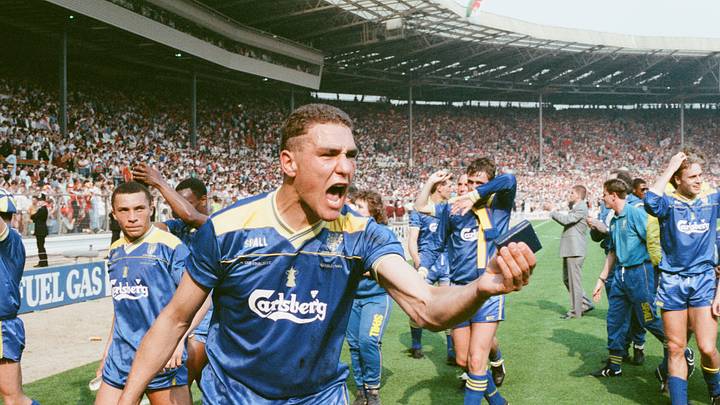
You simply can’t talk about FA Cup underdogs without mentioning “The Crazy Gang.”
Wimbledon’s infamous side wrote themselves into soccer folklore when they stunned Liverpool in the 1988 FA Cup final. While their run to Wembley didn’t feature a long list of giant-killings, they more than made up for it on the biggest stage.
Wimbledon led at half-time thanks to a looping Lawrie Sanchez header, unsettling Liverpool with their aggressive, uncompromising style. The Reds had chances to respond, but John Aldridge missed a crucial penalty after Dave Beasant became the first goalkeeper ever to save a spot-kick in an FA Cup final. From that moment on, Wimbledon looked in control and held on to complete a famous victory.
FA Cup Run
- Third Round: Wimbledon 4–1 West Bromwich Albion — Jan. 9, 1988
- Fourth Round: Mansfield Town 1–2 Wimbledon — Jan. 30, 1988
- Fifth Round: Newcastle United 1–3 Wimbledon — Feb. 20, 1988
- Sixth Round: Wimbledon 2–1 Watford — Mar. 12, 1988
- Semifinal: Luton Town 1–2 Wimbledon — Apr. 9, 1988
- Final: Wimbledon 1–0 Liverpool — May 14, 1988
Shrewsbury Town (2003)
Shrewsbury Town’s FA Cup run in 2002–03 is still fondly remembered by fans in Shropshire.
The Shrews began by beating Stafford Rangers and Barrow in the opening rounds, setting up a third-round tie against an Everton side sitting fifth in the Premier League. In contrast, Shrewsbury were seventh from bottom in League One, making the gulf in status clear on paper.
Everton manager David Moyes returned to Gay Meadow, where he had previously played for Shrewsbury, but left on the wrong end of a shock result, as Nigel Jemson’s 90th-minute header sealed a 2–1 win for the home side.
Their run ended in the fourth round, however, with Chelsea running out 4–0 winners.
FA Cup Run
- First Round: Shrewsbury Town 4–0 Stafford Rangers — Nov. 16, 2002
- Second Round: Shrewsbury Town 3–1 Barrow — Dec. 7, 2002
- Third Round: Shrewsbury Town 2–1 Everton — Jan. 3, 2003
- Fourth Round: Shrewsbury Town 0–4 Chelsea — Jan. 25, 2003
Leeds United (2010)

Leeds United were firmly in their modern-day doldrums in 2010, playing in League One just over six years after their infamous relegation from the Premier League.
Manchester United were second in the Premier League at the time of their third-round meeting, just two points behind Chelsea, while Leeds had already beaten Oldham and Kettering to set up the tie with their fierce rivals.
Jermaine Beckford scored the winner at Old Trafford as Sir Alex Ferguson criticised his side’s “shocking performance” and took issue with the added time, calling the five minutes of stoppage time “an insult to the game.”
Beckford proved decisive again in the next round, although his goals weren’t enough to take Leeds further. He struck twice at Tottenham, including a 96th-minute penalty equalizer to force a replay, but Spurs showed their quality as Jermain Defoe’s hat-trick sent them through.
FA Cup Run
- First Round: Oldham Athletic 0–2 Leeds United — Nov. 7, 2009
- Second Round: Kettering Town 1–1 Leeds United — Nov. 29, 2009
- Second Round Replay: Leeds United 5–1 Kettering Town (a.e.t.) — Dec. 8, 2009
- Third Round: Manchester United 0–1 Leeds United — Jan. 3, 2010
- Fourth Round: Tottenham Hotspur 2–2 Leeds United — Jan. 23, 2010
- Fourth Round Replay: Leeds United 1–3 Tottenham Hotspur — Feb. 3, 2010
Crawley Town (2011)
Crawley Town’s 2010–11 season was one for the history books, as they won promotion to the Football League for the first time in their history while also reaching the fifth round of the FA Cup.
After edging through the fourth qualifying round, they beat Guiseley before knocking out higher-league opposition in Swindon Town, Derby County and Torquay United. Their progress made them the lowest-ranked side left in the fifth-round draw.
Any hopes of a further upset were effectively ended when Steve Evans’ side were handed a glamour tie at Old Trafford. Wes Brown’s goal proved decisive as Manchester United edged out Crawley in a tight contest between the two “Red Devils.”
FA Cup Run
- Fourth Qualifying Round: Newport County 0–1 Crawley Town — Oct. 23, 2010
- First Round: Guiseley 0–1 Crawley Town — Nov. 6, 2010
- Second Round: Crawley Town 1–1 Swindon Town — Nov. 26, 2010
- Second Round Replay: Swindon Town 2–3 Crawley Town (a.e.t.) — Dec. 7, 2010
- Third Round: Crawley Town 2–1 Derby County — Jan. 10, 2011
- Fourth Round: Torquay United 0–1 Crawley Town — Jan. 29, 2011
- Fifth Round: Manchester United 1–0 Crawley Town — Feb. 19, 2011
Luton Town (2013)
Luton Town are more widely remembered these days for their brief spell in the Premier League in 2023–24 and their rapid fall from grace thereafter.
But back in 2012–13, then-Conference Premier Luton produced a remarkable FA Cup run. Starting in October, they overcame Nuneaton Town and Dorchester before pulling off a famous win away at Championship side Wolves. They then made history by becoming the first non-league team to beat Premier League opposition in the FA Cup, defeating Norwich City 1–0 at Carrow Road.
Their run eventually ended in the fifth round with a 3–0 defeat to Millwall.
FA Cup Run
- First Round: Luton Town 1–1 Nuneaton — Nov. 3, 2012
- First Round Replay: Nuneaton 0–2 Luton Town — Nov. 13, 2012
- Second Round: Luton Town 2–1 Dorchester — Dec. 1, 2012
- Third Round: Luton Town 1–0 Wolves — Jan. 5, 2013
- Fourth Round: Norwich City 0–1 Luton Town — Jan. 26, 2013
- Fifth Round: Luton Town 0–3 Millwall — Feb. 16, 2013
Wigan Athletic (2013)

Wigan Athletic remain the only side to win the FA Cup and be relegated from the Premier League in the same season. Although they have not returned to the top flight since, it does little to diminish the legacy of Ben Watson, Roberto Martínez and the rest of the Latics squad.
Their run to Wembley featured a mix of narrow wins and emphatic performances, before they stunned David Moyes’s Everton in the sixth round to book a semifinal meeting with Millwall. Goals from Shaun Maloney and Callum McManaman secured a 2–0 win at Wembley.
In the final, Manchester City were heavy favorites, but Wigan held firm throughout before substitute Watson rose highest to head home a late corner, sealing a famous victory and making Wigan the 43rd club to lift the FA Cup.
FA Cup Run
- Third Round: Wigan Athletic 1–1 Bournemouth — Jan. 5, 2013
- Third Round Replay: Bournemouth 0–1 Wigan Athletic — Jan. 15, 2013
- Fourth Round: Macclesfield Town 0–1 Wigan Athletic — Jan. 26, 2013
- Fifth Round: Huddersfield Town 1–4 Wigan Athletic — Feb. 17, 2013
- Sixth Round: Everton 0–3 Wigan Athletic — Mar. 9, 2013
- Semifinal: Millwall 0–2 Wigan Athletic — Apr. 13, 2013
- Final: Manchester City 0–1 Wigan Athletic — May 11, 2013
Sutton United (2017)
Sutton United were struggling to make much of an impact in the National League in 2016–17, but their FA Cup run gave supporters plenty to dream about.
Wins over Forest Green Rovers, Dartford, Cheltenham Town and Wimbledon set up a famous victory over Championship side Leeds United, who were beaten 1–0 at Gander Green Lane.
Eventually, a fifth-round tie with Arsenal proved a step too far as Sutton were eliminated in a 2–0 defeat, but not before reserve goalkeeper Wayne Shaw became an unlikely talking point after being caught on camera eating a pie following a bookmakers’ novelty bet.
The magic of the FA Cup, indeed.
FA Cup Run
- Fourth Qualifying Round: Sutton United 2–1 Forest Green Rovers — Oct. 15, 2016
- First Round: Dartford 3–6 Sutton United — Nov. 5, 2016
- Second Round: Sutton United 2–1 Cheltenham Town — Dec. 3, 2016
- Third Round: Sutton United 0–0 Wimbledon — Jan. 7, 2017
- Third Round Replay: Wimbledon 1–3 Sutton United — Jan. 17, 2017
- Fourth Round: Sutton United 1–0 Leeds United — Jan. 29, 2017
- Fifth Round: Sutton United 0–2 Arsenal — Feb. 20, 2017
Lincoln City (2017)

As far as non-league FA Cup runs go, this was Lincoln City’s best effort since 1914, as they reached the quarterfinals.
After beating Altrincham in the first round, the Imps went on to knock out Oldham Athletic, Ipswich Town and Brighton—all higher up the English soccer pyramid—before pulling off a major upset against Premier League side Burnley.
A trip to eventual winners Arsenal brought their run to an end, with Lincoln holding out for 45 minutes before eventually falling to a 5–0 defeat as the goals arrived in the second half.
FA Cup Run
- First Round: Lincoln City 2–1 Altrincham — Nov. 5, 2016
- Second Round: Lincoln City 3–2 Oldham Athletic — Dec. 5, 2016
- Third Round: Ipswich Town 2–2 Lincoln City — Jan. 7, 2017
- Third Round Replay: Lincoln City 1–0 Ipswich Town — Jan. 17, 2017
- Fourth Round: Lincoln City 3–1 Brighton — Jan. 28, 2017
- Fifth Round: Burnley 0–1 Lincoln City — Feb. 18, 2017
- Quarterfinals: Arsenal 5–0 Lincoln City — Mar. 11, 2017
Crawley Town (2021)
Cupsets are always better in front of packed-out crowds, but Crawley Town weren’t lucky enough to have that in the COVID-19-affected 2020–21 season.
Narrow wins over Torquay United and Wimbledon set up a third-round tie at home to Leeds United. A superb second-half display saw Nick Tsaroulla, Ashley Nadesan and Jordan Tunnicliffe all score as Crawley knocked Leeds out at the third round stage for the fourth successive season.
The result was so comfortable that TV personality Mark Wright, of The Only Way Is Essex fame, even made a late Crawley debut after signing on non-contract terms.
FA Cup Run
- First Round: Torquay United 5–6 Crawley Town (a.e.t.) — Nov. 8, 2020
- Second Round: Wimbledon 1–2 Crawley Town — Nov. 29, 2020
- Third Round: Crawley Town 3–0 Leeds United — Jan. 10, 2021
- Fourth Round: Bournemouth 2–1 Crawley Town — Jan. 26, 2021
Leicester City (2021)

Wigan aside, Leicester City stand out as one of the main outliers among recent FA Cup winners.
The Foxes enjoyed their crowning Wembley moment in 2021, with Youri Tielemans scoring a stunning second-half winner to seal victory over Chelsea in the final.
Brendan Rodgers’s side had earlier beaten Manchester United in the quarterfinals before edging past Southampton in the semifinals to reach Wembley.
FA Cup Run
- Third Round: Stoke City 0–4 Leicester City — Jan. 9, 2021
- Fourth Round: Brentford 1–3 Leicester City — Jan. 24, 2021
- Fifth Round: Leicester City 1–0 Brighton — Feb. 10, 2021
- Quarterfinals: Leicester City 3–1 Manchester United — Mar. 21, 2021
- Semifinals: Leicester City 1–0 Southampton — Apr. 18, 2021
- Final: Chelsea 0–1 Leicester City — May 15, 2021
Boreham Wood (2022)
Boreham Wood knocked out a Football League side in the FA Cup for just the fourth time in their history when they stunned Bournemouth in the fourth round in 2022.
Bournemouth, who were pushing for promotion back to the Premier League, dominated possession with 82% of the ball but could not break down the non-league visitors, who held firm for a famous win.
They pushed Everton hard in the next round, but the gap in quality between the two sides—separated by 78 league places at the time—eventually showed as the Toffees claimed a hard-fought 2–0 victory.
FA Cup Run
- Fourth Qualifying Round: Barnet 0–1 Boreham Wood — Oct. 16, 2021
- First Round: Boreham Wood 2–0 Eastleigh — Nov. 6, 2021
- Second Round: Boreham Wood 4–0 St Albans City — Dec. 6, 2021
- Third Round: Boreham Wood 2–0 Wimbledon — Jan. 8, 2022
- Fourth Round: Bournemouth 0–1 Boreham Wood — Feb. 6, 2022
- Fifth Round: Everton 2–0 Boreham Wood — Mar. 2, 2022
Grimsby Town (2023)
Grimsby Town reached the last eight of the 2022–23 FA Cup with a string of memorable victories along the way.
After beating Plymouth Argyle, Cambridge United, Burton Albion and Luton Town, the Mariners produced a standout result at Southampton, winning 2–1 thanks to two penalties from Gavan Holohan.
The League Two side then made another trip to the south coast in the quarterfinals after being drawn away at Brighton, but their run ended there with a 5–0 defeat.
FA Cup Run
- First Round: Grimsby Town 5–1 Plymouth Argyle — Nov. 5, 2022
- Second Round: Cambridge United 1–2 Grimsby Town — Nov. 26, 2022
- Third Round: Grimsby Town 1–0 Burton Albion — Jan. 7, 2023
- Fourth Round: Grimsby Town 1–1 Luton Town — Jan. 28, 2023
- Fourth Round Replay: Grimsby Town 3–0 Luton Town — Feb. 7, 2023
- Fifth Round: Southampton 1–2 Grimsby Town — Mar. 1, 2023
- Quarterfinals: Brighton 5–0 Grimsby Town — Mar. 19, 2023
Macclesfield (2026)
Macclesfield’s FA Cup run in the 2025–26 season may have only comprised of four matches, but one of those just so happened to be one of the biggest upsets in competition history.
Crystal Palace, the reigning champions at the time, traveled to Leasing.com Stadium expecting a simple path through to the fourth round, but the National League North side laughed at the gulf of five divisions and 177 places on the pyramid between the two sides to make history.
It was the first time in FA Cup history that a team from the sixth division had eliminated a Premier League side, and they came agonizingly close to doing it again in the fourth round, only for an own goal to dump them out at the hands of Brentford.
FA Cup Run
- First Round: Macclesfield 2–1 Totton — Nov. 1, 2025
- Second Round: Slough 1–3 Macclesfield (after extra time) — Dec. 12, 2025
- Third Round: Macclesfield 2–1 Crystal Palace — Jan. 10, 2026
- Fourth Round: Macclesfield 0–1 Brentford — Feb. 16, 2026
Port Vale (2026)

The 2025–26 League One season ended in tears for Port Vale, who were immediately relegated back to League Two after finishing 22nd in England’s third division.
The Valiants did, however, enjoy a, well, valiant FA Cup run, making it all the way to the quarterfinals, notably beating Premier League outfit Sunderland 1–0 in the fifth round before eventually being dismantled by Chelsea 7–0 in the last eight.
Their cup run briefly lifted morale and even sparked an upturn in league form heading into the final stretch of the season, but it ultimately came too late to prevent relegation.
FA Cup Run
- First Round: Port Vale 5–1 Maldon & Tiptree — Nov. 2, 2025
- Second Round: Port Vale 1–0 Bristol Rovers — Dec. 6, 2025
- Third Round: Port Vale 1–0 Fleetwood Town — Jan. 9, 2026
- Fourth Round: Port Vale 1–0 (a.e.t.) Bristol City — Mar. 3, 2026
- Fifth Round: Port Vale 1–0 Sunderland — Mar. 8, 2026
- Quarterfinals: Chelsea 7–0 Port Vale — Apr. 4, 2026
READ THE LATEST SOCCER NEWS, TRANSFER RUMORS AND MORE
 Add us as a preferred source on Google
Barnaby Lane, better known as Barney, is a soccer writer for SI FC. With nearly a decade of experience in the industry, he has worked for a range of household-name publications in both the United States and the United Kingdom, and has interviewed some of the world’s biggest athletes—from Usain Bolt and Rafael Nadal to Christian Pulisic (though his favorite interview remains Adebayo Akinfenwa). Barney specializes in Premier League soccer, covering everything from the nostalgia of years gone by to the modern, vastly different landscape of today’s game. He also has experience reporting on La Liga and Major League Soccer, the latter of which he developed a particular affinity for during his university days at Virginia Commonwealth University in Richmond.