%20%20--%3E%0A%3Csvg%20version%3D%221.1%22%20id%3D%22Layer_1%22%20xmlns%3D%22http%3A%2F%2Fwww.w3.org%2F2000%2Fsvg%22%20xmlns%3Axlink%3D%22http%3A%2F%2Fwww.w3.org%2F1999%2Fxlink%22%20x%3D%220px%22%20y%3D%220px%22%0A%09%20width%3D%2239px%22%20height%3D%2240px%22%20viewBox%3D%220%200%2039%2040%22%20enable-background%3D%22new%200%200%2039%2040%22%20xml%3Aspace%3D%22preserve%22%3E%0A%3Cpath%20fill%3D%22%23FFFFFF%22%20d%3D%22M38.5%2C7H28.2v26h10.3V7z%22%2F%3E%0A%3Cpath%20fill-rule%3D%22evenodd%22%20clip-rule%3D%22evenodd%22%20fill%3D%22%23FFFFFF%22%20d%3D%22M26.1%2C25.5c0%2C5.8-4.1%2C7.5-12.9%2C7.5C3.9%2C33%2C0%2C31.2%2C0%2C25.2v-1.1h11.6%0A%09v2.4c0%2C0.7%2C0.1%2C1.4%2C1.2%2C1.4c1%2C0%2C1.2-0.4%2C1.2-1.3v-0.9c0-1.6-0.9-1.6-3.5-2.2C2.2%2C21.7%2C0%2C19.7%2C0%2C15.3v-0.9C0%2C9.3%2C5.5%2C7%2C12.9%2C7%0A%09c10.2%2C0%2C12.8%2C2.6%2C12.8%2C7.4v1.8h-11v-2.9c0-0.6-0.4-1.1-1.2-1.1c-0.6%2C0-1.2%2C0.4-1.2%2C1.1v0.9c0%2C1.5%2C0.9%2C2%2C3.3%2C2.5%0A%09c8%2C1.6%2C10.5%2C3.3%2C10.5%2C7.5V25.5z%22%2F%3E%0A%3C%2Fsvg%3E%0A)
How Arsene Wenger’s New Offside Rule Changed a Goal for the First Time
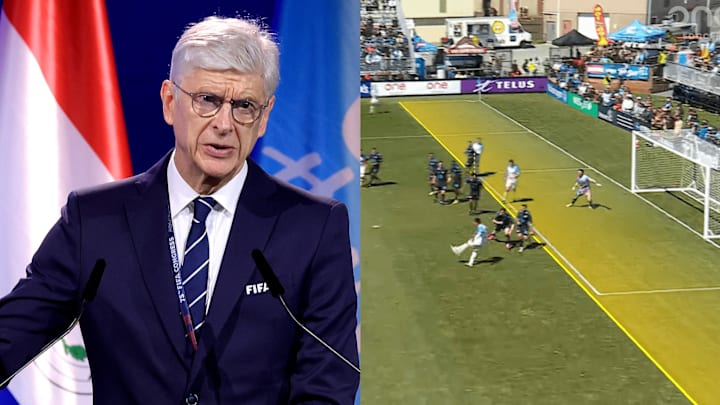
The next wave of soccer’s rule evolution arrived on the Eastern side of the Atlantic on Saturday, as the new “Daylight Offside” rule allowed a goal for the first time in the Canadian Premier League.
The top division of Canadian soccer, the eight-team CPL, is the first league to use the experimental rule, as initially set out by former Arsenal manager and now FIFA Chief of Global Football Development, Arsène Wenger. The rule allows the attacking player to be in a traditionally offside position, as long as one part of their body that can be used to score is equal to or behind the second-to-last defender.
In the third weekend of the CPL season, Pacific FC attacker Alejandro Diaz scored the first goal to use the rule, netting a rebound against the Halifax Wanderers, which would have been offside under the common rule used in most of the world.
The evolution of the offside rule is meant to encourage more risky attacking play from forwards, with the hopes of improving goalscoring opportunities in the game. At the same time, it is meant to take out controversial calls, with offside only given if there is visible space—the “daylight”—between the attacking player and the second-to-last defender.
As seen in the image below, Diaz is in a traditionally offside position behind Halifax’s Lorenzo Callegari when the ball is initially kicked by Pacific’s Matthew Baldisimo, which determines his positioning for the rebound parried away by goalkeeper Marco Carducci. He then finished the shot into the gaping goal, while several Wanderers players appealed for offside.

The play underwent a brief review but was eventually allowed to stand, making it the first goal scored under the new rule. However, with the rebound and net-front scramble, it did not showcase any tactics that could be adjusted by attackers or defenders, which are expected to emerge as players and coaches become accustomed to the new guidelines.
In addition to the new offside rule, the CPL is also the first professional league to adopt Football Video Support, as an alternative review system to VAR, giving the league its first-ever video review capabilities, having never embraced VAR itself.
We saw the impact of Arsène Wenger's 'daylight offside' rule in the #CPLSoccer match between the Halifax Wanderers and Pacific FC
— OneSoccer (@onesoccer) April 18, 2026
Here's how close Alejandro Díaz was to being offside on his goal📏 pic.twitter.com/7rr72O7qqQ
Under FVS, each team’s manager receives two challenge cards per game, which prompt the referee and fourth official to review a play on a pitchside monitor, analyzing only camera angles used for broadcast. Through the early stages, the system has caused significant delays to some matches, with reviews taking upwards of seven minutes on occasions for the most detailed plays, offering ample distribution for players, managers and fans.
Still just three weeks into the season, the CPL hopes the new rules can bring more eyes to the league, while making itself a testing ground for potentially formative changes to the world’s game in the near future—some of which could be discussed at the 76th FIFA Congress, hosted in Vancouver, Canada, on April 30.
READ THE LATEST SOCCER NEWS, ANALYSIS AND INSIGHT FROM SI FC
 Add us as a preferred source on Google
Ben Steiner is an American-Canadian journalist who brings in-depth experience, having covered the North American national teams, MLS, CPL, NWSL, NSL and Liga MX for prominent outlets, including MLSsoccer.com, CBC Sports, and OneSoccer.
Follow BenSteiner00