%20%20--%3E%0A%3Csvg%20version%3D%221.1%22%20id%3D%22Layer_1%22%20xmlns%3D%22http%3A%2F%2Fwww.w3.org%2F2000%2Fsvg%22%20xmlns%3Axlink%3D%22http%3A%2F%2Fwww.w3.org%2F1999%2Fxlink%22%20x%3D%220px%22%20y%3D%220px%22%0A%09%20width%3D%2239px%22%20height%3D%2240px%22%20viewBox%3D%220%200%2039%2040%22%20enable-background%3D%22new%200%200%2039%2040%22%20xml%3Aspace%3D%22preserve%22%3E%0A%3Cpath%20fill%3D%22%23FFFFFF%22%20d%3D%22M38.5%2C7H28.2v26h10.3V7z%22%2F%3E%0A%3Cpath%20fill-rule%3D%22evenodd%22%20clip-rule%3D%22evenodd%22%20fill%3D%22%23FFFFFF%22%20d%3D%22M26.1%2C25.5c0%2C5.8-4.1%2C7.5-12.9%2C7.5C3.9%2C33%2C0%2C31.2%2C0%2C25.2v-1.1h11.6%0A%09v2.4c0%2C0.7%2C0.1%2C1.4%2C1.2%2C1.4c1%2C0%2C1.2-0.4%2C1.2-1.3v-0.9c0-1.6-0.9-1.6-3.5-2.2C2.2%2C21.7%2C0%2C19.7%2C0%2C15.3v-0.9C0%2C9.3%2C5.5%2C7%2C12.9%2C7%0A%09c10.2%2C0%2C12.8%2C2.6%2C12.8%2C7.4v1.8h-11v-2.9c0-0.6-0.4-1.1-1.2-1.1c-0.6%2C0-1.2%2C0.4-1.2%2C1.1v0.9c0%2C1.5%2C0.9%2C2%2C3.3%2C2.5%0A%09c8%2C1.6%2C10.5%2C3.3%2C10.5%2C7.5V25.5z%22%2F%3E%0A%3C%2Fsvg%3E%0A)
How Real Madrid Could Line Up With Jose Mourinho As Manager
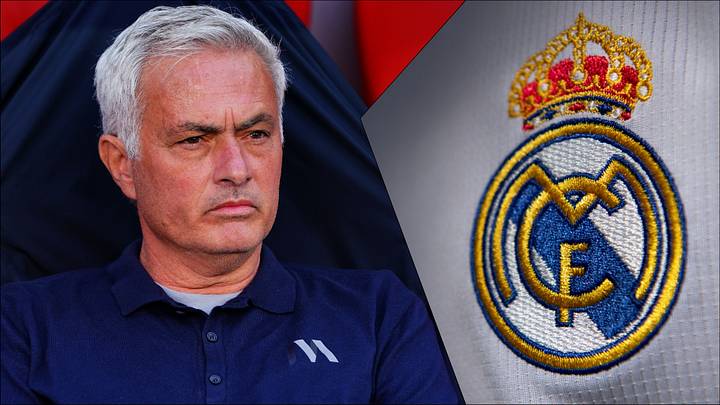
Following the confirmation of Florentino Pérez’s re-election as president, José Mourinho will become Real Madrid’s next manager.
The 63-year-old Portuguese has been identified as Pérez’s top choice to lead the club forward after successive trophyless seasons—an unthinkable reality for the world’s biggest club—and near-constant reports of dressing room unrest and disharmony.
Though still a box-office appointment, Mourinho’s return is a divisive one. On the one side, the “Special One” holds a special place in the hearts of many Madridistas, including Pérez and—seemingly—Kylian Mbappé for his past achievements—including that record-breaking 2011–12 season in La Liga.
The 63-year-old also has an undoubted charisma and is a formidable, battle-hardened tactician. Crucially for Real Madrid’s current situation, few men have more experience commanding locker rooms riddled with egos.
However, on the other side, Mourinho’s diminished trophy haul since leaving the Spanish capital 13 years ago shows he is long-removed from the days when he was considered the very best coach around and many fans may have liked to have seen the club move forward wth a younger, more attack-minded, less cantankerous coach.
Here’s how Real Madrid could line up with Mourinho at the helm.
José Mourinho’s Preferred Formation

Mourinho is nothing if not a pragmatist and has been adept at adapting his setup throughout his long career. However, in recent years, he has largely operated with a defensively-solid 4-2-3-1 system that relies on a double pivot in midfield, with hard-working wingers.
It’s the formation Mourinho favored at Benfica, with the Lisbon team finishing third in the Portuguese top tier after going unbeaten in the league in 2025–26.
Mourinho’s team relied on the goals of Greek target man Vangelis Pavlidis, who bagged 22 in the league, while 38-year-old Nicolás Otamendi was a stalwart at the back.
Despite a reputation for defense-first soccer, Mourinho showed his ability to go more attacking in the big games this season. He famously masterminded a 4–2 victory over Real Madrid in the Champions League group phase this season—with goalkeeper Anatoliy Trubin’s dramatic 98th-minute header securing the Portuguese team’s passage to the knockout phase.
In his recent posts at Fenerbahçe, Roma and Tottenham Hotspur, Mourinho occasionally switched to a 3-5-2 or 4-3-3, showing his flexibility. During the heyday of his career at Chelsea and Inter, he tended to prioritize midfield strength and counter attacking, though at Real Madrid he was more adventurous, with his side scoring a massive 121 goals and hitting 100 points on the way to the La Liga title in 2011–12.
A theme of his career has been his relying on favorites within the roster to act as on-field generals for the team, while he has never been averse to publicly castigating players deemed to be under-performing.
How José Mourinho Could Set Up at Real Madrid

GK: Thibaut Courtois—Mourinho famously fell out with Iker Casillas during his last spell in Madrid. It’s not impossible that history could repeat itself, but it feels unlikely. The 33-year-old Courtois remains one of the world’s very best keepers and his presence was keenly missed during his injury issues this season.
RB: Trent Alexander-Arnold—The Englishman’s first season at the Bernabéu was a mixed bag. Frequently hailed as the second coming of David Beckham and castigated as a defensive liability in the same week, it’s not difficult to see Mourinho getting frustrated with the former Liverpool star, who often needs the system adapted around him. Denzel Dumfries is set to join from Inter Milan, but is arguably even less defensively minded than Alexander-Arnold.
CB: Ibrahima Konaté—The arrival of Konaté on a free transfer from Liverpool may help Alexander-Arnold out defensively, with the France international having the experience and physicality to cover the gaps left by his more creative teammate on the right-side of the backline.
CB: Antonio Rüdiger—If the German veteran can manage the fitness issues that punctuated his season in 2025–26, it’s easy to see him becoming a favorite within Mourinho’s battle-ready system.
LB: Álvaro Carreras—Ferland Mendy remains the club’s best left back defensively when fit. The problem is he is never fit, and could well leave Madrid this summer after his latest injury. With left back unlikely to be a priority area to spend on this summer, Carreras should continue as a starter despite a mixed first season at the Bernabéu.
DM: Aurélien Tchouaméni—The France international has the ideal profile to play one half of the double-pivot system Mourinho typically prefers, shielding the defense and controlling the center of the pitch.
DM: Federico Valverde—If there’s one thing Mourinho values, it’s a hard worker. Versatile and indefatigable, Valverde has exactly the profile the Portuguese manager loves. The Uruguayan will likely take on a key role in the team either as an up-and-down winger in the system, or as one of the pivots. Question marks over his and Tchouaméni’s compatibility remain, however, after this spring’s mini-civil war at Valdebebas. Uniting the divided factions in the locker will be high on Mourinho’s to-do list.
RW: Michael Olise—Identified as the “total Galático” Pérez is planning to bid big for this summer, if Real Madrid land Olise it would be a blockbuster move. The Frenchman is one of the leading contenders for this year’s Ballon d’Or and there are few players as exciting on the ball.
AM: Jude Bellingham—Moved from pillar to post in the last two seasons, Bellingham has not been able to replicate the incredible attacking numbers of his first year at Madrid. However, the likes of Frank Lampard and Wesley Sneijder are among those to flourish for Mourinho in the No.10 role. Arda Güler—and potentially Nico Paz—will also vie for gametime.
LW: Vinicius Jr—Could Vinicius Jr be the biggest casualty of a Mourinho return? The Brazilian butted heads with Xabi Alonso and is unlikely to get an easier ride under the “Special One,” who famously has little tolerance for flamboyant, defense-shy wingers. While Vinicius should begin Mourinho’s reign as a starter, his expiring contract and protracted extension negotiations also add to a potentially complicated situation.
ST: Kylian Mbappé—The French superstar is in an odd position. Despite another year of plundering goals, Mbappé is yet to win a trophy of significance since his move to Spain. He’s not up for sale, but next season will be crucial for Mbappé. He doesn’t have the target man profile that Mourinho has favored in some of his more successful sides, but the new manager may still find a way to accommodate the superstar No.9 by putting more defensive onus on the players around him.
READ THE LATEST REAL MADRID NEWS, ANALYSIS AND INSIGHT FROM SI FC
 Add us as a preferred source on Google
Andy Headspeath is a Real Madrid correspondent for Sports Illustrated FC. Originally from the UK, the weather, culture and soccer lured him to Spain over a decade ago where he lives with his wife, son and two untrainable dogs. A player of unspeakably limited talents and only one fully functional knee, he has more than a decade's experience in a wide variety of editorial roles within sports media, from match reporting to in-depth feature writing and interviews. He specializes in soccer history and culture, as well as—of course—La Liga.