%20%20--%3E%0A%3Csvg%20version%3D%221.1%22%20id%3D%22Layer_1%22%20xmlns%3D%22http%3A%2F%2Fwww.w3.org%2F2000%2Fsvg%22%20xmlns%3Axlink%3D%22http%3A%2F%2Fwww.w3.org%2F1999%2Fxlink%22%20x%3D%220px%22%20y%3D%220px%22%0A%09%20width%3D%2239px%22%20height%3D%2240px%22%20viewBox%3D%220%200%2039%2040%22%20enable-background%3D%22new%200%200%2039%2040%22%20xml%3Aspace%3D%22preserve%22%3E%0A%3Cpath%20fill%3D%22%23FFFFFF%22%20d%3D%22M38.5%2C7H28.2v26h10.3V7z%22%2F%3E%0A%3Cpath%20fill-rule%3D%22evenodd%22%20clip-rule%3D%22evenodd%22%20fill%3D%22%23FFFFFF%22%20d%3D%22M26.1%2C25.5c0%2C5.8-4.1%2C7.5-12.9%2C7.5C3.9%2C33%2C0%2C31.2%2C0%2C25.2v-1.1h11.6%0A%09v2.4c0%2C0.7%2C0.1%2C1.4%2C1.2%2C1.4c1%2C0%2C1.2-0.4%2C1.2-1.3v-0.9c0-1.6-0.9-1.6-3.5-2.2C2.2%2C21.7%2C0%2C19.7%2C0%2C15.3v-0.9C0%2C9.3%2C5.5%2C7%2C12.9%2C7%0A%09c10.2%2C0%2C12.8%2C2.6%2C12.8%2C7.4v1.8h-11v-2.9c0-0.6-0.4-1.1-1.2-1.1c-0.6%2C0-1.2%2C0.4-1.2%2C1.1v0.9c0%2C1.5%2C0.9%2C2%2C3.3%2C2.5%0A%09c8%2C1.6%2C10.5%2C3.3%2C10.5%2C7.5V25.5z%22%2F%3E%0A%3C%2Fsvg%3E%0A)
Man Utd’s Celebration of Brutal Cost-Cutting Measures Just Feels Wrong
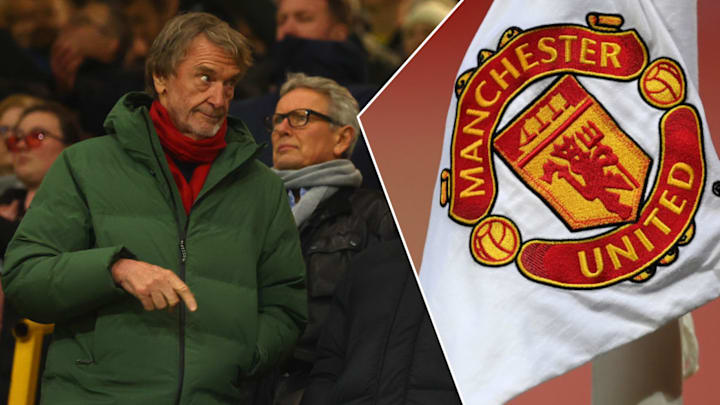
The core message within Manchester United’s latest set of financial results is that the cost-cutting initiated by co-owner Sir Jim Ratcliffe is working. But the celebratory nature of such statements feels misplaced given the overall situation and who exactly has paid the price.
The Red Devils announced on Wednesday an operating profit of almost £33 million ($44.6 million) for the first six months of 2025–26, up to Dec. 31, 2025. That is a significant upturn from the £3.9 million operating loss over the same period a year prior.
“We are now seeing the positive financial impact of our off-pitch transformation materialise both in our costs and profitability,” chief executive Omar Berrada proudly said.
A significant part of the “costs” eliminated has been the people behind Manchester United, brutally cut loose. As many as 450 non-playing staff have lost their jobs since the Ratcliffe era began two years ago. For those that remain, perks of the job—such as daily lunch provided by the club—have been cut right back. There is an understanding that staff are already paid comparatively less to work at Manchester United than they would be in similar roles at other large companies given the emotional pull of the institution.

“This is not the fault of the staff who are losing their jobs,” Andy Mitten wrote for The Athletic in the summer of 2024 when the first round of 250 cuts was taking place.
The well-placed founder of the United We Stand fanzine refuted a narrative being spun that the club was getting rid of “deadwood” weighing United down, citing instead “wasted wages” spent on underperforming players and the enduring impact of 2005’s leveraged Glazer takeover. “Many are competent and professional members of staff. They gave it their all at United. They were well respected and committed to the club’s success.”
A few months later, Manchester Evening News reporter Tyrone Marshall wrote: “Manchester United likes to think of itself as one big family. It’s something they trade on. It should be a long, long time before anyone associated with United tries to portray this as being a family club again. If it is, it’s a soulless family with the joy long since ripped out of it.”
What Is Man Utd Without its People?

The club began in the 19th century as a working-class institution serving its community. Manchester itself has always been a progressive, forward-thinking city, which is also why Ratcliffe’s recent comments about immigrants in the U.K. stung so much.
United, where players formed what became the Professional Footballers’ Association in 1907, always felt like an extension of what Manchester, the city, represented. Liverpool, although a fierce competitive rival, carries similar values as a club.
In the three months to the end of December 2025, United shaved £7.4 million off employee benefit expenses compared to the same period 12 months earlier. This was, the club clarifies, “due to the impact of headcount reduction programs implemented during the prior year.”
What is £7.4 million? Over a given three-month period, United will pay Mason Mount alone, based on reported estimates of his salary, between £3–3.6 million. While not intended to single out or specifically attack Mount, it serves as an important example because of his high salary set against low impact on the pitch and frequent injury absences. In its simplest form, hundreds of everyday people out of work only pays Mason Mount’s salary twice over.
Expensive Mistakes a Bigger Problem Than Staff Costs

The expensive mistakes that have characterised the Ratcliffe era to date, despite the billionaire’s early insistence that it was important to “walk to the right solution, rather than run to the wrong one,” only serves as a bigger slap in the face to discarded staff and the club’s family image.
Erik ten Hag had his contract extended in July 2024 shortly after the club had considered sacking him, only to be dismissed less than four months later anyway. Firing the Dutchman and replacing him with Ruben Amorim, who needed breaking out of his contract at Sporting CP, cost £21.4 million.
It cost another £4.1 million to sack Dan Ashworth from his briefly-held role as sporting director, astonishingly spending less time in the job than his gardening leave with former employer Newcastle United. Ratcliffe had hailed Ashworth as the kind of “best in class” executive Manchester United need, but his fate was sealed when he didn’t support the pursuit of Amorim. Ironic in hindsight.
The Portuguese coach followed Ashworth out of the door 13 months later, falling out with replacement sporting director Jason Wilcox, having also overseen the club’s worst season in 51 years. The cost of dismissing Amorim will only be revealed in the next set of financials to the end of March 2026, but it is estimated he walked away with a £10 million payoff—perhaps explaining why he looked so at ease when snapped by photographers while newly unemployed—with an overall hire-and-fire cost of £27 million.
Man Utd’s Falling Revenue Needs Addressing

As Mitten alluded to, everyday working people have paid the price for the failings of others. The money coming is directly tied to those out on the pitch and the executives who recruit them.
Revenue is down across the board for the first half of 2025–26.
There was a 3.2% drop in the club’s income for the first half of this season compared to last season. That has been most sharply felt in commercial revenue (4.5%), which also happens to be the most lucrative stream—ahead of broadcast and matchday. For just the three months up to the end of December, commercial was an even sharper 7.8% drop.
The fall in commercial revenue can be partly explained by United no longer have a training kit sponsor after a previous agreement with Tezos ended and wasn’t renewed or replace. The loss of Marriott International as a partner last summer was more unfortunate due to the world’s largest hotel brand engaging in its own restructuring and cost-cutting, but Manchester United, after a prolonged downturn on the pitch spanning more than a decade, is no longer as attractive as a partner.
Over the shorter three month October–December period, a slight increase in broadcast revenue on the same period the previous season was down to occupying a higher position in the Premier League. But failure to qualify for European competition offsets increases and massively impacts revenue. The club hasn’t competed in the enormously lucrative Champions League since the 2023–24 season.
Matchday revenue is down due to playing more home cup games last season, having been knocked out of both the Carabao Cup—in embarrassing circumstances—and the FA Cup at the earliest opportunity. With no European involvement either, this will be a 40-game season and therefore the club’s shortest campaign in more than a century since 1914–15.
READ THE LATEST MAN UTD NEWS, TRANSFER RUMORS AND MORE
 Add us as a preferred source on Google
Sports Illustrated’s FC team bring you the latest news, transfers and match coverage.