%20%20--%3E%0A%3Csvg%20version%3D%221.1%22%20id%3D%22Layer_1%22%20xmlns%3D%22http%3A%2F%2Fwww.w3.org%2F2000%2Fsvg%22%20xmlns%3Axlink%3D%22http%3A%2F%2Fwww.w3.org%2F1999%2Fxlink%22%20x%3D%220px%22%20y%3D%220px%22%0A%09%20width%3D%2239px%22%20height%3D%2240px%22%20viewBox%3D%220%200%2039%2040%22%20enable-background%3D%22new%200%200%2039%2040%22%20xml%3Aspace%3D%22preserve%22%3E%0A%3Cpath%20fill%3D%22%23FFFFFF%22%20d%3D%22M38.5%2C7H28.2v26h10.3V7z%22%2F%3E%0A%3Cpath%20fill-rule%3D%22evenodd%22%20clip-rule%3D%22evenodd%22%20fill%3D%22%23FFFFFF%22%20d%3D%22M26.1%2C25.5c0%2C5.8-4.1%2C7.5-12.9%2C7.5C3.9%2C33%2C0%2C31.2%2C0%2C25.2v-1.1h11.6%0A%09v2.4c0%2C0.7%2C0.1%2C1.4%2C1.2%2C1.4c1%2C0%2C1.2-0.4%2C1.2-1.3v-0.9c0-1.6-0.9-1.6-3.5-2.2C2.2%2C21.7%2C0%2C19.7%2C0%2C15.3v-0.9C0%2C9.3%2C5.5%2C7%2C12.9%2C7%0A%09c10.2%2C0%2C12.8%2C2.6%2C12.8%2C7.4v1.8h-11v-2.9c0-0.6-0.4-1.1-1.2-1.1c-0.6%2C0-1.2%2C0.4-1.2%2C1.1v0.9c0%2C1.5%2C0.9%2C2%2C3.3%2C2.5%0A%09c8%2C1.6%2C10.5%2C3.3%2C10.5%2C7.5V25.5z%22%2F%3E%0A%3C%2Fsvg%3E%0A)
Three Key Takeaways From Brazil’s Battle With Morocco in World Cup Opener
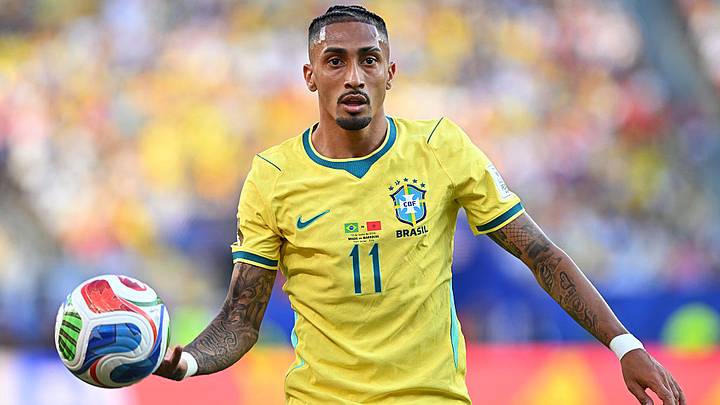
The notorious World Cup king, Brazil, faced a worthy adversary in its 2026 FIFA World Cup opener on Saturday night, battling Morocco to a 1–1 draw at MetLife Stadium in East Rutherford, N.J.
The Africa Cup of Nations champions came out blazing from the kickoff, forcing Brazil to slowly crawl its way back. Although the South Americans set the tone in the second half, the resurgence wasn’t enough to walk away with the win.
Brazil still has its sights set on that ever-elusive sixth World Cup title, and fortunately, the rest of Group C should be more forgiving, with Haiti and Scotland left on the docket.
Here are Sports Illustrated’s three key takeaways from the match.
Sluggish Seleção

Right from the moment Morocco kicked off, Brazil found itself on the back foot.
By just the 10-minute mark, Morocco had nearly 70% of the game’s possession and had already taken five shots. The Seleção were left chasing the Atlas Lions, franticly trying to break up any aspect of their systematic advances, a discrepancy in momentum that lasted for the better part of the first 30 minutes.
The North Africans, led by captain and Paris Saint-Germain star right back Achraf Hakimi, continually exploited Brazil’s left flank, targeting left back Douglas Santos’s side and applying pressure that Brazil could not seem to redirect. And when not dancing down the left sideline, Morocco took over the gaps the South Americans left riddled throughout the midfield.
Moroccan striker Ismael Saibari finally punished the Seleção in the 21st minute, splitting center backs Gabriel and Marquinhos en route to an easy goal. Saibari had received the ball from right midfielder Brahim Díaz, who was left wide open in the center of the pitch. Santos stepped too late to him, allowing Brahim to easily find Saibari on the run.
Should the Seleção have any ambition of earning that sixth star this summer, it must open play with more momentum, setting the tone for the match as opposed to allowing itself to be dictated from the kickoff. Additionally, the team must learn to better redirect the pressure it faces, instead of allowing itself to be continuously overrun in the same spaces.
Momentary Brilliance

The tides finally turned with a pinch of magic from Brazilian star forward Vinicius Junior in the 32nd minute. The Real Madrid standout drove to the left side of the goal frame before striking the ball to the far, upper corner of the net, the force of which was so powerful that it threatened to snap the fingers of goalkeeper Yassine Bounou.
Vini Jr equalized a match that, up until that point, had proved to be anything but equal, begging the question: Is one moment of brilliance equal to the unified, systematic breakdown that Morocco had been applying?
Well, actually, yes. Not only does the scoreboard—often unfairly—rule in the game of soccer, as it does for most sports, but also, Vini Jr’s moment of magic quickly proved to be exactly what Brazil needed in that moment. The highlight-reel banger jolted the South Americans back to life, and they settled into play, performing in sequences rather than fleeting, individual moments. They left for the break with all the momentum and didn’t look back in the second half.
Brazil, over a long history of World Cup success, has also come to define itself as a team capable of winning through individual star power. All but one of Brazil’s five World Cup triumphs have been defined by a standout individual, the anomaly being the 1970 edition in Mexico. Most famously, teenaged Pelé led the charge in 1958, while Garrincha carried the torch four years later. Romário inspired Brazil to glory in 1994—the last time the World Cup was held in the U.S.—and Ronaldo was all the rage in 2002. Perhaps Brazil is simply following its tried and true blueprint for World Cup success, designating Vini Jr the man of the summer as it fights for global glory.
Saturday’s goal marked Vini Jr’s 10th for Brazil in his 50th international appearance. He is perfectly situated for brilliance, well-versed in the coaching style of manager Carlo Ancelotti, having played 209 total games under the Italian boss after a long stint together at Real Madrid.
‘Rumo ao Hexa’ in Jeopardy?

Brazilian fans have a new mantra,’ Rumo ao Hexa’, which means chasing the sixth.
Although Brazil earned a critical point against a worthy adversary, the team’s ultimate dream may still be in jeopardy.
In every one of the Seleção’s previous World Cup triumphs, the team has won the opening match of the group stage, setting an important precedent and energy to carry throughout the rest of the tournament. If past tournament history means anything, the Brazilians may be doomed to try again in another four years.
In fact, in the past 20 World Cups, Brazil has only ever drew the opening match three times, winning the other 17 times. The team has never lost a World Cup opener.
In the meantime, Brazil turns to a more gentle foe next, Haiti, facing the Caribbean minnows on Friday in Philadelphia. Needing at least three more points to advance to the knockout stages, Brazil wraps up group play against an impassioned Scottish side on Wednesday, June 24 in the heat of Miami.
READ THE LATEST WORLD CUP NEWS, ANALYSIS AND INSIGHT FROM SI FC
 Add us as a preferred source on Google
Sophia Vesely is a writer, reporter and editor for SI FC, with an emphasis on North American coverage. Her experience comes from regional journalism as a former sports reporter for the Orlando Sentinel, Dallas Morning News and Seattle Times. Vesely graduated from Swarthmore College, where she played collegiate soccer as a wingback. She specializes in MLS, NWSL and NCAA soccer.