%20%20--%3E%0A%3Csvg%20version%3D%221.1%22%20id%3D%22Layer_1%22%20xmlns%3D%22http%3A%2F%2Fwww.w3.org%2F2000%2Fsvg%22%20xmlns%3Axlink%3D%22http%3A%2F%2Fwww.w3.org%2F1999%2Fxlink%22%20x%3D%220px%22%20y%3D%220px%22%0A%09%20width%3D%2239px%22%20height%3D%2240px%22%20viewBox%3D%220%200%2039%2040%22%20enable-background%3D%22new%200%200%2039%2040%22%20xml%3Aspace%3D%22preserve%22%3E%0A%3Cpath%20fill%3D%22%23FFFFFF%22%20d%3D%22M38.5%2C7H28.2v26h10.3V7z%22%2F%3E%0A%3Cpath%20fill-rule%3D%22evenodd%22%20clip-rule%3D%22evenodd%22%20fill%3D%22%23FFFFFF%22%20d%3D%22M26.1%2C25.5c0%2C5.8-4.1%2C7.5-12.9%2C7.5C3.9%2C33%2C0%2C31.2%2C0%2C25.2v-1.1h11.6%0A%09v2.4c0%2C0.7%2C0.1%2C1.4%2C1.2%2C1.4c1%2C0%2C1.2-0.4%2C1.2-1.3v-0.9c0-1.6-0.9-1.6-3.5-2.2C2.2%2C21.7%2C0%2C19.7%2C0%2C15.3v-0.9C0%2C9.3%2C5.5%2C7%2C12.9%2C7%0A%09c10.2%2C0%2C12.8%2C2.6%2C12.8%2C7.4v1.8h-11v-2.9c0-0.6-0.4-1.1-1.2-1.1c-0.6%2C0-1.2%2C0.4-1.2%2C1.1v0.9c0%2C1.5%2C0.9%2C2%2C3.3%2C2.5%0A%09c8%2C1.6%2C10.5%2C3.3%2C10.5%2C7.5V25.5z%22%2F%3E%0A%3C%2Fsvg%3E%0A)
Who Are the USMNT’s Best Midfield Options for the World Cup?
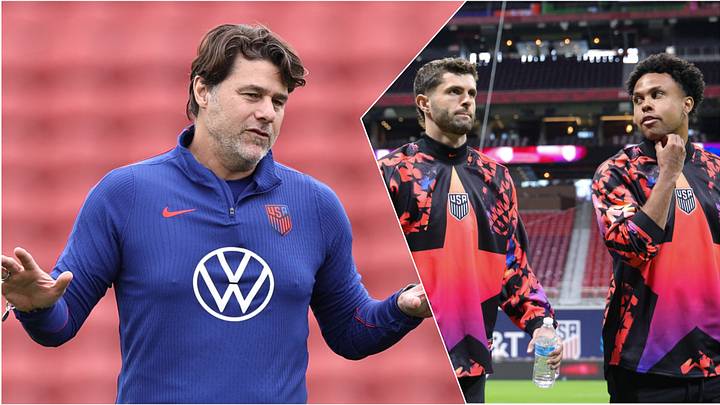
The U.S. men’s national team will kick off the 2026 World Cup on June 12 against Paraguay, with time ticking down for manager Mauricio Pochettino to figure out his best lineup through two final friendlies against Germany and Senegal.
Although U.S. Soccer is set to reveal the official 26-man roster on Tuesday at a live event in New York City, the entire squad was leaked three days earlier, suggesting the team could be lacking true central midfielders.
Here, Sports Illustrated takes a look at three possible midfield setups for this summer—and who should start in them—some of which could be experiments in friendlies, or potential setups in the tournament itself.
USMNT Midfielders: Reported
- Central/Defensive Midfielders: Tyler Adams, Sebastian Berhalter, Weston McKennie, Cristian Roldan
- Attacking Midfielders/Wingers: Christian Pulisic, Gio Reyna, Malik Tillman, Tim Weah, Alejandro Zendejas
3-4-2-1: The Adams and McKennie Duo

The USMNT may not have many pure central midfielders, but the versatility within the roster could allow for some players to step into roles they might not always play at the club level. Looking at a 3-4-2-1, it can be assumed that the wingbacks would likely be either Sergiño Dest or Alex Freeman on the right, and likely Antonee Robinson down the left—with the potential of Joe Scally taking a role as well.
With the wider defensive areas covered, this leaves options for two central midfielders and two wingers, who would likely drop back into midfield when out of possession. Pochettino’s top option in this setup is likely a double-pivot duo of Bournemouth’s Tyler Adams, who was a key piece in the Cherries’ run to UEFA Europa League qualification for next season, alongside the flexible Weston McKennie.
Both players, entering camp from the Premier League and Serie A, have a commanding ability to create chances and control transitional moments. This season, Adams posted two goals and two assists in 25 Premier League appearances after returning from injury. At the same time, McKennie bounced around to nearly every position for The Old Lady, becoming one of their most valuable players—even with the central midfield, No. 8 role remaining his best position.
This setup likely allows the USMNT to control the tempo of a game and to have two of the most influential players in midfield, while also permitting the likely duo of Christian Pulisic and either Malik Tillman or Tim Weah to be in less constricted roles as wingers.
4-2-3-1: McKennie’s Versatility, Berhalter’s Inclusion

The lack of pure central midfield talent, especially on the defensive side, could make a 4-2-3-1 a challenging approach for the USMNT, but there’s a way it could work—and a way it could be a strong pathway towards getting potential key role players into the mix. It also gives a chance at a settled backline and an opportunity for pure wingers to thrive with less defensive responsibility than wingbacks.
Starting in a defensive midfield, we’re going with Adams on the right side and Vancouver Whitecaps midfielder Sebastian Berhalter on the left. Adams offers versatility and an attacking outlook as a strong defensive midfielder, while Berhalter’s set-piece deliveries and tenacious defensive efforts, paired with his long-range shooting ability, make him a strong point against more methodical midfields. Those two, as a double pivot, could work off each other.
For this, we move McKennie to the right wing, taking advantage of his positional versatility, while Pulisic takes his place down the left. As the attacking midfielder, it’s either Borussia Mönchengladbach’s Gio Reyna, should he find his top form, or more likely, Bayer Leverkusen’s Tillman, who spent most of the domestic campaign in that role, learning to thrive with that transitional responsibility.
While this moves McKennie out of his best position, it ensures Tillman is in a more influential role and adds the potential of Reyna and Berhalter, who bring unique aspects to the squad. All that said, it didn’t quite work against Belgium in March.
4-3-3: Could it Work?

The USMNT didn’t win against Portugal in March, but a 2–0 loss to a team considered a World Cup favorite isn’t terrible. That night in Atlanta, Pochettino rolled out a 4-3-3, offering a different look to the USMNT, but one that could work with this roster.
We’ll keep the backline as a four-man unit, maintaining that structure, while Balogun remains up top and Pulisic shifts to a pure winger, with the ability to dart inside. Down the right side, it allows Marseille’s Tim Weah into the squad, opening up more balanced opportunities in the midfield trio.
With Weah offering more of an offensive look, McKennie could slide into a right midfield role, with Adams in the middle and potentially Leeds United’s Brenden Aaronson on the left, which would give the 25-year-old a strong opportunity racking up scoring four goals and five assists in 30 Premier League appearances through 2025–26.
At the same time, the formation opens itself up to shifts in play, with McKennie’s versatility, Pulisic’s ability to shift inside, and the number of players who can be introduced from the bench to change the approach of the game while maintaining the same structure.
READ THE LATEST USMNT NEWS, ANALYSIS AND INSIGHT FROM SI FC
 Add us as a preferred source on Google
Ben Steiner is an American-Canadian journalist who brings in-depth experience, having covered the North American national teams, MLS, CPL, NWSL, NSL and Liga MX for prominent outlets, including MLSsoccer.com, CBC Sports, and OneSoccer.
Follow BenSteiner00