%20%20--%3E%0A%3Csvg%20version%3D%221.1%22%20id%3D%22Layer_1%22%20xmlns%3D%22http%3A%2F%2Fwww.w3.org%2F2000%2Fsvg%22%20xmlns%3Axlink%3D%22http%3A%2F%2Fwww.w3.org%2F1999%2Fxlink%22%20x%3D%220px%22%20y%3D%220px%22%0A%09%20width%3D%2239px%22%20height%3D%2240px%22%20viewBox%3D%220%200%2039%2040%22%20enable-background%3D%22new%200%200%2039%2040%22%20xml%3Aspace%3D%22preserve%22%3E%0A%3Cpath%20fill%3D%22%23FFFFFF%22%20d%3D%22M38.5%2C7H28.2v26h10.3V7z%22%2F%3E%0A%3Cpath%20fill-rule%3D%22evenodd%22%20clip-rule%3D%22evenodd%22%20fill%3D%22%23FFFFFF%22%20d%3D%22M26.1%2C25.5c0%2C5.8-4.1%2C7.5-12.9%2C7.5C3.9%2C33%2C0%2C31.2%2C0%2C25.2v-1.1h11.6%0A%09v2.4c0%2C0.7%2C0.1%2C1.4%2C1.2%2C1.4c1%2C0%2C1.2-0.4%2C1.2-1.3v-0.9c0-1.6-0.9-1.6-3.5-2.2C2.2%2C21.7%2C0%2C19.7%2C0%2C15.3v-0.9C0%2C9.3%2C5.5%2C7%2C12.9%2C7%0A%09c10.2%2C0%2C12.8%2C2.6%2C12.8%2C7.4v1.8h-11v-2.9c0-0.6-0.4-1.1-1.2-1.1c-0.6%2C0-1.2%2C0.4-1.2%2C1.1v0.9c0%2C1.5%2C0.9%2C2%2C3.3%2C2.5%0A%09c8%2C1.6%2C10.5%2C3.3%2C10.5%2C7.5V25.5z%22%2F%3E%0A%3C%2Fsvg%3E%0A)
Why it’s Champions League or Bust for Ruben Amorim at Man Utd
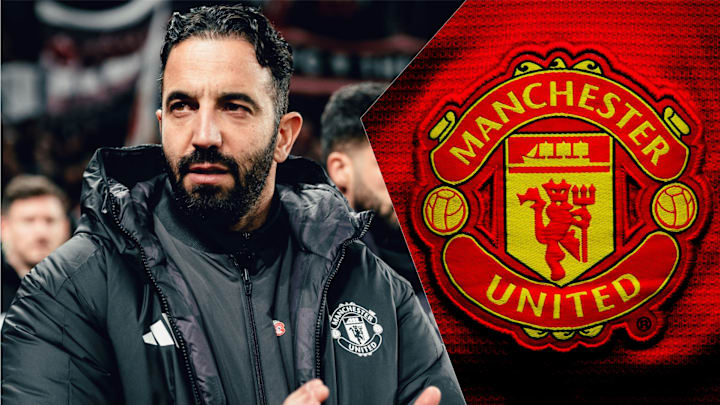
For all the occasional signs of improvement under Ruben Amorim, Manchester United’s results are simply not good enough for a club which has invested heavily in personnel, so far £232 million this season alone, and has all week to prepare a team for Premier League games. Amorim’s supporters point to decent performances. His critics point to dropped points.
Not being in Europe should allow Amorim more time to work on building the team but they remain a work in progress, in seventh place following two wins in eight and no clean sheets in 10. It’s poor for a club of United’s great history and expectation. Unless they progress into the Champions League, and there are likely to be five places, Amorim should leave in the summer.
That’s not harsh. That’s realism. United need that elite level of European football for the finance and prestige it brings. That’s a reflection that Amorim will have been in charge of 80 games by then, enough time to bed in his players and his style.
With two 18-year-old academy players, midfielder Jack Fletcher and winger Shea Lacey, making their debuts in the 2-1 defeat to Aston Villa on Sunday, Amorim has now used 36 players during his 60 games (23 won, 21 lost, 16 drawn). United needed a clear-out, and strengthening, but the brutal fact is that they remain below newly promoted Sunderland.
There’s Improvement But it’s Nowhere Near Enough

United now face a challenging run of opponents over winter, including a fired-up Newcastle United, a visit to the bear-pit belonging to Leeds United, a scrap with their mighty neighbours Manchester City and a trip to ambitious Arsenal. How many United players, if all fit, would get in Arsenal’s starting XI or City’s? It’s hard to make a case even for Bruno Fernandes, Matheus Cunha or Bryan Mbeumo. United have nobody of the threat and hunger of Morgan Rogers, their two-goal nemesis at Villa Park.
And yet United still demand and command so much attention. “Hated, adored, never ignored” runs the fans’ banner. You can never ignore them. United’s name, appeal and marketing clout ensure they remain the second biggest club in the world after Real Madrid. They still inspire belief. Some of their many supporters praised the display against Villa. Cunha certainly looks a real United player, one who generations past would recognise, a fighter who embraces the responsibility and pressure of playing for such a historic, scrutinised club.
Helped by Cunha, United’s attacking metrics are undeniably promising this season: United have most shots on goal (232) in the Premier League with only City having more shots on target (89 to United’s 84). Only City, the team of Erling Haaland, boast a better xG. The numbers look pretty but still hide an ugly truth: the lack of ruthlessness in front of goal—and mentally.
— Manchester United (@ManUtd) December 21, 2025
The sight of Mason Mount, one of the few who can hold his head high this season, scratching that head in frustration as another attack broke down at Villa Park told its own story. Luke Shaw was the picture of frustration, throwing his arms down, when United conceded their second.
The reality is that standards have slid so much at United that their fans are reduced to looking for positives from more dropped points, rather like searching for driftwood to cling to in a flood. Criticism has ebbed partly because of the understanding that United’s board continues to back Amorim. Its credibility is tied up in him doing well. That’s how much standards have plunged. United have fallen into the middle classes. There’s nothing magnificent about seventh.
Recruitment has improved with Cunha and Mbeumo but not enough. United urgently need a mobile ball-winner in central midfield. It is impossible not to sigh with disbelief at hearing United linked with Antoine Semenyo, Bournemouth’s £65m winger. He’s not a wing back, he doesn’t suit the way Amorim wants to play and he’s not a priority. Elliot Anderson, Nottingham Forest’s hungry young ball-hunter, should be their number one target. Until Amorim strengthens midfield, his team will continue to have a soft centre and will struggle to rise into contention for Champions League positions.
The Basics Still Aren’t Being Done

One obvious indictment of Amorim is to imagine what the catalyst for Villa’s revival, Unai Emery, would do with these United players and with access to the resources enjoyed by Amorim, financially and in preparation time. Emery needed only one look at Rogers at Middlesbrough to demand his signature in the January 2024 transfer window. Rogers was raw, lacking finesse with his final ball or finish. Emery saw a diamond that could be polished. Rogers was bought for £8 million with a further £6 million in appearances and £500,000 in England appearances. He’s now represented England on 16 occasions and vies with Jude Bellingham to be England No’s 10 at the World Cup.
Rogers has improved under Emery’s coaching, honing his touch and exploiting his ferocious pace, maturing into an elite talent worth £100 million+. Rogers was the difference between United and Villa, humbling Leny Yoro, the visitors’ £50 million right-sided centre back. All of this begs the question as to which players Amorim has improved? Certainly not Yoro. He was either not prepared sufficiently to face Rogers or forgot his instructions. He didn’t get tight enough. He didn’t react quickly enough. The Frenchman is young, still only 20, but these were basic mistakes.
Everyone knows that Rogers likes cutting in on his right foot. So if he plays on the left, show him down the line, keep him on his less menacing left foot. Why didn’t Yoro force Rogers wide? Why was the centre back so on his heels for the goals? Yoro got the blame for the two decisive moments of the match but it was a collective failure. Why didn’t United’s midfielders drop back into that corridor and block Rogers’ path? Why did Manuel Ugarte shy away from the block for Rogers’ first? Where was Diogo Dalot for the second?
There’s too many players, like Dalot, that just don’t do enough.Roy Keane speaking on Sky Sports.
How culpable should a manager be when his players switch off? In fairness to Amorim, Yoro might have focused more had injury not again precluded the reassuring, organising presence of Matthijs de Ligt, the experienced Dutch international centre back. Amorim can point to other absentees at Villa Park, notably the suspended Casemiro and the attacking right side of Amad Diallo and Mbeumo off at the Africa Cup of Nations. He also lost his captain, Fernandes, to a hamstring injury. But the understudies are not of similar calibre.
Signs of improvement were detected in the interplay between Fernandes, Cunha and Mount. United moved the ball into the final third promisingly at times against Villa. It’s the final ball, especially from out wide, that needs work. A longer lament is Amorim’s persistence with his 3-4-2-1 system. He’s tweaked it in the last two games but it is mainly a wing back affair, not the beloved flying wings that once lifted United to such heights. Watching United under Amorim is like seeing an old friend in ill-fitting new clothes. Amorim’s 3-4-2-1 system doesn’t suit United’s players or respect their tradition. They lack width, intensity and identity.
Lack of Critical Thinking, Baffling Selections

United don’t have the calibre of wing back that, say, Crystal Palace do in Daniel Muñoz (when fit) and Tyrick Mitchell, who both make Oliver Glasner’s 3-4-3 system work. Dalot and Patrick Dorgu are decent but not elite, certainly in supplying consistent service from wide. United knew from Victor Lindelöf’s long, largely unimpressive time with them that he is not the strongest aerially, so they should have targeted the Villa centre back more. Benjamin Šeško should have worked Lindelöf over. But the service was poor.
The positives were Ayden Heaven’s mature performance, including two vital early interventions. Also giving some hope for the future were Fletcher and Lacey, who care passionately about United. Their debuts were timely given the number of academy graduates eased out, including Alejandro Garnacho, Scott McTominay, the loaned-out Marcus Rashford and Kobbie Mainoo, who looks destined for pastures new in January (on loan and when over his new calf problem).
The Mainoo situation is baffling: good enough to start last year’s European Championship final for England, and now not deemed good enough to come off the bench for a mid-table club. It’s a pity that his calf has succumbed at this particular time: Mainoo is certainly more worthy of a start in midfield than Ugarte, who was alarmingly pedestrian when deputising for Casemiro against Villa.
With Fernandes now out, and Ugarte needing selling, who does Amorim turn to combat Newcastle’s powerful midfield on Boxing Day? Lisandro Martínez came on in central midfield and did well, especially in reading danger and passing through the lines, but he’s a centre back and lacks the pace required. Pairing Martinez and Casemiro risks being outmanoeuvred. It could be a long, cold winter for Amorim.
READ THE LATEST MAN UTD NEWS, TRANSFER RUMORS AND MORE
 Add us as a preferred source on Google
Henry Winter has been voted the UK’s Football Writer of the Year seven times, has covered nine World Cups, written for The Independent, Telegraph and London Times, and is a Ballon d’Or judge. He captained the England media team until losing the dressing-room in Kazakhstan.
Follow henrywinter