%20%20--%3E%0A%3Csvg%20version%3D%221.1%22%20id%3D%22Layer_1%22%20xmlns%3D%22http%3A%2F%2Fwww.w3.org%2F2000%2Fsvg%22%20xmlns%3Axlink%3D%22http%3A%2F%2Fwww.w3.org%2F1999%2Fxlink%22%20x%3D%220px%22%20y%3D%220px%22%0A%09%20width%3D%2239px%22%20height%3D%2240px%22%20viewBox%3D%220%200%2039%2040%22%20enable-background%3D%22new%200%200%2039%2040%22%20xml%3Aspace%3D%22preserve%22%3E%0A%3Cpath%20fill%3D%22%23FFFFFF%22%20d%3D%22M38.5%2C7H28.2v26h10.3V7z%22%2F%3E%0A%3Cpath%20fill-rule%3D%22evenodd%22%20clip-rule%3D%22evenodd%22%20fill%3D%22%23FFFFFF%22%20d%3D%22M26.1%2C25.5c0%2C5.8-4.1%2C7.5-12.9%2C7.5C3.9%2C33%2C0%2C31.2%2C0%2C25.2v-1.1h11.6%0A%09v2.4c0%2C0.7%2C0.1%2C1.4%2C1.2%2C1.4c1%2C0%2C1.2-0.4%2C1.2-1.3v-0.9c0-1.6-0.9-1.6-3.5-2.2C2.2%2C21.7%2C0%2C19.7%2C0%2C15.3v-0.9C0%2C9.3%2C5.5%2C7%2C12.9%2C7%0A%09c10.2%2C0%2C12.8%2C2.6%2C12.8%2C7.4v1.8h-11v-2.9c0-0.6-0.4-1.1-1.2-1.1c-0.6%2C0-1.2%2C0.4-1.2%2C1.1v0.9c0%2C1.5%2C0.9%2C2%2C3.3%2C2.5%0A%09c8%2C1.6%2C10.5%2C3.3%2C10.5%2C7.5V25.5z%22%2F%3E%0A%3C%2Fsvg%3E%0A)
The World Cup’s Biggest Upsets After Argentina’s Great Escape vs. Egypt
With just over 10 minutes to play in Atlanta on Tuesday, Argentina’s World Cup title defense looked to be ending in humiliation.
After surviving a major scare against Cabo Verde—64th in the FIFA men’s rankings—at the round of 32 stage, it appeared as though Argentina had come undone against unfancied Egypt. The Pharaohs caught the world champions cold in the first half as defender Yasser Ibrahim headed in Marwan Ateya’s cross. After the break, Egypt was incisive on the counter, taking a deserved two-goal lead only after having one controversially ruled out for a foul in the build-up.
Mostafa Ziko’s finish stunned the world of soccer, with many convinced they were witnessing one of the sport’s all-time great upsets. However, it was not to be.
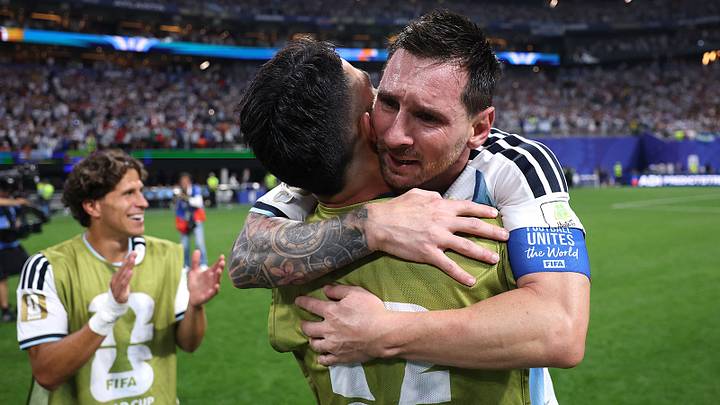
On 79 minutes, Argentina rallied to produce the latest comeback from two goals down in World Cup history, with Cristian Romero heading home, before Lionel Messi thundering in a half-volley off the bar and Enzo Fernández guiding his header back across goal from Lautaro Martínez’s cross. The Argentina bench and fans erupted.
For Egypt, it was simply too much to take. Manager Hossam Hassan sensationally accused FIFA of rigging the tournament, after seeing key refereeing decisions go against his team. In the end, the match will go down in history as Argentina’s great escape, but it could’ve been a very different story.
What Was the Refereeing Controversy?

Hassan was visibly incensed by the end of the game and had to be dragged away from confronting the referee François Letexier. Speaking after the match, the Egypt manager accused FIFA of fixing the contest in Argentina’s favor, insisting his side had “suffered an injustice”.
The key controversies arose from two incidents in the second half. Egypt thought it had doubled its advantage early on 60 minutes, only for Mostafa Ziko’s fine counter-attacking goal to be disallowed for a foul by Marwan Ateya in the buildup after a VAR review. Hassan was also left furious with Letexier’s failure to award a similar foul in Egypt’s favor the buildup to Fernández’s stoppage-time winner.
“It’s all about money. They want Messi to stay in the tournament,” Hassan said in an explosive postmatch interview. “In football, many things happen off the pitch because of interests. What happened was unfair. Egypt deserved to qualify. We were the better team.
“We have suffered injustice. It is my own way of speaking up and standing up. I am not going to watch another match in this tournament.”
The World Cup’s Biggest Shock Results

Whether Argentina got through by brilliance, fortune or something else depends on your perspective, but what is true is that the world champion narrowly avoided joining the list of some of the biggest World Cup upsets in history.
La Albiceleste has experience in this field. The last time it conceded first in a World Cup match was the 2–1 defeat to Saudi Arabia in Qatar back in 2022. An early Messi penalty that day was canceled out by Saleh Al Shehri’s strike, before Salem Al Dawsari bagged the surprise winner. Following one of international soccer’s biggest-ever shocks, Scaloni’s men regrouped to top Group C and would go on to win the tournament.
32 years before Qatar, in perhaps an even more surprising result, Argentina lost 1–0 to Cameroon in the opener at the 1990 World Cup in Italy. The defending champion, featuring Diego Maradona, fell to an uncompromising and underestimated opponent, with François Omam-Biyik’s header the only goal of the match.
It was a similar story in the 2002 tournament opener: Senegal 1–0 France, which mirrored Argentina’s 1990 humiliation as a defending champion falling to beat a much less fancied African opponent. Both Senegal and Cameroon would go on to make the quarterfinals in their tournaments, showing they had been seriously underrated.
That 2002 World Cup is often remembered as one of shock results. Joint hosts South Korea made it all the way to the semifinals, beating Spain on 5–3 on penalties, following a goalless draw after extra time. Before that the Asian side had seen off Italy in the round of 16—though both matches are remembered as much for controversial refereeing decisions as for Korea’s performances against the odds.
That painful result for Italy was not the first time it had been upset by a Korean team, previously losing 1–0 to North Korea in the 1966 tournament.
Looking even further back in time, one result often heralded as the first true World Cup shock was USA 1–0 England in 1950. An overconfident England had arrived in Brazil underprepared for its first-ever tournament, having previously rejecting invitations from FIFA to join the party. A goal from Haitian-born Joe Gaetjens proved the difference for the US’s part-timers, while the result fundamentally changed England’s standing in world soccer.
Biggest Rankings Disparity

In terms of FIFA rankings, Argentina’s latest scare might been devastating had it come to pass, but it would not have come close to the biggest upset with regard to rankings disparity—Argentina is currently second to Egypt’s 24th.
By that metric, as reported by Opta, the greatest upset in World Cup history is actually France 1-2 South Africa during the 2010 group stage, with a full 74 places between the European giant (ninth) and hosts (83rd). However, it is worth noting that the FIFA rankings were only introduced in 1994—long before the USA or North Korea’s surprise successes.
In that game, a star-studded, but aging French lineup, featuring Thierry Henry and Franck Ribery, was left shellshocked as South Africa opened the scoring through Bongani Khumalo in Bloemfontein, while Katlego Mphela doubled the lead not long after.
Florent Malouda scored a consolation effort in the second half, but it wasn’t enough and France was ultimately eliminated at the group stage for the second time in three tournaments.
READ THE LATEST WORLD CUP NEWS, ANALYSIS AND INSIGHT FROM SI FC
 Add us as a preferred source on Google
Andy Headspeath is a Real Madrid correspondent for Sports Illustrated FC. Originally from the UK, the weather, culture and soccer lured him to Spain over a decade ago where he lives with his wife, son and two untrainable dogs. A player of unspeakably limited talents and only one fully functional knee, he has more than a decade's experience in a wide variety of editorial roles within sports media, from match reporting to in-depth feature writing and interviews. He specializes in soccer history and culture, as well as—of course—La Liga.