%20%20--%3E%0A%3Csvg%20version%3D%221.1%22%20id%3D%22Layer_1%22%20xmlns%3D%22http%3A%2F%2Fwww.w3.org%2F2000%2Fsvg%22%20xmlns%3Axlink%3D%22http%3A%2F%2Fwww.w3.org%2F1999%2Fxlink%22%20x%3D%220px%22%20y%3D%220px%22%0A%09%20width%3D%2239px%22%20height%3D%2240px%22%20viewBox%3D%220%200%2039%2040%22%20enable-background%3D%22new%200%200%2039%2040%22%20xml%3Aspace%3D%22preserve%22%3E%0A%3Cpath%20fill%3D%22%23FFFFFF%22%20d%3D%22M38.5%2C7H28.2v26h10.3V7z%22%2F%3E%0A%3Cpath%20fill-rule%3D%22evenodd%22%20clip-rule%3D%22evenodd%22%20fill%3D%22%23FFFFFF%22%20d%3D%22M26.1%2C25.5c0%2C5.8-4.1%2C7.5-12.9%2C7.5C3.9%2C33%2C0%2C31.2%2C0%2C25.2v-1.1h11.6%0A%09v2.4c0%2C0.7%2C0.1%2C1.4%2C1.2%2C1.4c1%2C0%2C1.2-0.4%2C1.2-1.3v-0.9c0-1.6-0.9-1.6-3.5-2.2C2.2%2C21.7%2C0%2C19.7%2C0%2C15.3v-0.9C0%2C9.3%2C5.5%2C7%2C12.9%2C7%0A%09c10.2%2C0%2C12.8%2C2.6%2C12.8%2C7.4v1.8h-11v-2.9c0-0.6-0.4-1.1-1.2-1.1c-0.6%2C0-1.2%2C0.4-1.2%2C1.1v0.9c0%2C1.5%2C0.9%2C2%2C3.3%2C2.5%0A%09c8%2C1.6%2C10.5%2C3.3%2C10.5%2C7.5V25.5z%22%2F%3E%0A%3C%2Fsvg%3E%0A)
Why the Worst Part of the 2026 World Cup Could Come Back in 2030
La Liga chief Javier Tebas called them “a lie,” Kai Havertz described them as “annoying” and Thomas Tuchel lamented that they “change the identity” of matches.
One of the most controversial new features of the 2026 World Cup could be here to stay, with FIFA considering hydration breaks for the next men’s tournament in four years.
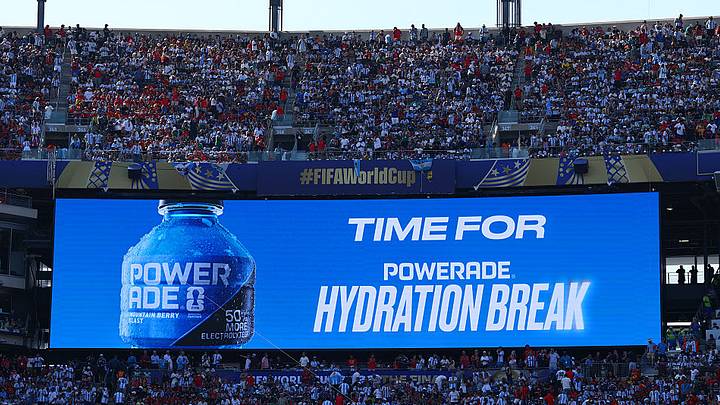
“Time for Powerade hydration break” became the least welcome phrase of the summer with the mandatory three-minute pause midway through each half imposed on all 104 matches of the tournament in Canada, Mexico and the United States, rain or shine.
Implemented under the guise of a player welfare measure amid concerns over dangerously high temperatures in North America, the supposed cooling break remained in place regardless of the weather conditions. Roughly one third of the summer’s matches were played out in climate-controlled stadiums.
Opponents of the hydration breaks claimed they fundamentally changed the game from one of two halves to four quarters, and—rather than being about protecting players—were simply a way to insert more advertising.
FIFA Keeping Options Open

Now, The Guardian reports that FIFA is considering keeping mandatory hydration breaks for the 2030 tournament and has flagged the “possibility and potential commercial benefits” of their inclusion with potential broadcasters as part of the tender process for broadcast rights.
While no official decision has yet been announced, this is the strongest indication yet that the breaks were not a one-off occurrence.
FIFA president Gianni Infantino has also defended the hydration breaks, even suggesting they helped improve the quality of matches at the 2026 World Cup.
Back in July, he told SNTV: “Maybe the coach can reassess certain situations, correct certain mistakes. The players get a little rest and come back in full speed. Well, is that bad necessarily? Maybe it’s good.
“And we see as well the intensity of the games. We’ve never seen 90 minutes in a tournament like this played in such an intensity. And maybe, maybe not, but maybe it’s also a bit thanks to this little break that the players have and after they can go back on the field and show what they can do.”
How Much Is the Hydration Break Worth?

While FIFA did not see any extra financial benefit from the use of hydration breaks over the summer, there is no doubt they are a money spinner.
The Hollywood Reporter claims that Fox Sports generated between $250–600 million from the additional advertising during hydration breaks at the 2026 World Cup. The possibility of their potential inclusion again in 2030 could be used to help drive up prices among bidders.
Broadcasting rights in the United States for the next World Cup are expected to fetch as much as $2 billion, with Netflix among the bidders.
No Forced Breaks Elsewhere

While water breaks could become an ongoing feature at the Men’s World Cup, with 2030 staged across Spain, Portugal and Morocco, plus three centenary matches in Uruguay, Argentina and Paraguay, they will not be used at next year’s Women’s World Cup in Brazil.
Meanwhile, UEFA has already dismissed the possibility of mandatory hydration breaks at either of its two biggest tournaments: the Champions League or European Championship.
Current UEFA rules stipulate that the need for drinks breaks during games is assessed on a case-by-case basis, when high temperatures occur.
A UEFA spokesman told the Telegraph: “UEFA has no plans to change these regulations for upcoming competitions, including for the UEFA Champions League and UEFA 2028 European Championship.”
 Add us as a preferred source on Google

Andy Headspeath is a Real Madrid correspondent for Sports Illustrated FC. Originally from the UK, the weather, culture and soccer lured him to Spain over a decade ago where he lives with his wife, son and two untrainable dogs. A player of unspeakably limited talents and only one fully functional knee, he has more than a decade's experience in a wide variety of editorial roles within sports media, from match reporting to in-depth feature writing and interviews. He specializes in soccer history and culture, as well as—of course—La Liga.