%20%20--%3E%0A%3Csvg%20version%3D%221.1%22%20id%3D%22Layer_1%22%20xmlns%3D%22http%3A%2F%2Fwww.w3.org%2F2000%2Fsvg%22%20xmlns%3Axlink%3D%22http%3A%2F%2Fwww.w3.org%2F1999%2Fxlink%22%20x%3D%220px%22%20y%3D%220px%22%0A%09%20width%3D%2239px%22%20height%3D%2240px%22%20viewBox%3D%220%200%2039%2040%22%20enable-background%3D%22new%200%200%2039%2040%22%20xml%3Aspace%3D%22preserve%22%3E%0A%3Cpath%20fill%3D%22%23FFFFFF%22%20d%3D%22M38.5%2C7H28.2v26h10.3V7z%22%2F%3E%0A%3Cpath%20fill-rule%3D%22evenodd%22%20clip-rule%3D%22evenodd%22%20fill%3D%22%23FFFFFF%22%20d%3D%22M26.1%2C25.5c0%2C5.8-4.1%2C7.5-12.9%2C7.5C3.9%2C33%2C0%2C31.2%2C0%2C25.2v-1.1h11.6%0A%09v2.4c0%2C0.7%2C0.1%2C1.4%2C1.2%2C1.4c1%2C0%2C1.2-0.4%2C1.2-1.3v-0.9c0-1.6-0.9-1.6-3.5-2.2C2.2%2C21.7%2C0%2C19.7%2C0%2C15.3v-0.9C0%2C9.3%2C5.5%2C7%2C12.9%2C7%0A%09c10.2%2C0%2C12.8%2C2.6%2C12.8%2C7.4v1.8h-11v-2.9c0-0.6-0.4-1.1-1.2-1.1c-0.6%2C0-1.2%2C0.4-1.2%2C1.1v0.9c0%2C1.5%2C0.9%2C2%2C3.3%2C2.5%0A%09c8%2C1.6%2C10.5%2C3.3%2C10.5%2C7.5V25.5z%22%2F%3E%0A%3C%2Fsvg%3E%0A)
50 Parting Thoughts From the 2026 French Open
Cleaning out the notebook from a wacky 2026 Roland Garros. Three preliminary notes:
A) We launched a Sports Illustrated tennis newsletter. You can get mailbags and dispatches like this direct to your inbox. If interested, sign up below.
B) The unstoppable force and immovable object that is the Served podcast churned out daily content at Roland Garros. (And we will all do it all again on-site at Wimbledon.) The recap show will come Tuesday.
C) In non-tennis news: Thanks much for your 60 Minutes reach-outs during this chaotic week. I couldn’t respond personally to everyone, but please do know your support—and occasional condemnation—was received and appreciated. For those of you asking how you can support, keep watching and sending story ideas and tips.
Onward …
1. Alexander Zverev won a title. The 2026 Roland Garros men’s champion is now, no longer, the best player never to win a major. He beat Flavio Cobolli in Sunday’s final 6–1, 4–6, 6–4, 6–7, 6–1. After two weeks of generally sterling tennis, he is now a Hall of Famer with a major title, four major finals appearances, more than 550 wins, an Olympic gold medal and 25 titles. One tournament—and some luck from the draw fates, never having to face a top-10 opponent—and we have a career rewritten.
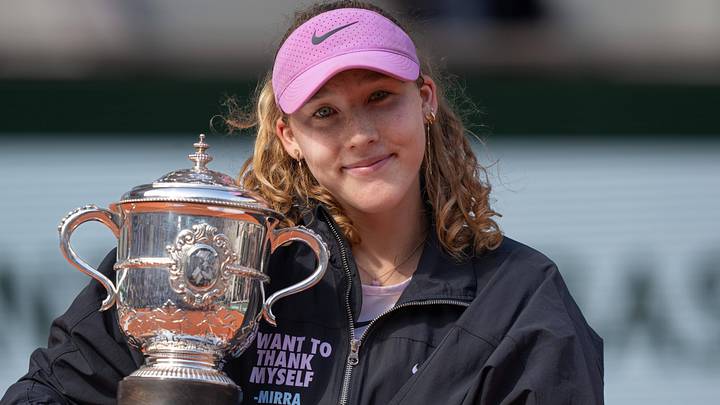
2. Mirra Andreeva broke through and won her first major, playing like a 19-year-old veteran. And you can’t help feeling that there’s more where that came from.
3. The journey—and, mercifully, the Cinderella references—ended in the finals. Still, the story of the tournament was Maja Chwalińska, the Polish 24-year-old who unfurled her lefty game and unflustered demeanor through the qualifying draw and then the first six rounds. She hit a wall in an uncompetitive final, but what a career-defining and career-redefining event it was. Chwalińska is now a top-25 player, i.e., a seed at a major. But because of draw cutoff schedules, as we write this, she might have to qualify for Wimbledon, which will be stained—and roundly, rightly criticized—if it denies her a wild card. Even though she’s not British (or a 23-time major champion), it’s the right thing to do.
4. Cobolli left the grounds visibly disappointed, coming awfully close to winning/stealing a major, serving for a fifth set against Zverev in Sunday’s tight final. When he steps back, he should savor a breakthrough tournament that included wins and a piercing of the top 10. He’s such a flashy shotmaker. A little more seasoning and Sinner will not be this generation’s only men’s major winner from Italy.
5. Jakub Menšík was terrific, resilient and surprisingly fluent on clay for five rounds, then he wilted a bit in the semifinals against Zverev. But he’s only 20, and this is part of the growth curve.
6. You’re ranked outside the top 200, reach a major semifinal and leave in crushed disappointment. So it goes for Italy’s Matteo Arnaldi, who won five matches, advanced to the semifinals, and couldn’t post because of a virus. Might it be because he played almost 18 hours previously, almost two hours more than the next-most industrious player? Note to the tournament: If you insist on bringing an intensely sick player into the interview room (weird in itself), maybe the other finalist—you know, the guy you need to be healthy to have a final and avoid another $35 million session loss—shouldn’t be seated simultaneously at the same table?
7. Diana Shnaider beat World No. 1 Aryna Sabalenka in the quarterfinals, including a 6–0 final set. She returned the next day for the semifinals and lost quietly to the world No. 114. Sports.
8. In keeping with a player who wore a T-shirt emblazoned with the phrase “Emotional Rollercoaster” to our interview, it was a mixed-bag event for Marta Kostyuk. The Ukrainian—and perhaps the best athlete on the WTA tour—kept her clay-court win streak going, reaching the semifinals with brilliant tennis in a win over fellow Ukrainian Elina Svitolina. She then turned in a clunker against Mirra Andreeva—whom she’d beaten a month earlier—logging 15 winners to 34 unforced errors.

9. What a strange event. In Australia, the stars were there, but the matches were mostly unmemorable, noncompetitive stinkers for the first 12 days. Then the last six players standing—39 majors between them—took us out. Here, the draw doubled as a star necrology. But the matches were dazzling, pendulous and gripping for 12 days, including 31 five-setters. Then the tournament lost air, with no major winners left after the fourth round.
10. In the women’s doubles, Taylor Townsend and Kateřina Siniaková won another major, beating Aleksandra Krunić and Anna Danilina in the final. With a combined age of 81, Horacio Zeballos (41, armed with a one-handed backhand) and 40-year-old Marcel Granollers defended their men’s doubles title.
11. In another Italian success, Sara Errani and Andrea Vavassori won another title, taking the mixed doubles final. Their plans to celebrate were deferred because Vavassori was still in the men’s draw and Errani had to return home to play a pro padel event.
12. Because the Czechs need another tennis prospect, 17-year-old Alisa Oktiabreva won the girls’ title. She was born in Russia—and played at Roland Garros for the Russian flag (or nonflag)—but grew up in Prague since she was one, and told me that she intends to represent the Czech Republic very soon.
And because Brazil needs another teenage prospect, Luís Guto Miguel, 17, and the world’s best junior, took the boys’ title, beating American Michael Antonius in the final. Miguel is all well and good, but we hear that the marketing types are hoping to confer on him a single name—Guto—à la Brazilian soccer stars, and the ATP is already discussing how this would be handled. And note that two of the top boys AND girls seeds at Roland Garros were Brazilian.
13. There is a fine line between market forces and greed, as the U.S. Open will demonstrate with its ticket-price debacle. And, adjacent to that, optimizing revenue comes with risk. The French federation sells more than a dozen sessions that feature only one match. When that one match is a stinker, either in quality or duration—the thin excuse the tournament offers for putting women in one of the past 33 night sessions—it’s bad. When that one match fails to materialize—i.e., Arnaldi failing to post for the second men’s semifinal—it’s an outright disaster.
14. Jannik Sinner and Sabalenka are generational, durable talents who have years at No.1 between them. They play well on all surfaces. They seldom lose early in majors (Sinner losing in Week 1 of this year’s French Open is an obvious exception). Together, they have only won two of the past 11 majors. (And together at Roland Garros, both top seeds were rolling, a game away from advancing, before the wheels flew off.)
15. One of the great revelations of the event was a joyful dunk in tennis’s baptismal font, 17-year-old Moïse Kouamé. And it was less the “what” (winning two, and nearly three, matches) than the “how” (with poise, emotion, backhand zings and more drop shots than aces). A teenage Frenchman playing in France—in the absence of Arthur Fils, after the last match of Gaël Monfil and when expectations are heightened—is a test. Kouamé didn’t miss a question. And to clarify: He gets to keep his prize money, though I was told this can be easily circumvented; his money stays in a trust until he turns 18 in March. As long as we are here, some trivia: The brother of which former top-10 player served as his agent?
16. Speaking of teens, well done to Rafael Jódar and João Fonseca, both 19, both quarterfinalists, both answering a lot of questions about their chops, durability and emotional fitness.
17. For a player who hasn’t competed at Roland Garros in five years, there was so much chatter in Paris about 44-year-old Serena Williams and her comeback. It will begin on grass with doubles at both Queen’s Club (with Victoria Mboko, we hear) and Berlin (Will Coco Gauff accept an invitation for this honor/distraction so close to Wimbledon?). Smart money says Serena, assuming she feels up to it, is then headed to the Wimbledon singles draw. Given that this is 2026 (and given that IMG is involved), there’s zero chance cameras aren’t trailing Serena this summer for the inevitable comeback documentary.
18. Novak Djokovic didn’t advance out of the first week. And yet, I’m not sure he got much persuasive evidence on the status of his career, one way or the other. With virtually no match prep, he rocked up, won two matches and took a 2–0 lead on Fonseca. The 39-year-old fell in five sets, but losing a long, well-fought match to a 19-year-old comet hardly says time to walk away. Wimbledon, which rewards age, beckons. And this is strictly conjecture, but does Serena not glean more proof that the great ones can overcome the absence of match play?
19. It was an unsettling event for Iga Świątek, a four-time Roland Garros champion, who hasn’t won a title in 2026 and projects so little joy these days. Here, she sailed through Week 1. But in the fourth round against Kostyuk—again, at an event she’s won four times—she retreated, spatially and metaphorically, lost a close first set 7–5, and then a capitulation second set 6–1, never holding serve. She heads to Wimbledon as the defending champion, but there’s considerable concern here.
20. Those of us who aren’t doctors should resist the urge to play doctor. After Sinner lost in the second round to the doubles team of Juan Manuel Cerúndolo and Heat, his troubles unleashed a torrent of theories about genetics, hydration, pigmentation and the salt content of his sweat. But the speculation here is well-taken. For two consecutive majors, and the fourth time since 2025, Sinner was really done in by the conditions. It’s not as though he’s lazy or lacks fitness. Sometimes players who lose unexpectedly in a tournament head to a therapist. In this case, a trip to a biohacking lab is in order.
21. How deep is Italian tennis? In the absence of two top-10 players, Sinner and Lorenzo Musetti, Italy provided three of the last five players remaining at this year’s Roland Garros and the mixed doubles champions—all from the country that hosts a Masters 1000 event, the ATP Finals and the Davis Cup.
22. Up 2–1 sets and 4–2, with a point for 5–1—with Matteo Berrettini looming in the quarters—Frances Tiafoe let a career opportunity slip away, falling to Arnaldi in the tournament’s 31st five-setter. Tiafoe is so easy to like and root for. But, looked at objectively, “sting” doesn’t paint the depth of this loss.
Overall, it was a middling tournament for the U.S. The top three men—Ben Shelton, Taylor Fritz and Tommy Paul—failed to get out of the first week. Jessica Pegula lost her first match. Coco Gauff, the defending champion, fell on the middle Saturday. Same for Amanda Anisimova. (An adjacent point: I am told Sebastian Korda—who was unsure if he’d enter the Miami Open and then beat Carlos Alcaraz—will be back for Wimbledon.)

23 One American who impressed in Paris: Zachary Svajda. He has never reached a quarterfinal of an ATP event, but he came close at Roland Garros, winning three matches and giving Cobolli a run. For a player of modest physique (he’s listed at 5’ 9”), he serves surprisingly well. He’s known as the ATP’s best practice partner because he doesn’t miss, and he showed a real competitive fire here. Tennis—including Djokovic—knows about his recent loss and how proud his late father would be.
24. It was nice to see some veterans who’d been high up the mountain—Pablo Carreño Busta, Berrettini and Daria Kasatkina—play to the middle weekend and beyond. She’s a bit younger, but Emma Navarro looks to be back in business, as well.
25. Do we talk about this enough? Multiple players noted the modest real estate behind the baseline of some of the outer courts. Compare that to Court Philippe-Chatrier, where players can return serve so deep that they’re out of the frame on the broadcast. Top players have so many built-in advantages in tennis: the seeding system, preferred scheduling and no fear of rain delays at majors. They also know the dimensions, geometry, sightlines and oddities of the big courts and can game plan accordingly.
26. As a reward for their unpaid work throughout the year, the French federation offered hundreds of folks the opportunity to call lines at Roland Garros. This makes it the only major—and one of the few tournaments—not to use electronic line calling. Yes, it’s a humane decision to employ actual, you know, humans. It’s also inefficient and, empirically, less accurate than letting the robots handle the task. (A conspiracy theory rejected by the suits, but interesting nonetheless: No human beings calling lines means the loss of six prominent on-court figures wearing logo attire—Lacoste at Roland Garros. Is clothing sponsor revenue part of the justification?)
27. From a grounds perspective, the French federation could use a date with the management consultants. The on-court signage boards and the tarps behind the courts must go. The food also needs an upgrade. But here’s a lovely new touch: a quiet booth (right off the main plaza) that fans can enter to escape the chaos. And, of course, Court Simonne-Mathieu might be our favorite venue in all of tennis.
28. It was another banner event for Ukraine, which continues to furnish top players at an impressive rate, especially given the strife in the country. Kostyuk and Elina Svitolina—who met in the quarters—were both politically outspoken after their match. But nothing compared to Oleksandra Oliynykova, who used her platform, taking particular aim—not without justification—at the Gazprom event, and came to press conferences with receipts and images. (Ben Rothenberg has chronicled this with great depth.) Among other grievances, she called out her third-round Russian opponent, Diana Shnaider, by name. As a result, Shnaider required extra and secret security detail during matches and on the grounds.
29. Get well soon, Hailey Baptiste. If there were a low point for this event, it might have been the gruesome sight of her knee injury. Just as she was rounding into form in 2026, playing her way into seeded status, fresh off a stare-down win over the world No.1 in Madrid, and armed with a new Nike deal. Just horrible. (This is precisely why tennis players, absent a union and guaranteed contracts, need to agitate for more money and benefits from the majors.) Wishing her a speedy and smooth recovery.
30. Five players who didn’t make it out of Week 1 but impressed nonetheless: Kouamé, of course. (A story to watch: Will he or Gaël Monfils get the U.S. Open reciprocal wild card?) Federico Cinà, an Italian 19-year-old. Oliynykova, who uses the moon ball as a weapon, Belgian boomer Raphael Collignon, who beat Ben Shelton, and American Akasha Urhobo, who won the USTA reciprocal wild card.
31. With Fonseca of Brazil and the uber-genial Cerundolo brothers of Argentina leading the way, Roland Garros 2026 doubled as an advertisement for the South American swing, currently imperiled by the Saudi Masters 1000 event. All the sportswashing lucre in the world won’t replace the energy, passion and fun of the fans, especially with all the ascending players from Argentina (too many to name), Brazil (not just Fonseca, but a spate of juniors), Chile (Alejandro Tabilo) and Peru (Ignacio Buse). I’ve heard that, in an effort to lure players and provide more of an Indian Wells update, these events intend to switch to hard courts.
32. From the boulevard of broken dreams that is the qualifying draw, two Americans, Emilio Nava and Michael Zheng qualified. Marco Cecchinato, who once beat Djokovic at Roland Garros, did not. Nor did Grigor Dimitrov, who took two straight sets off of Sinner within the past year. On the women’s side, the highlight was Sloane Stephens, who came within a set of winning this event in 2018.
33. One of those amusing Week 1 stories involved the abrupt split of player Alejandro Davidovich Fokina and coach Mariano Puerta, a telenovela-style breakup that played out on social media. Adjacent question: Mariano Puerta is known for two things: he was Nadal’s opponent the first time Rafa won Roland Garros. And he was notorious for being popped for doping. Puerta isn’t the only example of this, but given the vast pool of job candidates, why hire a coach with a history of doping sanctions?
34. Kudos to Roland Garros for (recently, not this year) inviting Peng Shuai to play in the legends events. Alas, this invitation, I was told, went unacknowledged. The train has moved on; one no longer sees many “Where is Peng Shuai” hashtags. But almost five years on, this remains such a disturbing, chilling chapter in tennis. A top-flight player, prominent in public and on social media, makes an explosive allegation against a government official. She retracts her allegation. She’s scrubbed from the Internet in her home country and then disappears. Or, more accurately, is disappeared. Women’s tennis removes its business from China. Then decides it can’t withstand the financial hit and returns. And now, when pressed about it all, the tennis response distills to: We know she’s alive. We’re told she’s fine. But she can’t leave the country. And, yeah, what can you do?
35. Andre Agassi’s fairly withering critique of Sinner was all the more remarkable given that Agassi’s longtime friend and coach, Darren Cahill, is Sinner’s coach. In a sport lousy with conflicts of interest, his calling it like he sees it was equally jarring and welcome. One adjacent issue we, as a tennis community, cannot let die: Players can’t receive treatment for cramping, but they can claim that it’s lightheadedness or possible heat stroke and leave the court mid-game? Loop meets hole.
36. One irony of the symbolic media protest (not, pointedly, a boycott) that preceded the event: The media is overwhelmingly on the players’ side and believes they are entitled to amplified voice and amplified prize money. We need to stop with the ridiculous NBA 50/50 comparison. But if the mixed Masters 1000s event can commit 22% of gross revenue to prize money, the majors—which, of course, earn more—can commit to that ratio, too. Lest you think this was unanimous, here’s Anastasia Potapova:
“If you want my honest opinion on that, I think media guys has nothing to do with our prize money. You don’t pay us, right? So how we can boycott somebody who also getting paid from the same tournament,” said Potapova. “I think for me it’s a little bit nonsense, so I’m not really into this, so here I am and talking to you as much as I want (smiling). As much as you want as well, so.”
37. Trivia: After Alcaraz won in Australia, we had a chance of a second consecutive career Grand Slam in Paris if Sinner had won the title. That obviously didn’t happen. Vanishingly small as it might be, there is a chance of another men’s career Grand Slam winner at Wimbledon. Which player would have to win it?
38. Adolfo Daniel Vallejo made one of the more moronic statements in recent tennis memory when he claimed that his second-round match should not have been umpired by a woman, incapable as women are of controlling crowds. And he was fined mightily, $65,000 more than all other fines collected at this event, combined.
Does anyone else share my discomfort with this? Not just the disproportion amount—roughly half his prize money—but perhaps even the fine itself. Again, he made a dumb, sexist, offensive, thought-deprived remark. We can all agree on that. But objectionable, troglodytic speech is still free speech. And are we not headed down a slippery slope when speech is sanctioned?
Wait, other sports have rules that athletes can’t disparage officiating without being fined. True but those rules are collectively bargained.
You couldn’t say that at your job and get away with it. True, but I am an employee, not an independent contractor.
The tournament paying the bills should expect not to be disparaged. Really? Signage on courts, scheduling decisions, bad drivers behind the wheel of courtesy cars, too many cameras in the private area. Players—often quite validly—complain all the time. Where’s the line?
This player made a terribly regressive, ill-considered comment, but let the marketplace of ideas do its thing. Fines for speech can take us to an ugly place very quickly.
39. Expect a decision soon in the case of Markéta Vondroušová. You’ll recall that the former Wimbledon champion was hit with a doping charge recently when she saw an anti-doping agent and, claiming a mental health episode, failed to engage and provide a sample. Unless there are facts not in evidence, it’s very hard to see how she skates here. Suppose players can interact with a test collector and refuse to provide a sample; that creates a substantial loophole. On the other hand, you do sympathize with an athlete who has (her characterization) a mental health episode, doesn’t provide a sample, and gets a stiffer penalty than a colleague who actually furnishes a positive result. Bluntly: If Sinner received a 90-day ban and Vondroušová gets a longer one, she needs an appeals lawyer, stat.
40. Keep an eye on the WTA Finals, the tour’s most valuable property. It’s an open secret that the tour would like to get out of the Saudi deal as soon as possible. The question is: even if the WTA can find a reason to leave early, can they recoup the Saudi fee ($15 million, I’m told) already baked into the 2026 financial projections? Charlotte and Poland have submitted bids, but I’m hearing Indian Wells has emerged as another possibility. And one unfortunate consequence of the Saudi deal going away is that the PIF helped sponsor the WTA maternity leave policy, ironic as that was. Now the cash-strapped WTA is, I’m told, seeking a new source of funding for this worthy project that Victoria Azarenka helped found.
41. Alexandra Eala lost in the first round to her friend, Iva Jovic. But her fan train kept rolling, as another army of supporters ringed the court when she played. And we’re hearing she’ll headline an off-season exhibition in the Philippines, potentially against another Asian player.
42. Roger Federer fans, exult. He will not only be inducted into the Hall of Fame this summer but, per USTA sources, will also appear at the U.S. Open, both before and after the ceremony. As the U.S. Open expands into a three-week event, it’s created more appearance and income opportunities for retired and current players.
43. More college players than ever are leaving their mark on the sport, including Shelton, rising stars Jódar and Learner Tien, top-tier types Navarro, Shnaider, Peyton Stearns, and upsetter Yulia Starodubtseva. And yet college tennis faces an existential crisis. With balance sheets changing, athletic departments going to an eat-what-you-kill model and dealing with both NIL and revenue sharing, nonrevenue sports are imperiled. All the more so when their rosters feature a majority of foreign players, sometimes 25 or 26 years old. It’s a pity that it’s become red meat for the jingoists. Still, the idea of a cap on foreign players—overseas tennis player recruitment can’t be more than one standard deviation from the school’s foreign population of the student body at large?—seems reasonable and legally sound.

44. This was a rough event in the press room as we learned before the tournament that Howard Fendrich—such a good guy, well-regarded colleague and co-president of the International Tennis Writers’ Association—died at 55. In a world of look-at-me hollow self-promotion, this was a proper journalist who served his audience, not his ego. The AP notes: “In lieu of flowers, donations can be made to the Associated Press Sports Editors Foundation, which supports careers and leadership in sports journalism.”
45. Rafa, the Rafael Nadal documentary, premiered on Netflix last week. And now comes Chris & Martina: The Final Set, which is based on the masterful Sally Jenkins Washington Post story and tells of this extraordinary rivalry and relationship between Martina Navratilova and Chris Evert. Full disclosure: I am a writer and executive producer. Despite that, it’s a spectacular film about two spectacular people. We have a Tribeca premiere on Wednesday, a Wimbledon event, and it drops on Netflix on June 26. Meanwhile, I’m told, Billie Jean King is hard at work filming her documentary. Andre Agassi has his Apple project spearheaded by his right-hand man, Justin Gimelstob, and the Djokovic documentary for Amazon, directed by the great Jason Hehir, is coming down the pike as well.
46. We don’t talk about taxes enough in sports. Why are so many players entering German grass events and not Queen’s Club and the other British events? One reason is that the U.K. tax policy takes into account the number of days one works in the country. So if, say, Sinner spent 28 days in the U.K., playing Queen’s Club and Wimbledon, he’d owe a huge tax bill on both his prize money and, potentially, endorsements. (Unlike soccer, where clubs sometimes pay taxes for players, tennis players get crushed.) Germany has a more lenient policy, one reason why nine of the top 10 WTA players have entered Berlin.
47. With full disclosure that I was part of the team, TNT was a sophomore at Roland Garros this year. The tennis fates did not offer up a Gauff title or a Sinner-Alcaraz classic, but the broadcasts adjusted. The coverage was fun, different, and, judging from my inbox and social media silo, generally appreciated (especially once Agassi arrived). And the ratings—despite an absence of stars in Week 2—reflected this.
Here’s a link to a mini-documentary we did in Prague about the Rise of the Czech Women, which will be available soon on HBO. Two awesome Rookies of the Year for Roland Garros 2026 (the media Chwalińska, as it were): Genie Bouchard for TNT and Alison Riske-Amritraj for Tennis Channel.
48. I toggled between TNT and Tennis Channel, doing interviews with stylish and substantive Prakash Amritraj. We talked with stars, little-known players, veterans, up-and-comers and Americans. Kostyuk talked about her fraught relationship with expectation. Shnaider mocked her impatience as a “passenger princess.” Wang Xiyu, overcoming her nerves, came by in part because she wants to improve her conversational English. Tiafoe talked enthusiastically about how Victor Wembanyama inspired him. Chwalińska spoke openly about her past mental health challenges. Svajda paid homage to his late father. My point: Tennis is just such a rich, disparate, overwhelmingly cool workforce. There are so many different players from (and in) so many different circumstances. Are some more personable than others? Sure. (Did one player in particular blow off every request? Yes.) But overall, tennis fans should feel confident knowing that, on balance, they are cheering for and following not just top-shelf players but top-shelf people.
49. A year ago, Juan Carlos Ferrero was the winning coach for the player taking the title in a titanic five-set battle. This year, he wasn’t on site, toggling between his academy, his attendance at a moto tour event and his work with golfer Angel Ayora. I speak for many when I say tennis is better for his presence.
50. Ending on a note of good soldiering: I’ve been collaborating with Nadal on a fun, boutique book project. Pre-order it here.
ENJOY THE GRASS TUNE-UPS, WE’LL BE BACK FOR WIMBLEDON!
More Tennis from Sports Illustrated
 Add us as a preferred source on Google
Jon Wertheim is a senior writer for Sports Illustrated and has been part of the full-time SI writing staff since 1997, largely focusing on the tennis beat, sports business and social issues, and enterprise journalism. In addition to his work at SI, he is a correspondent for “60 Minutes” and a commentator for The Tennis Channel. He has authored 11 books and has been honored with two Emmys, numerous writing and investigative journalism awards, and the Eugene Scott Award from the International Tennis Hall of Fame. Wertheim is a longtime member of the New York Bar Association (retired), the International Tennis Writers Association and the Writers Guild of America. He has a bachelor’s in history from Yale University and received a law degree from the University of Pennsylvania. He resides in New York City and Paris with his wife, who is a divorce mediator and adjunct law professor. They have two children.
Follow jon_wertheim