%20%20--%3E%0A%3Csvg%20version%3D%221.1%22%20id%3D%22Layer_1%22%20xmlns%3D%22http%3A%2F%2Fwww.w3.org%2F2000%2Fsvg%22%20xmlns%3Axlink%3D%22http%3A%2F%2Fwww.w3.org%2F1999%2Fxlink%22%20x%3D%220px%22%20y%3D%220px%22%0A%09%20width%3D%2239px%22%20height%3D%2240px%22%20viewBox%3D%220%200%2039%2040%22%20enable-background%3D%22new%200%200%2039%2040%22%20xml%3Aspace%3D%22preserve%22%3E%0A%3Cpath%20fill%3D%22%23FFFFFF%22%20d%3D%22M38.5%2C7H28.2v26h10.3V7z%22%2F%3E%0A%3Cpath%20fill-rule%3D%22evenodd%22%20clip-rule%3D%22evenodd%22%20fill%3D%22%23FFFFFF%22%20d%3D%22M26.1%2C25.5c0%2C5.8-4.1%2C7.5-12.9%2C7.5C3.9%2C33%2C0%2C31.2%2C0%2C25.2v-1.1h11.6%0A%09v2.4c0%2C0.7%2C0.1%2C1.4%2C1.2%2C1.4c1%2C0%2C1.2-0.4%2C1.2-1.3v-0.9c0-1.6-0.9-1.6-3.5-2.2C2.2%2C21.7%2C0%2C19.7%2C0%2C15.3v-0.9C0%2C9.3%2C5.5%2C7%2C12.9%2C7%0A%09c10.2%2C0%2C12.8%2C2.6%2C12.8%2C7.4v1.8h-11v-2.9c0-0.6-0.4-1.1-1.2-1.1c-0.6%2C0-1.2%2C0.4-1.2%2C1.1v0.9c0%2C1.5%2C0.9%2C2%2C3.3%2C2.5%0A%09c8%2C1.6%2C10.5%2C3.3%2C10.5%2C7.5V25.5z%22%2F%3E%0A%3C%2Fsvg%3E%0A)
Tennis Mailbag: What to Make of Tennis Australia CEO’s Recent Gaffe
Submissions have been lightly edited for brevity and clarity.
As it is written, Wednesday is mailbag day.
• Here’s this week’s Served podcast.
• Thanks to the reader who noted that Jana Novotná would have turned 58 this month. When we talk about the rise or over-indexing of Czech success, Martina Navratilova is the OG, but Novotná (who coached Barbora Krejčíková) should also get acknowledgment.
• Congrats to Coco Vandeweghe on her wedding this past weekend.
• Last month Rajeev Ram played his final major. Since then? Well, check out these dispatches from his trip to India.
• Rafael Nadal speaks about his new book.
Onward …
How can Tennis Australia stoop this low? They hired a new CEO and tournament director who hardly knows anything about tennis. He calls Jannik Sinner “Jacob” and mispronounced [Elena] Rybakina’s name and suggested that the Australian Open could be best out of three sets. He must have zero respect from the people working for him.
Sunny, Philadelphia
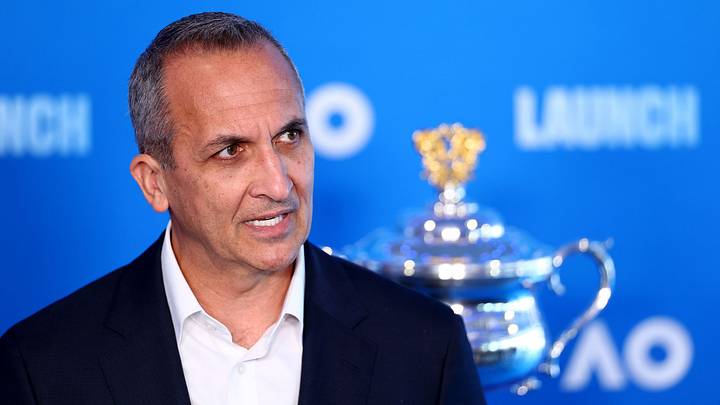
• If you missed it, the new tournament director of the Australian Open, Andrew Abdo—who decamped from the world of rugby—declared himself excited to watch “Jacob Sinner” and referenced the excellent defending women’s champion, “Elena Robakina.” No amount of spin can mask this as anything but a brutal unforced error, one that undermines confidence and erodes respect.
And yet, so often, tennis is afflicted by groupthink: executives and insiders with the equivalent of lifetime appointments, recycling old business plans and operating in the tennis ecosystem without a sense of innovation and strategy found in other sports. If you want to hire executives from the outside—as tennis should—you must accept that there’s a learning curve. (The same is true for the media, by the way. If a popular ESPN college football ace joins tennis coverage and calls Coco Gauff “Coco Graf,” it’s unfortunate, but I see it as a small price to pay for a new, well-regarded voice at the desk and in the sport.)
It’s a balance. Let’s keep doing this, because it’s how we’ve always done it is not a strategy. But hiring an outsider who had success elsewhere? It means dealing with someone who might not know how to pronounce the name of the world No. 1. Ideally, Abdo bones up on his tennis, and he is given some grace as he does.

Hello Jon,
It’s been a while since I wrote to you, hope you’re doing well.
Anyway, just figured an interesting stat: [Alexander] Zverev, who will finish the year as dominant Year-end No. 1 has gone 2–8 against top 10 opponents, while [Novak] Djokovic, who is currently outside the elite 10 has gone 6–2. Now, this is not say that Zverev doesn’t deserve his ranking and GS success (he won all his matches fair and square), but it has to be pointed out that his road to No. 1 and GS titles has been greatly influenced by obvious candidates (Sinner and Carlos Alcaraz) being sidelined and the next best player (Djokovic) struggling with Father Time. Thanks to the results of this season, the German has a HoF career now. Have there been others so fortunate as Zverev?
Kind regards,
Miloš from Zaječar, Serbia
• In a word: yes. Zverev shouldn’t be penalized for beating the seven players put before him in his two majors, even if Alcaraz and Sinner weren’t among them. It’s not like he’s a student getting straight A’s because he picked easy classes. Players have no agency in draws. The agency comes from beating the opponents on the other side of the net. Zverev executed that agency and should be commended for it.
And yes, it is strange/lucky/noteworthy that we have a No. 1 player who has fared so poorly against his best colleagues. Or that Djokovic—a 39-year-old part-timer—had more top-10 wins last week than Zverev had all year. Should Zverev be punished for this? No. Objectively, the math is the math. But should we ignore this statistical quirk? No.
Two tangential points:
A) Top players always hate this idea because it gives opponents more incentive, but rankings could award bonus points for upsets and weight opponents’ strength. There are models where beating a qualifier—or Flavio Cobolli in the finals of a major—would result in a different points haul than beating Sinner and Alcaraz.
B) Some of this is due to the ATP injury-o-rama. We talk about injuries hurting top players, with Sinner and Alcaraz both missing huge chunks of the season (i.e., more than 100 days of action). This trickles down. When the top two players are not in the draw, it stands to reason that lesser players will not only win, but do so with less than formidable draws.
Hi Jon. As always, I enjoyed all the wisdom in your 50 thoughts after the U.S. Open. In general, I think doubles has been getting a bad rap for a while, but the two American winners in the men’s and women’s doubles events are great poster children for doubles. Christian Harrison was out of tennis for 10 years, needing eight surgeries during that time. He’s now fully back and won two majors this year! Taylor Townsend is now No. 2 in the world in doubles, and although she plays with the No. 1 player, she’s more than held her own on the court, especially when [Kateřina Siniaková]’s serve goes sideways. She’s more than redeemed herself since her junior days when the then USTA head of player development, Patrick McEnroe, chastised her for not being fit enough. Great stories from great doubles players. We should really celebrate them!
Thanks, Naomi M.
• Thank you for that. You were right on both counts. Early in his career, Christian Harrison was known as Ryan’s little brother. He spent the middle chunk of his career mostly injured. And in the third act, he’s evolving into an elite doubles player, a real testament to persistence, but also to talent.
As for Taylor Townsend, first, full disclosure: We sometimes work together at Tennis Channel, which is a joy. She has a good aura and an absence of inhibition. As for the tennis itself, what a wildly entertaining, lefty, attacking game. She is on the short list of this generation’s best volleyers. And there’s her partner: Kateřina Siniaková, put simply, is a pro’s pro. As I said last month, she’ll get my Hall of Fame vote. The career slam Naomi notes? Siniaková had a career slam with other partners. (Now Townsend owes her a visit in the Czech Republic, and we will not stop nagging her until she goes there and drinks the beer.)
Hi Jon,
I was interested to get your take on British tennis and where it’s at right now. Being positive, we have [Emma] Raducanu (a slam winner no less) and Jack Draper (as high as four in the world) able to hang with their best when not injured. We’ve also just made the final eight in the Davis Cup and only got knocked out by a supremely talented Czech team in the final eight of the Billie Jean Cup. However, for the fourth time in five majors, there was no British interest in the second week. I know Arthur Fery made an unlikely but impressive semis at Wimbledon, but the other 14 Brits failed to reach even the third round.
Do you see British tennis improving? What do you think it could do better?
Thanks as always,
Alex
• You’ve answered a good question well. It’s hard to gauge the success/shortcomings of British tennis because of injuries. Eighteen months ago, Jack Draper seemed poised to break up the Sinner-Alcaraz duopoly. He’s scarcely played since. And Emma Raducanu, too, has shown flashes of brilliance but also spends more time rehabbing and recovering than playing.
As for bright spots, you note Arthur Fery, who, catapulted by his Wimbledon success, is currently a top-40 player. Katie Boulter has had some recent success. Cameron Norrie is still winning matches. The doubles draws (and college rosters) come studded with Brits. Hannah Klugman, 17, was briefly the No. 1-ranked junior. Her fate will go a long way towards any assessment of British tennis.
Lucky enough to host a major—and thus reap hundreds of millions in revenue that can be applied to development—the bar is (and should be) higher for the U.K. than most other nations. Then again, you’re talking about a country of 70 million people with a “crap climate,” as the Brits would say. So having a few players at the top of the game would mark an achievement. All of which is to say I have no good answer, but let’s revisit in, say, six months?

Tangentially, five years and zero additional titles since the 2021 U.S. Open, we’re getting close to being able to say, authoritatively, that Raducanu makes for one of the strangest tennis stories ever written. Now 23, she has a losing record at WTA 1000 events. Imagine winning a major as a teenager without dropping a set and then having the career of, say, (sorry for the stray) Liudmila Samsonova.
A caveat: Just because a player is from Country X doesn’t mean they were a product of the system. Some players avoided their country’s federation. Some succeeded despite it.
Hi Jon, Can you please use any influence you have to change TV tennis coverage for the better? See below.
1) Have the predominant view be from behind the receiver of service instead of the ridiculous bird’s eye view where you can’t tell if the ball’s going over the net. This way the viewer is able to see what it would be like to play at this level. Occasionally, you’ll see this angle on the coverage, but it’s only about 1% of the time.
2) After the match is over, keep the coverage on the players, not the crowd. I want to see the emotion between the players, before, during, and after the handshake. I don’t subscribe to the Tennis Channel to see the crowd. If you must show the crowd’s reaction, show it on a replay.
3) Tell the commentators not to say “he/she’s not really sorry” when they hit a lucky shot and raise their hand or racquet. It’s not an apology; it’s an acknowledgment that it was lucky.
Thanks,
Enjoy the Mailbag and your commentary.
Mark Averett
• Thanks, though asking me to use my influence to change tennis TV is like asking Tom Cruise to use his height to get a jar from the top shelf.
1) I’m not sure I like “predominant,” but I agree it’s often a revealing angle that gets used too seldom.
2) Amen. Amen. Amen. We’ve seen two players locked in combat for hours, and the minute it ends and we get resolution, you go to… random people in the crowd? Or little-known, sunglass-shrouded members of the camp exchanging awkward hugs and high fives? No. Stay on the damn players!
3) Point taken.
I’ve said this before, but regarding the first two points, note that there is usually an in-house feed or a world feed that networks and broadcast partners use. It’s not as though Tennis Channel or ESPN sends its own courtside cameras to Shanghai or Rome.
Shots
• Tennis is coming to New Mexico.
• New York readers take note of this fundraiser.
HAVE A GOOD WEEK, EVERYONE!
 Add us as a preferred source on Google
Jon Wertheim is a senior writer for Sports Illustrated and has been part of the full-time SI writing staff since 1997, largely focusing on the tennis beat, sports business and social issues, and enterprise journalism. In addition to his work at SI, he is a correspondent for “60 Minutes” and a commentator for The Tennis Channel. He has authored 11 books and has been honored with two Emmys, numerous writing and investigative journalism awards, and the Eugene Scott Award from the International Tennis Hall of Fame. Wertheim is a longtime member of the New York Bar Association (retired), the International Tennis Writers Association and the Writers Guild of America. He has a bachelor’s in history from Yale University and received a law degree from the University of Pennsylvania. He resides in New York City and Paris with his wife, who is a divorce mediator and adjunct law professor. They have two children.
Follow jon_wertheim