%20%20--%3E%0A%3Csvg%20version%3D%221.1%22%20id%3D%22Layer_1%22%20xmlns%3D%22http%3A%2F%2Fwww.w3.org%2F2000%2Fsvg%22%20xmlns%3Axlink%3D%22http%3A%2F%2Fwww.w3.org%2F1999%2Fxlink%22%20x%3D%220px%22%20y%3D%220px%22%0A%09%20width%3D%2239px%22%20height%3D%2240px%22%20viewBox%3D%220%200%2039%2040%22%20enable-background%3D%22new%200%200%2039%2040%22%20xml%3Aspace%3D%22preserve%22%3E%0A%3Cpath%20fill%3D%22%23FFFFFF%22%20d%3D%22M38.5%2C7H28.2v26h10.3V7z%22%2F%3E%0A%3Cpath%20fill-rule%3D%22evenodd%22%20clip-rule%3D%22evenodd%22%20fill%3D%22%23FFFFFF%22%20d%3D%22M26.1%2C25.5c0%2C5.8-4.1%2C7.5-12.9%2C7.5C3.9%2C33%2C0%2C31.2%2C0%2C25.2v-1.1h11.6%0A%09v2.4c0%2C0.7%2C0.1%2C1.4%2C1.2%2C1.4c1%2C0%2C1.2-0.4%2C1.2-1.3v-0.9c0-1.6-0.9-1.6-3.5-2.2C2.2%2C21.7%2C0%2C19.7%2C0%2C15.3v-0.9C0%2C9.3%2C5.5%2C7%2C12.9%2C7%0A%09c10.2%2C0%2C12.8%2C2.6%2C12.8%2C7.4v1.8h-11v-2.9c0-0.6-0.4-1.1-1.2-1.1c-0.6%2C0-1.2%2C0.4-1.2%2C1.1v0.9c0%2C1.5%2C0.9%2C2%2C3.3%2C2.5%0A%09c8%2C1.6%2C10.5%2C3.3%2C10.5%2C7.5V25.5z%22%2F%3E%0A%3C%2Fsvg%3E%0A)
Tennis Mailbag: Will Ben Shelton and Juan Carlos Ferrero Be a Perfect Match?
• Here’s this week’s Served podcast:
• In non-tennis news, here’s Victor Wembanyama:
• Read this from Tennis community elder Matt Futterman, trust me.
• Often we plug friends’ books. Today we plug a friend’s bookstore, The Rabbit in the East Village. New York readers and visitors, be advised.
Onward …
Ben Shelton’s New Coach
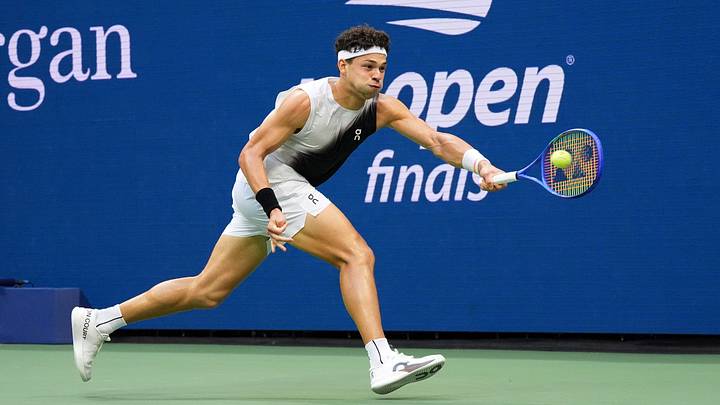
Most of the questions this week were about Ben Shelton’s new coaching announcement.
Juan Carlos Ferrero will be joining the Shelton team. Ferrero—out of character—dangled the idea of a return, marking his next tennis job after the abrupt breakup with Carlos Alcaraz in December. This sparked a parlor game and plenty of speculation. I guessed he’d next work with Rafael Jódar, but a source told me the player wasn’t a Spaniard. Then, on Sunday, came the announcement of the Shelton partnership.
To use one of the hoariest clichés: I didn’t have this on the bingo card. But it’s an intriguing move, and it shows real courage and humility from all parties. Shelton is willing not just to hear a new voice, but to hire a tough coach who is based in Spain. He didn’t hire Ferrero as a buddy on the road to talk SEC football or swap TikTok videos. This hire suggests he’s willing to work to get better. (It’s also a compliment that Ferrero—who doesn’t need to be doing this—finds Shelton worthy.)
Bryan Shelton deserves credit for having the humility to step aside, or at least shift the dynamics. It can’t be easy handing over some coaching authority, especially when the player is your son. But if it serves your son by helping him maximize his talent and put himself in the best position to win, you do it if you’re principled and humble.
And credit to Ferrero for waiting for the right opportunity, landing a young top-five player and showing a willingness to enter another family dynamic. (In addition to coaching Alcaraz—whose father is part of the team—Ferrero, you’ll recall, also worked, less fruitfully, with Alexander Zverev, whose father travels the circuit.)
As we discussed on Served, this could be a real win-win-win. But if not? Unlike team sports, in tennis it’s easy to part ways, say this isn’t working, and everyone moves on with little friction.
Next week we can talk about Jannik Sinner and Magnus Norman.
Q&A
Question for your tennis mailbag.
First of all, I will say that I’m not a fan of Aryna Sabalenka, most of all due to her intolerable screaming (I refer to her as Sabashrieka). Her talent is undeniable, but the screaming (it’s not just a grunt) and drama-queen antics are too much. I googled “hindrance in tennis” and got the following: “An extended grunt can be considered a hindrance in tennis if the noise continues after the player strikes the ball and interferes with the opponent’s ability to play the shot.” Sabalenka's “grunt” is deliberate, extended (well after the ball is struck), obnoxious and inconsistent, and it has to be annoying to her opponent, not to mention the fans. Why shouldn’t she be called for a hindrance when she does it?
Thanks, Mark Averett
• I don’t buy the premise. But this issue—and Sabalenka in particular—comes up quite a bit, so, in keeping with the goal of having these questions reflect the voters’ choices, I feel duty-bound to address it.
A) Given the sheer pace of Sabalenka’s ball striking, I’m inclined to give her the benefit of the doubt and suggest the soundtrack—unfortunate as it might be to some—is a result of exertion, not gamesmanship.
B) If this were really a hindrance, wouldn’t we hear more complaints from other players? We should not overlook the importance of sound in tennis. It’s critical for players not just to see the ball, but to hear it come off the opponent’s racket. If it really impeded and impacted performance, you’d expect this to come up more often—in the moment, after the match and even at WTA Council meetings.
C) The fan perspective should not be ignored. Again, grunting has never bothered me. Embarrassingly, perhaps, I concede that I barely notice it. But I acknowledge many of you do. If it’s bad for fans, then it’s bad for business. If I’m the WTA? Even if few players raise the issue, the chorus of angry fans would concern me.
D) This has a “Jordan Rules” aspect. When Maria Sharapova and Victoria Azarenka were at their loudest, they were also at the top of the sport. And the WTA’s position was essentially: We’ll grandfather in the stars. We don’t want to confront them. But we’ll really patrol it for the next generation. That was more than a decade ago. (Can-kicking is seldom what strong leadership looks like.)
We had a few questions about Vivek Ramaswamy and his dubious tennis claims. Ramaswamy lost the Ohio gubernatorial election to Democrat Amy Acton on Tuesday. Setting politics aside, what do we make of people exaggerating their tennis bona fides?
One of my favorite tennis books—actually one of my favorite books—is Levels of the Game by the great John McPhee. As the title implies, one theme is the Russian nesting-doll aspect of tennis. There are tiers to this sport. You can—and will—move up and down, but you must respect the system.
I was a decent junior player. Not great by any stretch, but I had a state ranking, played No. 1 on my high school team, etc. I got to college, explored playing on the jayvee team, and ceased that exploration before I could get cut. These classmates from California, Connecticut and Puerto Rico? They were good; certainly better than me. But they still couldn’t sniff the varsity team. The No. 6 player on varsity? He could barely take games off the No. 1 player. The No. 1 player? He couldn’t sniff the pros. (I just looked it up: The best player in the college conference during my time, Albert Chang, was amazing and didn’t scratch the ATP’s top 100.)
You see where I am going with this? The idea that a good high school player in Ohio would have a national ranking? It is not factual and is an unnecessary exaggeration. People aren’t going to say, Gee, I would have voted for him if he’d had a junior national ranking; but since he was only a ranked regional junior, I’ll cast my lot with Amy Acton. It’s disrespectful to the sport insofar as it dishonors the levels.
It’s the same reason Bill Ackman’s cringy embarrassment at Newport last year rubbed so many the wrong way. Here was a 59-year-old man who, like Ramaswamy, didn’t even play on the Harvard team. The idea that he had any business being on the same court in a sanctioned ATP match with full-time pros half his age? It wasn’t just the lack of self-awareness and humility. It was disrespectful to the sport itself, and all the players who reside levels—plural—above him.

Hi Jon,
Last week, Venus Williams accepted wildcards into another tournament. This is not a knock on Venus. I am a fan. However, I’m curious what tournament organizers and the data shows. Is there proof her presence drives ticket sales and attendance? Does her playing really boost tv ratings?
|Thank you!
• I’m glad you brought this up. Venus Williams was asked about her decision to continue competing. This was, in part, her response: “I think people sometimes get too caught up in what an athlete is supposed to do, or when they’re supposed to stop. There’s this expectation that you reach a certain age, or your results change, and suddenly everyone else gets to decide that your time is over.” Again, as someone who covered her at her celestial best, it’s wild that she is still going, closer to age 50 than 40 and that someone fiercely proud would be taking defeats to the kind of players she would have waved 6–1, 6–2 at the peak of her powers. And, yet, I can’t help but admire her attitude. It may not be the choice many others would make if similarly suited, but that’s never mattered to her.
To your point, I would love to see the data, too. Unfortunately—in keeping with a broader tennis theme/issue—it would be very hard to come by. Tournaments don’t really keep this kind of research. Even if they did, how would they isolate variables? How would you determine that X tickets were sold solely because of one player? And how would you make an apples-to-apples TV comparison? You’d have to consider the time slot, both players, the lead-in programming, etc.
My gut? Sure, the seven-time major champion and legend of the sport is more valuable to a tournament than a garden-variety wild card. But the bump is relatively small. If Venus were the type of player to schmooze sponsors at all hours, engage the local media and stay after elimination for kids’ clinics and civic luncheons, it might be more of a needle-mover. But that ain’t the case here.
Question for Bag:
What do you think of Zheng Qinwen’s chances to return to the top 10 in the next year? She’s looked very good since the U.S. Open.
Jason, Austin
• High. First, as you note, she’s been a world-beater since the U.S. Open. We’ve told the story before, but it’s a great encapsulation of tennis. Her ranking is so low—it’s been such a brutal year—that she has to qualify for tournaments. Without complaint, she arrives early, takes a shuttle bus to some of her matches and slogs through three rounds. Having found form—and more importantly, but not unrelatedly, confidence—she won four matches at the U.S. Open, twice coming back from 0–5 deficits against past majors champions (Madison Keys and Iga Świątek).
In the quarterfinals against Elena Rybakina, Zheng won the first set. She ran out of steam and lost to the player who won the title. No shame there. But the sting of defeat and failing to close still lingers. So, in two weeks, she went from the qualifying draw to genuine disappointment at failing to reach the semifinals. This is tennis, cruel and giving at the same time. You can turn your career around at one event and still leave with an aftertaste of distinct bitterness.
Anyway, Zheng then returned home and won the China Open, beating four top-20 players. She just turned 24, is relatively young and has such a complete game. She is a great athlete and has no shortage of self-confidence. I’d buy this stock.
SHOTS
• Greg Sharko, tennis treasure, sends this dispatch from the Dakotas:
A) Dylan Dietrich won his second straight challenger title, is the No. 1 collegiate player at UVA and is now in the top 200 at No. 189. He’s 18–3 since July 20, when he was ranked No. 556. A teammate of Jódar for a year, he plans to play his senior year at UVA, get his degree and play his first major in the qualifiers at the Australian Open.
B) Darwin Blanch reached the quarterfinals in Sioux Falls and is the second-youngest player in the top 150 ATP Rankings at No. 139, and seventh in Next Gen standings. He will likely qualify since top two Jódar and João Fonseca won’t play.
C) J.J. Wolf reached the quarterfinals in Sioux Falls and is coming back from a major shoulder injury, which sidelined him for a year. He was unranked in February and is now almost back in the top 200 (at 204). There were 22 players in the main draw with college ties (active or former players), and for the third year in a row, the final was between two players who had competed in college.
HAVE A GOOD WEEK, EVERYONE!
 Add us as a preferred source on Google

Jon Wertheim is a senior writer for Sports Illustrated and has been part of the full-time SI writing staff since 1997, largely focusing on the tennis beat, sports business and social issues, and enterprise journalism. In addition to his work at SI, he is a correspondent for “60 Minutes” and a commentator for The Tennis Channel. He has authored 11 books and has been honored with two Emmys, numerous writing and investigative journalism awards, and the Eugene Scott Award from the International Tennis Hall of Fame. Wertheim is a longtime member of the New York Bar Association (retired), the International Tennis Writers Association and the Writers Guild of America. He has a bachelor’s in history from Yale University and received a law degree from the University of Pennsylvania. He resides in New York City and Paris with his wife, who is a divorce mediator and adjunct law professor. They have two children.
Follow jon_wertheim