%20%20--%3E%0A%3Csvg%20version%3D%221.1%22%20id%3D%22Layer_1%22%20xmlns%3D%22http%3A%2F%2Fwww.w3.org%2F2000%2Fsvg%22%20xmlns%3Axlink%3D%22http%3A%2F%2Fwww.w3.org%2F1999%2Fxlink%22%20x%3D%220px%22%20y%3D%220px%22%0A%09%20width%3D%2239px%22%20height%3D%2240px%22%20viewBox%3D%220%200%2039%2040%22%20enable-background%3D%22new%200%200%2039%2040%22%20xml%3Aspace%3D%22preserve%22%3E%0A%3Cpath%20fill%3D%22%23FFFFFF%22%20d%3D%22M38.5%2C7H28.2v26h10.3V7z%22%2F%3E%0A%3Cpath%20fill-rule%3D%22evenodd%22%20clip-rule%3D%22evenodd%22%20fill%3D%22%23FFFFFF%22%20d%3D%22M26.1%2C25.5c0%2C5.8-4.1%2C7.5-12.9%2C7.5C3.9%2C33%2C0%2C31.2%2C0%2C25.2v-1.1h11.6%0A%09v2.4c0%2C0.7%2C0.1%2C1.4%2C1.2%2C1.4c1%2C0%2C1.2-0.4%2C1.2-1.3v-0.9c0-1.6-0.9-1.6-3.5-2.2C2.2%2C21.7%2C0%2C19.7%2C0%2C15.3v-0.9C0%2C9.3%2C5.5%2C7%2C12.9%2C7%0A%09c10.2%2C0%2C12.8%2C2.6%2C12.8%2C7.4v1.8h-11v-2.9c0-0.6-0.4-1.1-1.2-1.1c-0.6%2C0-1.2%2C0.4-1.2%2C1.1v0.9c0%2C1.5%2C0.9%2C2%2C3.3%2C2.5%0A%09c8%2C1.6%2C10.5%2C3.3%2C10.5%2C7.5V25.5z%22%2F%3E%0A%3C%2Fsvg%3E%0A)
U.S. Open 2026 Midterm Grades: Favorites Thrive, Americans Move on and Influencers Take Over
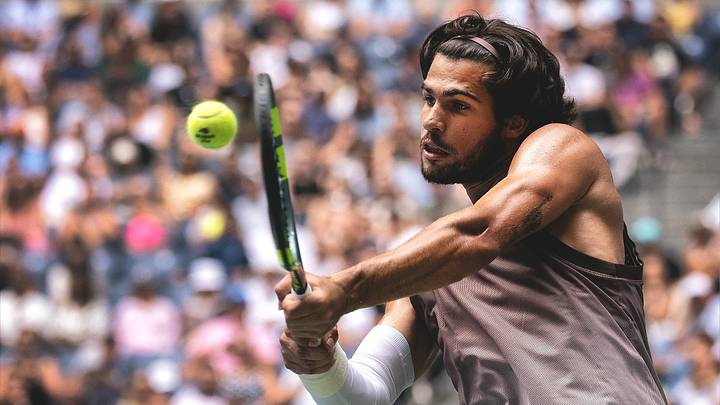
Break into your savings, endure the lines, watch out for the ring lights, and … welcome to tennis Coachella, the Disneyfied banquet of commercialism, also known as the 2026 U.S. Open. Amid the ubiquitous Honey Deuces, the $100 snacks, the clout-chasing influencers, the stench of sports gambling, the new suites—no longer festooned with bathrooms—and all the other trappings of late-stage capitalism, there is a … what’s the phrase? Oh, right … a major tennis tournament being held.
Let’s talk about that, shall we?
For one, there’s a storyline swap. The women’s draw has been remarkably formful. For the first time at a major since 2021, each of the top 10 seeds reached the third round. At this writing, the favorites are rounding into form. Aryna Sabalenka is looking like the three-peat chaser she is. Coco Gauff looks like a favorite. Jessica Pegula looks like she might win her first major. Even Elena Rybakina looks to have healed quickly from a lower leg injury.
It’s the men’s draw that doubles as a seed boneyard. We expected cannonballs from Arthur Fils, Rafael Jódar and Brandon Nakashima, each entering the U.S. Open with career-high rankings. We got belly flops instead. Félix Auger-Aliassime, the No. 3 seed, lost to a player (Karen Khachanov) who had lost to Bernard Tomic last month. Even the top seed, bleary-eyed Alexander Zverev, has struggled to survive.
The favorite? Carlos Alcaraz needed about an hour of tennis to douse concerns about his wrist and inflame enthusiasm that tennis’s most dynamic star is back in form. And the inevitable question: Might this be the event where the American men’s 23-year-old title drought ends, with Andy Roddick the last American men’s player to win a major championship (2003 U.S. Open)? Might Ben Shelton, Taylor Fritz or Tommy Paul reverse the curse?
Let’s take a quick look back at Week 1, before readjusting our ring lights and spinning forward.
A
Carlos Alcaraz: He is, undeniably, back. No nip-and-tuck matches here, as he charged to fairly routine wins. Bringing his aura and, more importantly, his top-shelf tennis to bear, he’s become the favorite. The break may have done him good.
Coco Gauff: A clear favorite, and playing like it.
The retirees: Stan Wawrinka, Gaël Monfils, Sorana Cîrstea, Rajeev Ram, Steve Dinkes. Some may soldier on, while some may reconsider hanging it up. But godspeed to all, some of whom will reemerge in Newport.
Zhengs: Qinwen, the reigning Olympic gold medalist in singles, has drifted outside the top 100 (thanks to an elbow injury). But after qualifying, she won three rounds—including a remarkable comeback victory over Madison Key—and looks to be back in business. Which is good for her, and, candidly, for the sport. And how about Michael? The recent Columbia graduate has won matches at each of the four majors in 2026 and is only beginning a promising career.
Taylors: Townsend and Fritz. She reached the middle weekend with terrifically entertaining tennis, including a win over fellow lefty Diana Shnaider. He (at this writing) looks healthier and better than he did in 2024 when he reached the U.S. Open finals.
A-
Aryna Sabalenka: She’s been unnecessarily testy with the media—this from a player who went out of her way to praise the press at Wimbledon—but, more importantly, her tennis has been unimpeachable as she goes for a three-peat.

B+
Williams sisters: At a combined age of 90, Venus and Serena wowed the U.S. Open crowd with a rollicking first-round doubles match against Maya Joint and Hao-Ching Chan. To the disappointment of most, the sisters blew a 5–0 lead in the decisive tiebreaker and skipped the mandatory press conference for all players, a show of disrespect for the media, yes, but also for the event and the public.
Reese Brantmeier: American wild card (and former NCAA champ from the University of North Carolina) may have lost her first match, but her impact looms large. Her lawsuit made it possible for players like Jack Kennedy to keep their first-round prize money ($140,000) and maintain their college eligibility.
One-handed backhand: Stefanos Tsitsipas scored one of the bigger upsets of the first round and is still going strong at this writing. Lilli Tagger continued her ascent in New York. Diane Parry beat Viktorija Golubic in a rare one-on-one fight. The one-handed backhand is not dead yet.
Robin Montgomery: She is such a talented lefty player and has already won a title this year, but needs to work on closing. After qualifying at Wimbledon, she was up a set and a break on seeded Jasmine Paolini and lost in three sets. After qualifying in New York, she was up a set and a break on seeded Maria Sakkari and failed to close.
Influencers: They have generated a lot of attention—which is, ultimately, the goal. If the USTA takes slings for credentialing the ring camera brigade, and it diverts attention from the unconscionable ticket prices and the Kalshi deal (see below), it is happy. A Simple solution to the protocol breaches: Before receiving credentials, influencers must take one of those corporate responsibility etiquette classes.
C
The USTA’s Kalshi deal: Yes, sports betting is here to stay, and it has infected so many sectors of sports. But prediction markets (even less regulated and more pernicious) are a whole new ball game. You would expect a national federation (that helps fund an integrity unit to combat the growing scourge of match-fixing) to have shown more integrity. It’s just a huge unforced error and breach of responsibility, indefensible everywhere but on a balance sheet, which sadly, is the USTA’s sacred text.
Momentum boys: Fils (the Cincinnati winner two weeks ago), Jódar (at a career-high ranking), Nakashima (also at a career-high ranking)—we’re talking about you. All three were out of the tournament by Wednesday. Maybe it’s fatigue. Maybe it’s a failure to manage the occasion. Maybe it’s the difference between best-of-five and best-of-three tennis. But what a trifecta of disappointing results.
Belinda Bencic: She has a lovely presence on the court, and is one of the least likely players to challenge the code of conduct, but fair is fair. She could have been defaulted for rifling a ball into the stands in frustration—a move that has, distressingly, become increasingly common among players. As a parent might say, Stop that before someone gets really hurt. Despite the prodding of the opponent, unsurprisingly, Yulia Putintseva, Bencic was not disqualified—but the No. 12 seed was upset in three sets.
Disneyfication: The USTA’s offseason homework: Remain capitalists and faithful to your fiduciary duties, but marry that with soul. The Ticketmaster deal, goofy influencers interrupting play and the $100 chicken nuggets? Surely there is a more artful way to marry commerce and integrity.
ENJOY WEEK 2 EVERYONE!
 Add us as a preferred source on Google
Jon Wertheim is a senior writer for Sports Illustrated and has been part of the full-time SI writing staff since 1997, largely focusing on the tennis beat, sports business and social issues, and enterprise journalism. In addition to his work at SI, he is a correspondent for “60 Minutes” and a commentator for The Tennis Channel. He has authored 11 books and has been honored with two Emmys, numerous writing and investigative journalism awards, and the Eugene Scott Award from the International Tennis Hall of Fame. Wertheim is a longtime member of the New York Bar Association (retired), the International Tennis Writers Association and the Writers Guild of America. He has a bachelor’s in history from Yale University and received a law degree from the University of Pennsylvania. He resides in New York City and Paris with his wife, who is a divorce mediator and adjunct law professor. They have two children.
Follow jon_wertheim