%20%20--%3E%0A%3Csvg%20version%3D%221.1%22%20id%3D%22Layer_1%22%20xmlns%3D%22http%3A%2F%2Fwww.w3.org%2F2000%2Fsvg%22%20xmlns%3Axlink%3D%22http%3A%2F%2Fwww.w3.org%2F1999%2Fxlink%22%20x%3D%220px%22%20y%3D%220px%22%0A%09%20width%3D%2239px%22%20height%3D%2240px%22%20viewBox%3D%220%200%2039%2040%22%20enable-background%3D%22new%200%200%2039%2040%22%20xml%3Aspace%3D%22preserve%22%3E%0A%3Cpath%20fill%3D%22%23FFFFFF%22%20d%3D%22M38.5%2C7H28.2v26h10.3V7z%22%2F%3E%0A%3Cpath%20fill-rule%3D%22evenodd%22%20clip-rule%3D%22evenodd%22%20fill%3D%22%23FFFFFF%22%20d%3D%22M26.1%2C25.5c0%2C5.8-4.1%2C7.5-12.9%2C7.5C3.9%2C33%2C0%2C31.2%2C0%2C25.2v-1.1h11.6%0A%09v2.4c0%2C0.7%2C0.1%2C1.4%2C1.2%2C1.4c1%2C0%2C1.2-0.4%2C1.2-1.3v-0.9c0-1.6-0.9-1.6-3.5-2.2C2.2%2C21.7%2C0%2C19.7%2C0%2C15.3v-0.9C0%2C9.3%2C5.5%2C7%2C12.9%2C7%0A%09c10.2%2C0%2C12.8%2C2.6%2C12.8%2C7.4v1.8h-11v-2.9c0-0.6-0.4-1.1-1.2-1.1c-0.6%2C0-1.2%2C0.4-1.2%2C1.1v0.9c0%2C1.5%2C0.9%2C2%2C3.3%2C2.5%0A%09c8%2C1.6%2C10.5%2C3.3%2C10.5%2C7.5V25.5z%22%2F%3E%0A%3C%2Fsvg%3E%0A)
Why U.S. Open Ticket Prices Are Soaring
As it is written, Wednesday is mailbag day.
• The U.S. Open is about to get underway, and we will flood the zone with previews, predictions, features, etc., in the coming days.
• Here are the tips for enjoying the 2026 U.S. Open.
• Here is my conversation with Jessica Pegula.
• Here’s this week’s Served podcast. We’ll be on the grounds on Friday from 1 p.m. to 4 p.m. ET interviewing players. Feel free to stop by.
• Good soldiering: Tennis Channel’s U.S. Open pregame show runs every day from 9 a.m. to 11:30 a.m ET.
Onward …
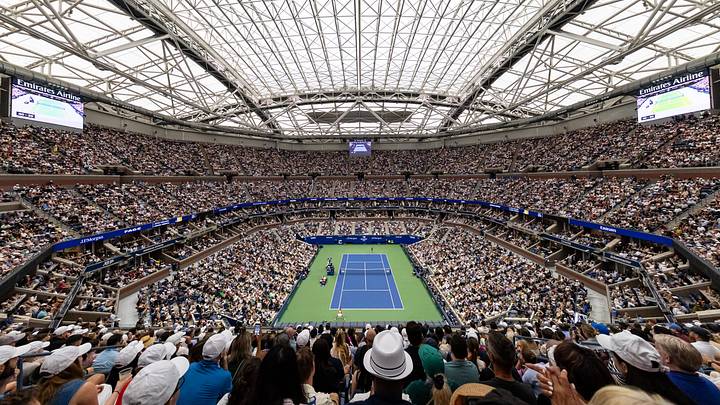
There were a lot of questions this week, but no topic generated more passion and chatter than the meteoric rise in U.S. Open ticket prices. Grounds passes with a face value of $65 are now being resold (a euphemism for scalped) for more than $300. New York City mayor Zohran Mamdani has weighed in, dedicating 1,000 U.S. Open tickets for New York residents to purchase for $100 each. Tickets for Tuesday night’s Roger Federer exhibition had a get-in price of $100 and were being resold for more than $1,000.
On the one hand, the market has spoken (yelled?), and clearly this event has seen a surge in popularity. Whether it’s due to the players, the event or the influencers, the U.S. Open is a coveted ticket. (Cue Yogi Berra: “Nobody goes there anymore. It’s too crowded.”). Alas, this pricing has made the U.S. Open simply unaffordable for so many fans, let alone families, which is terrible and enraging to so many.
I did some investigating over the past few days. Here’s what I found:
Scalping is legal in New York. There are a few restrictions (you can’t resell tickets within 500 feet of a venue with a capacity of 5,000 people or fewer, and within 1,500 feet of a venue with a capacity of 5,000 or more; hence, you will no longer see scalpers on the boardwalk outside Flushing Meadows), but otherwise, it’s an open market.
If you’re interested, here is the relevant statute: Article 25 of the New York Arts and Cultural Affairs Law (ACA), which “regulates the resale of tickets to places of entertainment.” But you’ll see scant regulation.
Ticketmaster—the official ticketing partner of the U.S. Open—and the other resellers have all sorts of freedoms. Note that the Department of Justice had the chance to break up the Ticketmaster/Live Nation monopoly in federal court earlier this year, and settled. The consumer (i.e., you and I) lost.
Where does the USTA fit into this? First, let’s be clear: The USTA absolutely benefits from this overheated resale market. It gets ticket revenue from the primary sale and then again—for the very same ticket—from the resale. Yes, the USTA gets a “scrape” (a legal kickback or legal revenue share) from Ticketmaster on the resold tickets. This is a portion of the fees Ticketmaster charges the secondary seller and buyer, and not the ticket prices, but anyone who has used Ticketmaster knows these fees can be exorbitant. Rates vary depending on demand and resale price, but we’re not talking nickels. I’m told the USTA makes well into seven figures (i.e., millions and millions) from these Ticketmaster resale fees.
I asked the USTA what the fee is that the USTA gets back from (legal) secondary sales made on Ticketmaster’s platform.
The USTA’s response: “We do receive a portion of the fees (not the ticket price) of the verified resale tickets on Ticketmaster. But, the reality is that ticket resale is legal in N.Y., people are reselling these tickets, and we can’t stop that—for example, we sold grounds passes for as low as $65, but we can’t control if they are then resold at a higher price point.”
The USTA did not provide a dollar figure or revenue share percentage. Note that in the USTA’s 990 form from 2024 (the most recent publicly available filing), there is a line item for ticketing, but it does not distinguish between box office sales and resale fees. I asked what percentage of the $208 million came from the Ticketmaster scrape. The USTA did not provide an answer. (Tangent: Watch that $208 million figure explode in 2026, with all the new club seating and the resale scrape.)
The USTA’s fallback position is to throw up its hands and say, We’re helpless to stop reselling. This is, at a minimum, incomplete. I spoke with two lawyers over the weekend, both of whom claim the USTA is no innocent party here. Just as there are few regulations on scalping, there are few regulations on what an issuer (i.e., the USTA) can impose. The USTA could prohibit the resale of individual tickets. This might be hard to enforce, given that scalping is legal, but it could have a chilling effect on the resale market. As one lawyer told me, “Ticketmaster wants the USTA’s business. Especially given the resale market, the USTA can use its leverage if it wants to.”
There are ample examples of musicians putting restrictions on Ticketmaster (Billie Eilish, Pearl Jam, etc.) On this point, Courtney Nguyen (whose excellent newsletter you all should be reading) notes that even the CEO of AMC is drawing the line on predatory reselling.
Right now, U.S. Open tickets are limited to eight per customer per session, but the bots are a step ahead of the technology, which can circumvent a cap. The USTA could limit purchasers to, say, two or four individual tickets. This would chill the AI platforms, the bots and the greedy among us who hoard tickets and immediately flip them. (The USTA tells me it is looking into this for next year.)
The USTA recognizes that this overheated resale market—which prices out and enrages fans—creates lousy optics and is an issue that needs to be addressed. “Everything is on the table,” a USTA spokesman told me, and the ticketing policy will be assessed after the event.
Another point in the USTA’s defense: If it really wanted to maximize value, it would just charge the market prices initially. And those $65 grounds passes would be priced at $300 from the jump.
The USTA’s nonprofit status makes this issue particularly salient and differentiates it from, say, exorbitant New York Knicks ticket prices. It’s hard to play up your nonprofit bona fides and plaster the grounds with pictures of economically disadvantaged kids holding rackets, promote the importance of community tennis, and then price out all but the wealthiest of the wealthy. (Then again, a friend points out that FIFA is a nonprofit, too.)
Context matters, too. New York City’s new mayor is a Democratic Socialist, less a political party than a political movement. Affordability is the critical issue in New York right now. A tennis tournament (played on public property; run by a nonprofit) taken over by capitalism and no longer accessible? That’s catnip.
This just in from Brendan McIntyre, managing director/head of U.S. Open, professional tennis and USA tennis content and communications: “In New York State, tickets must be transferable and resale is legal. Turning off resale on Ticketmaster is not going to stop resale—it is just going to happen on another site where we have no protections. We can’t control the secondary market, nor can we control whether a ticketholder resells their tickets. But through Ticketmaster we can ensure that if a resale takes place, that it is both legitimate and that we can assist if there are any issues. That being said, we will be investigating potential changes and different ways to get more tickets into the hands of fans who intend to use them, rather than resell them, in 2027.”
The USTA must work hard— and use its leverage over Ticketmaster/Live Nation—to avoid this situation in 2027. It is not simply a matter of principle; there’s a business case to be made, as well. Part of the U.S. Open’s objective is to introduce new fans to the sport and mint repeat customers. Come for Tennis Coachella; stay for the sport of a lifetime. The USTA’s stated mission is to grow and promote tennis. Pricing out so many potential decades-long consumers runs counter to that.
 Add us as a preferred source on Google
Jon Wertheim is a senior writer for Sports Illustrated and has been part of the full-time SI writing staff since 1997, largely focusing on the tennis beat, sports business and social issues, and enterprise journalism. In addition to his work at SI, he is a correspondent for “60 Minutes” and a commentator for The Tennis Channel. He has authored 11 books and has been honored with two Emmys, numerous writing and investigative journalism awards, and the Eugene Scott Award from the International Tennis Hall of Fame. Wertheim is a longtime member of the New York Bar Association (retired), the International Tennis Writers Association and the Writers Guild of America. He has a bachelor’s in history from Yale University and received a law degree from the University of Pennsylvania. He resides in New York City and Paris with his wife, who is a divorce mediator and adjunct law professor. They have two children.
Follow jon_wertheim