%20%20--%3E%0A%3Csvg%20version%3D%221.1%22%20id%3D%22Layer_1%22%20xmlns%3D%22http%3A%2F%2Fwww.w3.org%2F2000%2Fsvg%22%20xmlns%3Axlink%3D%22http%3A%2F%2Fwww.w3.org%2F1999%2Fxlink%22%20x%3D%220px%22%20y%3D%220px%22%0A%09%20width%3D%2239px%22%20height%3D%2240px%22%20viewBox%3D%220%200%2039%2040%22%20enable-background%3D%22new%200%200%2039%2040%22%20xml%3Aspace%3D%22preserve%22%3E%0A%3Cpath%20fill%3D%22%23FFFFFF%22%20d%3D%22M38.5%2C7H28.2v26h10.3V7z%22%2F%3E%0A%3Cpath%20fill-rule%3D%22evenodd%22%20clip-rule%3D%22evenodd%22%20fill%3D%22%23FFFFFF%22%20d%3D%22M26.1%2C25.5c0%2C5.8-4.1%2C7.5-12.9%2C7.5C3.9%2C33%2C0%2C31.2%2C0%2C25.2v-1.1h11.6%0A%09v2.4c0%2C0.7%2C0.1%2C1.4%2C1.2%2C1.4c1%2C0%2C1.2-0.4%2C1.2-1.3v-0.9c0-1.6-0.9-1.6-3.5-2.2C2.2%2C21.7%2C0%2C19.7%2C0%2C15.3v-0.9C0%2C9.3%2C5.5%2C7%2C12.9%2C7%0A%09c10.2%2C0%2C12.8%2C2.6%2C12.8%2C7.4v1.8h-11v-2.9c0-0.6-0.4-1.1-1.2-1.1c-0.6%2C0-1.2%2C0.4-1.2%2C1.1v0.9c0%2C1.5%2C0.9%2C2%2C3.3%2C2.5%0A%09c8%2C1.6%2C10.5%2C3.3%2C10.5%2C7.5V25.5z%22%2F%3E%0A%3C%2Fsvg%3E%0A)
After Mikaela Shiffrin’s Letdown, U.S. Ski’s B Team Bronze Raises American Spirits
CORTINA d’AMPEZZO, Italy — In the zero-sum crucible of the Olympics, someone’s dream moment is someone else’s nightmare disappointment. There is only so much glory to go around. And occasionally, the people soaring and crashing are on the same team.
Team USA has now experienced successive women’s Alpine skiing events with that same clash of conflicting emotions. Medals were won, but not by the expected stars. All-time greats were laid low while lesser-known athletes were lifted up. The emotions of victory and defeat were familiar, but a twist of the kaleidoscope left us viewing them differently.
Lindsey Vonn, the most accomplished downhiller in history, crashed in ghastly fashion Sunday, snapping her left leg in the process and likely ending her career. But here came fellow American Breezy Johnson—who had never won so much as a World Cup race, let alone an Olympic medal—to snatch the gold.
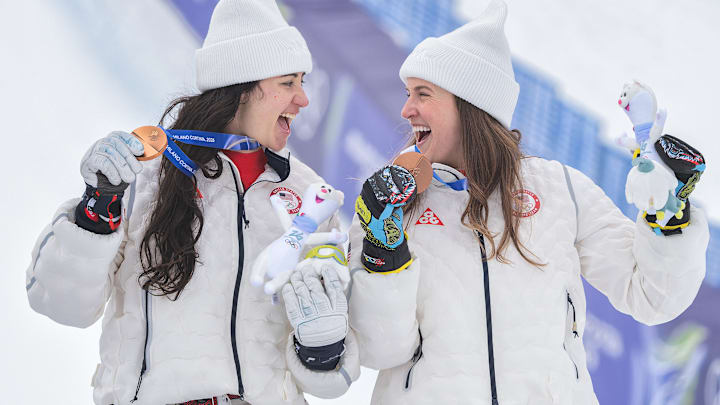
Then on Tuesday, in the first Olympic iteration of the spellbinding team combined event, U.S. expectations flipped again. The downhill-slalom power duo of Johnson and Mikaela Shiffrin—the latter the most decorated skier in World Cup history—shockingly finished fourth. While that result deflated one U.S. tandem, it secured a joyful bronze medal for the nation’s second-string entry, downhiller Jackie Wiles and slalomer Paula Moltzan.
The Dolomite drama just keeps compounding.
The new event is simple arithmetic for two teammates performing different disciplines—add up the times of their respective runs, and the fastest tandem wins. And with a single skier left to race, American downhiller Wiles and slalomer Moltzan were acutely aware that the math was not in their favor.
“We were asking for a miracle,” Wiles said.
To maintain their bronze-medal spot on the podium, the tandem needed its superstar friend to flop. Again. As she had repeatedly four years ago in Beijing.
“We asked for a miracle and I think we were delivered one,” Wiles said. “I think if you let Mikaela go run that course [again], I think she’d come down in the lead by at least a second.”
There was no do-over, at least not Tuesday. Shiffrin placed a dismal 15th out of 18 slalom finishers, her worst placement in a completed slalom event since March 2012, when she was 17 years old. This came after Johnson staked her a lead in the downhill.

The combined margin between the joy of bronze and the pain of fourth place: six hundredths of a second.
For Shiffrin, this is the issue: There are World Cups, and then there are Olympic Games. The disconnect between them seems to be growing.
Shiffrin owns a record 108 World Cup victories, including seven wins in eight events this season (she was second in the other one). She has been her dominant self. But her streak of Olympic races without a medal is now seven, and without a gold medal it is now nine. (Shiffrin has three Olympic medals to date, golds in 2014 and '18 and a silver in '18.)
The Beijing collapse was brutal—an 0-for-6 debacle that included her crashing out of three events. At least she stayed on her skis Tuesday, but never looked like the dominant technical skier she’s been.
“I didn’t quite nail—I didn’t quite find a comfort level that allows me to produce full speed,” Shiffrin said afterward. “So I’m going to have to learn what to do, what to adjust in the short time we have before the other tech races. (She is scheduled to do the individual slalom and giant slalom).
“It’s a feeling under the feet, like the give back from what’s going on under the feet. But it’s hard to explain. I want to be careful not to make excuses because it’s not really an excuse.”
Shiffrin was composed and gracious in a difficult moment, lavishing praise on Johnson for her leg of the event and congratulating the American teammates who finished ahead of them. It was a masterclass in class.
“She is a beautiful winner, but also a really beautiful, um, loser,” Moltzan said, clearly wishing she had a softer word to use, no matter how accurate it was in that context. “That’s really hard to do. I haven’t talked to her yet, but I can only imagine the feelings that they’re both going through. It’s definitely difficult.”
Wiles would know. On Sunday, she finished fourth in the downhill, cried in post-race interviews, went back to the team lodging and cried some more. Moltzan could commiserate: She missed the podium by one place at the world championships three times last year, including in the team combined event.
“I didn’t sleep well the last couple nights, but I felt grateful that I had another opportunity with Paula,” Wiles said. “I knew I needed to refocus, watched video, tried to kind of get back to the mindset I needed. Paula gave me some really nice words of encouragement and we both were on the revenge tour. We wanted it that bad.”
The two have been friends for 16 years, dating to their teenage years at national junior camps. But their aggressive racing styles have a way of stressing each other out. Wiles said they both have a tendency to ski “wild,” teetering on the verge of disaster.

Wiles certainly did that on her downhill run Tuesday morning, on multiple occasions looking like she might crash. She was pushing the limits in an attempt to make the revenge tour successful.
“I freaked out watching Jackie ski downhill this morning,” Moltzan said. “I was having panic attacks left and right.”
Wiles said she knew, in real time, what she was putting her teammate through.
“I knew she was freaking out because I was mid-air flailing,” Wiles said. “I’m like, ‘Nope, Paula’s freaking out. Hold it together.’ “
She held it together, at least until the post-race team celebration resulted in yet another broken medal ribbon at these Games. Wiles made the media rounds holding the first Olympic medal of her career in her hands, while the lanyard dangled emptily from her neck.
Skiing is an individual sport, populated with rugged individualists. U.S. Ski & Snowboard has national teams, and within those teams there are speed groups (downhill and Super-G) and technical groups (slalom and giant slalom). So there is a team element of sorts, but until recently there has never been a shared mission to win Olympic gold.
The team combined event adds a new dynamic. This is somewhat like a Ryder Cup pairing, but they’re not playing alternate shots. The two teammates still are doing distinctly different things.
“It’s both the most and the least pressure that you ever feel as a racer,” Johnson said after her run Tuesday. “It’s the most because we, as racers, intimately know what it is to have an Olympic dream, and to hold somebody else’s in your hand and try to ski fast with it is a lot of pressure. But then also to have somebody else be able to carry the torch halfway and not have to do the whole thing yourself makes it the least pressure.”
Johnson passed Shiffrin the torch with a lead Tuesday. If the slalom legend-in-residence raced to her capability, a gold was likely and a medal a certainty.
Instead, fourth place happened, as one American team’s emptiness was another’s moment of fulfillment. With two races left here, Shiffrin goes back to the drawing board in hopes of ending a brutal Olympic losing streak.
More Winter Olympics on Sports Illustrated
 Add us as a preferred source on Google
Pat Forde is a senior writer for Sports Illustrated who covers college football and college basketball as well as the Olympics and horse racing. He cohosts the Others Receiving Votes podcast for SI and is a regular contributor to the Tony Kornheiser Show podcast. He previously worked for Yahoo Sports, ESPN and The (Louisville) Courier-Journal. Forde has won 28 Associated Press Sports Editors writing contest awards, has been published three times in the Best American Sports Writing book series, and was nominated for the 1990 Pulitzer Prize. A past president of the U.S. Basketball Writers Association and member of the Football Writers Association of America, he lives in Louisville with his wife. They have three children, all of whom were collegiate swimmers.
Follow ByPatForde