%20%20--%3E%0A%3Csvg%20version%3D%221.1%22%20id%3D%22Layer_1%22%20xmlns%3D%22http%3A%2F%2Fwww.w3.org%2F2000%2Fsvg%22%20xmlns%3Axlink%3D%22http%3A%2F%2Fwww.w3.org%2F1999%2Fxlink%22%20x%3D%220px%22%20y%3D%220px%22%0A%09%20width%3D%2239px%22%20height%3D%2240px%22%20viewBox%3D%220%200%2039%2040%22%20enable-background%3D%22new%200%200%2039%2040%22%20xml%3Aspace%3D%22preserve%22%3E%0A%3Cpath%20fill%3D%22%23FFFFFF%22%20d%3D%22M38.5%2C7H28.2v26h10.3V7z%22%2F%3E%0A%3Cpath%20fill-rule%3D%22evenodd%22%20clip-rule%3D%22evenodd%22%20fill%3D%22%23FFFFFF%22%20d%3D%22M26.1%2C25.5c0%2C5.8-4.1%2C7.5-12.9%2C7.5C3.9%2C33%2C0%2C31.2%2C0%2C25.2v-1.1h11.6%0A%09v2.4c0%2C0.7%2C0.1%2C1.4%2C1.2%2C1.4c1%2C0%2C1.2-0.4%2C1.2-1.3v-0.9c0-1.6-0.9-1.6-3.5-2.2C2.2%2C21.7%2C0%2C19.7%2C0%2C15.3v-0.9C0%2C9.3%2C5.5%2C7%2C12.9%2C7%0A%09c10.2%2C0%2C12.8%2C2.6%2C12.8%2C7.4v1.8h-11v-2.9c0-0.6-0.4-1.1-1.2-1.1c-0.6%2C0-1.2%2C0.4-1.2%2C1.1v0.9c0%2C1.5%2C0.9%2C2%2C3.3%2C2.5%0A%09c8%2C1.6%2C10.5%2C3.3%2C10.5%2C7.5V25.5z%22%2F%3E%0A%3C%2Fsvg%3E%0A)
Bambi, Buses and Bureaucracy: Cortina’s Pace of Life Prospers Despite Olympic Buzz
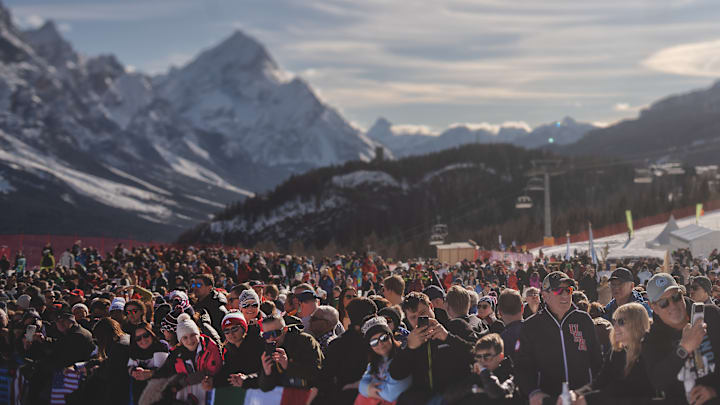
CORTINA d’AMPEZZO, Italy — Every Olympics is only as good as its mass transportation, and this particular moment was a snapshot of Italian inefficiency. Trying to descend into town from the Alpine ski venue on the night of Feb. 18, 23 of us were crammed like circus clowns into a van with 11 seats. Everyone had winter coats and work backpacks, and a few passengers had skis, boots, helmets and poles. So many armpits, so little room.
And then it got worse. A sudden roadblock on the winding path down. Unsmiling Carabinieri with flashlights, issuing orders to get off the van for it to be searched. Nobody knew what was going on.
After all of us filtered out into the road, an explanation was passed around: “Something has been lost.” Unless it was Mikaela Shiffrin’s just-won gold medal or a cache of weapons, a roadblock and search seemed excessive.
Whatever was lost did not turn up in our van. We reloaded, which was about like trying to re-pack a stuffed suitcase that you could barely close the first time. Somehow, we all herded back on and kept creeping down the mountain, trying to end the workday in fewer than 12 hours. The consensus mood: sour.

Around this time, from somewhere near the front of the huddled masses, someone called out in heavily accented English: “Everybody, sing along!”
This was as welcome an idea as a sudden game of Twister. But the general lack of enthusiasm on the van was ignored by the originator of the plan and a couple of his friends, and suddenly one of these insurrectionists was cuing up the inevitable worst possible sing-along song on his phone:
“Sweet Caroline.”
There were groans. (Maybe just from me, but it seemed like others as well.) This was no time for singing, and especially not that blight upon the culture. Why make a bad mood worse?
But a few singers became several. And then a few more joined in. And eventually they were singing the chorus in a round, the back of the van echoing the front. And at this point even the most curmudgeonly among us (hi) couldn’t help but laugh and, ahem, mumble along.
This is the Olympics at work.
You’re stuck on a late, overcrowded van with a bunch of strangers from strange lands, with a language barrier and a poor attitude, and then the world invites you to have a spontaneous moment of shared humanity. Who says no?
Few things are a better reminder that we are all in this together than the Olympics. We meet, we mingle, we relate, we commiserate, we celebrate. The Games make the world seem bigger and smaller at the same time.
To quote Sports Illustrated five-ring veteran Richard Demak (now at his 19th Olympics), they’re all different and they’re all the same. Milan Cortina 2026 contained all the usual themes—triumph, disappointment, surprise, controversy, charm, scandal, viral amusement and host-country quirks. As for what made this Olympics different: Cortina d’Ampezzo, the chi-chi ski town in the spectacular Dolomites, was unique.
The Unique Traditions of the Dolomites
Four curling matches ended at roughly the same time on the afternoon of Feb. 14, sending thousands of fans spilling out of the Cortina Curling Olympic Stadium and into the streets. Many of them were hungry and thirsty, in a mood to raise toasts or drown sorrows, depending on the outcome of the matches.
They had nowhere to go.
Most restaurants in town were closed from roughly 2 p.m. until at least 6 p.m. every day. That’s the way it always is, and they weren’t going to change their routine for the Olympics. Didn’t matter if tens of thousands of euros in potential revenue were walking by, going to waste. The American capitalist instinct is a literal foreign concept here.
The old line is that the worst of European culture combines English food with French hygiene and Italian efficiency. Without uniformly defaming the first two, the last of those has some truth to it — but some nuance, too. What sometimes appears to be a lack of organization or focus is often an Italian inclination toward ... how to describe it ... intentional nonchalance? Proud obliviousness? A slightly dysfunctional but thoroughly enjoyable quality of life?

Whatever the phrasing, it seems to distill to this: the more time spent working and hustling means less time spent sipping espresso or wine. It's hard to be sweaty and suave at the same time, so suave wins. While Italians might drive as if they’re trying to rush a loved one to the emergency room at all times, they tend not to live urgent lives—at least in Cortina, where things just kind of happen when they happen.
Which takes us back to the afternoon lunch-and-drinks crowd. The few places that were open were overrun—even NHL commissioner Gary Bettman appeared to be left in line with tourists outside a famous Milan restaurant Friday. That left thousands of tourists just milling about every day. (One of the Italian national pastimes appears to be standing obliviously in the path of others, so there was plenty of that going on.) There were plenty of upscale shops with window displays featuring very expensive earth-tone outfits, but not a lot of foot traffic was going there.
The scene was like Aspen, Colo. or Park City, Utah, at half-speed. The only time the pace revved up was on Tuesday, Feb. 17, when all of a sudden there were splotches of shaving cream and wads of confetti all over the cobblestones. Children were running everywhere in costumes, screaming and and laughing and spraying stuff on each other. This was Carnevale, a G-rated Mardi Gras celebration that reminded us families live here.
Among the smallest cities to serve as a major host for the Games, Cortina was still larger than where I and many other media members stayed—that was the village of Dobbiaco, about 20 serpentine road miles away, a ski town’s satellite ski town. It was utterly charming, sitting at the base of the Three Peaks of Lavaredo that dominate the landscape and near the Austrian border.

The culture skews more Germanic there. The region of South Tyrol is partial to schnitzel, spätzle and strudel, and businesses often have signs in both German and Italian. Dinner the first night was at the Schlosskeller. I ordered sausage and sauerkraut, and the smirking young waiter asked, “You O.K. eat bom-bee?”
Yes, I was O.K. eating Bambi. The sausage was venison. It was delicious.
From tables to benches to barstools, at Schlosskeller and elsewhere, the woodwork was impressive. Sturdy, rustic, timeless, pervasive. The heavily forested surrounding mountains produce an abundance of timber for a culture gifted in woodworking.
After breakfast at Hotel Moritz, our excellent mom-and-pop lodging, the days began spectacularly: a sunrise bus ride to Cortina, up a canyon with Dolomite expanses jutting into the sky all around. It’s one of the most breathtaking places on the planet. The dawdling pace of the bus—demanded by the twisting, narrow roads with steep drop-offs—gave time to appreciate it.
Like many other places in Europe, the road to Cortina bears a reminder of the wars that scarred the continent and redefined the size and shape of Italy. A cemetery memorializes those who fell during the White War, a series of Alpine battles during World War I between Austro-Hungarian forces and the Italians. The White War was waged in the brutal conditions of the Dolomites, with more than half the deaths attributed to cold, avalanches and disease.
Today, cross-country skiers quietly trek past the cemetery on a roadside trail. Almost everything in Dobbiaco happens quietly—there is little traffic or nightlife, just snow and scenery. Like the rest of the area, its natural state is largely uninterrupted by the Olympic Games.
Embracing the Spirit of the Olympic Games
The systemic issues with the Olympics are so baked-in that they’re impossible to remove. They cost a fortune to put on and leave a massive footprint, even when conscious attempts are made (like here) not to build a small city of new facilities that will then go unused. They are for rich consumers, not the common fan. They are environmentally expensive. They are racked with politics, even when the International Olympic Committee tries to pretend they’re not.
And yet, the athletes are still so compelling and the competitions are still so riveting. Great performances and great competitions are timeless and need no translation. We can all appreciate them. As long-held international alliances threaten to unravel, particularly where the United States is involved and pulling the threads, the Games can still keep us stitched together.
Americans are less popular at these Olympics than any in a long time—maybe ever—and we’re acutely aware of it. That’s why many of us visiting Italy these past couple of weeks have tried to be goodwill ambassadors, outwardly valuing the importance of international cooperation, connectivity and understanding.
On this overcrowded van of life, we might as well embrace the Olympic spirit and all sing together.
More Winter Olympics on Sports Illustrated
 Add us as a preferred source on Google
Pat Forde is a senior writer for Sports Illustrated who covers college football and college basketball as well as the Olympics and horse racing. He cohosts the Others Receiving Votes podcast for SI and is a regular contributor to the Tony Kornheiser Show podcast. He previously worked for Yahoo Sports, ESPN and The (Louisville) Courier-Journal. Forde has won 28 Associated Press Sports Editors writing contest awards, has been published three times in the Best American Sports Writing book series, and was nominated for the 1990 Pulitzer Prize. A past president of the U.S. Basketball Writers Association and member of the Football Writers Association of America, he lives in Louisville with his wife. They have three children, all of whom were collegiate swimmers.
Follow ByPatForde