From an American perspective, people are interested in seeing uh Mikaela Shiffrin.
So unfortunately, not a great day for her.
She finished 11th.
Um, it's not a terribly big surprise that she didn't medal.
This is not her marquee event.
Um, you know, she's been a really like well-rounded skier throughout her career, but at this stage in her career, really specializing in the slalom.
Um, so that event is, is later in the week.
Um, I think it's on maybe Tuesday, but, um, but yeah, so that's, you know, that's the, the, the thing to look for in terms of her chances.
So she finished 11th, you know, um, not a bad showing, but, but not too great either.
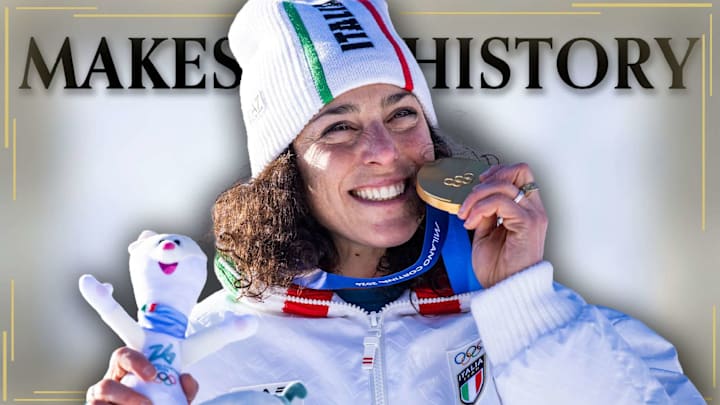
The reason I want to bring this up though, right at the top, uh, the great story of the gold medalist, uh, Frederica Brignone of Italy.
She was amazing.
She won, she also won the super G on Tuesday, I'm sorry, on Thursday.
Um, she's 35 years old.
She's the oldest of all the, uh, skiers in the field to complete the race today.
Uh, she was already the oldest gold medalist in women's alpine history when she won the Super G, now has two to her name at the age of 35.
And what makes it even more incredible is that she had a really terrible crash about 10 months ago.
Um, she, and she revealed Saturday for the first time the true extent of that injury.
Um, so I'll read a quote here, this is from Olympics.
com, uh, I caught up with her in a sponsor event over the weekend.
She's said, quote, I had a really bad accident and definitely came very close to not being able to be an athlete anymore, and maybe not even being able to walk properly again.
It wasn't just the tibia and fibula, and a multi multi-fragment tibial plateau fracture, but there was also a complete knee dislocation.
Both ligaments were involved, and the meniscus, everything.
So it's truly one of those injuries that normally takes more than 2 years to recover from, and here she is 10 months later, not only, I mean, she only started skiing again in November, and um the, the article described the skiing gently, you know, she was not really at like a world-class pace.
So in November, she's finally getting back on the mountain, but it's not at a world-class level.
She's really just getting her feet under her, and now, you know, shortly thereafter, now she's a gold medalist in two disciplines, really amazing.
Yeah, and, and one of those injuries where like the, the picture was floating around on social media and so you see like the, the like gross scar of like the stitches and everything, but that's, I mean, that's not it at its worst.
Like when you hear like the compound fracture and everything, it's just like sounds really gruesome and, and you mentioned her age being the oldest, um, with a gold medal here, like, typically the older athletes are the ones who have slower recovery, so that's even more impressive that she's able to get back.
Um, in 10 months, and, and yeah, I feel like we didn't really talk about that much after her first gold medal, so I'm glad we're, we're getting to that here.
Uh, also, I'm glad you led with her because the most fascinating thing in the race to me was, was the, uh, this was your thing, what happened in silver and bronze.
So, um, we've talked about the format here, um, with a lot of the, uh, alpine skiing races where they have two runs and then it's cumulative time from the two races.
So, uh, it's, uh, Sarah Hector of Sweden and, uh, The Louise Stennerod of Norway.
They tied on both of their runs, which is just incredible because they time it out to the 1100 of a second.
So the ties alone are, you know, a little bit rare and, and definitely rare on the medal podium, um, but not, not too unprecedented, but for.
For it to happen in both races involving both of the same skiers is amazing.
So they, uh, they tied, they both received the silver medal, which makes sense because they were tied.
They don't give out a bronze, which makes sense because, uh, you know, the skier in 4th place shouldn't get a medal just because the two people above them happen to be tied and not like a difference of 100 of a second in either direction.
Um, but yeah, just one of those like funny quirks, and it would have been crazy if they were, if they actually won the gold medal.
I think that would have been a, like a really big story that a lot of people would have talked about.
Um, they were, I believe they were 2nd and 3rd to last going down, and so they were briefly sharing the gold medal until Brignoni went down after them and beat their time and bumped them down to the silver podium.
But yeah, just, uh, every day, you never know what you, what you're gonna see on the mountain, and, uh, we got another exciting one today.
Yeah, we gotta get a mathematician on the case to figure out the odds of that happening, tying down to the 100th twice, you know, I mean, unbelievable.
Yeah, I'm surprised NBC didn't have Steve Kornacki just like immediately pop up in like a picture in picture like he was there waiting for this to happen.
The other interesting thing about this race, as I was, I was kind of combing through the results, um, the course is running a lot faster.
Um, the earlier people went in the, so there's two runs, like you mentioned, right?
So, the earlier people went in that second run, they were going a lot faster, um, than the people who finished later.
So, you know, in that way, Brignone's fortunate that as the course was getting slower, she was still able to put up this great time and, and, and win the gold medal.
Um, of the top 6 finish, so the, the top 6 finishers on their 2nd run.
Their average rank for that second run was 6th, 18th.
So, I mean, like, they, like they ranked in the top 6 in the first run and then didn't, you know, like I think there was, I think the top finisher among that 6 on the second run.
I mean, obviously Brignonti is part of that group, but her, she was like 14th fastest.
I think the fastest time among that group for the second run was like 11th, or a couple like in the low 20s, like, they were really stru it seemed like, you know, we talked about how the weather is kind of warming over there and this the conditions would be getting a little slushier, so, um.
You know, they had to fight through conditions that were really uh disadvantageous, but uh they made it work.
Yeah, I, and by the way, I did, I wanted to go back and make one point about Mikaela Shiffrin, if you're finished with uh the three medalists there.
You know, I'm sure a lot of people hear Mikaela Shiffrin's name and expect like medals, and I'm not sure if she still feels that way, if she thinks of herself as like going to win the medal every time, but, um, but we talked.
About her performance in Beijing, where she didn't finish 3 times.
And then earlier, um, her first race at these Olympics was in the team combined and she was, I think, 16th out of 18, um, and just like really fell out after Breezy Johnson gave her, um, the lead, uh, after the downhill portion of that event.
Um, but I thought finishing seventh in the first run was like, she got down there.
I was watching her second run.
She was actually, um, her splits were OK early and then I think she was like 0.01 behind, and I thought like maybe there was gonna be a chance that she could, I think the, the commentators, maybe they were like trying to will her into it, but made it seem like maybe there was a chance you could catch up and, and gain on that time a little bit, um, ended up fading a little bit.
Later in the race, but I think just like getting down, it, it seems like a normal race, if that makes sense.
And it, it feels almost strange to talk about Mikaela Shiffrin in those terms of like, at least she didn't crash, at least she wasn't second to last in the whole thing.
But, um, you mentioned she'll have another chance later in these Olympics, um, but I thought, you know , maybe for whatever it's worth, um, and, and who knows if this matters at all for someone as elite as Mikaela.
Shiffrin has been in her career, the most decorated alpine skier of all time and all those World Cup wins and everything.
Like, who knows if the mental reps like that help, um, but, uh, I just thought it was worth watching that, um, you know, it was not, it was not like a disaster like we've seen from her in some other previous Olympics, and so maybe that, um, you know, has her sort of getting back on the right foot before her, uh, her last race of the Olympics.
%20%20--%3E%0A%3Csvg%20version%3D%221.1%22%20id%3D%22Layer_1%22%20xmlns%3D%22http%3A%2F%2Fwww.w3.org%2F2000%2Fsvg%22%20xmlns%3Axlink%3D%22http%3A%2F%2Fwww.w3.org%2F1999%2Fxlink%22%20x%3D%220px%22%20y%3D%220px%22%0A%09%20width%3D%2239px%22%20height%3D%2240px%22%20viewBox%3D%220%200%2039%2040%22%20enable-background%3D%22new%200%200%2039%2040%22%20xml%3Aspace%3D%22preserve%22%3E%0A%3Cpath%20fill%3D%22%23FFFFFF%22%20d%3D%22M38.5%2C7H28.2v26h10.3V7z%22%2F%3E%0A%3Cpath%20fill-rule%3D%22evenodd%22%20clip-rule%3D%22evenodd%22%20fill%3D%22%23FFFFFF%22%20d%3D%22M26.1%2C25.5c0%2C5.8-4.1%2C7.5-12.9%2C7.5C3.9%2C33%2C0%2C31.2%2C0%2C25.2v-1.1h11.6%0A%09v2.4c0%2C0.7%2C0.1%2C1.4%2C1.2%2C1.4c1%2C0%2C1.2-0.4%2C1.2-1.3v-0.9c0-1.6-0.9-1.6-3.5-2.2C2.2%2C21.7%2C0%2C19.7%2C0%2C15.3v-0.9C0%2C9.3%2C5.5%2C7%2C12.9%2C7%0A%09c10.2%2C0%2C12.8%2C2.6%2C12.8%2C7.4v1.8h-11v-2.9c0-0.6-0.4-1.1-1.2-1.1c-0.6%2C0-1.2%2C0.4-1.2%2C1.1v0.9c0%2C1.5%2C0.9%2C2%2C3.3%2C2.5%0A%09c8%2C1.6%2C10.5%2C3.3%2C10.5%2C7.5V25.5z%22%2F%3E%0A%3C%2Fsvg%3E%0A)