%20%20--%3E%0A%3Csvg%20version%3D%221.1%22%20id%3D%22Layer_1%22%20xmlns%3D%22http%3A%2F%2Fwww.w3.org%2F2000%2Fsvg%22%20xmlns%3Axlink%3D%22http%3A%2F%2Fwww.w3.org%2F1999%2Fxlink%22%20x%3D%220px%22%20y%3D%220px%22%0A%09%20width%3D%2239px%22%20height%3D%2240px%22%20viewBox%3D%220%200%2039%2040%22%20enable-background%3D%22new%200%200%2039%2040%22%20xml%3Aspace%3D%22preserve%22%3E%0A%3Cpath%20fill%3D%22%23FFFFFF%22%20d%3D%22M38.5%2C7H28.2v26h10.3V7z%22%2F%3E%0A%3Cpath%20fill-rule%3D%22evenodd%22%20clip-rule%3D%22evenodd%22%20fill%3D%22%23FFFFFF%22%20d%3D%22M26.1%2C25.5c0%2C5.8-4.1%2C7.5-12.9%2C7.5C3.9%2C33%2C0%2C31.2%2C0%2C25.2v-1.1h11.6%0A%09v2.4c0%2C0.7%2C0.1%2C1.4%2C1.2%2C1.4c1%2C0%2C1.2-0.4%2C1.2-1.3v-0.9c0-1.6-0.9-1.6-3.5-2.2C2.2%2C21.7%2C0%2C19.7%2C0%2C15.3v-0.9C0%2C9.3%2C5.5%2C7%2C12.9%2C7%0A%09c10.2%2C0%2C12.8%2C2.6%2C12.8%2C7.4v1.8h-11v-2.9c0-0.6-0.4-1.1-1.2-1.1c-0.6%2C0-1.2%2C0.4-1.2%2C1.1v0.9c0%2C1.5%2C0.9%2C2%2C3.3%2C2.5%0A%09c8%2C1.6%2C10.5%2C3.3%2C10.5%2C7.5V25.5z%22%2F%3E%0A%3C%2Fsvg%3E%0A)
Breaking Down Every WNBA Team’s Salary Cap Situation
In this story:
With the WNBA draft lottery in the rearview mirror and free agency less than three months away, teams will soon be shaping their plans for their 2027 rosters. To understand what a team can do, it helps to understand what it can’t, and the Collective Bargaining Agreement (CBA) spells out those constraints. In other words, it’s time for some capology.
Consider the following the WNBA’s salary cap commandments for 2027:
- A team’s salary may not exceed the salary cap at any time unless it uses a hardship, emergency hardship, pregnancy/childbirth or season-ending injury exception.
- The 2027 salary cap can increase by no more than 13%, from $7 million to $7.91 million.
- The lowest full-season minimum salary under a standard player contract will be $280,800 in 2027, for players with no years of service. Minimums increase with a player’s years of service.
- The standard maximum salary is 17% of the salary cap for a given year.
- The supermax salary is 20% of the salary cap for a given year.
- An eligible player can sign a supermax only with their current team or, if they’re a free agent, their previous team.
- Each team must maintain a roster of 12 players during each season.
Why go through all of that? A team’s total cap space isn’t the same as what it can freely spend. Together, minimum salaries and the 12-player roster requirement lock in a spending floor. Take the Dream, for example. Under a projected $7.91 million salary cap for 2027, their nine players under contract (totalling about $6.18 million) leave around $1.73 million in total cap space. To reach 12 players, though, Atlanta has to sign three more players for at least $280,800 (the minimum), for a total of $842,400. That means the Dream, as currently constituted, will have to spend $7.02 million, leaving them with about $886,000 to spend freely in excess of minimum salaries.
We’ll call that money—the money a team can spend beyond the minimum it has to spend—effective cap space. (Hat tip to Joey Daniewicz, who posited this idea in a conversation we had on X about the Lynx’s cap situation.) But, again, why go through all of that? Because effective cap space shows the difference between what a team’s cap sheet looks like on paper and what it can actually pull off in free agency—who can actually offer a max contract, who may need to ask for a discount and who can only build around the margins.
Here’s where every team stands heading into the offseason, beginning with the Dream, whose effective cap space could prevent a star from earning all that she can in 2027.

All salary cap numbers are sourced from the Her Hoop Stats WNBA Salary Cap Database. Effective cap space assumes a $7.91 million salary cap in 2027.
Atlanta Dream
Players currently signed: Nine | Effective Cap Space: $886,770
Angel Reese’s standout 2026 season will make the Dream’s short- and long-term planning a touch more complicated. Because she made the All-WNBA Second Team, Reese is EPIC-eligible and can sign for $1.34 million in 2027. (The EPIC clause allows a player on their rookie contract to renegotiate their fourth-year salary up to the regular max if they have been named to an All-WNBA First or Second Team, or the supermax if they have been named MVP.) The problem? That raise would cost roughly $947,000, and the Dream have only $886,770 in effective cap space, leaving Atlanta about $60,000 short.
While that situation will likely resolve itself one way or another, Reese will eventually get paid and Atlanta will face another roadblock after the 2027 season. Rhyne Howard, Allisha Gray, Naz Hillmon and Reese may take up around two-thirds of the salary cap at that point, making it difficult to both retain Jordin Canada in ’28 and add significant depth beyond the team’s current roster. (Even with a 10% cap increase in ’28, Atlanta could have less than $900,000 in effective cap space left for four players.) That’s not unworkable, but the Dream may want to survey the international scene for a bargain in the meantime.
Chicago Sky
Players currently signed: Eight | Effective Cap Space: $1,497,336
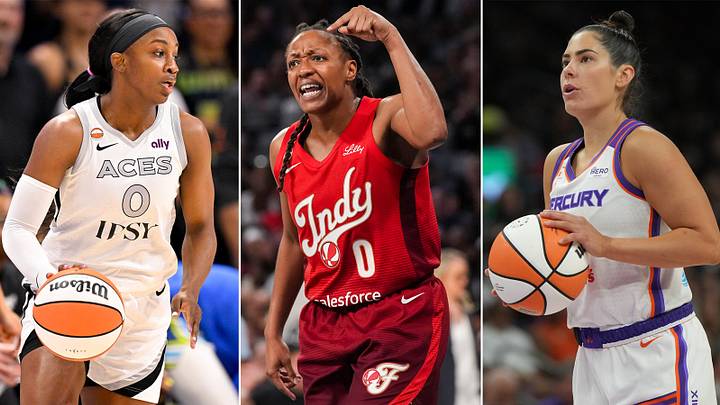
The Sky have a long-term need at guard and enough cap space to enter the sweepstakes for Jackie Young, Kelsey Mitchell and Kelsey Plum—should these players choose to depart their current team. Before any of that, though, tendering a reserved qualifying offer to All-Rookie honoree Sydney Taylor should be Chicago’s top priority. By doing so, Taylor won’t be free to negotiate with another team. The Sky could reward her (the Valkyries paid Janelle Salaün above the minimum in a similar situation this past offseason) but they don’t have to.
Looking ahead, Rickea Jackson, Kamilla Cardoso and Jacy Sheldon are slated to become restricted free agents in 2028. While Chicago could look to get ahead of each player’s market and broach extension talks this winter, decisions on their long-term futures may be pushed until next offseason.
Dallas Wings
Players currently signed: Six | Effective Cap Space: $1,196,314
How much money Awak Kuier ultimately signs for might be one of the most fascinating questions of the offseason. She’s a young, rising talent who can shoot the three, provide elite rim protection and seems destined for an All-Defense team. Those players don’t grow on trees, which is why an outside team may try to sign her to an aggressive offer sheet.
Looking for a range? $950,000 might seem rich, but that’s about the average annual value one arrives at when starting from Naz Hillmon’s deal ($2.55 million over three years) and then adjusting for cap inflation (+13%). The Wings can match beyond that number and still maintain some long-term flexibility, but doing so may force Dallas to make tough choices on Maddy Siegrist (an RFA) this offseason and Arike Ogunbowale and Jessica Shepard in 2028.
Golden State Valkyries
Players currently signed: Seven | Effective Cap Space: $1,850,152
The Valkyries have enough room to sign a star to a long-term max deal and extend their contending window through 2029. The fit for Collier (at the four, replacing Kayla Thornton) or Mitchell, Young or Plum (at the two, next to Veronica Burton) is easy to dream about. If that’s not in the cards, the Valkyries can simply double down on what has made them so successful: their depth. Golden State can bring everyone back from their championship roster and try to improve around the edges.
Houston Comets
Players currently signed: Seven | Effective Cap Space: $3,586,199
No team will have more effective cap space in 2027 than the Comets, the only squad that can offer three (!) different max contracts this offseason. Still, it will be hard to pitch Collier, Mitchell, Plum or Young to leave their current teams for one that likely won’t be in the playoff hunt next season—even given the lure of being the star player for one of the WNBA’s foundational franchises. Simply put, Houston will have more money than it can realistically spend. If it wanted, Houston could drive up Kuier’s market and spark the beginnings of an intrastate rivalry with Dallas. In the end, the Comets might carry their oodles of cap space forward and try to make a splash in ’28 instead.
Indiana Fever
Players currently signed: Seven | Effective Cap Space: $1,782,686
Like Reese, Caitlin Clark is EPIC-eligible and can sign for the maximum salary in 2027 and for the supermax in ’28 through ’30. Whether her contract looks as clean as that sounds is a separate question. Aliyah Boston, in the same situation, took $190,000 less than she could have otherwise in the first year of her deal. Here’s why that matters: If Clark signs for the regular max in ’27 ($1.34 million), the Fever couldn’t also offer Mitchell a max contract without going over the cap.

There could be a simple solution. Tony East reported for The IX that Monique Billings’s 2027 salary isn’t protected; the Fever could release her, clear $800,000 off the books and pay Clark and Mitchell their due. Still, the Fever may need either Clark or Mitchell to take slightly less to squeeze in another needle-moving player.
And if Mitchell walks, it’s a different conversation entirely.
Las Vegas Aces
Players currently signed: Five | Effective Cap Space: $1,784,800
The Aces’ cap situation is less complicated: They can sign Young to a supermax contract, fill out their roster with players on minimum salaries and have about $480,000 to spare. The issue is that a supermax doesn’t leave Las Vegas with much room to bring back NaLyssa Smith, Stephanie Talbot and Cheyenne Parker-Tyus. Young could sign for the normal max and help the Aces bring back at least two of those three. (Or all three in the event of team-friendly deals.)
Los Angeles Sparks
Players Currently Signed: Eight | Effective Cap Space: $1,956,917
The Sparks’ path forward should be relatively straightforward: find a head coach, build a foundation with their two first-round picks in 2027 and get the contracts right for their upcoming restricted free agents. That starts with Rae Burrell this offseason and continues with Cameron Brink in ’28. Keeping both deals affordable would create roster flexibility—especially with Dearica Hamby and Ariel Atkins both making over $1.1 million annually through ’28—and let Los Angeles capture each player’s prime without paying open-market prices.
There is a world in which new ownership wants to make a statement, and the Sparks sign Collier, Young or Mitchell to a max contract this offseason. There’s a world in which they can do so and still fit their young trio of Monique Akoa-Makani, Brink and Burrell under the cap long term.
Minnesota Lynx
Players currently signed: Six | Effective Cap Space: $1,786,940
The Lynx’s offseason will hinge on whether or not Collier returns to Minnesota. While it’s easy to daydream about other destinations for her, the Lynx are the only team that can offer her a supermax contract. In the end, the deciding factor could be as simple as that. If a supermax is what it takes to bring Collier back, Minnesota could offer another free agent approximately $766,000 without going over the cap and in hopes of improving its roster. (A big, such as Isabelle Harrison, could fit the bill.) If Collier walks, the Lynx would be left with just two players signed through 2028 and beyond: Olivia Miles and Anastasiia Olairi Kosu.

New York Liberty
Players currently signed: Six | Effective Cap Space: $741,211
Having stars willing to take less and a robust international scouting pipeline creates competitive advantages. Exhibit A: The Liberty’s cap sheet. Leonie Fiebich will still be on her rookie deal in 2027. Pauline Astier, Han Xu and Raquel Carrera are all reserved free agents, meaning New York won’t have to splurge above the minimum to retain them. (Marine Fauthoux will also be back on a $288,600 deal.) Rebekah Gardner and Marine Johannès are restricted free agents, giving the Liberty the right to match any offer.
New York could bring back everyone—giving slight raises to Gardner and Johannès along the way if need be—and still potentially have room to add another impact player. Or, it could keep the cap space and keep its options open to make in-season moves. Either way, the Liberty will be reinforced with a healthy Satou Sabally and the No. 8 pick. Roster continuity might be the team’s biggest boon.
Phoenix Mercury
Players currently signed: Four | Effective Cap Space: $2,215,000
Priority No. 1 is re-signing Plum. It would be a disaster if the Mercury gave up Akoa-Makani, a 2027 first-round pick and a ’28 second-round pick for Plum and didn’t find a way to bring her back. They will be the only team that can offer her a supermax contract, which should help Phoenix keep Plum, Alyssa Thomas and Kahleah Copper together next year.
Like the Liberty, the Mercury can maintain their star trio and keep the rest of the roster together. Sami Whitcomb and Natasha Mack are both under contract for 2027. They can retain Valériane Ayayi, Kyara Linskens, Noemi Brochant, Jovana Nogic (if she comes back) and Lexi Held, all of whom are reserved free agents. Then, they would have about $1.2 million left to spend for their final two roster spots.
Portland Fire
Players currently signed: Seven | Effective Cap Space: $2,922,147
The Fire will walk into free agency with a boatload of cap space, as nine players (including Sarah Ashlee Barker, Iyana Martín and the team’s lottery pick) will take up about 52% of the cap. It seems reasonable to assume that Frieda Bühner (a reserved free agent) and Emily Engstler (a restricted free agent) will both be back, which would then leave Portland with well over $2 million for its 12th roster spot. General manager Vanja Černivec has said that the team needs rim protection. With cash to spend, a need to improve their half-court defense and relatively few standout frontcourt options available on the open market, the Fire could get aggressive on a player like Kuier if they wanted to.
Seattle Storm
Players currently signed: Six | Effective Cap Space: $2,311,837
The good news: Dominique Malonga, Awa Fam, Flau’jae Johnson and Seattle’s 2027 lottery pick will take up only 22% of the cap for the next two years. The bad news, at least for those who are exceedingly impatient: It might take until ’28 for the Storm to get back to the playoffs. They too will have more cash than they can spend. They are also on the rebuilding end of the spectrum, which, as is the case for the Comets, might make landing a top free agent difficult.
Toronto Tempo
Players currently signed: Six | Effective Cap Space: $2,103,420
The Tempo have the No. 1 pick and a healthy cap situation: They have enough space to pursue a top-tier free agent in 2027, and they are not committed to any of their veterans after next season. Consider the frontcourt their biggest question mark heading into free agency, though. Nyara Sabally is a restricted free agent and will be coming off arthroscopic surgery on her left knee; Isabelle Harrison and Temi Fagbenle are both unrestricted free agents. Finding a true upgrade over the offseason won’t be easy.
Washington Mystics
Players currently signed: 11 | Effective Cap Space: $2,266,945
The Mystics, who played far beyond their years in 2026, have a dream roster-building scenario. Their lone All-WNBA star (Shakira Austin) is signed to a flat, affordable contract worth $1.19 million annually through ’28. Their two top young players (Sonia Citron and Kiki Iriafen) will only become EPIC-eligible after next season, and the team may not have to pay up until 2029. Washington has another lottery pick on the way and more than $2.2 million of effective cap space this offseason. Adding one big-ticket free agent guard (Young, Mitchell or Plum) who can boost the Mystics’ offense might supercharge their contending aspirations—and they wouldn’t have to sacrifice much long-term flexibility.
 Add us as a preferred source on Google

Dan Falkenheim is a fact checker for Sports Illustrated, where he may inundate you with numbers when he writes women's hoops. He joined the SI staff in September 2018 and also produces Faces in the Crowd for print. A graduate of Montclair State, Dan first got hooked on women’s basketball when covering the Red Hawks’ run to the 2015 Division III Final Four for the student newspaper. He lives in New Jersey with his wife and sweet rescue dog, Hari.
Follow thefalkon