%20%20--%3E%0A%3Csvg%20version%3D%221.1%22%20id%3D%22Layer_1%22%20xmlns%3D%22http%3A%2F%2Fwww.w3.org%2F2000%2Fsvg%22%20xmlns%3Axlink%3D%22http%3A%2F%2Fwww.w3.org%2F1999%2Fxlink%22%20x%3D%220px%22%20y%3D%220px%22%0A%09%20width%3D%2239px%22%20height%3D%2240px%22%20viewBox%3D%220%200%2039%2040%22%20enable-background%3D%22new%200%200%2039%2040%22%20xml%3Aspace%3D%22preserve%22%3E%0A%3Cpath%20fill%3D%22%23FFFFFF%22%20d%3D%22M38.5%2C7H28.2v26h10.3V7z%22%2F%3E%0A%3Cpath%20fill-rule%3D%22evenodd%22%20clip-rule%3D%22evenodd%22%20fill%3D%22%23FFFFFF%22%20d%3D%22M26.1%2C25.5c0%2C5.8-4.1%2C7.5-12.9%2C7.5C3.9%2C33%2C0%2C31.2%2C0%2C25.2v-1.1h11.6%0A%09v2.4c0%2C0.7%2C0.1%2C1.4%2C1.2%2C1.4c1%2C0%2C1.2-0.4%2C1.2-1.3v-0.9c0-1.6-0.9-1.6-3.5-2.2C2.2%2C21.7%2C0%2C19.7%2C0%2C15.3v-0.9C0%2C9.3%2C5.5%2C7%2C12.9%2C7%0A%09c10.2%2C0%2C12.8%2C2.6%2C12.8%2C7.4v1.8h-11v-2.9c0-0.6-0.4-1.1-1.2-1.1c-0.6%2C0-1.2%2C0.4-1.2%2C1.1v0.9c0%2C1.5%2C0.9%2C2%2C3.3%2C2.5%0A%09c8%2C1.6%2C10.5%2C3.3%2C10.5%2C7.5V25.5z%22%2F%3E%0A%3C%2Fsvg%3E%0A)
WNBA Playoffs First-Round Matchups: Breaking Down Each Team’s Strengths, Weaknesses
In this story:
After a two-week international break and another week of regular-season play, the WNBA playoffs are finally here and the first round is set up to be pure cinema. Buckle up. Before the action gets going, here’s what you need to know about each playoff team’s strengths and weaknesses and how they match up against their opponent.
No. 1 Lynx vs. No. 8 Liberty
Minnesota Lynx
Strengths: Recent hiccups notwithstanding, the Lynx have thrived in part because they are not who they’ve been. Minnesota has attempted more than 30% of its shots at the rim this season, the first time it has crossed that threshold since 2019, and has become more aggressive on the offensive glass. Credit spectacled rookie sensation Olivia Miles and crafty veteran forward Natasha Howard for that transformation. Miles gives Minnesota a downhill creator who can drive and bend the defense as a scorer and a passer, while Howard feasts inside. (Her 149 offensive rebounds were the fourth most in a single season in WNBA history.) They can still space the floor, of course: Minnesota’s 38.2% shooting percentage from deep ranked second in the league. With Kayla McBride stepping up with her best defensive season, key bench pieces in Nia Brodie and Maya Caldwell, and Cheryl Reeve’s painstaking attention to detail, the Lynx can reach a level few, if any, teams can.
Weaknesses: For the better part of the season, the Lynx were dominant. That might not be the case anymore. Minnesota’s defensive rating has slipped, sliding from 102.1 before the All-Star break to 106.1 since. As such, Reeve has had to challenge her team in public. Multiple times. After losing back-to-back games to the Valkyries and Dream in late August, Reeve expressed that she wanted her team to toughen up and handle physicality better. That shows up on the defensive glass: Out of all playoff teams, the Lynx have the worst defensive rebounding percentage (67.7%) and allow the most second-chance points per game (11.9). Then, following a September win against the Sun, Reeve blasted the Lynx’s defensive effort. Put simply: It hasn’t always been pretty. It also doesn’t help that Minnesota has lacked a dominant big to match up with towering paint presences on opposing teams since Sylvia Fowles retired in 2022.
New York Liberty
Strengths: The Liberty have a combination of length and versatility that, when they are playing at their best, gives any team fits. They can switch one through five. They can send Jonquel Jones on drives from the perimeter, have her spot up from deep or post up in the paint. They can space the floor with Leonie Fiebich, attack the basket with Pauline Astier, operate the pick-and-roll with Sabrina Ionescu and wreak havoc with Breanna Stewart. If that weren’t enough, New York can bring Marine Johannes’s wizardry off the bench and count on Rebekah Gardner to make hustle plays.
Weaknesses: Notice the operative word: They can do x, y and z. Far too often, the Liberty haven’t lived up to their potential. They have the second-worst defensive rating (109.1) of any playoff team since July 1 and the lowest forced turnover rate (14.6%) of any team all year. On the other end of the floor, Ionescu hasn’t provided the same level of offensive impact as she has in the past. Her 46.5% effective field goal percentage is the worst of her career, and her 4.7 assists per game are her lowest since 2020. At the same time, Jones has become less of an interior presence, with fewer than 50% of her shots coming in the paint for the first time in her career. Stewie can only do so much.
How they match up: Ready for New York–Minnesota II? Let’s start with the Lynx’s weaknesses mentioned above: physicality and size. Minnesota allows the fourth-most second chance points per game; New York scores the fourth-most second chance points per game. The Lynx also don’t have a big with size to throw at Jones. (Jones left the Liberty’s season finale early after stepping on a fan’s foot and rolling her ankle.) Still, the Lynx have the offensive firepower to outscore the Liberty, and the Liberty are not the same defensive team they were when they last met in the playoffs. While it’s not hard to imagine an upset, there’s a reason both teams finished with the seed that they did. The Lynx’s demolishing of the Fever in the season finale should be a reminder of that.
No. 2 Valkyries vs. No. 7 Wings
Golden State Valkyries
Strengths: Defense, depth and three-point shooting. The Valkyries allowed the fewest points per half-court play (0.84) and the second-fewest transition points per game (6.8) of any team in the league. With All-Defense candidates in Gabby Williams, Veronica Burton and Kiah Stokes, Golden State makes life hard for opposing offenses. As if that weren’t enough, the Valkyries also make the most threes per game (10.4, more than the Fever) and lead the league in bench scoring per game (35.9). It’s difficult to play against a team with a historically great defense. It’s even more difficult to play against a team with a historically great defense that can pull away from beyond the arc and rely on a wide assortment of contributors.
Weaknesses: Offensive consistency. Golden State scored 108 points per 100 possessions in the regular season, which was about league average. No team’s offense was more dependent on three-point shooting (38.5% of the Valkyries’ points came from beyond the arc, most in the league) and only one team had a worse field goal percentage on twos than the Valkyries. They don’t always generate easy offense and sometimes chew the shot clock, too. It has taken Golden State 15.4 seconds on average to get a shot off, the slowest rate in the league according to Inpredictable. A less complex way to make the same point: The Valkyries don’t have a tried-and-true offensive dynamo and will need to rely on Burton, Williams and Janelle Salaün for heroics.

Dallas Wings
Strengths: Dallas may have unlocked something by moving away from three-guard lineups. In the final eight games of the season—games in which either Awak Kuier or Maddy Siegrist started at the three—the Wings went 7–1 and outscored their opponents by 13.6 points per game in their wins. Drilling down further, lineups featuring Kuier, Jessica Shepard and Alanna Smith had a +35.3 net rating in that span. (It’s a small sample size primarily against non-playoff teams. Take the recent success with a healthy grain of salt.) Here’s why that matters: With Paige Bueckers balling out despite having one of the most difficult shot diets in the league, Arike Ogunbowale playing with career-best efficiency and Shepard operating as a top-tier connector, Kuier brings high-end rim protection and capable three-point shooting. Dallas is a more complete team with her on the floor. The Wings also take care of the ball and own the lowest turnover rate in the league.
Weaknesses: Kuier’s emergence is all the more relevant because of the Wings’ middling defense. Shepard hasn’t been a plus player defensively and, among playoff teams, Dallas allowed the second-highest field goal percentage at the rim (62.1%) and has the second-lowest forced turnover rate (15.7%). For all of their improvements, the Wings may have already hit their ceiling this season.
How they match up: The Valkyries swept the Wings and led for 72.0% of total game time in the teams’ three contests this year. Golden State just has too many answers. Burton and Williams are more than capable of limiting Bueckers and Ogunbowale. Stokes can shut down Shepard in the paint. (Shepard averaged just 8.0 points and 2.3 assists against the Valks.) Dallas will need at least one Herculean effort from Bueckers to stretch this series to three games.
No. 3 Aces vs. No. 6 Fever
Las Vegas Aces
Strengths: The Aces have A’ja Wilson, and everyone else doesn’t. The four-time MVP scored more points and blocked more shots per game than anyone in the league. Only four other players had more rebounds per game than Wilson. She ranks first in nearly every advanced impact metric. There is a reason why she remained the MVP frontrunner even after stellar seasons from Miles, Kelsey Mitchell and Caitlin Clark. It also doesn’t hurt to have Jackie Young playing at an All-WNBA level, Chelsea Gray doing Point Gawd things in clutch moments and Jewell Loyd coming off the bench. Out of any team, Las Vegas has the most championship experience.
Weaknesses: Losing NaLyssa Smith for the season due to a left leg injury takes some bite out of Vegas’s roster—the Aces’ lineup with Gray, Young, Loyd, Smith and Wilson had the fifth-best net rating (+19.0) of any five-player crew. (Their starting five with Smith and Stephanie Talbot also had the 10th-best net rating.) While swapping Brianna Turner in for Smith has worked lately against a slew of non-playoff teams, the Aces’ new starting five hasn’t been stress-tested against stronger opponents. There’s another small nit to pick: The Aces allowed 0.96 points per possession on pick-and-rolls, fifth-worst in the league according to Synergy.
Indiana Fever
Strengths: Indiana has a historic offense. The Fever finished the regular season with the best offensive rating (115.0) of all time, and they can simply drown opponents with their pace and shotmaking. Mitchell is nigh-unguardable. Clark shifts the geometry of the defense to create opportunities for both herself and her teammates. Aliyah Boston is hard to handle on both ends of the floor, and her newfound three-point shooting prowess makes defending the Fever a tall task. With apologies to the Aces, the Fever have the most dangerous trio in the league.
Weaknesses: Defense and frontcourt depth. Indiana has the worst defensive rating (108.3) of any playoff team, and, while she has made strides after early-season struggles, Clark often gets hunted on defense. Beyond that, though, it remains to be seen whether Makayla Timpson, Monique Billings and Mercedes Russell will provide enough support alongside Boston. Looking elsewhere, Lexie Hull’s three-point percentage has dropped this season and Sophie Cunningham’s production has fallen off a cliff since August. With Ty Harris, a bright spot off the bench, being carried off with an apparent left ankle injury Thursday night, the Fever may lack the secondary and tertiary pieces needed to steal the odd game in the playoffs.
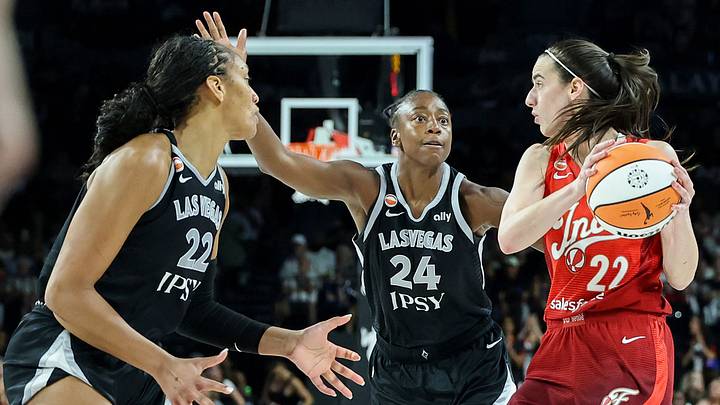
How they match up: Wilson vs. Boston is always must-see TV, especially so in a rematch of last year’s semifinals. The injury-ravaged Fever took the Aces to Game 5, and that was with Clark sidelined due to injury. This season, Indiana has beaten Las Vegas by 34 and 18 points in two games and fell in overtime in the other. (Oddsmakers have taken notice, too: The Aces open with the lowest game spread of any higher seed.) Remember that nit to pick with the Aces’ pick-and-roll defense? Well, the Fever have generated the third-most points per pick-and-roll possession (including passes) in the W. Expect offensive fireworks with enough star power to light up the Vegas Strip. And, as always, watch the possession battle. In the one game Vegas did win, it doubled the Fever on the offensive glass and forced them to commit a season-high 22 turnovers.

No. 4 Dream vs. No. 5 Mystics
Atlanta Dream
Strengths: Jordin Canada, Allisha Gray, Rhyne Howard, Angel Reese and Naz Hillmon have the best defensive and net rating (93.2 and +21.6, respectively) of any starting five that’s played at least 150 minutes together. They create problems. Canada is a tireless, pesky defender and Howard is both one of the league’s top perimeter stoppers and three-point shooters. Speaking of threes, Gray can also make it rain from deep. (She is also incredibly hard to handle on drives) Reese only adds to the team’s relentlessness and has rightly been considered a contender for Defensive Player of the Year, and Hillmon brings versatility to the group. Last month’s addition of DeWanna Bonner gives the Dream—who already has the best fourth quarter net rating in the league—an extra level of veteran experience.
Weaknesses: As good as Atlanta’s starting five has been, the Dream have sometimes struggled to defend the half-court: They have surrendered 93 points per 100 half-court plays this season, second-worst among playoff teams and only ahead of the Fever. Why? In part because of limited depth. Their starting five gives up 85 points per 100 half-court plays; that number inflates to 97 when at least one of the five starters is on the bench. The same trend holds on offense, too, as the Dream score 11 more points per 100 half-court plays with all five starters on the floor compared to when at least one sits. Atlanta may need to continue to rely on generating steals to survive.
Washington Mystics
Strengths: Defense and youth. The Mystics, along with the Valkyries and the Lynx, have established themselves as one of the league’s three elite defensive units this season. How? With physicality, and by not allowing anything easy: Washington allows the second-fewest points in the paint per game (35.49). That physicality shows up on the offensive end as well. The Mystics have the best offensive rebounding percentage (35.5%) and score the third-most second chance points per game (12.6). A team that is too young to know better—one that has burgeoning stars in Sonia Citron and Kiki Iriafen and an All-Defense candidate in Shakira Austin—can be dangerous.
Weaknesses: The Mystics have the least efficient offense among the postseason teams, which is in part caused by poor three-point shooting (32.3%, worst among playoff teams) and a lack of easy transition opportunities (6.4 fastbreak points per game, worst in the league). Tighter postseason defenses won’t make life any easier for Washington.
How they match up: The Mystics’ other weakness happens to be the Dream’s strength. Washington turned the ball over more than any team in the W and Atlanta forced more turnovers than any team in the W. The Dream then proceeded to score 798 points off their opponents’ turnovers, tops in the league. If Washington wants to pull off an upset, it needs to take care of the ball and ensure play remains in the half court.
 Add us as a preferred source on Google
Dan Falkenheim is a fact checker for Sports Illustrated, where he may inundate you with numbers when he writes women's hoops. He joined the SI staff in September 2018 and also produces Faces in the Crowd for print. A graduate of Montclair State, Dan first got hooked on women’s basketball when covering the Red Hawks’ run to the 2015 Division III Final Four for the student newspaper. He lives in New Jersey with his wife and sweet rescue dog, Hari.
Follow thefalkon