%20%20--%3E%0A%3Csvg%20version%3D%221.1%22%20id%3D%22Layer_1%22%20xmlns%3D%22http%3A%2F%2Fwww.w3.org%2F2000%2Fsvg%22%20xmlns%3Axlink%3D%22http%3A%2F%2Fwww.w3.org%2F1999%2Fxlink%22%20x%3D%220px%22%20y%3D%220px%22%0A%09%20width%3D%2239px%22%20height%3D%2240px%22%20viewBox%3D%220%200%2039%2040%22%20enable-background%3D%22new%200%200%2039%2040%22%20xml%3Aspace%3D%22preserve%22%3E%0A%3Cpath%20fill%3D%22%23FFFFFF%22%20d%3D%22M38.5%2C7H28.2v26h10.3V7z%22%2F%3E%0A%3Cpath%20fill-rule%3D%22evenodd%22%20clip-rule%3D%22evenodd%22%20fill%3D%22%23FFFFFF%22%20d%3D%22M26.1%2C25.5c0%2C5.8-4.1%2C7.5-12.9%2C7.5C3.9%2C33%2C0%2C31.2%2C0%2C25.2v-1.1h11.6%0A%09v2.4c0%2C0.7%2C0.1%2C1.4%2C1.2%2C1.4c1%2C0%2C1.2-0.4%2C1.2-1.3v-0.9c0-1.6-0.9-1.6-3.5-2.2C2.2%2C21.7%2C0%2C19.7%2C0%2C15.3v-0.9C0%2C9.3%2C5.5%2C7%2C12.9%2C7%0A%09c10.2%2C0%2C12.8%2C2.6%2C12.8%2C7.4v1.8h-11v-2.9c0-0.6-0.4-1.1-1.2-1.1c-0.6%2C0-1.2%2C0.4-1.2%2C1.1v0.9c0%2C1.5%2C0.9%2C2%2C3.3%2C2.5%0A%09c8%2C1.6%2C10.5%2C3.3%2C10.5%2C7.5V25.5z%22%2F%3E%0A%3C%2Fsvg%3E%0A)
It’s Time to Change the Way We Do March Madness Brackets
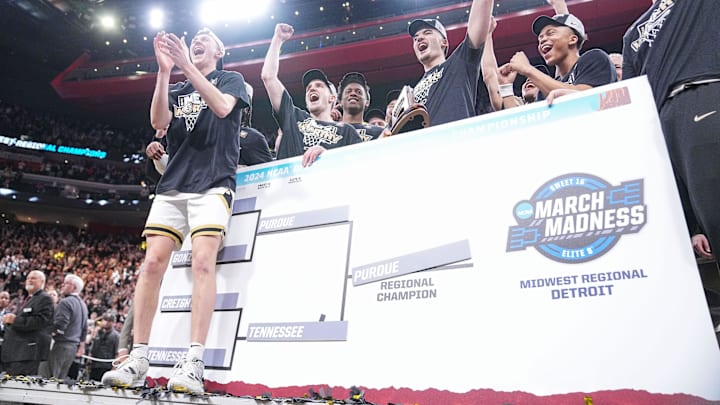
Ah, March. The month of madness. Somewhere on the internet, Jon Rothstein is smiling into the abyss, and the abyss is staring right back.
Over the next few days, millions of people across the country will spend time filling out March Madness brackets. For some, this will be a studious exercise, complete with spreadsheets, pivot tables and oh so many decimal points. For others, it will be a practice of vibes, school colors, and vaguely remembering, “Duke is always pretty good, right?”
There are few events in the sporting year that I enjoy more than March Madness and the ceremony of bracket building that comes with it. But as great as the current state of the bracket pool stands, I believe that it is time for innovation. We as a society are ready for the next step: the double bracket.
Interest in women’s college basketball has risen exponentially. Among casual viewers, women’s college basketball has produced more household names than the men’s side by a pretty wide margin in recent years. And while the prominence of pools for the women’s side of the bracket has undoubtedly increased, I think there is a way to improve the product as a whole—by uniting the men’s and women’s brackets into one überpool.
That feeling you get looking at a freshly printed bracket and basking in the glow of the 9.2 quintillion possibilities that stand before you? Let’s do it twice. The joy you pull after successfully calling the correct 12-seed that makes a run to the Sweet 16? Let’s double that, too. The heartbreak that rips through your soul and your wallet when your Final Four sleeper pick doesn’t survive past 4 p.m. ET on Thursday? We can have more of that.
My proposal is simple: Instead of filling out one bracket every year, we all fill out two. One on the men’s side, and one on the women’s side. Scoring stays the same, just with twice as many points available. You now have eight Final Four teams, and two champions. You can do the basic math. I believe in you.
What does such a change do? For one, it elevates the women’s postseason to equal importance as the men’s tournament in the eyes of the casual fan, which feels only proper. In 2024, the women’s Final Four outrated the men’s Final Four for the first time thanks to the Caitlin Clark effect. While those numbers have come back down to earth a bit since Clark’s jump to the WNBA, the overall interest in women’s college basketball continues to trend upwards.

But my desire for this shift is not one of simply elevating women’s basketball, as much as I would like to claim that it was. I am simply a sicko for brackets, and the opportunity to fill out more bubbles and engage in even more wildly branching hypotheticals after the first weekend of action is too good to pass up.
Further, it is universally acknowledged that the first Thursday and Friday of March Madness are two of the best sports days of the year, with games from noon until midnight ET. Year after year, articles are written about the collective work hours that we as a nation skip out on during these two days of action, and what could possibly be more American than that?
What if I told you that we could make those days even more exhilarating by doubling the first-round chaos? What’s better than tracking four games at once across two screens while pretending to work on a Friday? Tracking eight games at once across four screens on a Friday. We can give ourselves twice as many games to sweat and fret over if we have the courage to try.
Including both brackets in a single pool feels like a natural evolution of the fantasy sports environment. Fantasy football was working just fine when snake drafts were the norm, but we’ve now added the option of auction drafts, as well as other odd variations such as superflex and guillotine leagues. These evolutions didn’t mean the end of snake drafts, rather, the opportunities for more players to engage with fantasy in more ways.
The shift would also allow for greater variation in payouts—top prize to the combined pool top three, while smaller prizes go to the individual winners of both the men’s and women’s brackets. I am a firm believer that pools should have more, not fewer winners. This is a move in that direction.
I know there will be naysayers to such a shift, and to them I say either, “Just try it!” or “Whatever buddy!” depending on how honest I believe they are about their hesitations. If you hear someone arguing that they know more about the men’s side than the women’s side, and that giving the two tournaments equal footing in pools hurts their chances of winning:
- They probably don’t actually know that much about the men’s side despite what they say.
- Great reason for them to start watching more women’s basketball.
- lol fine dude I don’t want you winning anyways.
More realistic is concern that there are not enough upsets on the women’s side to compare it to the upsets and Cinderella runs that make predicting the men’s bracket so difficult. While it’s true that upsets are less common in the women’s tournament, they are on the rise and will only continue to rise as parity grows in the NIL era. We’ve seen two teams reach the Elite Eight as a nine-seed or worse in the past five years—a feat that had happened only once before the 2017 season.
In years past, an undefeated UConn side would be the near-certain champion pick heading into March Madness. This year, while the Huskies are still rightful favorites, UCLA, South Carolina and Texas could all be contenders with a run to the Final Four.
I am not a programmer, and thus, I do not have the ability to jump into the backend of bracket pools and make this a possibility. It isn’t that hard to do by long hand, and I’m hoping to build at least one such pool this year even if it means me going bracket by bracket to score things like back in the day (DM if interested!). But I cannot imagine such a shift would be that big of a lift for the powers that control the way we engage with March Madness.
Let’s double the fun of March Madness. There is simply no reason not to.
More College Basketball on Sports Illustrated
 Add us as a preferred source on Google
Tyler Lauletta was a staff writer for the Breaking and Trending News team at Sports Illustrated. Before joining SI, he covered sports for nearly a decade at Business Insider, and helped design and launch the OffBall newsletter. He is a graduate of Temple University in Philadelphia, and remains an Eagles and Phillies sicko. When not watching or blogging about sports, Tyler can be found scratching his dog behind the ears.
Follow tylerlauletta