%20%20--%3E%0A%3Csvg%20version%3D%221.1%22%20id%3D%22Layer_1%22%20xmlns%3D%22http%3A%2F%2Fwww.w3.org%2F2000%2Fsvg%22%20xmlns%3Axlink%3D%22http%3A%2F%2Fwww.w3.org%2F1999%2Fxlink%22%20x%3D%220px%22%20y%3D%220px%22%0A%09%20width%3D%2239px%22%20height%3D%2240px%22%20viewBox%3D%220%200%2039%2040%22%20enable-background%3D%22new%200%200%2039%2040%22%20xml%3Aspace%3D%22preserve%22%3E%0A%3Cpath%20fill%3D%22%23FFFFFF%22%20d%3D%22M38.5%2C7H28.2v26h10.3V7z%22%2F%3E%0A%3Cpath%20fill-rule%3D%22evenodd%22%20clip-rule%3D%22evenodd%22%20fill%3D%22%23FFFFFF%22%20d%3D%22M26.1%2C25.5c0%2C5.8-4.1%2C7.5-12.9%2C7.5C3.9%2C33%2C0%2C31.2%2C0%2C25.2v-1.1h11.6%0A%09v2.4c0%2C0.7%2C0.1%2C1.4%2C1.2%2C1.4c1%2C0%2C1.2-0.4%2C1.2-1.3v-0.9c0-1.6-0.9-1.6-3.5-2.2C2.2%2C21.7%2C0%2C19.7%2C0%2C15.3v-0.9C0%2C9.3%2C5.5%2C7%2C12.9%2C7%0A%09c10.2%2C0%2C12.8%2C2.6%2C12.8%2C7.4v1.8h-11v-2.9c0-0.6-0.4-1.1-1.2-1.1c-0.6%2C0-1.2%2C0.4-1.2%2C1.1v0.9c0%2C1.5%2C0.9%2C2%2C3.3%2C2.5%0A%09c8%2C1.6%2C10.5%2C3.3%2C10.5%2C7.5V25.5z%22%2F%3E%0A%3C%2Fsvg%3E%0A)
A Year After Rock Bottom, the ACC’s Bounce Back Needs to Be More Than Duke
In this story:
CHARLOTTE — A year ago at the ACC men’s basketball tournament, there was a bit of a crisis of confidence surrounding the sport which has underpinned the league since the beginning.
Only four teams from the 18-strong conference that spans both coasts made the NCAA tournament and just one, Duke, was better than a five-seed in the bracket. It was a historic nadir compounded by the futility of only the Blue Devils advancing out of the first round in the Big Dance.
In the bowels of the Spectrum Center, nearly every ACC coach was quizzed by the media over what could be done to reverse such fortunes—the fourth consecutive season of five or fewer tourney bids. Some got creative, including Stanford’s Kyle Smith suggesting a bifurcated slate of games in conference play akin to what some European soccer leagues do. There were promises of better resources by administrators behind the scenes and a need for better players (and coaches) that was apparent.
What a difference a year makes.
Such talk is not present here this week, collectively forgotten by most in this hoops-mad region as quickly as a goldfish would. The ACC is on track to get at least seven teams safely in the tournament Sunday and very likely eight based on the way the bubble has played out. That would be a high-water mark since the most recent round of expansion and the league’s most since nine made it in 2018.
Much of the turnaround can be attributed to new coaches at places like Miami, NC State, Florida State and, particularly, Virginia. The Cavaliers are ranked in the Top 10 in the polls, have lost just twice since the calendar turned over to 2026 and are into their first ACC tourney final since ’23.
“Nobody did it better than Tony Bennett, the most humble national championship coach to ever do it. I’m just honored to be the one chosen to follow a guy like that,” said coach Ryan Odom, who grew up in Charlottesville, Va. “I want to do my best for UVA and these players. You can see it. They love the place and they want to do their best for UVA.”
Odom is no stranger to this month, authoring the historic UMBC upset of the program he is now in charge of, and leading Utah State and VCU to the Big Dance before getting a crack at a Power 5 job in a league where his father once roamed courtside.
While Odom’s calm and stoic sideline demeanor stands out, it helps to have a roster that can flip results from last season’s 15–17 record under interim Ron Sanchez to the 29–4 mark they’ll take into the ACC title game after making light work of the Hurricanes in an 84–62 semifinal victory. Kansas State transfer Ugonna Onyenso posted a game-high 17 points on Friday night and gives Virginia some incredible frontcourt depth alongside Johann Grünloh, who arrived from Germany over the summer. Belgian forward Thijs De Ridder helped lead the team on both ends.

“We were underrated in the beginning of the season. I think we’re still underrated. We lost one big game that was really bad [against Duke], everybody knows that, everybody saw that, but I think we bounced back great,” De Ridder says. “Today we showed the country what we can do.”
While there has been an ACC basketball renaissance, it comes with the conundrum if the league can have more bite beyond top-ranked Duke in the Big Dance this year.
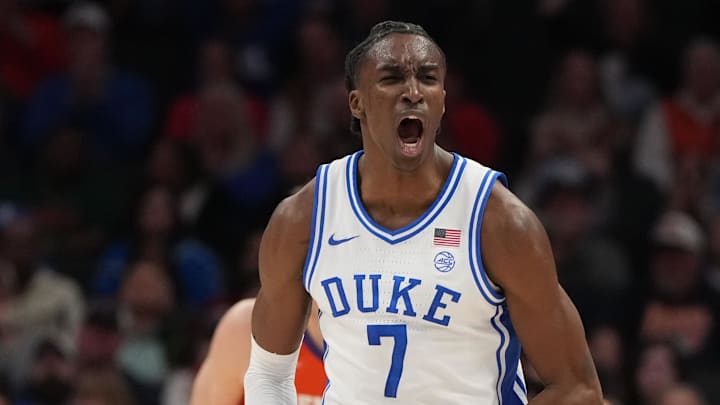
The Blue Devils seamlessly transitioned from Mike Krzyzewski to Jon Scheyer and became one of the lone, consistent threats to make the Final Four every year in an era where rosters are constantly in flux. They followed up last year’s run to the national semifinals, and survived the loss of national player of the year Cooper Flagg, without losing a step. Not only are they destined to be the No. 1 overall seed in the tourney, but forward Cameron Boozer is putting together one of the best campaigns ever for a true freshman.
And, despite being one of the higher-usage players in the country, he may need to do even more as the team deals with injuries to center Patrick Ngongba II and guard Caleb Foster that have them in walking boots this week.
“Four years in a row and we’ve had some type of injury in the tournament. Do I wish it wasn’t the case? Of course,” Scheyer said. “It’s part of the game, unfortunately. Nobody has put their head down. I’m not going to allow any of our guys to do that.”
Still, it remains a question if any other programs can advance past the first weekend.
In the past you would have naturally pointed toward the Blue Devils’ Tobacco Road rivals, North Carolina. The Tar Heels certainly have the pedigree historically, but results under head coach Hubert Davis have been a series of diminishing returns since a magical first season. This season offered up the opportunity to reverse that trend with a high-priced roster, but injuries clamped down on their actual ceiling—particularly the loss of lottery pick Caleb Wilson—and resulted in a one-and-done trip to Charlotte after a loss to Clemson.
Across the Triangle, results have been improved at NC State to the point where it should be safely into the main bracket but will have to hope that losing seven of its last nine is something it can shake off when playing somebody without an ACC patch on their jersey.
“I was hired at NC State to do a job. This wasn’t going to take one year. I’ve already met with our administration about next year and some of the changes that we need to make and some of the things that we need to do to put this program where it deserves long-term,” Wolfpack coach Will Wade said on Thursday. “We have what we need, and it’s on me and my staff to get the job done. Look, this year hasn’t gone exactly how we wanted it to, but we’re going to rally and we’re going to work hard and we’re going to have a team next year that’s ready to roll.”
Such aspirations are music to his fan base’s ears given the way the program tailed off prior to his arrival. Wade will not be alone among his peers in hitting the portal hard later this spring to build a bigger, and better, winner for 2027.
In the present, however, figuring out which ACC teams want to start adding NCAA tournament units to the league’s coffers beyond the current standard-bearers in Duke remains ripe for discussion. The good news for everyone across the conference is at least there’s a fresh new question being asked of it after what transpired last year.
More College Basketball from Sports Illustrated
Listen to SI’s college sports podcast, Others Receiving Votes, below or on Apple and Spotify. Watch the show on SI’s YouTube channel.
 Add us as a preferred source on Google
Bryan Fischer is a staff writer at Sports Illustrated covering college sports. He joined the SI staff in October 2024 after spending nearly two decades at outlets such as FOX Sports, NBC Sports and CBS Sports. A member of the Football Writers Association of America’s All-America Selection Committee and a Heisman Trophy voter, Fischer has received awards for investigative journalism from the Associated Press Sports Editors and FWAA. He has a bachelor’s in communication from USC.
Follow bryandfischer