%20%20--%3E%0A%3Csvg%20version%3D%221.1%22%20id%3D%22Layer_1%22%20xmlns%3D%22http%3A%2F%2Fwww.w3.org%2F2000%2Fsvg%22%20xmlns%3Axlink%3D%22http%3A%2F%2Fwww.w3.org%2F1999%2Fxlink%22%20x%3D%220px%22%20y%3D%220px%22%0A%09%20width%3D%2239px%22%20height%3D%2240px%22%20viewBox%3D%220%200%2039%2040%22%20enable-background%3D%22new%200%200%2039%2040%22%20xml%3Aspace%3D%22preserve%22%3E%0A%3Cpath%20fill%3D%22%23FFFFFF%22%20d%3D%22M38.5%2C7H28.2v26h10.3V7z%22%2F%3E%0A%3Cpath%20fill-rule%3D%22evenodd%22%20clip-rule%3D%22evenodd%22%20fill%3D%22%23FFFFFF%22%20d%3D%22M26.1%2C25.5c0%2C5.8-4.1%2C7.5-12.9%2C7.5C3.9%2C33%2C0%2C31.2%2C0%2C25.2v-1.1h11.6%0A%09v2.4c0%2C0.7%2C0.1%2C1.4%2C1.2%2C1.4c1%2C0%2C1.2-0.4%2C1.2-1.3v-0.9c0-1.6-0.9-1.6-3.5-2.2C2.2%2C21.7%2C0%2C19.7%2C0%2C15.3v-0.9C0%2C9.3%2C5.5%2C7%2C12.9%2C7%0A%09c10.2%2C0%2C12.8%2C2.6%2C12.8%2C7.4v1.8h-11v-2.9c0-0.6-0.4-1.1-1.2-1.1c-0.6%2C0-1.2%2C0.4-1.2%2C1.1v0.9c0%2C1.5%2C0.9%2C2%2C3.3%2C2.5%0A%09c8%2C1.6%2C10.5%2C3.3%2C10.5%2C7.5V25.5z%22%2F%3E%0A%3C%2Fsvg%3E%0A)
Forde-Yard Dash: Which New Coordinators Are Thriving and Which Are Flailing?
In this story:
Forty names, games, teams and minutiae making news in college football, where the irrepressible P.J. Fleck has moved on from blood rituals to crowd-surfing and jug chugging. First Quarter: Save-Your-Job Saturday? Second Quarter: The Seven Habits of Highly Effective Teams.
Third Quarter: New Coordinator Wellness Check
Which new hires are working out well so far, and which ones are off to a rough start? The Dash checks in:
Thriving
Chip Kelly (21), Northwestern offensive coordinator
He’s schemed up a lot of great stuff over the years, but the wing T beatdown Kelly put on Penn State on Friday night was some of his finest work. Employing a 1960s offensive look, the Wildcats gouged the Nittany Lions for 413 rushing yards, their most in a home game in 26 years and the most nationally against a power-conference opponent this season.
Northwestern (3–1) completely befuddled the Penn State defense with motion, misdirection and execution, throwing the ball just 14 times. It came seven days after Kelly and the Wildcats had to lean heavily on quarterback Aidan Chiles and the passing game against Indiana, pushing the reigning champions deep into the fourth quarter before submitting, 29–23.
Northwestern should be 6–1 when it travels to face the team Kelly led to the 2010 national championship game, Oregon.
Will Muschamp (22), Texas defensive coordinator
The Longhorns defense has more takeaways (five) than touchdown drives allowed (four). As noted in the Second Quarter, the red zone is a dead zone against Texas, with opponents scoring TDs just 27% of the time. Muschamp also threw an absolute onslaught at Tennessee freshman quarterback Faizon Brandon last game, resulting in 10 sacks (5.5 of them by edge rusher Colin Simmons).
Starting with the fourth-quarter shutout of Ohio State, the Texas defense is allowing 2.6 points and 46 yards per quarter over its last nine. Oklahoma’s wobbly offense could be up against it Saturday in Dallas.
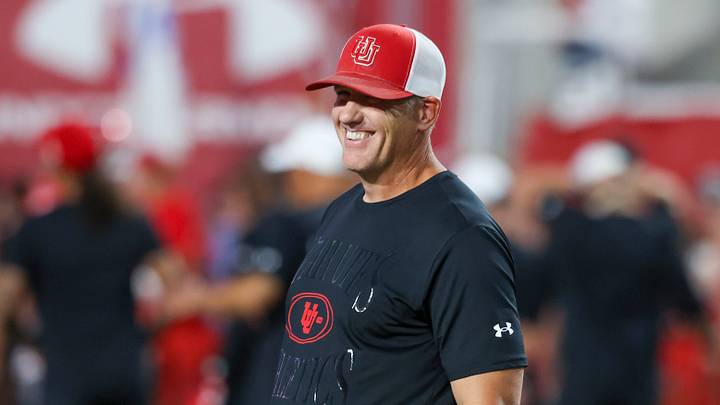
Kevin McGiven (23), Utah offensive coordinator
Kyle Whittingham took Jason Beck with him to Michigan and, well, we’ll get to that in a minute. Beck’s replacement is McGiven, a veteran play-caller at several stops out West, most recently Utah State, and he’s kept a good thing going.
In jetting off to a 4–0 start in their first season under Morgan Scalley, the Utes have scored more than 30 points and rolled up more than 400 total yards and six yards per play in every game. Quarterback Devon Dampier looks like the same guy he did last year in Beck’s offense, while running it less (so far). Running back Wayshawn Parker had career highs of 174 rushing yards and 239 yards from scrimmage in the Utes’ win at Iowa State last time out.
Chip Lindsey (24), Missouri offensive coordinator
He’s been around the block, making seven different stops in the last decade. Lindsey’s arrival at Mizzou was followed shortly thereafter by a gunshot injury to the Tigers’ best offensive player, running back Ahmad Hardy, who hasn’t yet played this season. Lindsey had to work in transfer quarterback Austin Simmons and multiple new receivers. The result is a Missouri offense that leads the SEC in total offense in league games at 487 yards. The Tigers threw an offensive haymaker at Florida on Saturday, producing 560 yards and 8.48 yards per play in a blowout victory.
Dean Kennedy and Chris Smith (25), UCLA offensive coordinators
They came to Westwood with Bob Chesney from James Madison, bringing the same playbook and several of the same players with them—with pretty much the same results. The Bruins are 4–0 and averaging 44.8 points per game.
Kennedy is the primary coordinator, but Smith’s work as offensive line coach and run-game coordinator should not be ignored—UCLA leads the nation in yards per carry at 6.95 and rushing touchdowns per game at 4.5. They are pulverizing teams on the ground in the fourth quarter, averaging 125 yards per game in that stanza alone.
Flailing
Don’t give up on ’em, it’s not even midseason yet. But it’s reasonable to expect better in the weeks ahead:
Jason Beck (26), Michigan offensive coordinator
The Wolverines’ misery stat endures—they have now gone four of the first five games without scoring 20 points, something which last happened in 1965. That team went 4–6 despite a solid defense, which sounds similar to the current situation.
Five-star quarterback Bryce Underwood is pretty much the same passer thus far this season as he was last year as a freshman, which is pretty pedestrian. Underwood’s performance in the loss to Minnesota might have been his most disappointing yet, with 101 yards passing, 121 total offense and two interceptions. That might not be Beck’s fault, but guess who stands to take most of the heat?

Chad Morris (27), Clemson offensive coordinator
In classic Dabo Swinney retrograde fashion, he decided to modernize the Tigers offense by bringing back his OC from 2011 to ’14. That has worked splendidly—Clemson is last in the ACC in total offense and total touchdowns, and one of those TDs was scored on a punt return. As noted in the Second Quarter, Clemson’s passing TD rate is lowest in America (two in 153 pass attempts).
Holmon Wiggins (28), Texas A&M offensive coordinator
The arrival of Arkansas on the schedule will make any offense look and feel better. The Aggies put a balanced, 401-yard performance on the board against the Razorbacks, but now it’s back to the grind for an attack that has been wildly inconsistent.
A&M scored just seven points in the first three quarters against Kentucky, did not produce a touchdown against LSU and was in a tight game against Arizona State before two defensive touchdowns in the fourth quarter broke it open. Marcel Reed has not thrown the ball well but has been a more productive runner recently.
Gary Patterson (29), USC defensive coordinator
Much like Swinney and offensive coordinators, Lincoln Riley seems to have an ability to make every DC look bad. The former TCU head coach was lauded as a home run hire, and at times has resembled that. But there also have been times when the Trojans couldn’t stop Louisiana or Rutgers, much less Oregon or a random Washington tight end.
Poor tackling effort from USC's defense leads to a 42-yard TD from Washington TE Decker DeGraaf. pic.twitter.com/w81LubL5Rm
— Underdog CFB (@UnderdogCFB) October 4, 2026
With its season on the line, the USC defense hunkered down against Washington on Saturday to produce a fumble-return touchdown and pitch a shutout over the last 28 minutes of the game. Maybe that’s something to build on.
Mark Ivey (30), Louisville defensive coordinator
No team has given up more passing plays of 30 yards or longer this season than the Cardinals, who have surrendered 13 of them. Four of those have gone for 60-plus, as the back door of the Louisville defense has remained chronically open. Defensive lapses are the primary reason why the Cards are a disappointing 2–3, having canceled out their own big-play offense.
(Also everyone at California, where Tosh Lupoi might have flunked his first attempt at staff construction.)
PODCAST: Listen to Sports Illustrated’s college sports podcast, Others Receiving Votes, hosted by Pat Forde, on Apple and Spotify. Watch the show on SI’s college YouTube channel or on SI TV.
 Add us as a preferred source on Google
Pat Forde is a senior writer for Sports Illustrated who covers college football and college basketball as well as the Olympics and horse racing. He cohosts the Others Receiving Votes podcast for SI and is a regular contributor to the Tony Kornheiser Show podcast. He previously worked for Yahoo Sports, ESPN and The (Louisville) Courier-Journal. Forde has won 28 Associated Press Sports Editors writing contest awards, has been published three times in the Best American Sports Writing book series, and was nominated for the 1990 Pulitzer Prize. A past president of the U.S. Basketball Writers Association and member of the Football Writers Association of America, he lives in Louisville with his wife. They have three children, all of whom were collegiate swimmers.
Follow ByPatForde