%20%20--%3E%0A%3Csvg%20version%3D%221.1%22%20id%3D%22Layer_1%22%20xmlns%3D%22http%3A%2F%2Fwww.w3.org%2F2000%2Fsvg%22%20xmlns%3Axlink%3D%22http%3A%2F%2Fwww.w3.org%2F1999%2Fxlink%22%20x%3D%220px%22%20y%3D%220px%22%0A%09%20width%3D%2239px%22%20height%3D%2240px%22%20viewBox%3D%220%200%2039%2040%22%20enable-background%3D%22new%200%200%2039%2040%22%20xml%3Aspace%3D%22preserve%22%3E%0A%3Cpath%20fill%3D%22%23FFFFFF%22%20d%3D%22M38.5%2C7H28.2v26h10.3V7z%22%2F%3E%0A%3Cpath%20fill-rule%3D%22evenodd%22%20clip-rule%3D%22evenodd%22%20fill%3D%22%23FFFFFF%22%20d%3D%22M26.1%2C25.5c0%2C5.8-4.1%2C7.5-12.9%2C7.5C3.9%2C33%2C0%2C31.2%2C0%2C25.2v-1.1h11.6%0A%09v2.4c0%2C0.7%2C0.1%2C1.4%2C1.2%2C1.4c1%2C0%2C1.2-0.4%2C1.2-1.3v-0.9c0-1.6-0.9-1.6-3.5-2.2C2.2%2C21.7%2C0%2C19.7%2C0%2C15.3v-0.9C0%2C9.3%2C5.5%2C7%2C12.9%2C7%0A%09c10.2%2C0%2C12.8%2C2.6%2C12.8%2C7.4v1.8h-11v-2.9c0-0.6-0.4-1.1-1.2-1.1c-0.6%2C0-1.2%2C0.4-1.2%2C1.1v0.9c0%2C1.5%2C0.9%2C2%2C3.3%2C2.5%0A%09c8%2C1.6%2C10.5%2C3.3%2C10.5%2C7.5V25.5z%22%2F%3E%0A%3C%2Fsvg%3E%0A)
One Number That Sums Up Every ACC Team and Notre Dame in 2026
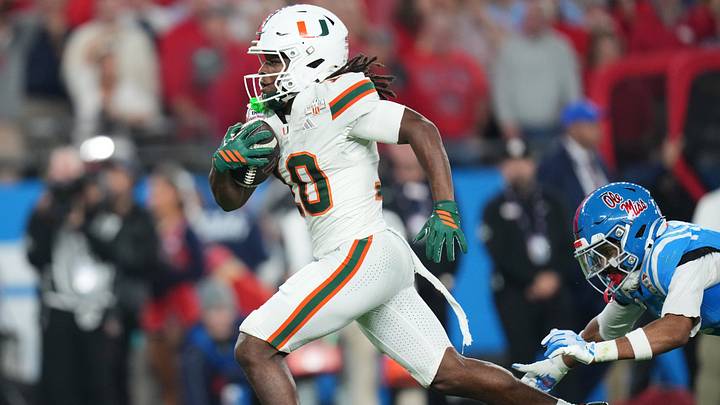
The year 2025 was a bizarre one for the ACC. The league’s consensus best team, Miami, stayed home from its championship game, which pitted Virginia against Duke. The Cavaliers lost to the Blue Devils in overtime, blowing a surefire CFP spot and raising the possibility of the league being left out of the dance altogether—until the Hurricanes rode their at-large spot all the way to the national championship game.
In its third year since expanding to California and Texas, the ACC seems less sure than ever what kind of league it wants to be—basketball-first or football-first, high-roller or middle-class, logical or illogical. Make no mistake, though: competition for the crown remains fierce, byzantine tiebreaker rules be damned. Here’s a look at one number that will define every ACC team’s (and Notre Dame’s) regional and national chances in 2026.
Boston College: 65
That’s the number of solo tackles racked up by Eagles defensive back KP Price in ’25, most in the ACC. Price is the slam-dunk best player on Boston College’s roster, and a big year from him in defensive coordinator Ted Roof’s system could go a long way toward erasing memories of the Eagles’ worst season since 2012.
California: 0
That’s the number of suitcases Golden Bears coach Tosh Lupoi packed on his successful trip to pitch quarterback Jaron-Keawe Sagapolutele on staying with the program; Lupoi left his introductory press conference and immediately boarded a commercial flight from San Francisco to Hawai’i in order to do it. This year may see some growing pains, but Lupoi is already looking like one of this offseason’s most impactful coaching hires.
Clemson: 11
That’s the number of transfers the Tigers added to their roster this offseason, breaking with years of tradition under coach Dabo Swinney. Swinney, whose days as one of college football’s most feared bosses seem long behind him, finished outside of the top 25 for the first time since 2010—his bid for a return to glory will hinge on offensive coordinator Chad Morris, who helped mastermind Clemson’s original Swinney-era breakthrough in the early 2010s.
Duke: 70
That’s the number of days separating the Blue Devils’ season opener against Tulane from the game their fans really want to win: a road trip to Miami on Nov. 14. Hurricanes quarterback Darian Mensah’s messy transfer from Duke left the Blue Devils high and dry at that position, with San José State expat Walker Eget and freshman Dan Mahan bidding to take the reins of a formidable offense.
Florida State: .188
That’s the Seminoles’ winning percentage in the ACC since winning the conference title three years ago—three wins and 13 losses. Florida State has struggled to build a roster worthy of its illustrious history in recent seasons, and the Seminoles will have to fight for coach Mike Norvell with a new quarterback (Auburn transfer Ashton Daniels) and offensive line.
Georgia Tech: 27
That’s the Yellow Jackets’ final FBS rank in scoring offense a year ago, their highest since going 11–3 and winning the Orange Bowl in 2014. Building an attack remotely as potent without now-Florida offensive coordinator Buster Faulkner will be a difficult ask for Georgia Tech this season, and Indiana transfer/national champion Alberto Mendoza’s development at the quarterback position will be key.
Louisville: 35.3
That was Cardinals quarterback Lincoln Kienholz’s completion percentage (6-for-17) in the most sustained game action he saw in his Ohio State career—a 14–3 loss to Missouri in the 2023 Cotton Bowl (non-CFP bowl games are a shaky performance metric, but still). We’re about to learn precisely how much Kienholz has improved in the last three years, and we won’t have to wait long to do it—Louisville plays Ole Miss in Nashville on Sept. 6.
Miami: 9
That’s the number of slots the Hurricanes occupy on the preseason All-ACC team (three—wide receiver, all-purpose and return specialist—by Malachi Toney alone). In ’25, when Miami also boasted the most talented roster in the conference, the Hurricanes lost to Louisville and SMU—two teams absent from Miami’s schedule in a year where it’s poised to dominate its league.
North Carolina: 35
That’s the difference between the Tar Heels’ spot in 247Sports’ recruiting rankings (17) and transfer rankings (52). It’s both a mildly positive and concerningly negative testament to the way coach Bill Belichick’s team does business—yes, the Belichick name continues to carry clout, but do he and embattled general manager Michael Lombardi have the portal know-how it takes to build a modern winner?
NC State: 147.8
That’s Wolfpack quarterback CJ Bailey’s career passing efficiency, the most in program history for a quarterback with more than 20 career attempts (ahead of program icon Philip Rivers). Bailey has been the subject of considerable hype this offseason, and he’ll have a national stage in “Week Zero” against Virginia on Aug. 29.
Pittsburgh: .337
That’s the combined winning percentage a year ago of the Panthers’ first seven opponents, just two (Boston College and Virginia Tech) of whom Pittsburgh will play on the road. Talk about a runway for quarterback Mason Heintschel, whose midseason hot streak electrified Panthers fans a year ago—look for Pittsburgh to spend at least a little time ranked for the sixth time in seven years.
SMU: 64
That’s the combined number of starts with the Mustangs for the team’s three returning offensive line starters—Joshua Bates, Addison Nichols and PJ Williams. SMU has been superb in its first two ACC seasons, but if the Mustangs want to find another (read: a CFP) gear, that unit will need to be airtight blocking for both quarterback Kevin Jennings and transfer running back Kendrick Raphael.
Stanford: 1
That’s the number of games in his Michigan career where transfer Cardinal quarterback Davis Warren threw multiple touchdown passes (Nov. 2, 2024 against Oregon). Warren struggled mightily in the Wolverines’ bumpy first season after coach Jim Harbaugh’s departure, but this year he’ll have two ideal shepherds in general manager Andrew Luck and coach Tavita Pritchard—former Stanford gunslingers both.
Syracuse: 43
That’s the number of games the Orange’s quarterback room has played for other FBS schools combined—21 for Steve Angeli (Notre Dame), 10 for Malachi Nelson (USC, Boise State and UTEP), and 12 for Amari Odom (Kennesaw State). Angeli is returning from an Achilles injury that nuked Syracuse’s ’25 season after a promising start, but the Orange will have plenty of options in the event of underperformance or reinjury.
Virginia: 30
That’s the number of years it had been since the Cavaliers finished as high as their No. 16 final AP ranking in ’25. Coach Tony Elliott’s determination in turning Virginia into a conference contender in the aftermath of tragedy is a sight to behold—remember that the horrific shooting that killed three Cavaliers came just four years ago—and the team could be even better in ’26 if it avoids early obstacles like NC State and Florida State.
Virginia Tech: 17.3
That’s the number of points per game Penn State allowed in 2021 under Hokies defensive coordinator Brent Pry—a defensive performance that helped Pry get Virginia Tech’s coaching job. In a widely discussed show of professional humility, Pry accepted a defensive coordinator position under new boss James Franklin after being fired by the Hokies in ’25—and Virginia Tech should be all the better for reuniting what in the late 2010s was a Big Ten brain trust to be reckoned with.
Wake Forest: 4
That’s the number of years in their football history where the Demon Deacons have won nine games, most recently in an under-the-radar ’25 campaign under first-year coach Jake Dickert (Jim Grobe needed six years to accomplish that feat; Dave Clawson needed seven). Dickert is taking a calculated risk in installing Gio Lopez at quarterback after a shaky year with North Carolina, but a stout front seven should limit the number of jams Lopez will need to wriggle out of.
Notre Dame: 29.7
That’s the Fighting Irish’s average margin of victory in their final 10 games of ’25, having lost their first two games to the Hurricanes and Texas A&M. Quarterback CJ Carr’s 21-touchdown, four-interception finish was essential to Notre Dame’s success, and a fairly light September and October slate could provide him with the statistics necessary for a Heisman run.
Listen to SI’s college sports podcast, Others Receiving Votes, below or on Apple and Spotify. Watch the show on SI’s College YouTube channel.
 Add us as a preferred source on Google
Patrick Andres is a staff writer on the Breaking and Trending News team at Sports Illustrated. He joined SI in December 2022, having worked for The Blade, Athlon Sports, Fear the Sword and Diamond Digest. Andres has covered everything from zero-attendance Big Ten basketball to a seven-overtime college football game. He is a graduate of Northwestern University's Medill School of Journalism with a double major in history .
Follow PAndres2001