%20%20--%3E%0A%3Csvg%20version%3D%221.1%22%20id%3D%22Layer_1%22%20xmlns%3D%22http%3A%2F%2Fwww.w3.org%2F2000%2Fsvg%22%20xmlns%3Axlink%3D%22http%3A%2F%2Fwww.w3.org%2F1999%2Fxlink%22%20x%3D%220px%22%20y%3D%220px%22%0A%09%20width%3D%2239px%22%20height%3D%2240px%22%20viewBox%3D%220%200%2039%2040%22%20enable-background%3D%22new%200%200%2039%2040%22%20xml%3Aspace%3D%22preserve%22%3E%0A%3Cpath%20fill%3D%22%23FFFFFF%22%20d%3D%22M38.5%2C7H28.2v26h10.3V7z%22%2F%3E%0A%3Cpath%20fill-rule%3D%22evenodd%22%20clip-rule%3D%22evenodd%22%20fill%3D%22%23FFFFFF%22%20d%3D%22M26.1%2C25.5c0%2C5.8-4.1%2C7.5-12.9%2C7.5C3.9%2C33%2C0%2C31.2%2C0%2C25.2v-1.1h11.6%0A%09v2.4c0%2C0.7%2C0.1%2C1.4%2C1.2%2C1.4c1%2C0%2C1.2-0.4%2C1.2-1.3v-0.9c0-1.6-0.9-1.6-3.5-2.2C2.2%2C21.7%2C0%2C19.7%2C0%2C15.3v-0.9C0%2C9.3%2C5.5%2C7%2C12.9%2C7%0A%09c10.2%2C0%2C12.8%2C2.6%2C12.8%2C7.4v1.8h-11v-2.9c0-0.6-0.4-1.1-1.2-1.1c-0.6%2C0-1.2%2C0.4-1.2%2C1.1v0.9c0%2C1.5%2C0.9%2C2%2C3.3%2C2.5%0A%09c8%2C1.6%2C10.5%2C3.3%2C10.5%2C7.5V25.5z%22%2F%3E%0A%3C%2Fsvg%3E%0A)
The New Rules of College Football’s Coaching Carousel
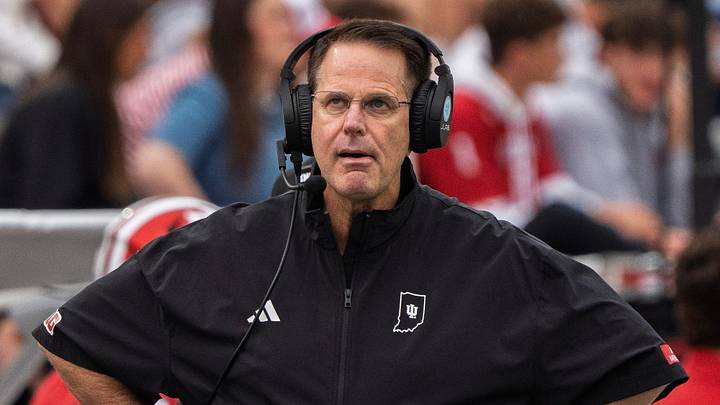
After a slow start, the college football coaching carousel is spinning.
Maryland broke the seal when it issued Mike Locksley a pink slip during the Terrapins’ bye week and NC State, Baylor and Florida State followed suit. Throw in Group of 6 openings like Sam Houston State—along with the lengthy search that’s been underway at Northern Illinois—and it won’t be long before the fairly quiet market begins to really heat up as the sport inches toward Selection Sunday.
While coaching searches are becoming less a one-man show in how they’re conducted by athletic directors compared to past cycles, this year could feature a fascinating group of schools looking for new coaches and a general lack of clear-cut candidates. Before the search firms begin to present their lists and donors get asked just how much they might be willing to underwrite in staff costs, however, programs in the market for a new coach would be wise to look backward. There have been a variety of successful coaching transitions and even more lessons from what didn’t work the last few years.
With that in mind, here are a few things every AD, agent, school president and overzealous booster should learn from the past so they’re not doomed to repeat the same mistakes.
MORE COLLEGE FOOTBALL FROM SI: Podcast | Forums | Newsletter | Bracket Challenge
1. Coaches who win at lower levels can win at bigger ones
When NIL was in its infancy, there was a line of thinking among some athletic directors that you had to have significant inexperience at a major program who was fully involved in paying players at a high level if you wanted a big-time gig. Numerous Power 4 openings seemed to go not with Group of 6 head coaches who had experience running their own programs, but to pool much more exclusively from the ranks of high-level offensive and defensive coordinators. Some Group of 6 head coaches, sensing this trend, even took a step backward in title in order to move up a level, hoping that the change to a more prominent team would lead to a truly high-end job down the road.
While that remains a viable path for many, it’s mostly taken a back seat to schools leaning much more on experience and not worrying as much about knowing what to do with a budget for rosters that is quickly running well past $20 million for most programs. You might even call this the Curt Cignetti effect if it wasn’t already happening before his hire at Indiana, though the success he’s had in Bloomington, Ind., has no doubt supercharged it. UCLA’s Bob Chesney, Houston’s Willie Fritz and New Mexico’s Jason Eck all won plenty at lower levels, understood how to turn around programs and won a lot of games recently in their new jobs.
In short, football is football—even in this NIL era. Schools would be wise to remember that and not limit their candidate pools with so many successful coaches all over the map.
2. A massive contract doesn’t take long to become an albatross
The coaching carousel in November and December often flows directly from the extensive talk about buyouts that proliferates September and October after coaches on a hot seat start losing games. It’s a number that circulates among fan bases on message boards, gets posted in newspaper articles and even makes its way into the chatter on pregame shows each Saturday.
This kind of talk about how much it costs to get rid of a coach should serve as a reminder to athletic directors that as much as the coaching market is often an irrational one, you really don’t have to blink and accept every demand some of the agents on the other line are requesting.
Mike Norvell is an excellent example of this recently, with Florida State having to pony up the third-biggest buyout on record in order to get rid of him recently. The only reason why a separation between the parties didn’t occur earlier was because the school handed him a giant new contract amid rumored interest from Alabama a few years ago. The bad decision to believe he would leave put the school in a much bigger hole.
And how about the two sides of Lincoln Riley? While USC may have notched its biggest win of the coach’s era in Los Angeles, his seat can still become quite warm if the Trojans miss the playoff. His buyout is even bigger thanks to the massive nine-figure deal the school signed to pry him from Oklahoma. The Sooners, meanwhile, have both hired and extended Brent Venables like he’s a top-of-the-market SEC coach when results have proven otherwise. If either school wants to make a change amid disappointing seasons, it would be prohibitively expensive to do so.

While you would like to think this would mean schools might actually start adjusting how they go about handing out contracts—pulling back on guaranteed money in favor of shorter, incentive-laden deals most notably—the industry at large will need to see this happen in practice before they really start to believe it will become the norm. As the past few big-time coaching changes and the litany of expensive hot seat situations have proven though, it should at least be in the back of everybody’s mind before pen meets paper.
3. Committing to a clear plan is good, having no backup is not


Every athletic director likes to say they have a list in their drawer full of names they’re prepared to move quickly on if they have an opening. Sometimes that actually is the case, such as last year when Iowa State’s Jamie Pollard moved with rapid succession to hire Jimmy Rogers as soon as Matt Campbell left for Penn State.
That kind of transition, however, is much more the exception than the rule. The reason the Cyclones were even thrown into the market for a new coach was because Penn State’s search to replace James Franklin meandered along with plenty of fascinating twists and turns before Pat Kraft eventually locked up Campbell. In both cases it was a good lesson in having a clear and straightforward plan, but plenty of avenues to go down if that top name involved either gets cold feet or suddenly becomes unavailable.
In few places did this show up more than in the slate of SEC openings last year. Jon Sumrall was heavily linked to Auburn before winding up at Florida. The Tigers moved quickly to snag Alex Golesh from USF before he could be hired at Arkansas. The Razorbacks pivoted overnight to hiring Ryan Silverfield after talking with a very diverse set of potential candidates over the course of their search.
Coaching searches are often complex entities given the number of people with a hand on the wheel and the amount of competing interests that lead coaches to land in one spot over another. Throw in the pressure that comes with a hiring window that feels ever more compressed thanks to signing day and the transfer portal and you can see why it doesn’t take much to nudge a program into a hire destined to fail if they’re not prepared ahead of time.
4. Traditional stepping stones are no longer needed
There used to be a very clear hierarchy for coaching searches. A Big Ten school would mine who was having a good season or two in the MAC and consider bringing that coach up to the big leagues. If there was an SEC opening, anybody on Nick Saban’s staff or who had extensive experience in the league was top of mind. It wasn’t hard to go from a good year at a Group of 6 school into a plucky ACC or Big 12 gig.
That’s no longer the case as programs are more apt to explore every avenue to the fullest. That includes hiring ex-head coaches (see Michigan State hiring Pat Fitzgerald or Michigan going with Kyle Whittingham), NFL assistants (Kennesaw State won CUSA last year after hiring Jaguars running backs coach Jerry Mack) or retreads (West Virginia’s Rich Rodriguez and UCF’s Scott Frost). All have had varying degrees of success in turning around their programs but serve as a reminder that what was often the traditional way of working up the ladder is no longer something schools are beholden to.
That may particularly be the case for Group of 6 schools moving forward given the gap in resources and how many coordinators at the Power 4 level would not sign up to take the pay cut that comes with a head coaching job at a smaller program. That’s led some to get creative in who they’re considering, such as Central Michigan tabbing Matt Drinkall after he was Army’s offensive line coach to Oregon State landing a gem in JaMarcus Shephard after he was a little-known wide receivers coach at Alabama. While there may be the occasional alumnus who is happy to take a job or a veteran big-name coach just itching to finally get his shot at running a program, widening the search is likely to become the norm for those with fewer resources.

5. Dominoes can be opportunities … or roadblocks if you don’t read the market
Hiring season is often like a set of dominoes being pushed over, which can create opportunities for plenty of programs to land the right guy.
Most recently, Florida is a great test case as it became clear that Lane Kiffin was going to go to LSU after deciding to leave Ole Miss, putting the Gators in a position to quickly move to snag Sumrall. Sometimes it works against schools not aware of what might happen in the market, such as when UCLA didn’t see Chip Kelly’s departure coming after the 2023 season, leading them to hastily promote DeShaun Foster in the wake of Kelly’s move to Ohio State. That prevented the Bruins from potentially snagging Jedd Fisch, Brent Brennan or even Jonathan Smith—with the latter ending up as a bad fit at Michigan State in lieu of the Pasadena native coaching in his hometown after leaving Oregon State.
This is an area where search firms can help, but also a good reminder for athletic directors that seeing around the corner in a coaching search can play a big role in either landing a great fit or having to play catchup in finding their next coach.
Who will take such lessons to heart this cycle? That remains to be seen as college football’s coaching carousel begins to spin and sets off a wild and chaotic next few months in the sport that will inevitably shape it for years to come.
PODCAST: Listen to Sports Illustrated’s college sports podcast, Others Receiving Votes, hosted by Pat Forde, on Apple and Spotify. Watch the show on SI’s college YouTube channel or on SI TV.
 Add us as a preferred source on Google

Bryan Fischer is a staff writer at Sports Illustrated covering college sports. He joined the SI staff in October 2024 after spending nearly two decades at outlets such as FOX Sports, NBC Sports and CBS Sports. A member of the Football Writers Association of America’s All-America Selection Committee and a Heisman Trophy voter, Fischer has received awards for investigative journalism from the Associated Press Sports Editors and FWAA. He has a bachelor’s in communication from USC.
Follow bryandfischer