%20%20--%3E%0A%3Csvg%20version%3D%221.1%22%20id%3D%22Layer_1%22%20xmlns%3D%22http%3A%2F%2Fwww.w3.org%2F2000%2Fsvg%22%20xmlns%3Axlink%3D%22http%3A%2F%2Fwww.w3.org%2F1999%2Fxlink%22%20x%3D%220px%22%20y%3D%220px%22%0A%09%20width%3D%2239px%22%20height%3D%2240px%22%20viewBox%3D%220%200%2039%2040%22%20enable-background%3D%22new%200%200%2039%2040%22%20xml%3Aspace%3D%22preserve%22%3E%0A%3Cpath%20fill%3D%22%23FFFFFF%22%20d%3D%22M38.5%2C7H28.2v26h10.3V7z%22%2F%3E%0A%3Cpath%20fill-rule%3D%22evenodd%22%20clip-rule%3D%22evenodd%22%20fill%3D%22%23FFFFFF%22%20d%3D%22M26.1%2C25.5c0%2C5.8-4.1%2C7.5-12.9%2C7.5C3.9%2C33%2C0%2C31.2%2C0%2C25.2v-1.1h11.6%0A%09v2.4c0%2C0.7%2C0.1%2C1.4%2C1.2%2C1.4c1%2C0%2C1.2-0.4%2C1.2-1.3v-0.9c0-1.6-0.9-1.6-3.5-2.2C2.2%2C21.7%2C0%2C19.7%2C0%2C15.3v-0.9C0%2C9.3%2C5.5%2C7%2C12.9%2C7%0A%09c10.2%2C0%2C12.8%2C2.6%2C12.8%2C7.4v1.8h-11v-2.9c0-0.6-0.4-1.1-1.2-1.1c-0.6%2C0-1.2%2C0.4-1.2%2C1.1v0.9c0%2C1.5%2C0.9%2C2%2C3.3%2C2.5%0A%09c8%2C1.6%2C10.5%2C3.3%2C10.5%2C7.5V25.5z%22%2F%3E%0A%3C%2Fsvg%3E%0A)
Scottie Scheffler Brilliantly Debunked the Biggest Misconception About Shinnecock Before the U.S. Open
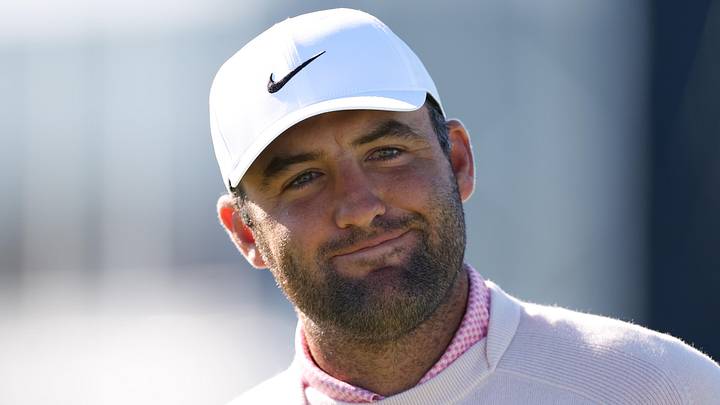
Heading into the 126th U.S. Open we know one thing for sure—the star of the week is going to be Shinnecock Hills Golf Club. The iconic course located just off the eastern shoreline of Long Island truly has it all and is ready to present the stiffest of challenges for the best players in the world.
The one thing it mostly lacks, which will be easy to see when you flip on your television this week, is trees. There are rolling hills, elevated tee boxes and greens and lots and lots of fescue rough just waiting to derail a player’s hopes of winning our national championship.
2026 U.S. OPEN PREDICTIONS: Our Picks to Win and Surprise at Shinnecock
But when it comes to trees, there really isn’t a single one that will cause an issue in this year’s U.S. Open.
That’s why a lot of people are quick to label Shinnecock a links-style course like the legendary ones seen overseas each year at the British Open.
Scottie Scheffler isn’t one of those people, however. And this week he brilliantly broke down that while Shinnecock might look like a links course to the untrained eye, it sure as heck doesn’t play like one.
Why Scheffler doesn’t consider Shinnecock a links-style golf course
When Scheffler goes deep on a topic, like he did a last summer about the importance of his career, you’re best to listen and take note. Oftentimes the No. 1 player in the world can be a bit bland when talking about golf. But that wasn’t the case Tuesday when he was asked about Shinnecock and the way it not only looks, but plays.
“I wouldn’t describe this place as a links course,” Scheffler said. “It may look like a links course but it don’t think it really plays like one. I think links golf is really interesting in a sense that once you get the ball on to the green most of the greens are pretty flat and they’re fairly slow compared to these greens, just because you have so many elements. Those golf courses are always naturally firmer as well.
2026 U.S. OPEN TEE TIMES: The Seven Spiciest Pairings to Watch, Including a Very Fun Jordan Spieth Group
“Links golf is one of those things that once you get the ball on the green it’s fairly easy. There’s not a ton of slope on those greens. These you could be in the middle of the green and be like ‘wow, I don’t know how I’m going to two-putt from here.’
Is Shinnecock a "links" course?
— Jamie Kennedy (@jamierkennedy) June 16, 2026
Scottie answered that question perfectly.... pic.twitter.com/r4ZPcuQy6s
The beauty of links-style courses is what happens on the ground. Players often have to hit shorter shots into greens knowing the contours of the turf will take over and move the ball to where it needs to be. You have to be comfortable and confident in playing those types of shots. You also have to have a great understanding of all the undulations around the greens, some of which have been there for well over a hundred years, and what they will do. On those courses you generally have to forget about taking aim at pins and instead take aim at different parts of the land before the greens.
Scheffler said at Shinnecock, you can’t think that way or you will be doomed.
“I think it may look like links golf but it doesn’t necessarily play like it,” he said. “A lot of the shots here, there’s a lot of false fronts on the greens and it’s not really easy to run it up. On this golf course I think the challenge is you still have to play a lot of shots into the air and then control your spin in the wind as well, so that’s really the challenge here.”
What is a true links-style golf course?
A links-style golf course is one that has few trees, sits along the coast and is played on really firm land. That leads to what Scheffler talked about above, with players being forced into hitting lower shots that play off the ground around the greens as well as sometimes off the tee.
It’s a different style of play than what we see on most courses here in the United States where players often play high shots along tree-lined holes where the goal is to land the ball on the green, not before it.
Most links-style courses are found in Scotland, Ireland and England. The most legendary one is the Old Course in St. Andrews, Scotland, which is known as the first golf course in the world and referred to as the home of golf.
Shinnecock might look like some of those courses and even has a number of the same attributes, but as Scheffler pointed out, the big difference comes on the greens where players will need to land their approach shots on the putting surface and then try to make birdies or pars from there.
“I think links, a lot of times you can hit just really, really low shots and kind of run it around everywhere,” Scheffler said. “Around [Shinnecock] I’m not sure that necessarily works. It may on a couple of holes but for most of the holes you still got to be hitting the ball up in the air in order to hold the greens.”
What Shinnecock felt like for an amateur who recently played it
Sports Illustrated’s Brian Giuffra, who’s on the grounds this week covering the U.S. Open, played Shinnecock earlier this year and had this to say about the experience and why the course doesn’t play like a links-style course:
When I first returned to Shinnecock Hills Golf Club this year, I was stunned to see the windmill on the adjoining National Golf Links of America course. One of the great features on any golf course, it was obscured by trees when the U.S. Open was last held at Shinnecock in 2018. Since then, that view has been opened up.
Yes, they're still removing trees from in and around Shinnecock.
While links courses are mostly devoid of trees, Shinnecock is no links course. Oakmont, host of the 2025 U.S. Open, also had most of its trees removed over the last decade. Its logo, a squirrel holding an acorn, hardly makes sense anymore. It too is no links course.
Links courses are mostly flat. There are knobs and swales of various heights and depths. But there aren't 40-foot false fronts on greens or massive undulations on the greens or spots on the fairway where the ball might be 16 inches below your feet. Those are all quite common at Shinnecock.
What Shinnecock shares in common with links courses is merely coincidental. They're typically located on the coast. Wind plays a big role in course design and play. There aren't many (if any) trees on the course. Yes, those are all true for Shinnecock.
Everything else, tee to green, at Shinnecock, is a classic U.S. parkland course. Just without the trees.
Shinnecock’s impressive U.S. Open history
This will be the sixth time Shinnecock has hosted a U.S. Open, and history shows it will be quite a test for the field this week.
In the last four Shinnecock U.S. Opens, dating back to 1986, a total of just three players have finished under par. Only one winner, Retief Goosen (-4) in 2004, finished with a score under par. Brooks Koepka won the 2018 U.S. Open at Shinnecock with a score of one-over par.
So yeah, this week has all potential to be a bloodbath by the shore. But it won’t be played on a links course. Just ask, Scottie Scheffler, who with a win would become just the seventh player in history to complete the career grand slam.
More U.S. Open from Sports Illustrated
 Add us as a preferred source on Google
Andy Nesbitt is the assistant managing editor of audience engagement at Sports Illustrated. He works closely with the Breaking and Trending News team to shape SI’s daily coverage across all sports. A 20-year veteran of the sports media business, he has worked for Fox Sports, For the Win, The Boston Globe and NBC Sports, having joined SI in February 2023. Nesbitt is a golf fanatic who desperately wants to see the Super Bowl played on a Saturday night.
Follow anezbitt