%20%20--%3E%0A%3Csvg%20version%3D%221.1%22%20id%3D%22Layer_1%22%20xmlns%3D%22http%3A%2F%2Fwww.w3.org%2F2000%2Fsvg%22%20xmlns%3Axlink%3D%22http%3A%2F%2Fwww.w3.org%2F1999%2Fxlink%22%20x%3D%220px%22%20y%3D%220px%22%0A%09%20width%3D%2239px%22%20height%3D%2240px%22%20viewBox%3D%220%200%2039%2040%22%20enable-background%3D%22new%200%200%2039%2040%22%20xml%3Aspace%3D%22preserve%22%3E%0A%3Cpath%20fill%3D%22%23FFFFFF%22%20d%3D%22M38.5%2C7H28.2v26h10.3V7z%22%2F%3E%0A%3Cpath%20fill-rule%3D%22evenodd%22%20clip-rule%3D%22evenodd%22%20fill%3D%22%23FFFFFF%22%20d%3D%22M26.1%2C25.5c0%2C5.8-4.1%2C7.5-12.9%2C7.5C3.9%2C33%2C0%2C31.2%2C0%2C25.2v-1.1h11.6%0A%09v2.4c0%2C0.7%2C0.1%2C1.4%2C1.2%2C1.4c1%2C0%2C1.2-0.4%2C1.2-1.3v-0.9c0-1.6-0.9-1.6-3.5-2.2C2.2%2C21.7%2C0%2C19.7%2C0%2C15.3v-0.9C0%2C9.3%2C5.5%2C7%2C12.9%2C7%0A%09c10.2%2C0%2C12.8%2C2.6%2C12.8%2C7.4v1.8h-11v-2.9c0-0.6-0.4-1.1-1.2-1.1c-0.6%2C0-1.2%2C0.4-1.2%2C1.1v0.9c0%2C1.5%2C0.9%2C2%2C3.3%2C2.5%0A%09c8%2C1.6%2C10.5%2C3.3%2C10.5%2C7.5V25.5z%22%2F%3E%0A%3C%2Fsvg%3E%0A)
The Potentially Fatal Flaw For Each MLB Playoff Team
In this story:
The MLB playoffs are here as 12 teams survived the regular season and are ready for an all-out battle for October supremacy. Each of the remaining squads has spent the last six months proving it belonged in the postseason. None of the last teams standing got here unscathed and all have glaring weaknesses that could end their seasons early.
With postseason baseball upon us, here is the fatal flaw that could derail each MLB playoff team.
Brewers: Lack of Power
The Brewers were baseball’s best team all season but that doesn’t mean they’re perfect. Milwaukee has a great rotation fronted by baseball’s new ace Jacob Misiorowski, and a good bullpen, but the lineup relies heavily on getting hits up and down the lineup. The Brewers play the 2026 version of small ball, and don’t have a ton of power. That can kill teams in October, when runs come at a premium.
Milwaukee finished the season tied for 28th in home runs (154) and 25th in isolated power (.144). The Brewers were tied for 10th in slugging (.403) and were third in wRC+ (107), but the lack of top-line power could be their downfall. Against elite pitching in the postseason, it’s much more difficult to string together hits and build big innings. Being able to get runs on balls that leave the yard is huge. Each of the last six World Series champions ranked inside the top five in regular season home runs.
Maybe Milwaukee bucks that trend, but if they don’t win the World Series, a lack of power may be the reason.
Dodgers: Health
The Dodgers have won two straight titles and at full strength, they’d be the overwhelming favorite to take home a third in a row. But L.A. has dealt with major injuries all season and the team looks more vulnerable than it has in a long time as we enter the postseason.
Blake Snell and Tyler Glasnow combined to make only 22 starts this season. Both are back now, but neither has been particularly reliable—Snell left his penultimate start on Sept. 16 with a groin injury before returning to pitch four innings on Saturday. Tarik Skubal had elbow surgery earlier this year with the Tigers and hasn’t been quite as dominant as usual when it comes to limiting baserunners. Shohei Ohtani has been sidelined by knee and biceps injuries, and won’t be pitching in October. Freddie Freeman, Mookie Betts and Teoscar Hernandez are showing signs of decline and have played a ton of baseball over the last three years.
L.A. is still loaded, but a few injuries to a roster that’s had its fair share of medical issues could make things dicey.

Rays: Trouble Against Lefties
It’s hard to find too many flaws here. The Rays are an incredibly balanced squad that was the best in the AL pretty much all season. One of the only red flags here is the team’s performance against lefties, and they’re likely to run into a few in the playoffs.
Against lefties as a team, Tampa Bay ranked 27th in slugging (.364), 26th in wRC+ (90) and 25th in OPS (.679). Luckily for the Rays, their best offensive players hammered lefties. Junior Caminero slashed .287/.426/.490 with eight home runs and a 152 wRC+. Unfortunately, the 23-year-old and Yandy Diaz are the team’s only players who appeared in 100-plus games and topped .700 in OPS against lefties.
That’s a weakness opponents will try to exploit in October. The Rays don’t have many holes, but good left-handed pitching could be the kryptonite that slows one of baseball’s most complete teams.
Braves: A Hole at Shortstop
The Braves have plenty of star power in the lineup and Chris Sale at the top of their rotation but they have a huge flaw at the heart of their team. Atlanta’s shortstops were among the worst offensively during the 2026 season. Ha-seong Kim is is the starter, but he had a .359 OPS with zero home runs in 147 plate appearances this season so I’m not sure that is the answer. The other option is Mauricio Dubón, who had a .719 OPS in 153 games, but that won’t work against southpaws since it means lefty Mike Yastrzemski must play left field.
Collectively, Braves shortstops slashed .241/.295/.349 during the regular season and ranked 27th with a wRC+ of 78. They also ranked 23rd in fWAR (1.6) and bWAR (-0.4). They simply haven’t gotten enough out of the position and need to find some offensive production there.
Atlanta went wire-to-wire to win the NL East and did so while not getting much from a premium position. Against elite pitching in the postseason, they’ll need production out of everyone in the lineup at some point. Carrying an empty spot will likely prove to be more damaging than it already has been.
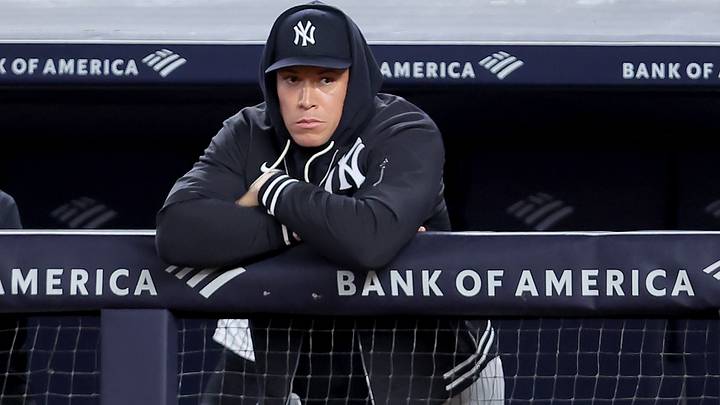
Yankees: An Aaron Judge-Sized Hole in the Lineup
The Yankees may have baseball’s best postseason rotation and found enough offense to hold onto the AL’s top wild-card spot. But to win a World Series, they need their best player healthy and hammering baseballs. They may not have it.
Aaron Judge is trying to return for the wild-card series from a strained calf muscle, but it would be unwise to rush him back into action. Yes, New York needs his bat in the lineup, but it also needs to ensure he is available for the entire postseason, not just the first series. Ben Rice (149), Cody Bellinger (115) and Paul Goldschmidt (111) are the only Yankees with more than 300 plate appearances and a wRC+ over 100. That’s a scary lack of production from the lineup.
They need Judge’s bat back at full health as soon as possible simply because the team relies on him so much to produce.

Padres: Who Starts After Michael King?
The Padres have baseball’s best bullpen and an offense that has been clicking on all cylinders in the second half. What they don’t have is a deep rotation after injuries have decimated it.
Michael King is the team’s ace and should be reliable in that spot, but after him things get dicey. Nick Pivetta missed most of the season due to a flexor strain in his pitching elbow that cost him nearly five months. He’s back and has thrown well, but he’s only made eight starts this year. After that, it’ll be some combination of Robbie Ray and Walker Buehler. Both have been up and down this season and neither feels like a rock-solid option.
If San Diego can get decent starts and shorten games by getting the bullpen in early, things could be fine. But if the team’s starters struggle it could mean an early exit.
Cubs: A Battered Starting Rotation
The Cubs have one of baseball’s best offenses and its best all-around player in Pete Crow-Armstrong, but their pitching staff remains a patchwork mess. The team’s starting rotation has endured season-ending injuries to Cade Horton and Ben Brown, Justin Steele still hasn’t returned after elbow surgery in 2025, Matthew Boyd missed time thanks to knee surgery and a shoulder issue, and Kevin Gausman is now dealing with a shoulder injury.
Chicago will open the postseason with Boyd on the mound and should follow with Clay Holmes in Game 2, then Shota Imanaga and, if he’s healthy enough, Gausman. How bad has it been for the Cubs? Among starters, only Imanaga generated 2.0 bWAR this year. That’s a dangerous weakness to carry into the postseason when pitching becomes even more important.
Could the Cubs manage to overcome a rotation that has been battered all season? It’s possible, but that would take a herculean effort from the team’s top-ranked offense.

Phillies: Trea Turner’s Disappearing Production
Trea Turner was a key piece of the Phillies’ success in 2025, as he slashed .302/.354/.450 with 15 home runs, 36 stolen bases and a 123 wRC+ in 141 games. The team is probably wondering where that guy went.
In 157 games this year, Turner slashed .242/.297/.378 with 19 home runs, 21 stolen bases and a wRC+ of 83. His strikeout rate jumped from 16.7% to 21.0%, his xBA dropped from .270 to .242 and his xwOBA of .293 ranked in the 14th percentile. That would be manageable if Turner provided value defensively, but his outs above average dropped from 17 in 2025 to -8 this season. That’s a precipitous, ominous drop for a shortstop who’s in his age-33 season, has always depended on his athleticism and still has seven more years on his contract. Philadelphia has underachieved as a whole in 2026, and Turner is the poster child.
While he was a disappointment in the regular season, Turner has a ton of playoff experience and won a title with the Nationals in 2019. Maybe he’ll turn it around when the lights are the brightest. But his postseason track record doesn’t offer much optimism. He has a career playoff OPS of .681.
Red Sox: A Top-Heavy Offense
Boston’s comeback story this season was remarkable after Alex Cora was fired following a 10–17 start. While they were one of MLB’s best teams over the final two-thirds of the season, the offense never really clicked one through nine. As a team, the Red Sox finished 17th in wRC+ (99) and 19th in OPS (.717). And it seemed all season a few guys would come through, while the rest of the lineup struggled.
Among the team’s hitters who played at least 100 games, only Willson Contreras (151), Wilyer Abreu (112) and Ceddanne Rafaela (109) topped 100 in wRC+ to grade out as above-average hitters. The drop-off from Contreras to the rest of the roster is pretty alarming in itself, though Mickey Gasper (130), Masataka Yoshida (108) and Roman Anthony (106) all performed well in fewer than 300 plate appearances. Key pieces like Caleb Durbin (100) and especially Jarren Duran (69) had off years, while catcher Adley Rutschman slashed .222/.278/.410 with a wRC+ of 88 after arriving at the trade deadline.
Boston will have to overcome those issues throughout the lineup, particularly against the kind of pitching ahead in the postseason. The lack of offensive balance could be the team’s downfall.

Guardians: A Lineup Short of Firepower
The Guardians are in an enviable position, as they barely made the playoffs but wound up with the AL’s No. 2 seed. While they are set up for success thanks to the bracket and have an excellent pitching staff, their lineup has been anemic.
Cleveland finished the regular season ranked 27th in home runs (162) and slugging (.380), 26th in OPS (.696), 24th in runs scored (678) and 21st in wRC+ (97). Meanwhile, star third baseman José Ramírez wrapped up the worst full season of his career, slashing .235/.320/.368 with 12 home runs and a wRC+ of 92. The question is simple: Where do the runs come from? Rookie Chase DeLauter was the team’s most productive hitter after slashing .287/.363/.456 with 16 home runs and a 131 wRC+, but he doesn't have much help. Steven Kwan was second on the team in wRC+ (114), but only slugged .349, while Travis Bazzana (110) and Angel Martinez (108) were both only modestly above average by wRC+. The rest of the lineup struggled to generate offense.
After a tough battle down the stretch, the Guardians wound up with a favorable path in the postseason. But getting to the World Series will likely require unearthing some unsung heroes on offense.
White Sox: October Inexperience
The White Sox surprised everyone with their run to a postseason berth after three consecutive 100-loss seasons. The roster has been properly overhauled, with only 19.8% of the team’s plate appearances coming from players on the 121-loss team in 2024. The problem is, most of the team’s new players have little to no postseason experience.
Braden Montgomery, Munetaka Murakami and Sam Antonacci are rookies, while Colson Montgomery, Kyle Teel, Chase Meidroth and Grant Taylor are second-year players. Sean Burke debuted in 2024, but has never pitched in the postseason, and All-Star Miguel Vargas has likewise never appeared in the postseason despite coming up with the Dodgers. Maybe there’s something to be said for youthful exuberance, but there’s also the possibility that fatigue becomes a factor for players who haven’t been through a playoff chase before. Colson Montgomery posted a wRC+ of 54 after August 1, while Murakami slashed .156/.299/.375 in that stretch.
Chicago is built for success long-term, but its lack of postseason experience could be a significant obstacle in October.
Astros: A Thin Starting Rotation
The Astros finished 81–81 to win the weak AL West and notch a playoff spot. Given their record, it’s not surprising they have a ton of issues across the roster. The most glaring is their starting rotation, which is in rough shape.
Beyond Hunter Brown, Houston simply doesn’t have the kind of high-end starting pitching that wins in October. And even Brown enters the playoffs with some uncertainty, having thrown only 107 ⅓ innings this season after missing a chunk of the campaign with a shoulder injury. Peter Lambert has become the team’s No. 2 starter, but he went 8–10 with a 3.82 ERA and doesn’t possess premium stuff. Hayden Wesneski finished the season strong, but made only 11 starts all year, while Cristian Javier and Mike Burrows are both on the IL.
The rotation is so thin that the Astros are poised to open Game 1 of the wild-card series with a bullpen game to give Brown, Lambert and Wesneski rest. It’s hardly an ideal situation and there aren’t many options available for manager Joe Espada.
 Add us as a preferred source on Google
Ryan Phillips is a senior writer on the Breaking and Trending News team at Sports Illustrated. He has worked in digital media since 2009, spending eight years at The Big Lead before joining SI in 2024. Phillips also co-hosts The Assembly Call Podcast about Indiana Hoosiers basketball and previously worked at Bleacher Report. He is a proud San Diego native and a graduate of Indiana University’s journalism program.
Follow rumorsandrants