
Angels Top 5 Trade Chips: Why Walbert Ureña's Value Is Skyrocketing—And Why LA Should Keep Him
In this story:
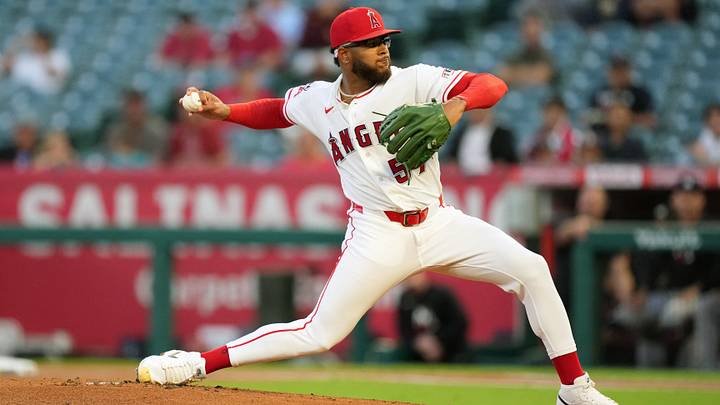
Continuing our series ranking the Angels’ top five offseason trade chips—which kicked off at No. 5 with why a deep rebuild makes catcher Moises Ballesteros a prime flip candidate—we turn our attention to the starting rotation. Coming in at No. 4 is right-hander Walbert Urena, a breakout rookie whose trade value has exploded over the past week without him throwing a single pitch.
To understand just how valuable Ureña is right now, look at what contenders and rebuilders are paying for starting pitching this November. First, the Chicago White Sox set a new financial floor for back end arms by handing Dustin May a three year, $52.5 million deal, a move that already began reshaping the Angels' offseason plans for Reid Detmers and Yusei Kikuchi. Days later, the Mets shattered the ceiling entirely by signing Tarik Skubal to a historic nine year, $450 million contract—a record payday that drives up pitching costs and forces the Angels to consider trading Detmers and/or Kikuchi.
When average innings-eaters cost $17.5 million per season and true aces command $50 million annually, pre-arbitration starters with electric stuff become the most coveted currency in baseball.
Why Contenders Would Pay a King’s Ransom for Ureña
Ureña checks nearly every box for clubs priced out of the free-agent market. Making his Major League debut in March 2026, the hard-throwing right-hander posted a 2.97 ERA across 29 appearances (27 starts) in 148.1 innings, holding opponents to a .210 batting average and generating 3.8 bWAR. Armed with a 98 mph fastball and an elite ground ball rate north of 55%, Urena proved he can keep big league lineups off balance. And he looked better as the year progressed, indicating the new pitching data and analytics will help him going forward.
Even more appealing to rival front offices is his contract status. Ureña is not eligible for arbitration until 2029 and remains under affordable team control all the way through the 2032 season. If the Angels put him on the block this winter, every contender would line up with top tier prospect packages.
The Sell High Case: Low Strikeout Rate Signals Regression Risk

For all of Ureña's surface success, there is a compelling analytical argument to cash in while his stock is riding this high. Despite routinely touching 98 mph with his fastball, Ureña struck out just 142 batters in 148.1 innings—a middling 8.62 strikeouts per nine innings and a 22.7% strikeout rate that fails to match his raw velocity.
When a pitcher generates relatively modest swing and miss numbers while issuing 66 walks (4.00 BB/9, 10.6% BB%), his 2.97 ERA becomes heavily dependent on batted ball luck and defense behind him. If those strikeout numbers do not climb as hitters adjust to him the second time around the league, Ureña could be a prime candidate for ERA regression in 2027—making this winter a potential golden window to sell high.
Best Suitors and What a Return Would Look Like
If Anaheim were to test the market, small- and mid-market pitching factories like the Milwaukee Brewers and Tampa Bay Rays make the most sense as aggressive suitors. Both organizations thrive on acquiring affordable, controllable arms with elite raw traits—like Ureña’s 98 mph velocity and heavy sink—and refining their pitch shapes and command to unlock frontline strikeout rates.
Because Ureña comes with six years of team control, the Angels could demand a massive prospect haul in return. From a deep farm system like Milwaukee's, a realistic package could be headlined by Josh Adamczewski and Braylon Payne:

Josh Adamczewski (2B/OF): Ranked as Milwaukee's No. 3 prospect and a Top 100 talent by MLB Pipeline with a 55 overall grade, the 21 year old left handed hitter slugged his way to AA Biloxi in 2026, slashing .300/.417/.509 (.926 OPS) with 18 home runs and 18 stolen bases across two levels. His best tool is his 55 grade hit tool, backed by 50 grade power and 50 grade speed. He is a high on base percentage player who can hit to all fields and cover multiple positions; exactly what the Angels rebuild needs.

Braylon Payne (OF): Milwaukee’s 2024 first round pick checks in as the Brewers' No. 6 prospect with a 50 overall grade but I see more upside in him. He broke out in 2026 with a 28 home run, 25 steal campaign (.910 OPS) between High-A and AA. The standout tool is his elite 70 grade speed but he also has 55 grade power. Very smooth and fluid while patrolling the grass, he has a 55 grade fielding tool that looks low to me. He definitely has the speed, jump, and stride to stick in center field at the MLB level.
The Verdict: Trade Detmers, Keep Ureña
Even with those underlying regression flags and enticing prospect packages on the table, the Angels still need to draw a clear line between their tradeable arms.
I can easily see the logic in trading Reid Detmers this winter. Detmers is 27, only has two years of club control left before hitting free agency after 2028, and his long term extension price climbs every time another ace signs a mega deal. Flipping Detmers at the height of his value makes total sense for an organization still building toward contention in a couple of years.
Ureña, however, is a completely different story. He does not even turn 23 until January. With six full seasons of team control remaining, the Angels have plenty of runway to let his secondary pitches and command develop alongside his 98 mph heater—without needing Milwaukee or Tampa Bay to do it for them. In fact, a new data centered coaching program combined with the team's pitching lab in Tempe should give Angels fans reasons to hope Walbert can turn into a bona fide ace.
Ureña is young enough to anchor Anaheim's rotation well into the next decade, long after the club’s pending ownership transition and current rebuild are complete. Unless another team makes a truly franchise altering offer, Ureña is one young pitching asset the Angels should hold onto.
 Add us as a preferred source on Google

I'm a lifelong Angels fan who majored in journalism at CSU, Bakersfield and has previously covered the team at Halos Heaven and Crashing the Pearly Gates. Life gets no better than a day at the ballpark with family and friends.