%20%20--%3E%0A%3Csvg%20version%3D%221.1%22%20id%3D%22Layer_1%22%20xmlns%3D%22http%3A%2F%2Fwww.w3.org%2F2000%2Fsvg%22%20xmlns%3Axlink%3D%22http%3A%2F%2Fwww.w3.org%2F1999%2Fxlink%22%20x%3D%220px%22%20y%3D%220px%22%0A%09%20width%3D%2239px%22%20height%3D%2240px%22%20viewBox%3D%220%200%2039%2040%22%20enable-background%3D%22new%200%200%2039%2040%22%20xml%3Aspace%3D%22preserve%22%3E%0A%3Cpath%20fill%3D%22%23FFFFFF%22%20d%3D%22M38.5%2C7H28.2v26h10.3V7z%22%2F%3E%0A%3Cpath%20fill-rule%3D%22evenodd%22%20clip-rule%3D%22evenodd%22%20fill%3D%22%23FFFFFF%22%20d%3D%22M26.1%2C25.5c0%2C5.8-4.1%2C7.5-12.9%2C7.5C3.9%2C33%2C0%2C31.2%2C0%2C25.2v-1.1h11.6%0A%09v2.4c0%2C0.7%2C0.1%2C1.4%2C1.2%2C1.4c1%2C0%2C1.2-0.4%2C1.2-1.3v-0.9c0-1.6-0.9-1.6-3.5-2.2C2.2%2C21.7%2C0%2C19.7%2C0%2C15.3v-0.9C0%2C9.3%2C5.5%2C7%2C12.9%2C7%0A%09c10.2%2C0%2C12.8%2C2.6%2C12.8%2C7.4v1.8h-11v-2.9c0-0.6-0.4-1.1-1.2-1.1c-0.6%2C0-1.2%2C0.4-1.2%2C1.1v0.9c0%2C1.5%2C0.9%2C2%2C3.3%2C2.5%0A%09c8%2C1.6%2C10.5%2C3.3%2C10.5%2C7.5V25.5z%22%2F%3E%0A%3C%2Fsvg%3E%0A)
The Biggest Mistakes of Dana Brown’s Tenure As Astros GM
In this story:
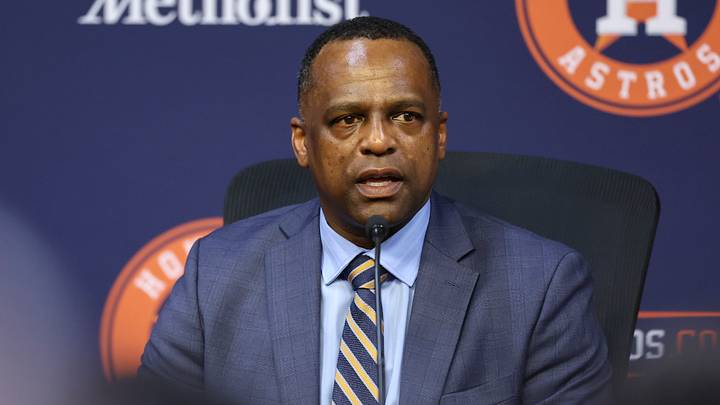
The Astros parted ways with general manager Dana Brown on Monday following a disappointing homestand in which the team went 3–6. Before the homestand, it seemed an opportune time for Houston to expand upon its lead in the AL West, but the team failed to do so, culminating in just three wins against a trio of underperforming division rivals in the Mariners, Athletics and Angels.
The Astros now sit at 65–66, level with the Rangers and just three games ahead of the Mariners. The team missed out on getting some breathing room in the race for the division crown. Enough was enough, and Brown has been axed.
Brown had been the Astros GM since 2023, when he joined the organization after serving as the Braves’ vice president of scouting––a role he’d been in since 2019. Brown inherited a roster fresh off a World Series title, and one that had been to the postseason in six consecutive seasons, and seven of the previous eight years. In ‘23, Brown’s first year in the role, the Astros made the ALCS and were just one win shy of returning to the World Series, but things worsened after that. In ‘24, Houston won 88 games, its fewest in a full season since ‘16, and were ousted in the wild-card round. The following season, the Astros missed the postseason entirely after winning 87 games. Now, at risk of missing the postseason for a second straight campaign, the organization felt it was time to relieve Brown of his duties.
But what ultimately led to Houston’s falloff and Brown’s subsequent departure? There were a multitude of factors that landed the Astros in their worrisome present spot. For one, there’s a concerning lack of depth on the team’s 26-man roster, paired with a lack of MLB-ready minor leaguers who could be called upon to make an impact. Those shortcomings forced the organization to rely on some aging veterans to keep their competitive window open. That task was only made more difficult after Brown failed to sign key players to contract extensions before they departed in free agency. Further still, the additions Houston did make in free agency and on the trade market have not panned out, including some woeful additions to the starting pitching rotation.
Lack of organizational depth and MLB-ready prospects
Brown had intended to build the Astros in a similar manner to what the Braves had been building––a talented MLB roster with a strong farm system to support it. That never happened in Houston.
A few years into Brown’s tenure, and the Astros have one of MLB’s weakest farm systems, with just one prospect––18-year-old Kevin Alvarez––ranking inside MLB Pipeline’s Top 100. The majority of the organization’s top prospects are still at least a few years away from reaching the big leagues. As such, when the injury bug bit the MLB rotation and sidelined key starters such as Hunter Brown and Cristian Javier, it forced the organization to rush to promote some young arms, such as Ethan Pecko, who likely would’ve benefited from more time in the minor leagues.
Disappointing free agency signings
The Astros signed six pitchers during the offseason, three of whom have already been designated for assignment––Nate Pearson, Roddery Muñoz and Ryan Weiss.
Tatsuya Imai was Houston’s big offseason splash, bringing the veteran righthander over from the NPB in a three-year, $54 million deal. Imai struggled mightily after arriving in MLB and was recently moved to the bullpen. In 18 appearances (15 starts) this season, Imai owns a 5.32 ERA with 83 strikeouts against 44 walks in 67 2/3 innings. Brown also spearheaded the signing of Mike Burrows, who, like Imai, has been relegated to bullpen duties after a lackluster showing in the rotation. Burrows has a 5.99 ERA this season and has surrendered 21 home runs in 94 2/3 innings.
Of the six pitchers acquired by the Astros this offseason, only Kai-Wei Teng has been serviceable.
Misfires on contract extensions
Brown also struggled with retention of the team’s own free agents. It’s worth noting that the pre-existing contracts inherited by Brown were dismal––specifically the big-money deals issued to the likes of Jose Abreu and Rafael Montero, both of which were doled out by owner Jim Crane prior to Brown’s hiring. Those contracts impacted how the team was able to maneuver in free agency, strapping them down to a pair of unproductive players who were outearning their impact.
With less financial freedom, the front office was reluctant to issue long-term contracts to players such as Kyle Tucker and Alex Bregman, which resulted in the duo leaving the team. Looking back, it’s possible the Tucker trade, which saw the Astros acquire Cam Smith, Hayden Wesneski and Isaac Paredes, was the best move Brown made during his tenure, though his many misfires ultimately outweigh the success of that deal.
Other key signings included the five-year, $95 million deal they awarded closer Josh Hader in free agency, as well as Brown’s first big move as the GM––extending Cristian Javier on a five-year, $64 million contract, much of which he’s spent on the injured list. They also signed an aging Jose Altuve to a front-loaded, five-year, $125 million contract which runs through the 2029 season. Altuve produced just 0.5 bWAR in the first year of the deal, and has amassed 0.1 bWAR through 105 games of the deal’s second year.
Meanwhile, the Astros failed to get long-term contracts signed for important young assets like Hunter Brown and Jeremy Peña. As a result, the team will be forced to back up the Brinks truck in order to lock them down, giving them significantly larger deals than what they would’ve received just a couple of seasons ago.
Ultimately, Brown balked at giving out contracts to some important players, and when he has deemed it appropriate to spend big, he hasn’t seen much success.
Inactivity at this year’s trade deadline
The Astros made just one significant move at this year’s trade deadline, acquiring Daulton Varsho from the Blue Jays in exchange for RHP Spencer Arrighetti. For a team that lacked much depth in the starting rotation, offloading Arrighetti at the deadline was a perplexing move, especially considering he was a young, cost-controlled asset who grew up in the Houston area. Varsho’s struggles since arriving in Houston haven’t helped change the perception of the trade. In 18 games, Varsho is batting .169 and has a .532 OPS with the Astros.
Had Houston been a bit more aggressive at the deadline, they could’ve shored up key weaknesses and put themselves in a more competitive position this year. Instead, they’ve gone 7–11 since the deadline, allowing the Rangers and Mariners to remain close in the division.
Brown ends his tenure as the Astros GM with a 330–285 record, but ultimately failed to shape the roster and the farm system for sustainable, long-term success. Where the organization goes from here remains to be seen. Crane intends to assume responsibility of baseball operations in the interim, while assistant GMs Charles Cook, Gavin Dickey and Connor Huff will lead day-to-day operations, with assistance from senior advisor and franchise legend Jeff Bagwell.
 Add us as a preferred source on Google
Karl Rasmussen is a staff writer for Sports Illustrated. A University of Oregon alum who joined SI in February 2023, his work has appeared on 12up and ClutchPoints. Rasmussen is a loyal Tottenham, Jets, Yankees and Ducks fan.
Follow Karlras920