
Why the Blue Jays Should Prioritize Their Starting Rotation Plans for 2027
In this story:
The key point here is a little uncertainty regarding the Jays’ projections for 2026. Dylan Cease and Jose Soriano appear to be the safest arms, but there is no clarity regarding the health and consistency that Yesavage, Jose Berrios, and Cody Ponce could offer, or whether Scherzer and Bieber will finally return. We can add that the initial experiment after bringing in Spencer Arrighetti at the trade deadline was terrible and, in the end, Spencer Miles offered a little stability as an opener.
In my opinion, I wouldn't rule out the Blue Jays being interested in an affordable arm in free agency to reinforce their rotation or perhaps the bullpen. They really need it, especially because they do not even have their rotation spots secured for the long term beyond Cease, Soriano, and, with a little luck, Yesavage. That said, I set out to investigate some details about how the Jays’ most successful rotations have performed over the last decade in terms of the number of consistent arms, their contribution in fWAR, and the weight of that combined value.
2017
Pitchers with 2.0+ fWAR: 3
Combined WAR: 8.9
This could be considered a year of high workload, as the Jays had three starters who pitched at least 145 innings, two of them surpassing 185. Marcus Stroman was the leader, with support from J. A. Happ (145 1/3) and Marco Estrada (186). Stroman recorded 3.4 WAR in 201 innings and stood out for his ability to generate ground balls (62.1%). However, all of them were vulnerable, with high home runs allowed per fly ball rates and combined for 8.9 fWAR, the second-lowest total among these qualified rotations. Toronto did not reach the postseason, and there really were not great expectations for those arms to have a guarantee of dominance and survive in October.
2021
Pitchers with 2.0+ fWAR: 4
Combined WAR: 11.1
This is the type of season that, in a certain way, we can compare with 2026 for one reason: Toronto had a great season from left-hander Robbie Ray, who ended up winning the American League Cy Young Award and was 15th in MVP voting. Dylan Cease had an impact similar to Ray’s, but the difference was behind him. Ray led a rotation with four productive arms; Cease navigated the entire season as the only reason to feel hope, even for the first half of the season, when Kevin Gausman was still part of the starting rotation and had many problems with inconsistency.

Ray led the 2021 rotation with 3.9 WAR and 11.54 K/9 in 193 1/3 innings, but Steven Matz (2.7), Hyun Jin Ryu (2.5), and Alek Manoah (2.0) also made the rotation very consistent. Even so, it was a year that seemed perfect for seeing more of that rotation in October, but the team still could not reach the playoffs.
2022
Pitchers with 2.0+ fWAR: 3
Combined WAR: 12.4
Gausman and Manoah raised the rotation’s ceiling. Gausman led with 5.5 WAR, backed by 10.56 K/9 and just 1.44 BB/9. Manoah added 3.9 WAR, and Stripling added 3.0. Gausman and Manoah combined for 9.4 WAR. It was the best combination of individual impact among the top two starters.
2023
Pitchers with 2.0+ fWAR: 4
Combined WAR: 13.4
The rotation reached its highest collective production, led by Gausman (5.3), with consistent contributions from Jose Berrios (2.9), Chris Bassitt (2.6), and Kikuchi (2.6). Bassitt pitched 200 innings, Berrios 189 2/3, and Gausman 185, for an average of 191 1/3, while they combined for a 50-35 record. That was John Schneider’s first season as manager, and the Jays reached the playoffs, but they lost 0-2 in the Wild Card Series for the second consecutive year, this time against the Minnesota Twins. The elimination was their third consecutive one in that round, also counting the fact that in 2020 they fell in a 2-0 sweep to the Tampa Bay Rays.

2024
Pitchers with 2.0+ fWAR: 3
Combined WAR: 7.5
Three starters surpassed 2.0 WAR, but with a lower impact. Gausman (3.0), Bassitt (2.3), and Kikuchi (2.2) accumulated 7.5 WAR, the second-worst mark during this period. The team did not reach the postseason and, worse, finished 74-88, 20 games behind the Division leader, the New York Yankees (94-68).
As you can see, each of those rotations, successful to a certain extent in terms of individual and collective results, had several key factors, from the number of innings pitched to the weight carried by two or three arms.
But what really made the difference is that the average of the rotations that reached the postseason was 10.8 fWAR.
The Blue Jays have just finished their second consecutive season in which their starting rotation has recorded only two pitchers qualified with at least 2.0 fWAR. However, there is a difference we should analyze here, and that is that, in 2026, 67.9% of the combined 8.1 fWAR was carried by a single pitcher, right-hander Dylan Cease. The 2025 rotation was not far off, but Kevin Gausman’s impact with his 4.1 fWAR was 63.1%. Behind him, Chris Bassitt recorded 2.4, so the Blue Jays often competed in three-game series

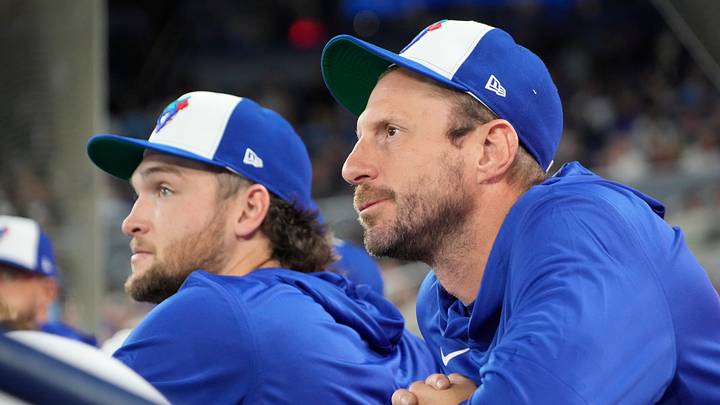
Then, in the postseason, injuries changed the rotation. Toronto achieved consistency with four dominant arms, starting with Gausman’s leadership, the emergence of Trey Yesavage, the resurgence of veteran Max Scherzer, and a surprising version of Shane Bieber, who combined for a 7-4 record with a 3.57 ERA in the playoffs.
As I wrote before, Cease’s impact was 67.9% in the context in which only his 5.5 fWAR plus Gausman’s 2.6 counted, for a total of 8.1 in 2026, but the overall impact was much greater. The contribution of both to Toronto in 2026 represented 71% of the 11.4 fWAR recorded by the entire rotation, and with Cease alone, it would be a considerable 48.2%.
In other words, there will be no balance at all if at least two more arms do not achieve consistency to sustain the starting rotation, and that need deserves urgent attention from the organization in order to have a competitive pitching staff in 2027.
 Add us as a preferred source on Google
Yirsandy is a baseball writer specializing in MLB coverage with experience across multiple teams and storylines. He currently writes for Diamond Centric, where he covers the New York Mets, San Diego Padres, Chicago Cubs, Milwaukee Brewers, and Kansas City Royals. My work focuses on game coverage, player analysis, and storytelling that connects performance with context. My Substack has also been an important part of my writing development, where I’ve built much of my baseball coverage and storytelling voice over time. I’m passionate about combining reporting, research, and thoughtful analysis to produce engaging baseball content for readers.
Follow Yirsandy