
The Pitch Mix That Made Braves Lefty Dylan Dodd Successful in 2026
In this story:
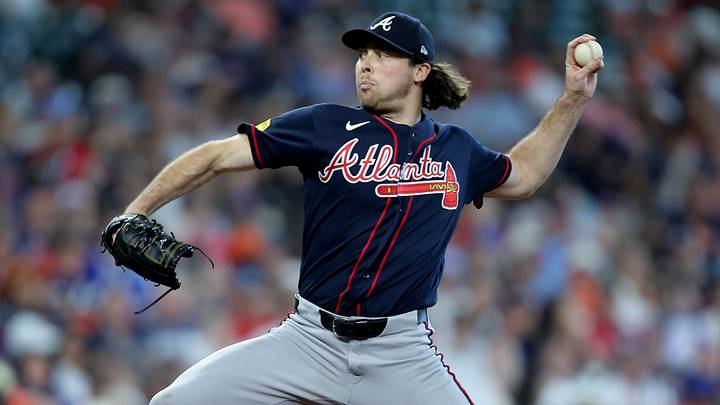
The 2026 season was a long time coming for Atlanta Braves lefty Dylan Dodd. Once a starting pitching prospect, he found his way as a member of the bullpen.
He wasn't on the opening day roster. He didn't make his season debut in the majors until April 12 and didn't stick around until he was recalled again on April 27. However, after that, he was set to play a role for the rest of the way.
In 48 appearances for the Braves, he pitched to a 2.54 ERA and a 0.91 WHIP with 53 strikeouts over 49 2/3 innings pitched. He spent some time on the injured list, but was mostly a consistent face during the season.
He was part of the postseason roster, even opening a game in the National League Division Series.
The bullpen underwent some identity changes during the season, and Dodd was part of an early change that worked out for the better.
Dodd Finds His Way with Braves in 2026
A three-pitch mix, highlighted by two pitches in particular, played a key role in his success: a sinker and a cutter. Two types of fastballs accounted for 95% of his pitches thrown in 2026. A slider accounted for the other 5%. There was a single four-seam fastball thrown all season.
Before the 2025 season, he had a four-pitch mix consisting of a four-seam fastball, a changeup and the aforementioned slider and cutter. The sinker wasn't in the equation early on. Over the last two seasons, the fastball and changeup have exited the arsenal and the sinker joined it. The cutter showed much more prominence.
The effectiveness of each pitch during the 2026 season shows why he was able to lean on them so heavily.
Here is the whiff and putaway rates for each of the three pitches he threw more than once during the season:
• Sinker: 25.8% whiff rate, 16% putaway rate
• Cutter: 33.6%, 23.9%
• Slider: 54.5%, 23.8%
Dodd was especially effective against rigthies with a plus-3 run value against them on the sinker and cutter each. It's reflective in more traditional splits as well with his .180 opponent average and opponent .564 OPS.
Focusing on the pitches that work isn't necessarily specific to him. Another example was from deadline addition Tyler Mahle, who became very fastball- and splitter-heavy, with other pitches being used more selectively. When something works, the Braves locate it and have their pitchers keep using it.
To further refine his craft, Dodd has some work left for handling lefties. His cutter, in particular, had a minus-4 run value against left-handed hitters, and his sinker had a zero.
He also struggles more on the road. At home, he had a 0.99 ERA and a 0.55 WHIP. On the road, he had a 4.43 ERA and a 1.34 WHIP.
So, there is more work to be done, but it doesn't take away from the progress he made last season. When the next season finally arrives, expect him once again to be in the conversation.
Sign up for our free Atlanta Braves on SI newsletter for the latest news
 Add us as a preferred source on Google

Harrison Smajovits is a reporter covering the Atlanta Braves and the Florida Gators. He also covers the Tampa Bay Lightning for The Hockey Writers. He has two degrees from the University of Florida: a bachelor's in Telecommunication and a master's in Sport Management. When he's not writing, Harrison is usually listening to his Beatles records or getting out of the house with friends.
Follow HarrisonSmaj