
Mariners Haven’t Opened J.P. Crawford Contract Talks, Exposing a 2027 Lineup Problem
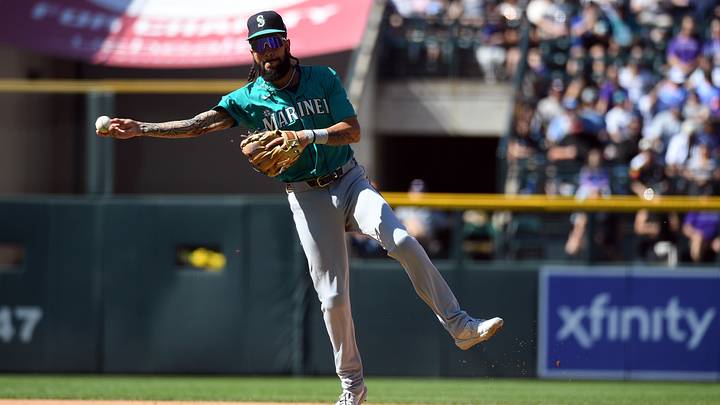
In this story:
The Mariners could put a better defender at shortstop in 2027 and still send a weaker lineup onto the field. It might sound a little wild, but it’s the trap that lies in J.P. Crawford’s uncertain future. If he leaves, Seattle has to answer two questions: who handles shortstop, and who replaces the times he gets on base?
According to Adam Jude of The Seattle Times, the Mariners had “not made any overtures about re-signing” Crawford as of Sept. 20. That doesn’t mean a deal still can’t happen. But with Crawford nearing free agency, Seattle will need to find out if the club can improve its infield without thinning out their offense.
Through Sept. 20, Crawford was hitting .222 with 13 home runs. The average doesn’t say much, but his .338 on-base percentage and 62 walks in 111 games says a lot more. Only Cal Raleigh and Randy Arozarena had walked more for Seattle, and both had played more games.
J.P. Crawford’s Case for Staying Starts With What Seattle Would Lose
Crawford isn’t a threat that lives in the middle-of-the-order. The Mariners need to focus on adding one this winter. His 107 wRC+ describes a hitter who has been impactful, not necessarily dominant. We’ve seen the Mariners struggle to put runners aboard often enough to know we can’t realistically shrug off those plate appearances. Somebody has to take them and do something with them.
There’s also the defensive concern. Crawford had 13 outs below average at shortstop in 2025, and is at the mark again for 2026. The defensive numbers have regressed quickly. When Colt Emerson reached the majors, Crawford volunteered to try third base. That gave the Mariners a chance to put their better young defender at short. Crawford deserves credit for making it easier, but after some time at the hot corner, he didn’t really earn the chance to claim that space for 2027.
The Mariners also got a preview of why they need a second shortstop it trusts. When Crawford went on the IL and Emerson was scratched in June, Cole Young made his first big league start at the position. Brock Rodden later filled in while both were sidelined. Leo Rivas made appearances as well. They were able to cover the innings, but the injuries showed how thin they’re depth truly was.
Colt Emerson’s Shortstop Future Still Requires a Backup Plan
Emerson is the obvious long-term answer. The team’s commitment to eight years and $95 million before his debut is proof. His rookie season ended with wrist surgery, though, and the team expects his swinging to be limited for much of the winter. The club expects him ready for 2027. We can believe in his future and still give him room to grow without making him responsible for replacing Crawford’s on-base production.
The infield already tilts left-handed with Josh Naylor, Young, Emerson and Brendan Donovan. Keeping Crawford would add another left-handed bat; letting him leave would subtract one of Seattle’s better on-base threats. That’s why adding a right-handed hitter has to mean more than finding a bat for occasional starts against lefties. The Mariners need someone who can help the offense every day.
A reunion is worth discussing if there’s a defined role for Crawford at third base or around the infield. The front office should be candid about the playing time available alongside Emerson, Young and Donovan. It should also assess whether Crawford’s bat and limited work at third fit that role.
If the Mariners go another direction, they need dependable shortstop coverage behind Emerson and a proven hitter who reaches base consistently. One acquisition might address both needs. If it takes two, so be it. This season showed how fast an injury can expose the infield and how much the offense misses a hitter who can keep an inning going.
Crawford’s exit might make the infield younger and quicker. It will make the Mariners better only if they account for better fielding and a strong ability to get on base.
 Add us as a preferred source on Google
Tremayne Person is the Publisher for Mariners On SI and the Site Expert at Friars on Base, with additional bylines across FanSided’s MLB division. He founded the Keep It Electric podcast in 2023 and covers baseball with a blend of analysis, context, and a little well-timed side-eye just to keep things honest. Tremayne grew up a Mariners fan in Richmond, Va., and that passion ultimately led him to move to Seattle to cover the team closely and become a regular at home games. Through his writing, he connects with fans who want a deeper, more personal understanding of the game. When he’s not at T-Mobile Park, he’s with his dog, gaming, or finding the next storyline worth digging into.
Follow TremaynePerson